
The Book Of John
Who wrote the Book of John: John
When was it written: Based on what we know of John’s post-resurrection ministry, it was most likely written around 85 A.D.
The gospel of John is an eyewitness account of the events in the life and ministry of Jesus. John was one of the first four disciples Jesus called into full-time ministry; making him privy just about every moment of Jesus’ three-year evangelistic crusade.
John is also known as the disciple that Jesus loved. Among the twelve disciples Jesus chose as his core group of confidants and assistants, he had an even more select group of three—Peter, James, and John.
And from those three we see numerous times when it was John Jesus relied on. It was John Jesus who entrusted his mom right before he (Jesus) breathed his last breath on the cross.
Yes, in spite of the fact that Jesus had several brothers (the writer of James and the writer of Jude being two of them), he entrusted his mother to John. But why? What made John so special?
The answer is simple: Family. John was family…Jesus’ first cousin, to be exact. The fact that Jesus, James, and John were first cousins is not specifically stated in scripture like that, i.e. “Jesus, James, and John were cousins”. But the fact presents itself in all four of the gospels when you put them together to see what they say.
Fact #1: We learn early on that James and John are the sons of Zebedee.
Fact #2: The Gospel writers tell us that among the women standing with Mary (Jesus’ mother) at the cross was Mary Magdalene, Mary the mother of James the lessor, and the mother of Zebedee’s children (Matthew). The book of Mark tells us the same thing, only he calls the mother of Zebedee’s children by name—Salome.
Fact #3: Salome and Mary (Jesus’ mother) were sisters. John tells us in recording who was with Mary at the cross that the group of women consisted of Mary, Mary Magdalene, Mary the wife of Cleopas, and Mary’s sister, Salome.
Understanding the relationship between Jesus and James sheds a lot of light on some of the incidents in the Bible surrounding James and his brother, John. For example, knowing that they were related makes it easier to understand how James and John’s mother would have had the ‘audacity’ to approach Jesus to ask a special favor of him for her sons.
She was his aunt. She’d been in his life from the very beginning. She’d watched him grow up— possibly even helped care for him at times.
It also explains why Jesus asked John to watch over Mary after he was gone. He knew Mary and Salome would be together—that Mary would continue to lean on her sister for love and support. It wasn’t anything against his siblings. He just knew John would be seeing after Salome’s well-being, so…
John’s gospel was written for the non-Jewish community— especially the Greeks. His purpose for writing is evangelism plain and simple. John doesn’t focus on presenting evidence of the truth, but rather the spiritual necessity of believing.
John begins his writing by establishing the fact that Jesus is part of the Trinity and that he has always been. This would have been especially important for witnessing to the Greeks due to their attention to and extreme interest in philosophy.
They would have wanted answers not only to who Jesus was and why he came but also to where Jesus came from and who sent him. Following John’s introduction of Jesus and his statement of why he is writing, John delves into the ministry of Jesus in the same way the other three gospels do—with the baptism of Jesus by John the Baptist.
While there are several of Jesus’ miracles and parables mentioned by one or two of the writers of the four gospels but not the others, Jesus’ baptism is at the forefront of all of them— and for good reason.
It was essential for Jesus to set the example for what he was commanding us to do. It was equally important that he begin his ministry with his baptism because our baptism is the beginning of our salvation…our entry into God’s family.
Following Jesus’ baptism John recorded the calling of Jesus’ first six disciples—Simon Peter, Andrew, James, John, Philip, and Bartholomew (Nathanael)—in the same way the other gospel writers did.
Chapter two of the Book of John opens with the account of Jesus’ first miracle—changing the water into wine at the wedding feast in Cana.
John is the only one to record this miracle, but we know it is Jesus’ first miracle (in contrast to the miracles the other disciples recorded in conjunction with the calling of the first disciples) because John states that it is Jesus’ first miracle.
John’s credibility in being the only one to record Jesus’ first miracle is valid due to the fact that because he was one of the first called, he was there from the onset.
The last sentence in this passage of scripture says, “He thus revealed his glory, and his disciples put their faith in him.” Sometimes this statement leaves people wondering how this is different from them leaving everything behind to follow Jesus.
Why had they started following Jesus if they hadn’t yet put their faith in him?
The best way to explain this is to share something from the blog, “A Bit of Salty Grace” https://abitofsaltygrace.blogspot.com/2016/06/faith-is-like- chocolate.html.
The writer compares faith with eating chocolate by saying that the first time a child eats chocolate they do so on the advisement of someone they trust. In other words, their faith is in the person. But after they taste the chocolate, their faith is transferred to the chocolate—to always taste as sweet and yummy as it did the time before.
The disciples initially went with Jesus because they were willing to take him up on his offer when he told them to come and see for themselves who he was and what he was about.
But when they saw what he had done at the wedding feast, as well as the signs they had seen and heard about prior to that (God speaking after his baptism and the unexpected catch of fish, for example), their desire to follow Jesus was the result of faith, not curiosity.
Now that we’ve established the flow of their spiritual growth, let’s keep moving through the book of John by listing the highlights of Jesus’ ministry as recorded in each chapter.
Chapter 3: Nicodemus, who was a Pharisee and leader of the Jewish council, came to Jesus in the night because he believed, but feared the repercussions he would face from the other Jewish leaders.

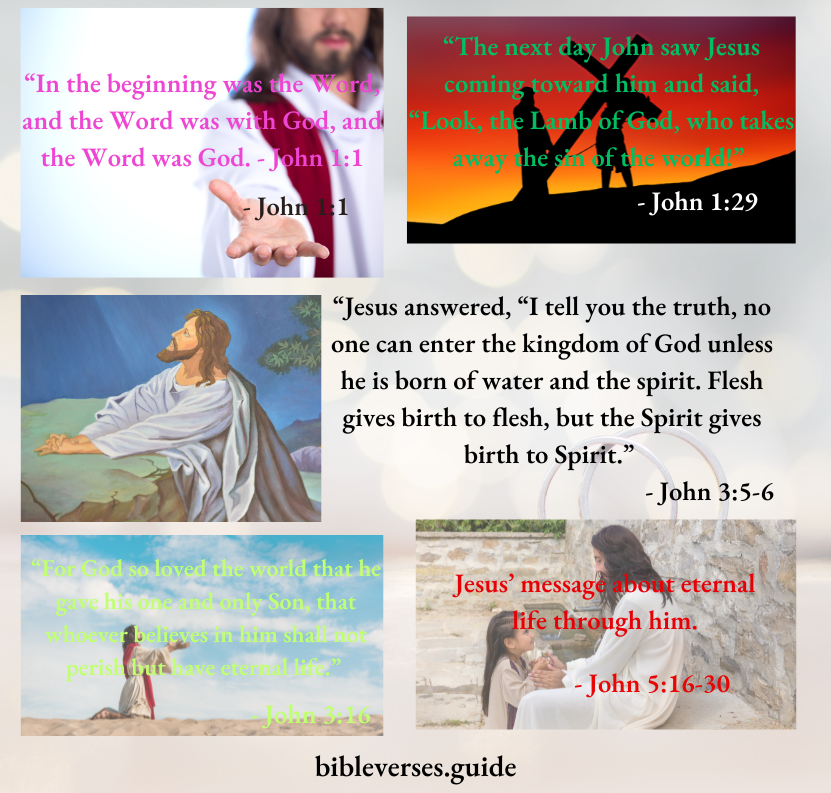
“For God so loved the world that he gave his one and only Son, that whoever believes in him shall not perish but have eternal life.
” Nicodemus’ ‘secret faith’ saved Jesus from the Pharisees a couple of times prior to his arrest and crucifixion (God’s timing rather than man’s) and it was Nicodemus that worked with Joseph of Arimathea to properly care for Jesus’ body rather than allow it to be mauled and broken.
While this doesn’t excuse us from hiding our faith or not sharing it, we should learn from Nicodemus that there are times when a quiet but resolute faith is more effective and appropriate.
Chapter 4: Jesus’ encounter with the Samaritan woman at the well solidifies the truth that Jesus’ gift of salvation is for everyone.
Chapters 5-6: John records several of Jesus’ miracles—acts of compassion and mercy, as well as miracles meant to validate his identity in order to help his disciples understand him more fully.
Chapters 7 through 10 contain several of Jesus’ sermons and John’s recollections of how adamant the Jewish leaders were in getting rid of Jesus. We also gain insight into Jesus’ earthly personality.
Yes, he was still the perfect, flawless, sinless Son of God, but he didn’t hesitate to put the Pharisees on the spot by putting their false accusations back on them. Jesus was at times sarcastic and he showed no patience for those who were bent on trying to malign him or his father, God.
Chapter 11 opens with the death and resurrection of Jesus’ friend, Lazarus. Jesus used Lazarus’ death to display God’s power and glory. Jesus allowed Lazarus to die for the purpose of being able to resurrect him so that those present would know there was nothing he and God could not do.
NOTE: It is important to note the difference between Lazarus being raised from the dead and Jesus being raised from the dead.
The difference is this: Lazarus’ resurrection was temporary. He died again. Jesus, however, was resurrected for all eternity. The subject of death ends the eleventh chapter, as well, by telling us that after hearing about the miracle of Lazarus being brought back to life, the Jewish leaders joined forces with their enemies, the Roman government, to take Jesus down.
They would stop at nothing to kill Jesus. Jesus knew what was happening, so at this point, he withdrew from the ministry and the general public. Instead, he spent most of his final days with the disciples; preparing them for the time he would no longer be with them.
Chapters 12 through 16: Jesus was preparing to die, but before he did, he would share one last Passover meal with his disciples in Jerusalem. Entering the city was a joyous occasion for Jesus. He was greeted by songs and shouts of joy and praise by the people.
Sadly, however, many of these same people would be shouting “Crucify him!” a few short days later. Following Jesus’ return to Jerusalem, we read his instructions and encouragements to his disciples.
He tells them he is going to die soon and that one of their group will betray him.
He humbly washes the disciples’ feet, predicts Peter’s denial, comforts them in their sadness over their grief of losing him, promises them the Holy Spirit, gives them a sermon on remaining faithful, and explains to them that their grief will turn to joy when they see and understand all that is about to take place.
The one thing noticeably missing from John’s account of the last evening he spent with Jesus before the cross is the institution of communion. He is the only one of the writers of the four gospels to leave it out. Why? No one knows, but all the other details of the evening are there and in perfect harmony with the other three gospel writers.
Chapters 17 and 18: Jesus’ time of prayer in the garden, his arrest, his so-called trial before the high priest, and Peter’s denial of knowing Jesus three times—just as Jesus said it would happen.
Chapter 19: Jesus was handed over to Pilate, an official of the Roman government. Pilate found no reason to convict Jesus. He’d done nothing wrong in the eyes of the Roman government. But not wanting to appear weak in the eyes of the people, Pilate caved to them and sentenced Jesus to death on the cross.
Pilate only thought he was ultimately responsible. We know that whether it was Pilate or Caesar himself who sentenced Jesus, it was only because God said it was to be so, that Jesus died on the cross.
The events leading up to the cross and the actual time Jesus spent on the cross are recorded by John in a way that only Jesus’ closest friend could tell it. John’s account of those final hours is filled with emotion. John speaks of fulfilled prophecy (vs. 23-24).
He reveals that some of Jesus’ last thoughts are about his mother, whom he asks John to watch out for. Jesus burial by Joseph of Arimathea and Nicodemus, who were both religious leaders who had quietly followed and believed in Jesus, now stepped forward to claim Jesus’ body for burial to fulfill yet another prophecy.
Chapter 20: Jesus is alive!
Chapter 21: John is the only one of the gospel writers to record this particular miracle Jesus gave to seven of his disciples following his resurrection. Jesus once again provided fish after no fish had been caught.
They were overjoyed to see Jesus, as it was only the third time they had seen him since his resurrection (vs. 14). But it is the situation immediately following the catch of fish and breakfast on the seashore that is most important.
Bible with subheadings title it “Peter’s reinstatement”. Following Peter’s denial of Jesus three times, he was deeply grieved and ashamed. How could he do that to Jesus? To the Son of the living God?! You know his excitement over seeing Jesus had to be coupled with embarrassment and anxiety over what Jesus would say or do.
But Jesus didn’t say a word about it—not directly, anyway. Instead, in verses 15 through 19, Jesus asks Peter three times if he (Peter) loves him (Jesus), to which Peter always responds by saying, “Yes”.
Jesus then counters by telling Peter to feed his sheep; meaning to take the message of the gospel of salvation to anyone and everyone who will listen. What a beautiful testimony of God’s mercy and forgiving nature!

No, I say this because the words of John 21:25 sum up the magnitude of who Jesus was while he was living here on earth.
Let these words soak into your heart and mind so that you can try to grasp the truth of just how amazing, big, and wonderful our Savior, Jesus, is: “Jesus did many other things as well. If every one of them were written down, I suppose that even the whole world would not have room for the books that would be written.”
Every book of the Bible provides us with words of wisdom, instruction, comfort, encouragement, admonishment, warning, promise, and hope. Let’s look at some of what the Book of John has to offer.
“I tell you the truth, no servant is greater than his master nor is a messenger greater than the one who sent him. Now that you
Key Verses In John
