
Jesus We Talk About Three In One
Dear Thomas,
You ask in your fifteenth question, “Christians talk about a three-person God spoken of as Father, Son, and Holy Spirit.I don’t understand how you can have three different identities and three separate persons all in one being. How can that be?”
The easiest way for me to explain the triune nature of God is by relating some of the ways it was explained to me years ago. A three-person God is like three aspects of the same entity. We could compare it to an apple.
An apple is composed of its skin, its pulp, and its core, three distinct parts that make up the whole apple. The apple isn’t any one of the three parts but all of them. The three-person God could also be compared to water.
Water has formed as a liquid, a gas, or a solid. All three are water but in different forms. Yet another analogy could be our sun. The sun’s mass gives off energy (the Father). That energy gives us flight (the Son), and that light renders its effect on us (the Holy Spirit).
Many things are composed of multiple parts that make up the whole. In speaking of the Trinity, we can identify each person’s descriptive separateness or distinctiveness within the triune God—Father, Son, and Holy Spirit—yet they are one in essence and communion.
Is the Trinity provable? No more than God is provable. Believing in and understanding God in Trinitarian form comes through faith as revealed in Scripture and validated by our relational experience with God.
Many references to the Trinitarian nature of God can be found directly in Scripture. Jesus made many references to God the Father. “In the beginning God” (Gen. 1:1) refers to Jesus Christ in the context of John 1:1- 5, Col. 1:15-17, Heb. 1:1-3.
Then in verse 2 of Genesis 1, the Bible says, “The Spirit of God was hovering over the waters.” Many other references to God and the Holy Spirit or the Spirit of God can be found throughout the Old Testament. The Old Testament also has many prophetic references to the Messiah, the Son.
In the New Testament, the angel Gabriel mentioned aspects of the three when he was talking to Mary about the birth of Jesus. Luke 1:35 says,

When Jesus was baptized in the Jordan River, the Holy Spirit descended upon Him, and God declared Jesus as His Son, “And a voice came from heaven: ‘You are my Son, whom 1 love; with you, I am well pleased’” (Mark 1:11). Jesus told His disciples to baptize others in the name of the Father, Son, and Holy Spirit (Matt. 28:19).
At Pentecost, Peter spoke of the Trinity, “Exalted to the right hand of God, he [Jesus] has received from the Father the promised Holy Spirit and has poured out what you now see and hear [the Holy Spirit]” (Acts 2:33).
At the end of his second letter to the Corinthians, the apostle Paul said, “May the grace of the Lord Jesus Christ, and the love of God, and the fellowship of the Holy Spirit be with you all” (2 Cor. 13:14).
And the Trinity is described in Revelation 5 and 6. From Genesis to Revelation, these scriptural verses are only a few that express God in Trinitarian form.
Christianity is the only religious belief system that understands God in monotheistic terms yet in Trinitarian form. All other systems view God as a solitary entity or a plurality of gods.
It is very important that this triune oneness of God is understood by all, Christians and non-Christians alike because it reveals something about God and about us in relation to Him. It also says something about our human nature, as we were created in the image of God (Gen. 1:26).
Within His own being, God is fellowship and community. His very nature is one of love interrelated and outwardly expressed. Within His own being, He experiences a love relationship that affirms the commonality of purpose, cooperation, and mutual agape love.
Flowing from this agape love is His desire to give it expression through His creative activity. It is not just expressed through the physical nature of the world and the heavens as Creator but through creating us in His image for the sake of giving love to us and enjoying that love in return.
The plurality of persons found in God—Father, Son, and Holy Spirit was intended to be mirrored in man. God created mankind in His image, male and female with the ability to procreate after their own kind.
I don’t think God intended for man to think of himself as a duality of man and woman but rather as a single unit where the two become one. As Genesis 2:24 says, “The two shall become one flesh.”
A close, loving, intimate, nurturing, supportive marriage relationship was to be a reflection of what each person of the Trinity experiences within that divine relationship.
However, I have described only two parts of the human experience that reflect the image of God. The third part is the Holy Spirit. It was God’s intention that males and females be united with the Holy Spirit as the third part of their connection to and reflection of a Trinitarian God, at least as much as is possible for a created being.
When God breathed life into man, He breathed His Spirit into him. Thus, Adam and Eve were created spiritually alive (see Genesis 2). With this three-part union of man, woman, and the Holy Spirit active in both, mankind could reproduce others who would join the family of loving relationships.
The man was created as, within, and for the community, male and female enlivened by the Holy Spirit, altogether reflecting the image of God.
How could God as a solitary being love within Himself in the agape sense of unmotivated, spontaneous, altruistic, and other-centered love? The Trinitarian nature of God expresses this as the very essence of His being.
We humans can become the outward expression of God’s love with the ability to reflect back that love. However, as we know, much of that reflection was lost when Adam and Eve sinned. As a result of that sin, they became spiritually dead.
Genesis 2:17 warned, “But you must not eat from the tree of the knowledge of good and evil, for when you eat of it you will surely die.” When they ate from the tree, they died immediately in the sense of losing the image of God, for there can be no cohabitation of sin and God.
Read Genesis 3 and see how profoundly the oneness of Adam and Eve with God was broken and how that separation caused them to hide from God. The apostle Paul says in Romans 5:18-19,
Consequently, just as the result of one trespass was condemnation for all men, so also the result of one act of righteousness was justification that brings life to all men.
For just as through the disobedience of the one man [Adam] the many were made sinners, so also through the obedience of the one man [Jesus Christ] the many will be made righteous.
As fragmented and individualistic as we have become, no wonder the idea of oneness—either within God or in union with our spouse and God-is difficult for us to grasp. It isn’t our current and natural state of being. That was lost in Eden.
The Trinitarian nature of God makes the good news of the gospel possible. God the Father sent His Son, Jesus Christ, to do what Adam didn’t do so that we could be brought back to life—spiritual life enlivened by the Holy Spirit.
“I tell you the truth, no one can see the kingdom of God unless he is born again,” says John 3:3. “Flesh gives birth to flesh, but the Spirit gives birth to spirit,” verse 6 goes on to explain.

Through Jesus Christ, we thus can become spiritually alive again, born anew, or born again. The Holy Spirit can again live within us.
We humans have the opportunity to become partially whole, even though we still live with individualistic, self-centered inclinations rising from our fallen nature.
We can get glimpses of and move toward God’s original intention for us. As stated earlier, that intention was for a spiritually alive husband and wife, even though marred and impaired by the inherent sinful nature, to form a three-part union with the Holy Spirit.
This was the desire of God in the beginning when He created man in His own image, and it is His desire now. It can be a progressive reality through the “Christ in you” and “you in Christ” promised to all those who accept and follow Jesus Christ as Lord and Savior.
One thing that has been a stumbling block to some is the description of Jesus as the Son of God. When we use the term son in the vernacular, we understand that the son is begotten of the father—that is, the son comes from the father and is created by the action of the father.
A son does not come into existence at the same time the father comes into existence. Thus, when the term son is used for Jesus, many find it difficult to take that leap and say the Son is not begotten, not created, but eternally existing with, coequal, one and the same in essence with the Father and Holy Spirit.
The Son is not less than the Father; no inequality exists in their relationship. In speaking of Jesus Christ, John 1:1-3 explains, “In the beginning was the Word, and the Word was with God, and the Word was God.
He was with God in the beginning. Through him all things were made; without him, nothing was made that has been made.” As expressed in
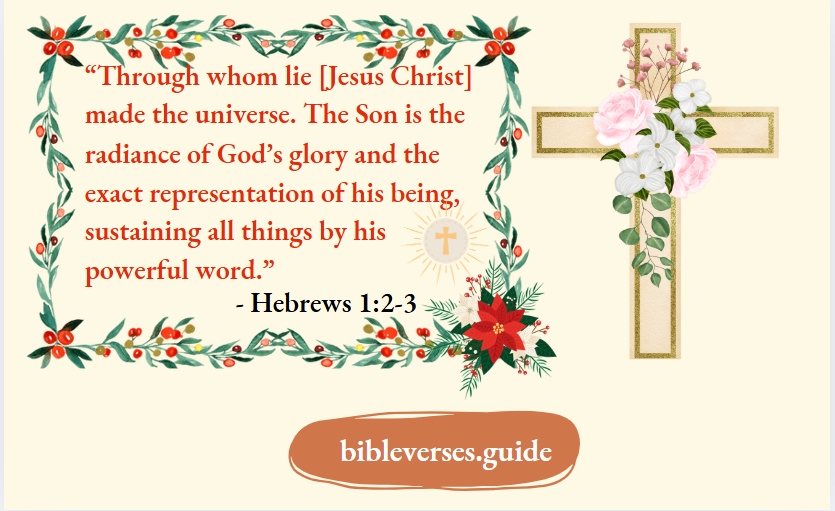
We might wish that another term had been used to describe the second person of the Trinity. But if we are going to use human metaphors to describe God, what other terms might we select? We must remember that the use of this term reflects the reality of Jewish culture.
Women were regarded as chattel and did not have the social status that would allow any type of feminine description. Certainly, nothing in all creation that man was given dominion over in the Garden of Eden would work.
Finally, the idea of two fathers would not work, for there is no relationship in the sense of oneness between two fathers.
In the Jewish culture and as expressed in Scripture over and over again, a father holds within his loins the likeness of his being in his seed. We were in Adam, and therefore, the consequence of his sin passed on to us.
We were in Abraham’s seed as heirs to the promise (of the coming Messiah, Jesus Christ), and we were in our father’s seed. In the Jewish culture, this likeness was truest of the firstborn son. Thus, in Scripture the closest term that could be used to describe Jesus’ relationship with the Father was Son.
Another problem some people have with Jesus as the Son of God arises because they see Him in human form, walking, talking, eating, sleeping, and doing all the things we mortal men and women do.
Some surmise that God should be different. To them, Jesus seems too much like us to be God, for we know what we are like, and it is anything but Godlike.
Yes, Jesus was very much like us in one sense, but He was very much unlike us in another. He was born of a virgin and directed by God the Father through the work of the Holy Spirit. Divinity was joined with humanity in one person Jesus Christ.
Though God, Jesus set His divine prerogatives aside (see Mark 14:36; John 5:19-20; 6:38 and Phil. 2:5-7). He lived as the God-man, the second Adam, living in Adam’s fallen state but without Adam’s inherited sin.
Though He was tempted in every point as we are (Heb. 4:15), He remained without sin, living His life in perfect connection with the Father and Holy Spirit, doing what Adam did not do.
Jesus followed the perfect will of the Father, even unto death on the cross. Jesus denied the use of His divinity to save Himself from the experience of the cross and allowed His humanity to be crucified in order to be the Savior of the world.
In Trinitarian form and described in symbolic language as Father, Son, and Holy Spirit, God so loved His creation that He came in human form in the name of the Son to redeem the world unto Himself (Heb. 2:9).
Yes, Jesus was fully God, as expressed by the apostle Paul in Romans 9:5, where he says, “Christ, who is God over all, forever praised! Amen.”
The good news of the gospel has its foundation in the divinity of Jesus Christ joined with humanity and the Trinitarian nature of God. Jesus was God reconciling the world to Himself. From Genesis to Revelation, God, in Jesus Christ, has been actively coming to man in spirit and in truth.
God, in Jesus Christ, came and revealed His love by His birth, life, death, and resurrection. He graciously continues to come by sending the Holy Spirit to all those who believe by faith alone.
By such faith, we become the recipients of His free gift of peace with God now, and we receive salvation from the consequences of sin, leading to life in all its fullness forever and ever—amen! Finally, as God’s rescue plan comes to maturity, God in Jesus Christ will one day break into our physical world again by coming to this earth in power and glory.
At this second coming we will see Him in the clouds of heaven as He returns to earth to receive His own (Mark 13:26; 1 Thess. 4:16-17; Rev. 22:12).
It is my prayer that you gain the full understanding that God is one in essence and one in the community as Father, Son, and Holy Spirit. Revealed in the Son, Jesus Christ, the three in one came specifically to express and provide a permanent means for us to have a personal relationship with Him.
Jesus wants us to be part of His community both within and without—within by the indwelling Holy Spirit and without by ultimately giving us glorified bodies like His. The Trinity looks forward to the day when we will live forever in the earth made new, where our individualistic fragmentation because of sin and its consequences will be no more.
The Trinity looks forward to an open communion with us involving all our senses, a communion even greater than what Adam enjoyed prior to the fall when he communed with God in the cool of the day (Gen. 3:8).
Your friend,
Matt