
Jesus We Talk About The Word
Dear Thomas,
In your twenty-third question, you ask about the Holy Bible. You state, “Christians say that the Bible is the inerrant Word of God. How can that be when it was given orally from generation to generation and then reduced to written form about 600 to 400 BCE, translated into different languages many times, and translated within the same language many times over? I’ve heard some claim that the various translations don’t even seem to say the same thing.”
Many approaches abound on how to look at Scripture. This is a very big subject with volumes written about it. However the Bible is approached, though, it remains the primary source of our knowledge about God and His relating to humankind over the millennia.
For Christians, the Bible is a sacred book. The Old Testament coupled with the New Testament provides the primary source for our knowledge and understanding of redemptive history.
The Bible puts life into a contextual whole. It gives voice to where we came from, why we are here, and where we are going.
It explains the fall of mankind or mankind’s choosing to separate from his special relationship with God and God’s efforts to reestablish that relationship.
The books or letters that make up the Bible were all written by the end of the first century. However, much of our worldview has changed in the last two thousand years, and this makes answering your question difficult.
How do we explain a book written by so many people over many centuries so long ago? The literary genre of the Bible includes history, poetry, storytelling, visions, dreams, miracles, and parables expressed by those who came before us.
However, culture changes. Language changes, and our worldview changes as well. With each change comes the challenge to understand the meaning of that literature expressed in its variety of styles.
Nonetheless, scholars continue to find evidence of the Bible’s historicity and its understanding of word meanings in Scripture’s best-known original form.
When it comes to the Bible, two primary questions need to be asked as we read and study it. First, what does it say about God? And second, how does it explain mankind’s rescue from sin and death and the plan for the restoration of all things?
Through the totality of the Bible, God is self-revealing. and the clearest revelation of God is found in the person of Jesus Christ.
The key to having faith in that revelation is established by the firm conviction that Jesus was raised from the dead. The apostle Paul says in 1 Corinthians 15:14, 17 that “if Christ has not been raised, our preaching is useless and so is your faith—and you are still in your sins.”
As I’ve mentioned, the Bible puts all of life into a contextual whole. From the war in heaven, the creation of mankind, and the fall to the covenant-keeping God of Israel, all pointed forward to the coming Messiah, Jesus Christ, and His perfect implementation of the rescue plan.
The crowning event was Jesus’ death on the cross and His resurrection and victory over death, which is now made available to all of us. Then we move on to the spreading of the good news of God’s rescue through church history and the future second coming of Jesus.
All of redemptive history eventually culminates with our own resurrection when Jesus at His second coming gathers His elect, His trusted friends, and transforms them into their glorified state.
And finally, there is the ultimate end of sin and sinners and the creation of all things new. All along the way the Bible gives instructions about how love works so we can be restored to a loving relationship with God and one another (see 1 Cor. 13; Phil. 4:8; 1 John 4:11).
In short, the Bible is about redemptive history our redemptive history and about the one who does the redeeming. It is about God’s original intent for this earth; about His rescue plan because of the fall, sin, and evil; and about His ultimate promise to restore all things.
It is about humankind’s decision to break a relationship with their Creator and to render judgment upon God by eating the fruit of the tree in the middle or center of the garden, the Tree of the Knowledge of Good and Evil.
We humans have thus put ourselves at the center ofall life, determining through our own judgment what is good and what is evil. God, as expressed before, never intended us to be in the position of judge.
That is His rightful place. And just as self-centeredness started with Adam, it has been inured to all humankind throughout history, for we are all heirs of Adam.
Thus, God began His rescue plan because of the circumstances mankind found itself. Scripture is the unfolding of that plan, and the Bible reveals God’s nature and commitment to draw all mankind back into a relationship with Him.
The Bible is a major part of God’s self-revelation. It is through divine inspiration or God’s Spirit working on the hearts and minds of its writers that the Bible possesses that quality of authority and self-revelation. Thus, it is more than the recorded experiences and thoughts of men.
The Bible is not the mere subjective opinions of its writers, however valuable or true those opinions might be. Neither did the writers act as God’s pen as if God was dictating and they were recording His speech verbatim.
Rather, God inspired men, and they wrote within the context of their culture, history, and understanding. Except when stated specifically otherwise, God did not tell the writer in effect, “I am going to tell you some things to write.
Now write them down word for word.” No, I don’t think Scripture is a matter of dictation. I don’t think the writers of Scripture were acting as court reporters. Rather, their writing came from slow, quiet reflection and from history, convictions, dreams, and visions.
Their writing came from God’s still, small voice from within the heart and mind, and from information given to them by the enlivening presence of the Holy Spirit, who thus inspired them with what to communicate.
Again the Bible was written by human beings in their language, in their culture, and in their historical setting. Within the ability of the writers to express themselves in the various literary forms available, they gave expression to the message they were inspired to communicate.
This scenario could be likened to the actions of the president’s press secretary. The press secretary gives messages to the press in his own words, yet those words represent the president’s attitudes, policies, actions, politics, and thoughts about issues governing the nation.
They are not the exact words of the president, but they are representative of his words. And at times they are his words directly quoted.
Of course, difficulties arise whenever someone speaks in the representation of another. Yes, some historical difficulties and apparent contradictions can be found in the Bible.
Contemporary history is often not viewed the same at a later date. The Bible includes different mindsets of some forty different authors, which include priests, kings, prophets, poets, fishermen, historians, and doctors throughout nearly a millennium and a half.
All these different camera angles lend the Bible its full authority. Any one book written by one author at one time in history is but one piece of God’s communication.
It’s something like an answer to prayer. An answered prayer yields a powerful impact on the believer and others who are aware of God’s answer.
Yet how much more powerful is an entire life of answered prayers; wise, unanswered prayers viewed in hindsight; and prayers that seem to have been put on hold?
It’s easy to pick apart any one prayer and its answer, but when answers to prayers are viewed as a whole, they reveal a truth about prayer that becomes much more apparent. Scripture is like that. The sum of its parts gives power and authenticity to each separate part.
Jesus said in John 5:39, “These are the Scriptures that testify about me.” In Matthew 4:4, Jesus also said, “Man does not live on bread alone, but on every word that comes from the mouth of God.”
In 2 Timothy 3:16-17, the Bible proclaims, “All Scripture is God-breathed and is useful for teaching, rebuking, correcting and training in righteousness, so that the man of God may be thoroughly equipped for every good work.”
And there is Romans 10:17, which says,
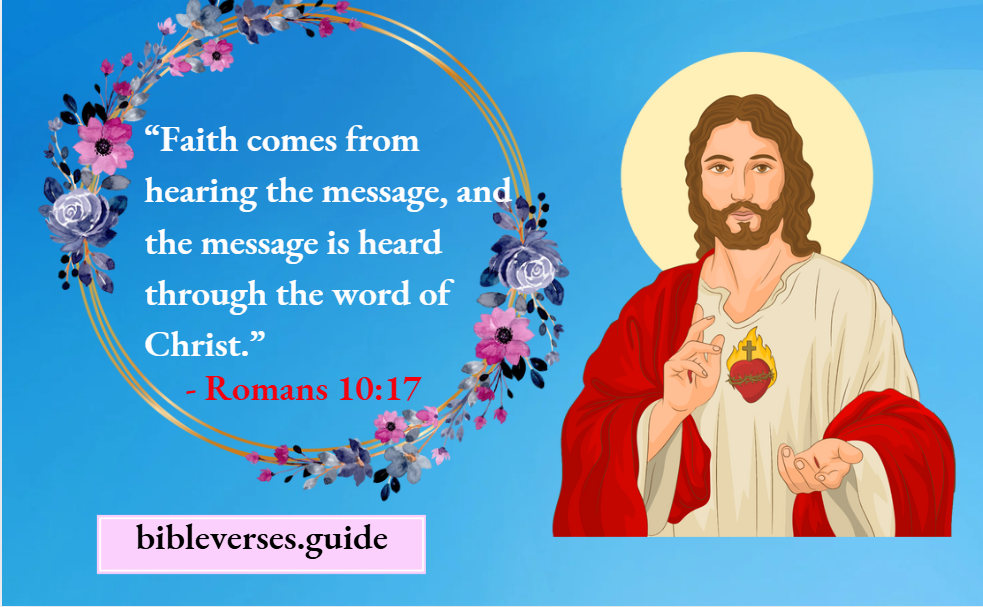
In John 14:10, Jesus declares, “The words I say to you are not just my own. Rather, it is the Father, living in me, who is doing his work.” And Hebrews 4:12 states, “The word of God is living and active. Sharper than any double-edged sword, it penetrates even to dividing soul and spirit, joints and marrow; it judges the thoughts and attitudes of the heart.”
As far as when the Bible was written, individual sections were probably written much earlier than you suggest in your question. My understanding is that the Old Testament goes back as early as the tenth century BC. Written texts were compiled from oral traditions, and spoken words transcribed into written texts continued throughout time.
The initial writings were copied and recopied through the centuries. Certainly, the earliest surviving copies were written centuries after the first copy.
The gathering and the consolidation of these copies were most likely done by Ezra in the sixth century BC. Most of the New Testament was written in the latter half of the first century AD.
The process of scriptural interpretation into languages other than the original as well as updating the understanding of the original requires hermeneutical (science of interpretation within a historical setting) and exegetical (critical analysis of the interpretation of word meanings) scholarship.
That scholarship can vary the way something is said. This is where people can get into trouble with their understanding of the Bible as the inerrant Word of God.
The problem is not with the Bible but with what people mean by inerrant. Inerrant does not mean that there are no word, story, numbering, dating errors, or thought translation errors that occur in the Bible but that it is inerrant in its self-revealing truth about God.
That is why we can read the King James Bible, the New King James, the Revised Standard Version, the New International Version, the New English, the Amplified Bible, or the Phillips New Testament translation as well as the Living Bible, the Message, and other paraphrases of the Bible, with assurance that God is being revealed as the Creator and redeeming God of love.
It is not the words, for they can come in many forms and languages, but the one behind the words who is being revealed is the inspiration of Scripture. And it is the Holy Spirit who illuminates its meaning to each of us who comes to it with an open and receptive heart.
The Bible bears witness to God, centered in Jesus Christ, as the one who created; the one who came to earth in human flesh through the action of the Holy Spirit; the one who was crucified, buried, and rose again and has promised to return. Why? Because our God loves and cares deeply about us.
He wants us to know Him. He wants us to have that affirming, continuing, deep, and personal relationship with Him now and forever as the totality of Scripture testifies.
Your friend,
Matt