
Jesus We Talk About The Knowable God
Dear Thomas,
Your nineteenth question is, “Some Christians say that they know God, that they have a personal relationship with Him. That sounds very arrogant to me. How is God knowable if the God they talk about actually created and sustains the whole universe?”
Your question is a reflection of Job 11:7-9, which says, “Can you fathom the mysteries of God? Can you probe the limits of the Almighty? They are higher than the heavens—what can you do? They are deeper than the depths of the grave—what can you know? Their measure is longer than the earth and wider than the sea.”
Is God knowable? He is only knowable to the extent that He reveals Himself in creative acts, human language, the lives of people, the movement of history, and His taking on human proportions.
He did all that through the beauty and balance of creation, through the patriarchs and prophets, and ultimately as the highest revelation, through Jesus Christ, “Emmanuel,” meaning “God with us.”
He then continued to reveal Himself through the gifts of the Holy Spirit, through the apostles and the church as witnesses, and through people individually and collectively.
In the book of Jeremiah, the Lord said, “Let not the wise man boast in his wisdom, or the strong man boast in his strength, or the rich man boast of his riches; but let him who boasts, boast about this, that he understands and knows Me, that I am the Lord, who exercises kindness, justice, and righteousness on earth. For in these, I delight” (Jer. 9:23-24). The apostle Paul says in Romans 1:20,

Nature, that awesome environment around us and within us with all its mysteries and marvels, testifies to an artist, creator, author, and architect.
How can people not recognize His handiwork when they are witnessing the beauty of a sunset or the majesty of soaring snow-capped mountains with their streams, waterfalls, giant trees, and meadows?
Then there are the intricate relationships within ecosystems, the marvelous workings of an eye, the vastly complicated balance of body chemistry, the wonders of procreation, and the unique ability of humans to love, which all testify to His handiwork.
There are also individual personal encounters to consider. You can tell by my answers to your questions that I am aware of, enjoy, and easily lay claim to a personal relationship with Jesus.
Yet I am the first to confess that my knowing of Him is very limited, flawed, and short of what is possible. My knowing is too often limited by my personal trepidations and fears about where that knowing might lead.
In this mortal body and soul (mind, emotions, and will), I, too, am caught in a level of self-centeredness that holds me back. Yet I also know there is really no reason to fear or hold back.
God loves perfectly, and as the Bible says in 1 John 4:18, “There is no fear in love. But perfect love drives out fear.” Verse 19 continues, “We love because he [God] first loved us.”
It is by God’s graciousness and love, His coming to us, and His always wooing us that we experience the privilege of knowing Him. Yet this knowledge is always filtered through our knowledge, life experiences, and worldviews.
Knowing God has always been His doing, His revealing. I am also sure that God would love to reveal Himself more, but our stubborn, often unconscious resistance holds us back from knowing Him more deeply. Would that we could all fully realize an answer to Jabez’s prayer,

We all have the choice of what we believe about God. The result of those choices will produce a variety of results. It is said that we are what we believe. And often we believe what we are looking for. Our culture, history, life experiences, and worldview give us presuppositions and prejudices that drive many of our understandings.
Additionally, many things said and written about God provide a certain vicarious knowledge about Him. Even if those things said and written are true, they are obviously still limited. The finite can’t comprehend the infinite. The temporal can’t comprehend the eternal.
A person can know about God but not know God. Big difference! To know, to have a relationship with God is crucial. Knowing about God makes Him an impersonal object, but knowing God personally takes on a faith-based, real-life communion.
It is one thing to know about God by what He has done; however, it is critical to move from the what about God to the who of God. As you know, it is this who of personal knowing, this experiential knowing, that is at the heart ofall your questions and my efforts at answering.
The experiential knowing will come as God desires our experiential knowledge of Him. He continues to search our hearts for that open door.
In His search, He seeks to reestablish the broken relationship with us. If He is to be known, He must reveal Himself, and He will, He has, and He does exactly that. “Be still, and know that I am God” (Ps. 46:10).
So how does He do it? Or a better way to say it, how does God break through to us? Let me use a personal illustration from my life to explain what it takes to know God at a personal level.
On a particular occasion, a couple (then engaged) was sitting together on our sofa. I told the young man that a lady was anxious to meet him, for she had been looking for someone just like him. I then described the lady to him.
I said that she was very pretty, had blond hair and blue eyes, and stood about five-foot-six.I added that she was bright, loved to learn, worked hard, loved cats, liked to travel, enjoyed snow-skiing and water-skiing, and so forth.
I did my best to describe as many facets of her that I could think of. That is the best that theology can do. It can tell us quite a few things about God that are important to know, but it isn’t knowing that is personal.
Then I asked the young man if he would like to meet this lady personally based on my description of her. He said that he would. What else could he say when she was sitting right next to him during the entire time of my illustration?
I told him that the only way that could happen was if he asked her for a date. Though she desired a relationship with him, he had to ask her to spend some time with him.
Without his asking for her presence, she would remain merely a beautiful young woman in the abstract. He would have no personal relationship with her, and he would have no firsthand experiential knowledge of her.
Then I instructed the young man to take the lady’s hand and hold it in his for a moment. I told him to look into her eyes and speak to her about how he felt about anything.
Then he was to ask her to respond to his thoughts. This type of interaction results in a new knowing that goes beyond descriptive knowing. It is a personal, firsthand, experiential knowing.
That is what “faith knowing” is all about, taking all the descriptive knowing and adding to it the experiential knowing that comes from a personal encounter with Jesus Christ.
It’s asking Him on a date with the soul (mind, emotions, and will). It is inviting God to come into your life and understanding His desire to do so. The apostle Paul said in his first letter to the church in Corinth,
The Spirit [Holy Spirit] searches all things, even the deep things of God. For who among men knows the thoughts of a man except the man’s spirit within him? In the same way, no one knows the thoughts of God except the Spirit of God.
We have not received the spirit of the world but the Spirit who is from God, that we may understand what God has freely given us. This is what we speak, not in words taught us by human wisdom but in words taught by the Spirit, expressing spiritual truths in spiritual words.
The man without the Spirit does not accept the things that come from the Spirit of God, for they are foolishness to him, and he cannot understand them, because they are spiritually discerned.
The spiritual man makes judgments about all things, but he himself is not subject to any man’s judgment: “For who has known the mind of the Lord that he may instruct him? But we have the mind ofChrist.” (1 Corinthians 2:10-16)
That is the promise to Christians when they accept Jesus Christ as their personal Lord and Savior. That is the promise to us when we ask God on a date when we ask God into our lives.
God is indeed revealing Himself and is thus knowable. Yet that knowing is obscured by our limitations. The apostle Paul said, “Now we see but a poor reflection as in a mirror; then [in the resurrection] we shall see face to face. Now I know in part; then I shall know fully, even as 1 am fully known” (1 Cor. 13:12). Jesus said,
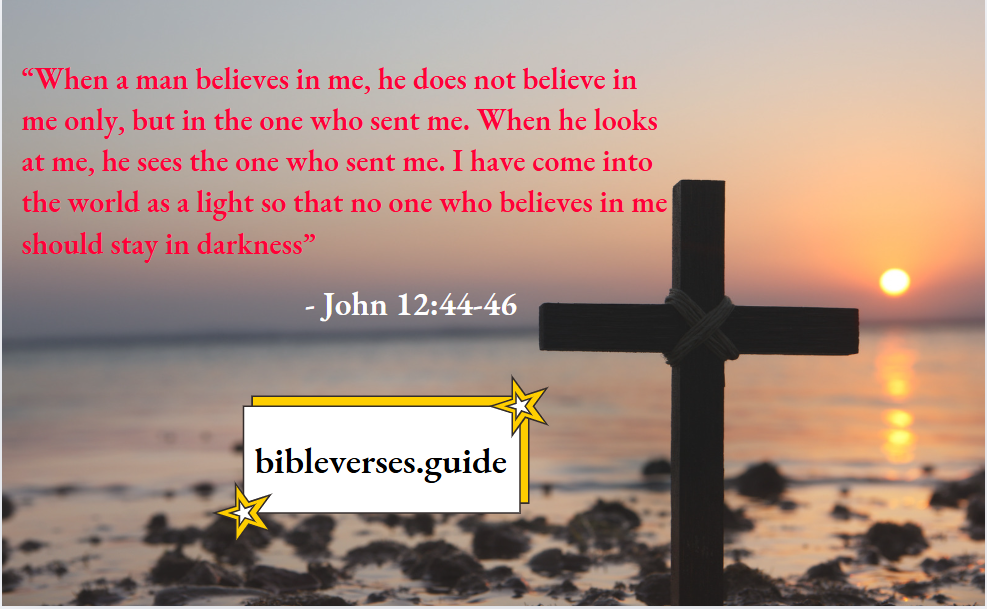
Yes, God is knowable both at the theological and the experiential level. But another part of your question seems to be concerned with how big or little the God of our knowing is. If God is God, then He is the first cause of all that is, the first cause by logical necessity.
As stated in a previous letter, if there is no cause and nothing existed before something, something could never have come into being, for out of nothing, nothing comes.
But there is something and not nothing. Thus, that something or that someone is God, the eternal being who is Creator and Sustainer ofall that is. He is the cause of all beings yet is outside of space, matter, and time. He is Spirit.
He is love, and He is immaterial, except for His revelation as expressed in Jesus Christ. Jesus’ entry into the world—His birth, life, death, and resurrection with His glorified body—let us experience on a human level His being.
Yet as Hebrews 1:3 says, “The Son [Jesus Christ] is the radiance of God’s glory and the exact representation of his being, sustaining all things by his powerful word.”
Hebrews 1:1-2 further says, “In the past, God spoke to our forefathers through the prophets at many times and in various ways, but in these last days he has spoken to us by his Son, whom he appointed heir of all things, and through whom he made the universe.”
This thought is also expressed in John 1:1-2, which says, “In the beginning was the Word, and the Word was with God, and the Word was God. He was with God in the beginning.” John further declares in John 1:14,

And Jesus’ own statement in John 14:9 declares the same, “Anyone who has seen me has seen the Father.” All these verses have been quoted before in answer to other questions. Yet they remain key to this question as well.
How big is God? He is certainly way beyond my imagination and comprehension. Yet He humbled Himself and came specifically to reveal Himself and draw all humanity back into a relationship with Him.
As incredible as it may seem, Jesus Christ is the master designer ofall time and eternity. He is the master designer ofall systems, orders, and intelligence. He is the beginning and the end of all reality.
And if God in Jesus is that big, we cannot omit His attribute of being a personal God. There can be no aspect of our relational ability that is not part of God’s relational ability, His intelligibility, and His love. Love is the centerpiece of God’s relational reality.
Yes, God is God—the awesome, unfathomable, incomprehensible, mysterious lover of mankind, even of you and me. It is my prayer that you will discover the peace and joy that come from opening your soul (mind, emotions, and will) to Him.
I pray that you will discover the experiential truth that develops into your own personal and declared relationship with Him.
Your friend,
Mat