
Jesus We Talk About Stop
Dear Thomas,
Your twenty-fourth question is, “If you don’t like being a Christian, is it easy to stop being one?”
I find this a curious question. It is like asking, “If I don’t like being loved, is it easy to walk away from it?” The truth is that there are people who actually walk away from love.
They find within themselves an inability to accept love. They are convinced from life’s damages that they are unlovable, or they may think they have done something unforgivable and are thus not worthy of love.
We all experience numerous common damages. Faced with a God who says, “I love you. I forgive you, and I accept you,” some of us respond in effect, “It can’t be so, as I know who and what I am.
This cannot be true.” But the good news is this: That is exactly what God means! He declares and proves it through Jesus Christ.
Our trouble is not that it is so but that we struggle to believe it. Certainly, we cannot believe it by our feelings or performance. We can believe it only by the evidence of a gracious and loving God acting in the history of man.
We can see the evidence in Scripture from man’s creation beginning to the end of prophetic history, and we can especially see the evidence revealed in the birth, life, death, and resurrection of Jesus Christ.
We can see the evidence within the affected lives of those who have experienced God’s love, forgiveness, and acceptance.
Being a Christian also means declaring our brokenness, and wanting to be set right each time we experience failure. It is believing in the God who forgives and heals, which is all made possible through Jesus Christ and the work of the Holy Spirit.
Your question about not being a Christian probably has more to do with identifying with a particular Christian group than with being in a relationship with this Jesus we talk about.
Being a member of any denomination or religious group has more to do with personality, theological emphasis, and form and style of worship within the body of Christ (the body of Christ being those who declare themselves active Christians coming together for worship and fellowship) than with anything else.
A person can and many do change denominational membership or form of worship but remain in the body of Christ. And for a variety of reasons some may choose not to participate in a formally labeled institutional or congregational church at all.
They may feel that the institution costs too much and is too prone to vested interests, turf protection, and one-upmanship on theological truth.
Yet these people carry their faith, and by God’s grace, they try their best to walk humbly before their God. Even though they do not declare membership in a formal body of believers, they may still be active Christians.
That’s because being a Christian is not membership in an institution but a relationship with the living God expressed in relationship with others and exercised in fellowship with other Christians through a variety of means and places of gathering.
It is also being ready and actively willing to share the good news about God’s love. Having said that, I must add that Hebrews 10:24-25 does urge us to

Thus, going it alone is not what God had in mind for our loving, encouraging, healing, and building up one another. It is very important to find and maintain Christian fellowship as we have discussed before. As to whether a person can stop being a Christian if he or she wants to, the answer is yes. God never takes away our free will.
We can choose to turn our hearts and minds away from God and walk away from Him. We can disclaim our former faith. We can grieve the Holy Spirit to the point that our hearts become so hardened that God has no choice but to let us go and give us up.
We can take the path of the pharaoh of Egypt. When faced with a decision God put before him, he hardened his heart. Pharaoh could have chosen to be like butter and melt before Israel’s God, but he chose instead to be like clay and harden his heart before Israel’s God.
God was just the heat source that would melt the butter or harden the clay. It was the same heat source, but there were different effects depending on the freewill choice of the one making the decision (see Exodus 4-13).
Christianity is not a “once saved, always saved” system of belief. We are not predestined outside our free will. We are predestined to an open door of relationship with the living God, and we are free to open that door.
However, once that door is opened and we experience the irresistible love of our triune God, we could almost say, “Once saved, always saved” by our freewill attraction to that experiential love relationship.
Whether it is easy to stop being a Christian is another question. Turning away from God’s love has all the earmarks of a person who has experienced some emotional damage, hurt, or pain or perhaps one who has an incorrect understanding of the heart and character of God.
Those experiences can harden a person’s heart so that he or she concludes, “God just isn’t there for me. Nor will He beat least not in the way I want Him to.
If God won’t meet my perceived needs, what good is He?” Sadly some people are like Pharaoh, and when confronted with the heat source of God’s wooing them to come into or stay in relationship with Him, they become like clay and harden their hearts against God.
My conviction is that once a person experiences God’s love, which is found in a personal relationship with Jesus Christ, then turning away from Him for any reason will not be free of struggle.
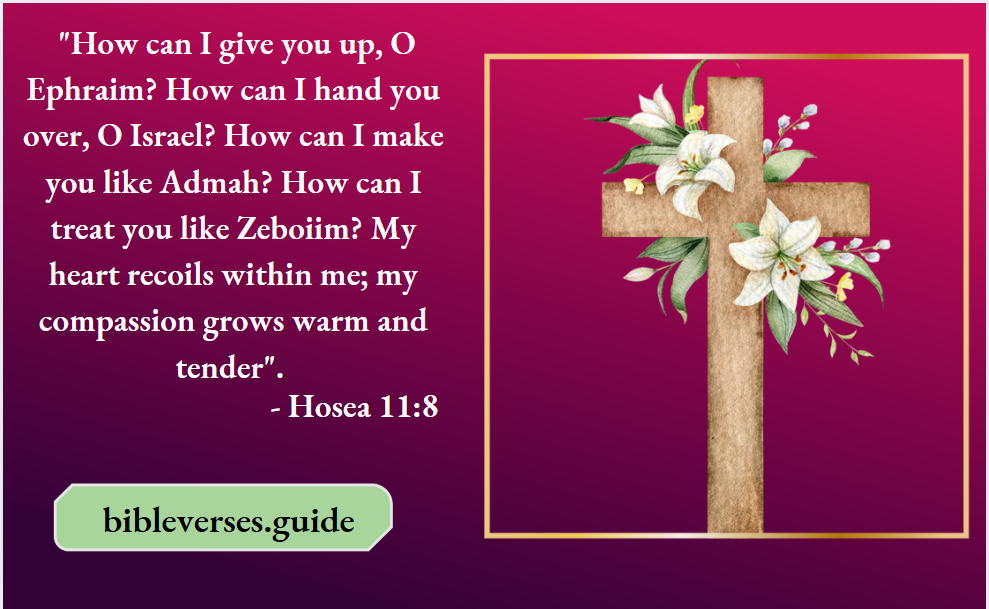
God does not want to give us up or let us go (see Hos. 11:8). It is a wise thing for us Christians to ask God to hang on to us, to never let us go, no matter how we feel, what mistakes we make, or how angry we become at circumstances in a world that cause us pain and suffering. It is important to ask God to hang on to us even when He seems absent for allowing the pain and suffering to come our way in the first place.
God is faithful in His love for us. However, in that faithfulness, God’s plans for our lives do not always seem clear or make sense. God’s ultimate end for us is to enjoy His fellowship forever. And on this side of heaven with broken bodies and souls (our minds, emotions, and will) acting within the confines of this currently broken world, very bad things sometimes happen.
God cries along with us in our hurts. Within the context of free will, He does what He can with us and those around us to help us hang on to love’s values, love’s fellowship, and love’s sense of acceptance and belonging so that we may enjoy its blessings.
When the truth about God is understood, there is just no reason to stop being a Christian, for being a Christian is living out the conviction and declaration of “I know to whom I belong” and all that can mean.
Your friend,
Matt