
Jesus We Talk About Religious Stuff
Dear Thomas,
You ask in your twenty-first question, “How far do your beliefs have to go before you can call yourself a Christian? Can you just believe in Jesus, who died for your sins, and not believe or participate in all the other religious stuff?”
First I would have to address what is meant by believing in Jesus. To believe is to take as real or true the object of the belief.It means to have faith, trust, and confidence or conviction in the object of belief.
But Jesus Christ is a person, not an object, and believing in a person who is alive, personal, and relational takes on a dynamic quality unlike believing in an object. Furthermore, believing is not just an academic exercise for our betterment or security for the hereafter.
It is easy for us humans to depersonalize others, to think of them as objects. We tend to view others through the lens of us and them.
But when it comes to relating to our Creator and Redeemer, this Jesus we talk about, we soon discover that He just doesn’t fit into an “object” status.
He doesn’t fit into any category of an impersonal, historical figure. We can, however, try to force Jesus Christ into an impersonal object.
We can study Him in an impersonal way. Many academics do just that. We can assign Jesus the role of a charismatic prophet or messiah figure living some two thousand years ago.
If that is our approach, there is an astounding shortfall in the who of the living, relating, indwelling, “in Christ” Jesus.
The real Jesus Christ does not want to be experienced as an impersonal historical figure. He wants a personal living relationship with you and me.
Thus, our belief in Jesus Christ coupled with His indwelling Spirit becomes a personal, relational, intimate who. And when there is an understanding of the who, a relationship that inspires active worship results.
This who of Jesus Christ generates an awe of wonder from His other-directed love that includes you and me. The activities of worship with our whole body and soul (mind, emotions, and will) relating in honest wonderment to this creative, redeeming, loving, three-person God— Father, Son, and Holy Spirit—are certainly not just religious stuff.
To accept and believe that Jesus Christ is who He said He was—the Son of God—sets into motion all that He said would happen to us when we believe in Him. Believing in this Who sense is dynamic, not static. Believing becomes an active, real, life-changing, ongoing friendship.
This is not just mental assent but a living relationship that affects our expressions of awe, wonder, admiration, and worship. The who, when we truly know Him, transforms into a Thou.
It is a little like Jesus’ disciple Thomas, who was not present when Jesus appeared to the other disciples after His resurrection.
Thomas couldn’t believe the report that Jesus was alive and said, “Unless I see the nail marks in his hands and put my finger where the nails were, and put my hand into his side, I will not believe it” (John 20:25).
A week later Thomas was with the other disciples when Jesus appeared among them. Jesus said to Thomas, “Put your finger here; see my hands. Reach out your hand and put it into my side.
Stop doubting and believe” (v. 27). In response, Thomas declared, “My Lord and my God!” (v. 28). Jesus answered, “Because you have seen me, you have believed; blessed are those who have not seen and yet have believed.” (v. 29).
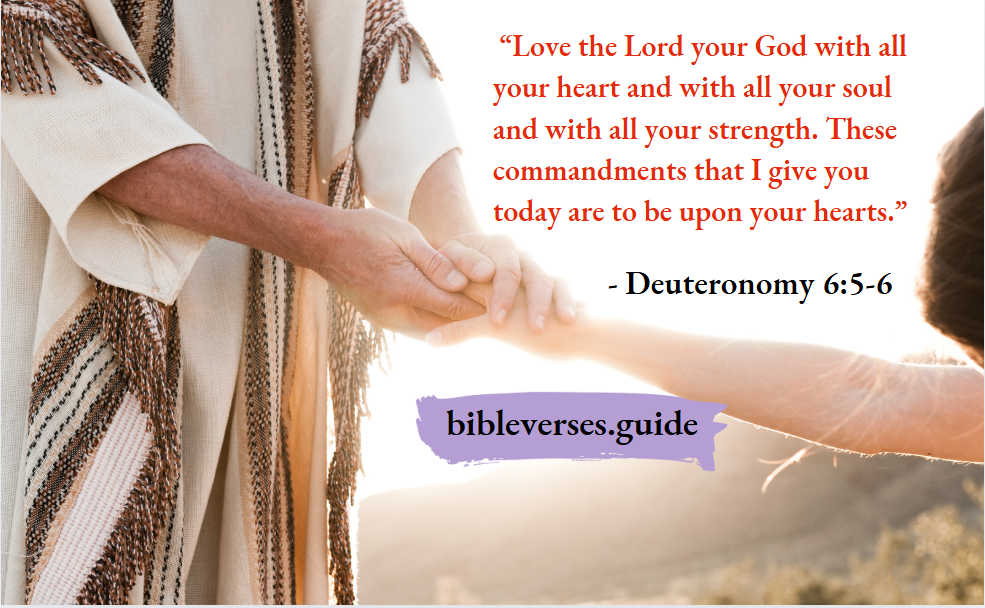
So how far do you have to go in your belief to become a Christian? May I suggest that one goes all the way to the Thou. Anything short of that risks turning Jesus Christ into an idol, a thing to be used for personal gain. As the commandment of God given to Moses and recorded in Deuteronomy 6:5-6 says,
God also said in Exodus 20 and Deuteronomy 5, “I am the Lord your God—you shall have no other gods before me. You shall not make for yourself an idol, and you shall not misuse the name of the Lord your God.”
I understand that the previous commands sound like God is giving us the order to love or suffer the consequences if we don’t.
But remember, issuing an order is not what God is doing here. He is making a declaration on how we were meant to function.
We were meant to be in a relationship with Him. We were meant to love Him as a precept or an operative norm that we have internalized, hold ready for use, and act upon.
I must add a footnote here. The stuff of religious worship, this Thou relationship, does not come from the natural inclination of what we sometimes call “the flesh” or from our natural instincts.
This Thou relationship comes from the Holy Spirit dwelling in us (see Romans 8:5- 11). Within our natural selves, physically born but spiritually dead, we can only look at the Christian life from the outside.
From the outside this Thou relationship seems ethereal, mysterious, and at times, depending on how the Christian life is expressed, foolish.
But to the one who is spiritually alive in Christ, it is neither foolish nor ethereal but very real, and yes, it is always a mystery that we could be loved that much by our Creator.
Then there is the other aspect of your question, “Do not believe or participate in all the other religious stuff.” There are probably many people we could describe as closet Christians.
They believe, pray, feel connected to Jesus Christ, and try to live their understanding of the Christian life through the prompting of the Holy Spirit in their social intercourse with their fellow man.
But for a variety of reasons they don’t participate in a formal Christian community. For me, this is the harder part of your question, how can a person experience the fullness of the Thou in isolation from a Christian community or fellowship?
How does someone express love back to God yet leave out all others He loves? Would God’s Spirit in a person act that way? Does God’s Spirit, the “in Christ” nature of the Christian life, include Christian fellowship?
I prefer not to become too harsh of a judge here. Many people with different backgrounds and personalities love and worship God.
Some of those people might be extreme introverts. Some have experienced such damage in life that relating to many people in one place at one time is very uncomfortable, even stressful for them. Christian extroverts might find this difficult to understand. Again I am referring to the extremes.
Though the apostle Paul spoke in synagogues, halls, theatres, and streets, I think Scripture indicates that Paul’s communities and the early church were rather small bodies of people meeting in homes.
Their gatherings often included a meal. Praise, worship, prayer, building up one another, lending support, learning, and equipping one another for contribution within and outside their small Christian community were probably the norm in their gatherings.
I don’t see any formal liturgy expressed. I don’t know if there was any music, but I would guess probably so. But what we see today in many churches, an hour or so of meeting time on Sunday with music, sermon, public prayer, and so forth, an often choreographed event on a stage, would probably not be recognized by those attending the early-church meetings in the first century AD.
The form of religious expression, it seems to me, can have a wide range, much of which depends on the culture, traditions, and personalities of the people involved.
The crux of the matter is that whatever the form, whatever the expression, whatever the activity, it all needs to be an outworking of the commandment Jesus expressed in Matthew 22:37-38, which says,

I think it is a true saying that love needs expression from one to another. Thus, our relationship with the Thou, this Jesus we talk about, finds its full meaning as we participate in some form of Christian community. The nature and size of that community and how it expresses itself depend on many factors.
The “stuff” you refer to may be certain elements within some Christian communities or churches that don’t fit your spiritual needs or personality.
However, the variety of expression within the community of Christian churches should enable you to find a comfortable fit. There are small home Bible study groups and Bible study groups that meet for breakfast at local restaurants.
Some people participate in these as well as in full worship experiences of gatherings in large megachurches. Others prefer small churches, others larger churches with choirs, pipe organs, guitars and drums, sermons, and everything in between.
Pray that you will find the right stuff where Christ’s indwelling Spirit creates the greatest Thou worship in your relationship with Jesus Christ, one that promotes loving relationships with others inside as well as outside the Christian community.
Your friend,
Matt