
Jesus We Talk About Prayer Chain
Dear Thomas,
In your thirteenth question, your perception was stated as follows: “Christians seem to believe in prayer for all kinds of things—getting a job, healing, staying safe on a trip, and so forth. Yet they seem to experience about the same percentage of car accidents, cancers, divorces, and other tragedies as non-Christians do.
What does prayer really accomplish?” Then in the second part of your question, you state, “A person I work with is on what she calls a ‘prayer chain.’ If one person has a problem, then all the people on this prayer chain pray about the problem. Isn’t one person’s prayer as good as a whole group of people’s prayers? Is the Christian’s God so political that He listens to a group more than to one?”
Another way you could phrase your question is this: Does prayer affect us only in the way we perceive and interpret the events surrounding our lives, or does it actually affect God’s actions and wield a real impact on our lives and the world around us? If it is the latter, is there a way to make such prayers more effective, and if it is the former, is prayer merely self-talk and psychobabble that helps steer us toward a goal?
Because of sin’s entry into the world, a separation exists between man and God that must be bridged. This reuniting with God does not come from self-effort, self-help, or self-will.
Jesus We Talk About Prayer Chain
Without that reuniting, man remains empty, and only the indwelling presence of God can fill it. That is how we were created. That is what we lost. And prayer is an integral part of that reunion.
Prayer is not just a petition. It is our connection and communication with God, the healer and restorer of our minds, emotions, and wills, which compose our very souls, as well as our physical bodies. Prayer is the realization of being alive in spirit. Prayer is the acknowledgment of our being creatures and an expression of our praise and worship of the Creator.
Prayer is talking to a friend, a trusted friend who has given us our very lives through Him giving His very life. Prayer is telling that friend of our thankfulness and adoration. Prayer is expressing our needs and offering apologies.
Prayer is asking for forgiveness and granting it to others. Prayer is seeking help from others. Prayer is a vertical relationship with the Creator of the universe just as surely as our horizontal communication is with others. It is listening to Jesus, the friend who sticks closer than a brother (Prov. 18:24).
“But,” you may ask, “what does that friend do exactly? What can we expect from God when the problems of broken people and a broken world affect everybody, Christian and non-Christian alike? What does God do about it, and how does He do it?”
Let me say first what He doesn’t do. He doesn’t let us use Him like a magic black box where we put in our requests. Then if we stroke the black box correctly, sure enough, whatever we want comes about. Some have suggested such a thing.
They insist that if we have enough faith, if we live exactly right, if we ask long enough, o rif we get enough people to ask, then presto, the magic box responds, and we get what we want. Sorry, but God is not our or mankind’s personal genie who does our bidding.
Prayer Chain Ministry Explained
God is also not a formula. Christianity is not a formula. If God’s actions could be reduced to a formula, what would that say about belief in a personal, loving God who has our eternal destiny in mind? Most often we have a short view of life and look for ease and comfort in our days on earth here and now.
God, however, looks at the long view. He looks at eternity and how we can enjoy it with Him. This life, which has been scarred and broken, is secondary to eternal life yet primary in the beginning of it. The apostle Paul said in 2 Corinthians 12:7-9.

God sometimes says no to our requests or just seems to allow this broken world or our broken bodies to take their course. Does that mean He is absent in and through that brokenness?
Absolutely not! The only time God has ever been absent was in the brokenness of the body and spirit of Jesus Christ on the cross of Calvary, where His sacrificial death afforded us our rescue, our life everlasting.
To answer your questions about prayer, we have to go back and ask another question. How does love work? God is agape love personified— unmotivated, spontaneous, self-emptying, creative love. God is personal, and He is creative. As Scripture shows, He is a God who acts in history and relates to individual people.
Mans’s comings and goings, happenings, callings, pain, suffering, struggles, responses, and redemption are not predestined. Man has free will in a world gone awry. I don’t think it is proper to suggest that we don’t change God’s mind through prayer.
Prayer is not about changing God’s mind, for God’s mind is always directed toward us in love. It would be better to say that we can never change God’s love, but we can change His actions toward us through prayer.
How To Start A Prayer Chain
We see this in Jesus’ responses to those around Him and in the many miracles He performed. And it was Jesus Himself who said, “Anyone who has seen me, has seen the Father” (John 14:9).
The purpose of prayer is to “be anxious for nothing, but in everything by prayer and supplication, with thanksgiving, let your requests be made known to God; and the peace of God, which surpasses all understanding, will guard your hearts and minds through Christ Jesus” (Phil. 4:6-7).
Jesus told us, “Ask and it will be given to you; seek and you will find; knock and the door will be opened to you. For everyone who asks receives; he who seeks finds; and to him who knocks, the door will be opened” (Matt. 7:7-8). The apostle James said.

It should be noted that what is absolutely promised in each of these verses is that we will always be heard. God will never ignore our prayers.
Secondly, the answers usually come in some form of assistance in dealing with a particular desire, problem, or need. As the Sermon on the Mount indicates, God bestows good gifts (Matt. 7:11) of righteousness, sincerity, humility, purity, and love.
He lavishes upon us the fruits of the Spirit—love, joy, peace, patience, kindness, goodness, faithfulness, gentleness, and self-control, as stated in Galatians 5:22-23. He imparts wisdom, understanding, and perseverance. He lends assistance and aid to our faith as we need it.
God is also faithful in arranging and rearranging circumstances to answer our prayers as long as it does not violate free will. He helps us answer the prayers of others by responding to Him through the prompting of the Spirit within us. And yes, at times and in accordance with His sovereign will, He enters the human experience through miracles.
God answers prayer through Scripture, through the writings of other authors, through pastors and other people, through common daily experiences, and through the still, small voice of His Spirit as we listen for His counsel and guidance. As anyone who has kept a prayer journal knows, God continually answers prayer.
Prayer is not just psychobabble where we use our mind to picture desires and wants, sending messages to our subconscious and letting the mind work like a computer search engine where it automatically steers the way to a goal, target, or solution.
However, God does use the way He created us—body, soul (mind, emotions, and will), and spirit—as a means to answer prayer. Prayer is communication with God outside of ourselves, not a way of steering our thoughts so that we are gods unto ourselves.
In all my highs and lows in life—and there have been plenty of both I have discovered the truth of what God said, “And surely I am with you always, to the very end of the age” (Matt. 28:20). Indeed, what a friend we have in Jesus!
I think the best way to explain my understanding of prayer is to share a few personal testimonies. Answers to prayer can have a profound effect on a person’s life. It certainly has on mine.
In chapter 2, 1 gave the account of one such prayer, the “prayer and fox” story that exerted an enormous and obvious effect on my life. But there have been many, many other prayers that have also deeply affected me. Let me relate just a few of them.
I recall an answer to a prayer during an extremely difficult time for my wife and me. People very close to us had broken off our relationship for a variety ofreasons.
Even though we were on our knees praying to God daily, nothing we did seemed to repair the breach. From those prayers the only answer the Lord had ever given me, though I tried all kinds of things, were His instructions.
In that still, small voice during one of these prayers, He said, “Love them.”I immediately asked in return, “How, Lord, when we don’t even see them or talk to them?” The answer quickly came back, “Love them. Be there when they need you.”I took the instruction to heart but found little opportunity to exercise it.
Time went by, and when all my efforts seemed to be in vain, I prayed to God, “Lord, I have done all I know to do. I have done the best I know how. I give up. I release them into Your hands. Please take care of them.
I don’t know how to explain it, but joy and peace came into my life. By faith, I knew that whatever path they took, God would be faithful to my prayer. I also knew that He would do it in a way that would not violate their free will.
But that was my prayer and not my wife’s. She and they had always had a very close friendship. My wife continued to feel torn by the emotional loss of the relationship.
Again after a time, I went to God in prayer. I asked, “How long, oh Lord, how long will they stay away?”I think I was asking the Lord in almost a rhetorical way, not really expecting an answer. Then just as clear as anything, just like His answer to that earlier prayer, “Love them.
Be there when they need you,” came the thought, the answer, “Eight months.” Eight months.”Eight months! What kind of number was that? Not a perfect seven, not two or six, numbers that for me seem easier for the mind to come up with. No, I had heard that still, small voice before. “Eight months.”
As the months rolled by, we didn’t hear much from them. They would leave messages from time to time on our answering machine. We would do likewise on theirs.
An Easter gathering was taking place, and we left a message that they were invited and welcome to come. To our surprise, they left a message saying that they would be there.
At that gathering, they confessed that they missed our former relationship and wanted to be in the relationship again. And yes, it had been eight months!
Another way God answers our prayers is through the actions of other people as they are open to His promptings. For example, my wife and I led a small evening Bible study in our home for a number of years.
Because of numerous circumstances, however, it eventually disbanded, and we were no longer involved in any small groups. Knowing the spiritual value of a small group, we prayed that God would show us where to get involved or how to start a new group.
Only a couple of weeks later some friends asked if we could get together and study the Bible.I mentioned this to others and shared our topic of study. Some remarked that they were looking for something like that. So another group formed, and our prayers were answered.
Biblical Basis For Prayer Chains
I remember another time when God answered a prayer that involved my business. My company was doing well, and we had an opportunity to make some investments that would create the potential for future financial rewards as well as mitigate current annual income taxes.
After a few years, however, the government ruled that the tax savings from our investments were not applicable unless we were truly at risk. Thus, they determined that I owed a significant amount in back taxes plus penalties and interest.
About that time the savings and loan crisis was in full swing, and my business was not doing well. Lenders were in no mood to lend significant amounts of money to my type of business.
The amount I owed in taxes far exceeded my ability to pay at that time. Like most people, whenever financial disasters, emergencies, predicaments, entanglements, crises, or needs arise, I am quick to go to the Lord in prayer, and this time was no exception.
After time and expense, I managed to achieve a dated settlement with the government, but it was still in excess of my current ability to pay. I did have a piece of real estate that I had subdivided into residential lots a few years earlier, and I put them up for sale; however, it was a bad time for sales of any kind. Even when I marketed the lots below their current appraised value, I still received no interest in them. There just seemed nowhere to turn.
As the time for the payment drew ever closer, the consequences of not meeting the obligation loomed large. Failure to make payment would mean losing my home, the attachment of bank accounts, and the ruin of the excellent credit it had taken years to build.
With much prayer and faith that God would give us the means or strength to see this thing through, my wife and I waited with anticipation and, I have to admit, some trepidation.
So many times in life I have been like the father who asked Jesus to heal his son as told in Mark 9:17-24, “I do believe; help me overcome my unbelief.” This was one of those times.
About a month before the payment was due, we had a cash offer on all the lots in my little subdivision. The offer was nearly equal to what we owed, but it was significantly lower than what the individual lots were worth.
Needless to say, we took the offer, closed on the property, made the agreed payment to the IRS and state, and continually gave thanks and praises to the Lord.
In the not-too-distant past, I had an unexpected answer to prayer. I was praying as I usually do on my morning walk with our dog. Im ashamed to say that too many of my prayers have been dominated by fret, stress, and worry over business conditions, and that day the issue was a debt I had created.
I had purchased parcels of land through bank financing prior to the height of the housing bubble. I purchased the land for less than the market value, but of course, I had no idea what was coming a couple of years down the road.
When the real estate market crashed, the value of the land dropped nearly 70 percent. I was now terribly upside down on the debt, and the loans on the land were coming due.
As I said, too many of my prayers became dominated by this debt issue. As I was praying on my walk, fussing and murmuring about not knowing how to extract myself from this situation, the Lord, as He had done so many times before, spoke.
But this time He spoke not just in a whisper, not just in a still, small voice, but rather loudly. He said, “Matt, Matt, I’m working on it!” Just like in my “prayer and fox” experience, I knew God had spoken to me.
When I have had such experiences in my life, I have always found it very important to have them verified by other means. I want to make sure that any perceived answer to prayer is not the enemy’s voice or the product of my own wishful thinking.
I have discovered that God always gives us an objective validation of what could be considered a subjective experience. That objective validation can come from an event like my “prayer and fox” story or through Scripture, a pastor, a Christian friend, or some other source.
A couple of weeks later I attended a prayer conference. During one of the talks, the presenter used an illustration from Scripture that immediately confirmed my experience. The speaker referenced four times from Scripture when God had used the name of the person He was addressing twice in order to capture the individual’s immediate attention.
For example, when He spoke to Saul on the Damascus road, He said, “Saul, Saul” (Acts 9:4). At the burning bush He said, “Moses, Moses” (Lx. 3:4), and just as Abraham was about to slay Isaac, God said, “Abraham, Abraham” (Gen:11). He said, “Martha, Martha” (Luke 10:41) when she thought herself overburdened with work.
I had never heard anyone make this point from Scripture, and since God had addressed me, “Matt, Matt,” this was my objective validation that God had indeed told me to stop murmuring and to have trust and faith in Him.
So many times when God answers prayer, He doesn’t let us in on the future. He simply asks us to have faith and trust in His work. Concerning financial matters, I have learned that I need to maintain the posture that I do not own anything, regardless of my name on a title deed.
I am only a steward of what God has blessed me with. I need to have a heart that is willing to surrender all to God and then let Him work on it however He sees fit. In the end, it comes back to the old but important saying of trust and obeys.
To make a long story short and without going into all the particulars, let me say that I no longer have any land debt. It was truly an answer to prayer.
Still, another way God answers prayer is through the books and writings of other people. During another time of great stress, I prayed daily for courage, strength, and wisdom. Someone at church knew the pressure I was under and gave me a little devotional book titled God Calling by A. J. Russell.
I could never communicate just how meaningful this little book was to me and continues to be. It features daily messages that always seem to fit the issues of the day, and as I read this gem, it was as if God was speaking directly to me on those pages.
I have had many other books that have similarly guided, counseled, and helped me in my own temporal struggles and spiritual growth. Within their pages, I have found expressions of praise, experiences of worship, and profound truths of man’s relationship with his Creator that often became answers to my prayers.
Scripture is another way that God answers prayer. Through the characters of the Bible, I have many times discovered directly and vicariously how God wants me to relate to Him, others, and myself.
I have discovered the kind of attitude He wants me to have concerning issues and circumstances and the kind of character He wants to develop in me. I think of James 1:2-8, which has continually been instructive in confused or hard times in my life.
Consider it pure joy, my brothers, whenever you face trials of many kinds, because you know that the testing of your faith develops perseverance. Perseverance must finish its work so that you may be mature and complete, not lacking anything.
If any of you lacks wisdom, he should ask God, who gives generously to all without finding fault, and it will be given to him. But when he asks, he must believe and not doubt, because he who doubts is like a wave of the sea, blown and tossed by the wind. That man should not think he will receive anything from the Lord; he is a double-minded man, unstable in all he does.
The truth about God and Jesus Christ is primarily revealed through Scripture. Countless times when I have made a request in prayer, a Bible text will come to my mind that answers me or leads me to an answer.
When I have failed God and myself, texts like these come to mind: “If we confess our sins, he is faithful and just and will forgive us our sins and purify us from all unrighteousness” (1 John 1:9).
How To Start A Prayer Chain
“Now there is no condemnation for those who are in Christ Jesus” (Rom. 8:1). “Take every thought captive” (2 Cor. 10:5). “Think on these things” (Phil. 4:8). “Create in me a clean heart and renew a right spirit in me” (Ps. 51:10).
Prayer is not just about praying for ourselves. Talking to God about our concerns for others is another important aspect of prayer, and God is as active in answering our prayers for others as He is in answering our personal prayers.
One way He answered those prayers became very apparent to me during that summer camp experience where the “prayer and fox” story took place.
At the close of the campfire meeting one evening, I took all my boys back to the cabin. We discussed the evening’s campfire talk a bit, and then I got everybody settled in their bunks.
I said that if any of them wanted to pray, they should go ahead and do so, after which I would close. A few boys prayed, but most did not. I began my closing prayer.
As much as I knew about each boy, I prayed for each individually by name. All were still awake while I prayed, all except for one boy, whom I will call Johnny.
No, I don’t always keep my eyes closed when I talk to my friend Jesus. With a cabin full of eight energetic boys, however, I had learned that I sometimes needed to use looks and hand gestures to keep order even while I was praying.
As 1 prayed that night, 1 noticed that Johnny, his head back and mouth slightly open, was in a deep sleep and did not hear his name or a word of the prayer that I had prayed for him.
After I finished praying for each boy, it was time to be quiet and go to sleep. A few boys said that they wanted to go to the bathroom first. With the commotion of boys jumping out of bunks and talking, Johnny woke up. He said to me, “Did we finish praying?”
I answered, “Yes, some of the guys just wanted to go to the bathroom.” Johnny then said to me, “I wanted to pray, but I fell asleep.” I told everyone in the cabin to hold up a moment before they left. I said, “Johnny wants to pray, so let’s be quiet for a moment.”
Johnny began his prayer, and to my astonishment, his prayer was almost exactly the same as the one I had prayed for him—word for word! The Holy Spirit working through me had ministered to him even while he was asleep.
Our prayers for others are heard, and God is just as faithful in answering them as in answering our prayers for ourselves. Through the Holy Spirit, we are connected to one another in ways few of us realize.
There are all types of prayers and different manifestations of praying. Speaking in tongues is one of those manifestations that can be very uncomfortable to someone who does not have that gift or is not used to being around those who do.
In 1 Corinthians 12, the apostle Paul gives some specific instructions to those who experience this manifestation of the Holy Spirit praying in and through them.
So what is speaking in tongues? Romans 8:26 explains it this way: “In the same way, the Spirit helps us in our weakness. We do not know what we ought to pray for, but the Spirit himself intercedes for us with groans that words cannot express.”
The Holy Spirit allowed me to experience this gift once. After I read about being baptized in the Holy Spirit, I retreated to a quiet place of prayer and asked God about this manifestation.
I had many times enjoyed His still, small voice and other means of answers to prayer, and I truly didn’t know if He wanted me to experience this manifestation and validation of His indwelling Spirit. I was willing for Him To Say Either yes or no. I had no particular expectations.
I lifted my head while I was kneeling and waited a moment. Then I began to sing in melodious tones with words that I did not understand. I felt a warmth, a peace, and a sense of His presence.
It was for me a personal validation of the “Christ in me,” an affirmation that Jesus Christ through the Holy Spirit dwelt within my being. “If you love me, you will obey what 1 command.
And I will ask the Father, and he will give you another Counselor to be with you forever—the Spirit of truth. The world cannot accept him, because it neither sees him nor knows him. But you know him, for he lives with you and will be in you” (John 14:15-17).
The interesting thing about my experience of singing in the Spirit is that anyone who knows me knows that I do not sing. I can’t carry a tune. I really don’t even like to sing. I listen to and love music, but I don’t make music. I don’t even make a good or joyful noise.
When songs are sung at church, I usually just look at the words. I don’t mind listening to others sing though. It is so much like God to give people an experience that they would never come up with of their own making, and that is exactly what He did for me. This was no psychobabble, no subconscious experience.
If you still need to ask about the purpose and value of prayer, I can only say that it opens the door of communication with God through Jesus Christ through the activity of the Holy Spirit.
In Jesus’ name, because of His birth, life, death, and resurrection, we have direct access to God. We are invited to address Him as “Abba, Father,” a personal, intimate address.
And is His communication back to us real? Absolutely! He is a God who loves us and acts upon our requests. Does He always give us the answer we want? Of course not, no more than we would give our children everything they perceived they wanted.
He also doesn’t give us a fish when He can teach us how to fish. It is in the how that God does most of the answering. He usually wants us to learn something, and in that process He wants us to acquire character traits, things like love, patience, purity, fidelity, sincerity, humility, gentleness, kindness, goodness, self-control, and forgiveness.
It is never God’s desire that we live in pain and suffering. Yet this side of heaven, because we live with broken people in a broken world, pain and suffering persist. Even the Son of God, Jesus Christ, suffered unto death on the cross at the hands of an unjust world.
But God, through all our highs and lows, pain and suffering, instructs us to “rejoice always, pray constantly, give thanks in [not for] all circumstances; for this is the will of God in Christ Jesus for you” (1 Thess. 5:16).
Is God political in that He listens to a group of prayers more than He listens to one? Absolutely not! However, I do think it is important to understand God’s original plan for mankind as it relates to this issue.
When God created Adam and Eve, He gave them and their descendants dominion over the entire earth and all creation. As Genesis 1:26-28 says,
Then God said, “Let us make man in our image, in our likeness, and let them rule over the fish of the sea and the birds of the air, over the livestock, over all the earth, and over all the creatures that move along the ground.”
So God created man in his own image, in the image of God he created him; male and female he created them. God blessed them and said to them, “Be fruitful and increase in number; fill the earth and subdue it. Rule over the fish of the sea and the birds of the air and over every living creature that moves on the ground.”
When God created the earth, He didn’t surrender its ultimate destiny. However, He did give man free will and stewardship over it. In the beginning, mankind could keep the earth as an Eden paradise or choose to mess it up. How mankind managed this stewardship was up to him. History shows we haven’t done all that well.
But thank God for His rescue plan through Jesus Christ, who became part of our humanity and did for us what we could not do for ourselves. Jesus provided an open door so that we could find our heavenly Father seeking us.
What a fantastic commitment God has made to leave so much to us humans! He works through human beings in helping all to find their way into a relationship with Him. Even though the earth will in the end become new again, until that time God continues to work through human beings.
Having the resources of many focused on a particular issue or problem opens up many possibilities for God’s work. But the impact of the many does not diminish the authority and power of the one.
Biblical Basis For Prayer Chains
Think of the possibilities when five, ten, fifty, or a hundred people are praying over an issue or concern that is rooted in love. As God works through human beings, He arranges and rearranges circumstances through the pathways that the many in a prayer chain offer, which may not be present with the prayer of just one.
In an earlier question, I talked about the consequences of violating gravity. God has governing principles in place, and when we violate them, we reap certain consequences. We live in a world that continually violates them, and Christians and non-Christians alike see and feel the results.
Why God sometimes overrides the consequences of those broken principles and other times lets the consequences exact their toll, I do not know. Prayers for safety are sometimes followed by accidents and prayers for health by illness and death.
Prayers to ward off hunger or financial ruin are sometimes followed by starvation and economic disaster. Then there are the prayers for a healed relationship or another’s salvation that are followed by no response.
We want answers immediately; however, sometimes answers seem very slow in coming, and sometimes there is no answer at all. Most often we are not very patient. God’s timing, however, doesn’t necessarily match our timing. Our motives and purposes don’t necessarily match His.
As your question suggests, one of the biggest stumbling blocks for Christians and non-Christians alike is the fact that they see Christians experiencing about the same number of divorces, serious illnesses, accidents, and other ills of this broken world as non-Christians.
Shouldn’t the Christian’s faith in the God he or she prays to in Jesus’ name make a difference? So many Christians petition God, “Please fix the problem of ” Just fill in the blank with a pressing need.
Prayer Chain Ministry Explained
They may pray for healing within a relationship or for physical healing, yet the fracture in the relationship or the illness continues. It is certainly an issue that I have struggled with at times. Unfortunately, it is also one over which many have lost their faith.
Why is God so active in the lives of some and so silent in the lives of others? Or to bring it closer, why does God actively answer our prayers sometimes and remain so silent at other times? We can look in the Bible and see that this was Job’s problem as well.
Job didn’t understand it either. And just as Job discovered when God answered him (see Job 38:1-40:2), we, too, discover that it isn’t all that satisfying when God does answer us by putting us in our place.
We discover the truth of Isaiah 55:8, which says, “‘For my thoughts are not your thoughts, neither are your ways my ways,’ declares the Lord.”
God’s thoughts and ways are unfathomable to us because of the very nature of how He created us. We were created with the ability to love. Love, if it is such, must be freely given; it cannot be programmed into us or come by way of coercion.
Thus, we have an immeasurable number of people all exercising their free will as they interact with one another. The complexities of all these free-will decisions are beyond our comprehension. We remain ignorant of their effects on the course of history on a grand scale and on our individual lives at any given time.
Scripture tells us of God’s ultimate desire, activity, and purpose. That purpose is to complete His rescue of mankind, to bring this broken world to a conclusion, and to create all things new.
In that process is the irrevocable freedom to love or not to love. That irrevocability has the potential of creating unloving people with all its destructive effects.
God’s power lies within His ability to work in and through an incalculable number of variables. Yet even God can be temporarily thwarted by the freedom He has given us.
Certainly, God has the power to break through all the variables and act in ways we identify as miracles. When, why, and why not are beyond our capacity to know.
Much must be left to the statement in Isaiah 55:8 just mentioned a few paragraphs ago. Remember, “‘For my thoughts are not your thoughts, neither are your ways my ways,’ declares the Lord.”
So what is the answer? What would account for God’s action or inaction when it comes to our prayers? For me, I think the answer lies in understanding what God really wants for us. Note that I said “for us” and not “from us.”
God wants us to mature in our trust in His love and sovereignty over the eternal destiny of our lives. He wants to save us and heal us from the sin problem that surrounds us and has made its home within us.
I am reminded of the truth of Romans 8:28-29, which says, “And we know that in all things God works for the good of those who love him, who have been called according to his purpose.
For those God foreknew (would accept His rescue gift) He also predestined (or predetermined) to be conformed to the likeness of His son.”
Please remember that God’s highest purpose is bringing us to the kingdom of God, the eternal salvation for each one of us, not that we enjoy the ease and comfort within this broken world. However, to the extent possible, He wants many aspects of the kingdom of God to be experienced even now.
I remember an illustrated joke I read in the Sunday newspaper as a teenager. It showed a boy kneeling by his bed, saying his prayers, and asking God for a list of things he wanted God to do for him.
Down through the ceiling came the booming response from God, “Get up, you clod, and do it yourself.” That joke has always bothered me.
When should I buck up and manage my own affairs, and when should I give up and hand issues over to God? Can I say, “God, help me to lose weight,” and then eat poorly and refuse to exercise? Can I say, “God, help me overcome this health problem,” and then ignore the remedies available?
Can I ask God to save the value of my home when the real estate market collapses? Can I ask God to save the value of my retirement account as the markets crash? In many of the issues of life we have choices to make, and I find that God doesn’t usually override our choices even when we ask Him.
But how should we respond to God when circumstances and solutions are beyond any choice we can make? I think we have to go back to Job. God allowed Job’s possessions to be eliminated, a true financial disaster.
But Job managed to make it through, still maintaining his trust in God. Then Job was touched and it physically hurt in his body. But even there Job maintained his trust in God, saying.
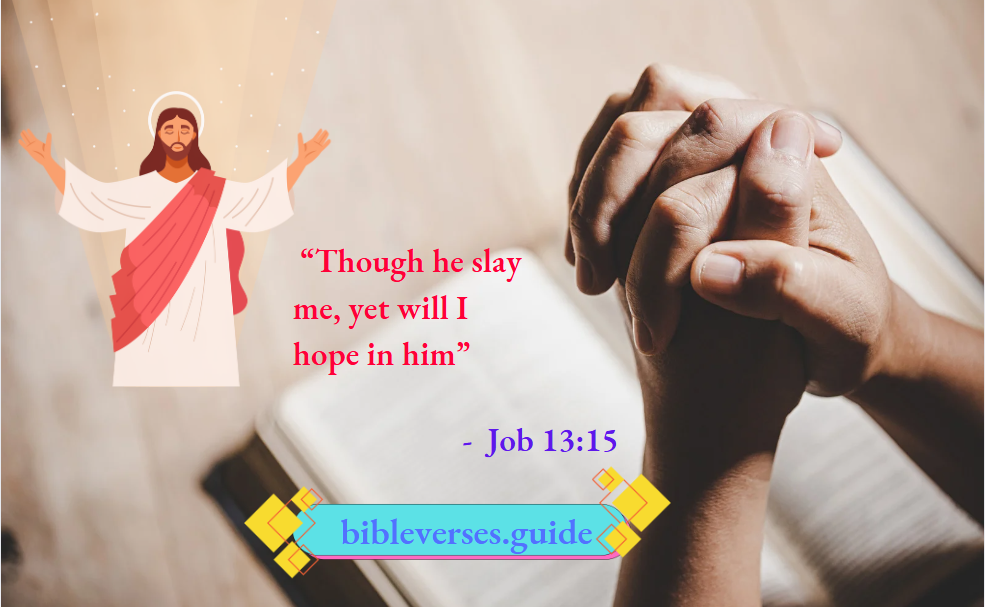
Then Job was bombarded with suggested reasons for guilt, his friends imploring him to confess his wrongs, for those kinds of calamities only befall the guilty, they thought.
In the end, Job knew that he stood justified before his Lord and maintained his hold on God as wants even now. as trustworthy and loving.
Could this be what answered and unanswered prayers are about, that a trustworthy and loving God wants us to mature in our relationship with Him just like Jesus Christ did?
Jesus said in Matthew 26:39, “My Father if it is possible, may this cup be taken from me. Yet not as I will, but as you will.” Romans 8:29 says we are “to be conformed to the likeness of his Son.” Jesus’ life was not one filled with ease and comfort as the world measures ease and comfort.
But it was filled with inner peace and joy, a sense of purpose and mission, and yes, disappointment in others. It wasn’t until He took on our guilt and exchanged His life for ours as He approached the cross and His untimely death that He experienced separation from His Father.
I don’t think we can blame God for what goes wrong in this world. Think of what He has already done to redeem this “gone wrong” world. We gain little and lose much if we try to blame God. Rather, through all the wrongs and all the pain, we need to remember what Jesus said in Matthew 28:20.

In other words, we are never alone in our pain and suffering, and we can assist others in that understanding. God’s promise is that we don’t have to go it alone, regardless of the problems or tragedies that invade our lives.
Jesus We Talk About Prayer Chain
Someday when the earth is created anew, we will understand the why of God’s action or seeming inaction. And maybe it is not the why at all. Perhaps we should ask, “ To what end?” When we sum it all up, what God wants is for us to be with Him now and throughout eternity.
What God wants for us in this life is to learn to trust him and love Him as well as love others as we love ourselves (which is impossible except for His working in and through us). He is the Creator, potter, Master, and friend.
In prayer we enjoy Him. He is unseen but heard in all kinds of ways. To commune with Him in prayer is indeed, as speaking with a friend, a rewarding privilege that has no end.
Your friend,
Matt