
Jesus We Talk About Nonissue Or Spin?
Dear Thomas,
Your next question is a good one. You asked, “It seems that Christianity rests on the idea that Jesus rose from the dead. If that is true, why did only His closest followers record the event and preach it? Why didn’t historians and government officials of the time document it as well?”
Ancient scribes and historians did not often record the mistakes of their rulers and kings. I understand that Egyptologists find no battles lost in Egyptian hieroglyphics.
Warriors are lost but not battles. After all, who wants to record their mistakes or defeats, especially if you are a pharaoh god-king? How can a god lose?
However, from the evidence recorded in the Old Testament, Judaism was one of the few civilizations that did record its lost battles and in many cases, the why.
Even in the modern age, we have seen cover-ups by national leaders in order to avoid the condemnation of peers and history. The Soviet Union and China both rewrote their histories during times of political shifting.
American authors reporting on historical events of our country’s past have put their own spin on certain facts. This tendency to interject bias into the reporting of history was certainly true of the Roman leaders and the Jewish priesthood in Jerusalem at the time of Jesus’ death and resurrection.
The Romans had no reason to promote a Jewish messiah-king. In fact, they had many reasons to make sure that reporters of the day put a distinctive Roman spin on what happened that eventful Sunday morning.
Spin is about preserving power and control, and the Roman leadership was not about surrendering power and control to an event that they could easily spin into something unbelievable.
Likewise, the Jewish priesthood had everything to lose if there was no cover-up about the resurrection of Jesus. They were the ones who had Him arrested, saw Him go to trial, and called for His execution. They knew very well that resurrection from the dead would require an action beyond all human power.
If they acknowledged that Jesus had indeed been raised from the dead as He had declared would happen by divine power, then everything else He had said would also be validated. That was not an option for the Jewish priesthood.
So what might be the spin concerning the idea of a resurrected Jesus? If we were to try to eliminate the idea that it really happened, we might have a few options on how to explain the event.
We could say that Jesus did not fully die. There have been people who were thought to be dead but in fact were not and later revived.
It would certainly provide a convenient spin to claim that Jesus was merely resuscitated after a time in the tomb. But the theory of resuscitation and His appearance to numerous disciples don’t seem to fit the record.
Without divine intervention, how could a weak, near-dead Jesus (or His friends) roll away the stone sealing the tomb, I might add, that was carefully guarded? Furthermore, when Jesus appeared to the women that Sunday morning outside the tomb and when He appeared to the two travelers on the road to Emmaus (see Luke 24:13—32), He certainly did not appear weak.
The same can be said when He talked with Peter in Jerusalem or with the eleven disciples in the upper room. That is a lot of activity for someone who was physically tortured to the point that He couldn’t even carry His cross to the crucifixion site.
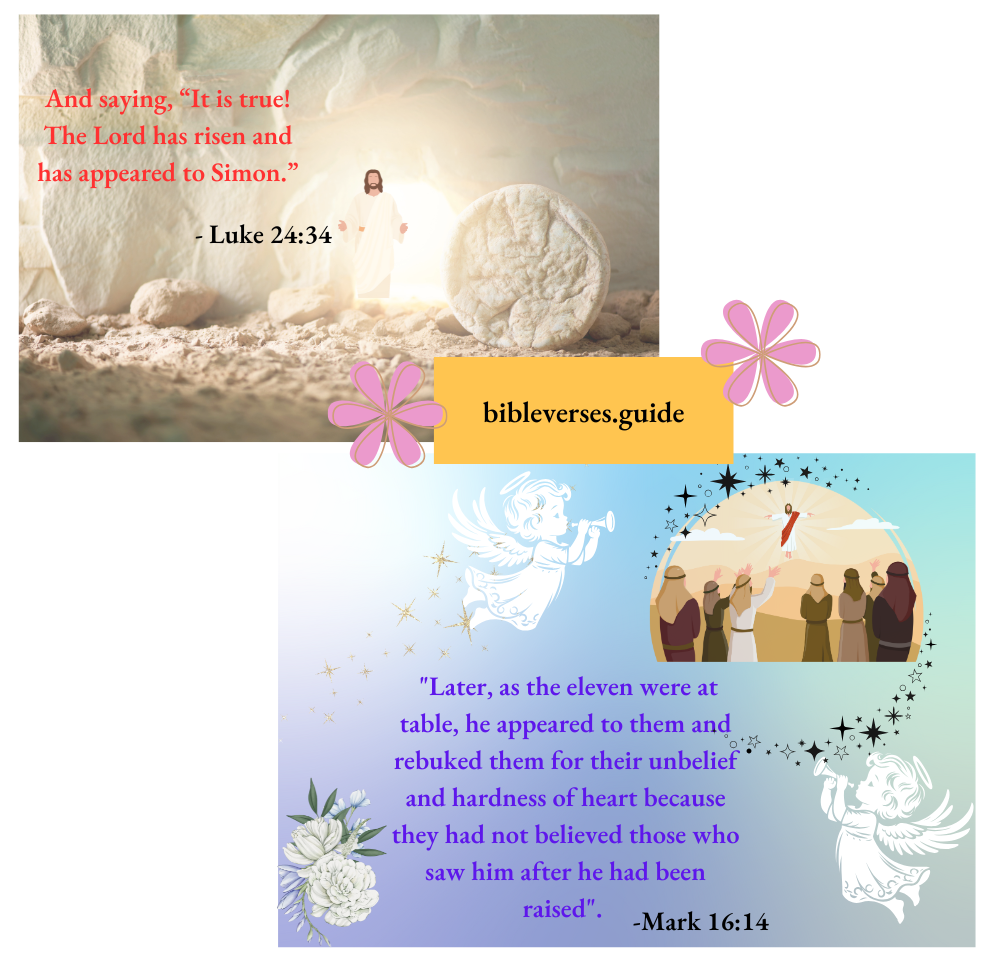
Then on top of that, He was hanged on the cross by nails driven through His wrists and heels. If He could survive all that and be no worse for it, that would truly be some resuscitation!
Did Jesus actually die? Roman crucifixion wasn’t a partial or maybe death it was a certain death. The person being crucified wasn’t removed from his cross until death was assured.
That is why the soldiers broke the legs of the two criminals on either side of Jesus—to hasten their death so that they could get the job done before the Jewish Sabbath began. After their legs were broken, the criminals could no longer push themselves up in an effort to breathe. Thus, death was hastened by suffocation.
When the soldiers approached Jesus, He appeared already dead to them, so they pierced His side with a spear (see John 19:34). Because He had no reflex or blood pressure, only residual blood and body fluid flowed from the wound, further confirming His death, the Roman executioners determined that Jesus was indeed dead.
If it had truly been a matter of resuscitation, Jesus would have remained on the earth for some time until He died from natural or unnatural causes. But it did not happen that way with Jesus. After He rose from the grave, He chose to whom He would appear and when He would take His leave from this planet.
Some question why Jesus didn’t just go with His disciples or a group of witnesses to Pilate, Caiaphas, the full body of the Sanhedrin, or Herod and show them proof positive the resurrected Son of the living God.
Why didn’t He explain to them the meaning of it all, as He did to the two travelers on the road to Emmaus (see Luke 24:13)? Wouldn’t that have settled it once and for all? But that is not what Jesus did.
Once again He chose to whom He would appear, and He chose when He would take his leave. Forty days later He ascended to His Father from the Mount of Olives outside the city of Jerusalem.
Why did He do it that way? I have a suspicion that God always leaves the door open to doubt. He always allows us the power to choose, the power to exercise free will, and the power to decide freely whether we will walk in faith or doubt.
If the evidence is so strong and so overwhelming that the power of choice is taken away, then the process of redemption and liberation changes to the process of coercion and intimidation. That is not the way love acts. The evidence is there, but it is not so overwhelming that a spin can’t be invented.
As history looks back on the events of Jesus’ death and resurrection, are there any other possibilities for discounting the resurrection? Could it have been a conspiracy promoted by His followers, the spin of those who had vested interests in keeping the movement alive?
Could they have wondered if their time spent with their Lord and Savior was for naught and thus created a story to fit their agenda? I think it would be quite difficult to make this kind of spin stick.
All that the opponents had to do was to open the tomb and produce the body. Yet they couldn’t because the tomb was empty. That is the rub for all the detractors of the resurrection—the tomb was empty!
True, people could say that the body had been stolen. But Roman guards weren’t prone to sleeping on the job. Even if they had dozed off, the commotion of someone rolling back the stone would have brought them to attention.
And if the disciples did steal Jesus’ body, it would be most unlikely that they would collectively live out their lives the way they did and die as martyrs on behalf of a lie. You could conjecture that it wasn’t His disciples, who stole the body, but some of His other followers who never told the disciples what they had done.
But then what about the rest of the story—the appearances, the changed lives of the disciples? That spin falls flat when the birth, life, death, resurrection, and ascension of Jesus are all taken together in the context of a God who came to redeem the world.
Through the eyewitness accounts of the risen Christ, the good news of the Christian faith soon developed. The record of the events was written when the knowledge of the events was still current, real, and personal.
To those who lived it, the events were like Pearl Harbor, the Kennedy assassination, or 9 or 11. Those who are witnesses to such events don’t ever forget them any more than I could forget my “prayer and fox” story of chapter 2 now some fifty-plus years ago.
Another possible conjecture is that the disciples were hallucinating when it came to seeing Jesus after His death. Could their desire to believe that He was raised from the dead —as He had said would happen—have been so overwhelming that they broke with reality?
Had they wanted it so badly that they—and a whole bunch of them—imagined it to be so? The problem with this theory is that hallucinations apply to individuals, not to groups of people.
A multitude of people claiming to have spoken to, eaten with, and touched the subject of their hallucination doesn’t fit any normal definition of hallucination.
Could it be that the whole resurrection thing is just a myth, a good story that is spiritually or symbolically true but not historically true? Could it be a good folktale told by Jesus’ followers to add credibility and meaning to His ministry?
You might get away with the myth idea if the history of Christianity hadn’t begun so soon. The resurrection was affecting lives; eyewitnesses were still alive, and the idea that the resurrection was only spiritually or symbolically true could not stand against the reality of what had actually happened.
Myths and legends take time to develop, and there was just too much immediacy of the resurrection for it to have been a mythological event.
The spread of early Christianity happened quickly, beginning on the day of Pentecost with the conversion of three thousand people from many cultures and languages (see Acts 2).
Some might ask why the writers of history waited so long to record the events of Jesus’ life. To answer that, we need to take a look at Jesus’ ascension into heaven, which was recorded in.

The witnesses to the ascension expected Jesus to return very soon and probably did not think it necessary to make a permanent record of the events of His life. In fact, early Christians under stress and persecution would often say to each other with hope and desire, “Maranatha,” which means, “Come, Lord.”
In the first century, this great and continued anticipation of Jesus’ return removed some of the urgency of recording the events of His life, death, and resurrection. Thus, many years passed before the record of Jesus’ doings and sayings was written down.
Yes, the resurrection did happen in real time and in real history. There was indeed an empty tomb, and Jesus’ enemies and detractors could not produce a corpse. All that the detracting powers could do was to push forward the idea of a cover-up, as reported in

When the chief priests had met with the elders and devised a plan, they gave the soldiers a large sum of money, telling them, “You are to say, ‘His disciples came during the night and stole him away while we were asleep.’
If this report gets to the governor, we will satisfy him and keep you out of trouble.” So the soldiers took the money and did as they were instructed. And this story has been widely circulated among the Jews to this very day.
I suspect that if the facts of the resurrection could be played out in a court of law in the first century, the verdict would surely come in, “Jesus is alive! After His death on the cross, Jesus was raised in three days!” Of course, I am assuming the presence of a fair and impartial jury.
I would expect all the evidence to be presented, including all the eyewitness accounts. The trial would consist of both factual and circumstantial evidence, both positive and negative with many expert witnesses brought in to testify at such a trial. And it would use all the current critical analysis in the defense of the arguments surrounding the event.
But the truth is that this trial has been going on ever since the actual event took place. The trial goes on within the life of each person who listens to the record of the events. If the resurrection is true (which it is), it wields an enormous impact on your life and all of human life.
The birth, life, death, resurrection, and ascension of Jesus Christ as well as what it means to the redemptive process of each of us is a thing of wonder now and will be throughout the eternal ages. We may never, I dare say, comprehend the extent of God’s love. At best, all we can do is enjoy the realization that

To disbelieve in the resurrection of Jesus Christ, we must deliberately make an exception to the way we make judgments of all the other events in history. Why would anyone want to do that? This goes back to the thoughts expressed in Chapter 3 about why Jesus’ death was so significant in world history.
Again, it might be conceivable to accuse one or two people of hallucinating about an event, but the idea loses its credibility when we extend the conjecture to hundreds of people who have the same hallucination and even give their lives for it.
As I have stated before, myths and legends don’t happen instantly. They are developed over long periods of time. The very nature of the gospels, however, each with its own unique variations, is a strong case against the idea that the disciples conspired to create a myth.
They were clearly written at different times by different authors to different audiences for different purposes. Even if that myth were assigned spiritual or symbolic meaning, it would still be a weak case.
In addition, I don’t think that people collectively die as martyrs for a known lie. We do see some people—however misguided, misunderstood, or misdirected —committed to false beliefs and even dying for them, regardless of whether history determines the beliefs to be true or not.
Suicide bombers are a case in point. People do believe in lies, but they do not usually die for lies that they have willingly and knowingly created.
Self-delusion certainly occurs in many instances, but is it reasonable to conclude that a coordinated, massive self-delusion took place among the diverse group of people who followed Jesus? I don’t think so!
But the question can still be asked why so few disinterested secular historians recorded so little about such an astounding event. Here I think that we would have to go back to the historical record, as best as it can be reconstructed, and look at the political, economic, social, and religious times in which Jesus lived.
There was much going on at the time. The Romans ruled Palestine with an iron hand and tolerated no dissent or rebellion against Roman occupation and rule. Rome was ruled by military power, which was exercised in such a way as to induce fear in the common Jewish populace.
Additionally, coalitions existed between the Romans and local governors as well as with the Jewish priestly class. The Jewish priestly class developed varied relationships with the powerful elite that benefited themselves but did little to lift the burden of Roman rule from the common Jewish communities.
From Rome’s perspective, Judaism was tolerated as long as it did not upset the peace or interfere with revenue collected from the area.
When communities were under extreme stress because of taxation, repression, tyranny, or a lack of control over their destinies, they were ripe to follow anyone who promised something better or a way out of Roman domination.
In the Jewish tradition, it was common to find those who declared themselves prophets of the Lord. Numerous messiah figures made their claims, and groups of bandits, rebels, and other malcontents attracted followers in that oppressed society.
Many of these prophets leaders or charismatic individuals were politically motivated to remove Roman occupation and rule. Some did this by direct rebellion, like that of the mid-first-century Zealots, whose actions ultimately led to the destruction of Jerusalem in AD 70.
Other leaders who were more concerned with social or religious purity withdrew their followers from the established towns and villages dominated by Roman control.
One such group established the village of Qumran, where the Dead Sea Scrolls were found centuries later. Still, other leaders developed followings just to strike back at all the injustices, both real and perceived, suffered under Roman rule.
Remember, embedded in the hearts and minds of the Jewish people was their entire history. They remembered the promise made to Abraham, Isaac, and Jacob. They remembered their oppression in Egypt and how God delivered them from that bondage through Moses.
They remembered what God did to the Egyptians at the Red Sea. They remembered how God had led them through the wilderness to the Promised Land and how God, through Joshua, had enabled them to conquer it.
They remembered their failures through the judges. They remembered the glory of the Davidic kingship, the factions that split the kingdom, the prophets and their warnings, and their captivity in Babylon and subsequent release.
They remembered returning to the Promised Land and rebuilding the temple. They remembered and recognized that the God of Israel was present and active through all the events of their history. They were firm in their historical and eschatological destiny.
The time was right for all kinds of movements, and there were many. The Romans knew this and kept a close eye on them. When things seemed to be getting out of hand, the Romans would squash the movement by killing the leader and sometimes the followers as well.
This was the time when the Roman emperors Augustus and Tiberius ruled, and Pontius Pilate was appointed governor of Jerusalem. This was also the time in history when numerous high priests held office, Joseph Caiaphas being in that office at the time of Jesus’ trial.
This was the time of John the Baptist and his demise at the hand of Herod. This was the nature of the times in which Jesus of Nazareth lived.
Two other men were crucified with Jesus, and most likely others were crucified in the days preceding and following Jesus’ crucifixion. We do not know the number of those who suffered this fate, but we do know that crucifixion was not a particularly unique event from a Roman anti perhaps even Jewish perspective.
Jesus’ crucifixion, therefore, might have garnered no extra attention. He was just someone whose growing spiritual and charismatic power over the people concerned the Jewish priesthood. They feared what Jesus’ influence might do to their own power structure, and His indictment of their system of performance-based religious understanding certainly didn’t help His cause.
His triumphal entry into Jerusalem just before Passover and His bold act of driving out the moneychangers in the temple merely added to the view that Jesus was just one more rebel within the Jewish populace.
His crucifixion was really nothing to take note of, except by a band of followers and those of the Jewish establishment that He seemed to threaten.
How wrong they were! The crucifixion of Jesus Christ was a pivotal point in the redemptive history of mankind. It was the full exposure of the consequence of evil. It was the expressed nature of a loving God that even the onlooking beings of the universe witnessed.
When Jesus said on the cross, “It is finished” (John 19:30), little did the Romans or the Jewish priesthood know what He meant. It doesn’t surprise me that there is so little secular recording of the event.
It was just the nature of the times. “It is finished,” meant the rescue plan had been accomplished. Jesus completed His earthly mission. The way of salvation is now open to all!
We can have complete assurance that resuscitation, hallucination, myth, and legend do not apply. The resurrection of Jesus is a historical fact. The tomb He was buried in, the tomb that was sealed and guarded is empty!
Please take the time to read John 14:1-12 and John 18-20:29. Then go to the book of Matthew and read about the cover-up in Matthew 28:11-13. Yes, the resurrection of Jesus Christ on that Sunday morning centuries ago did indeed happen in real-time and in real history.
You can bank your life on it! It is certainly not a nonissue, and it is certainly not just spin. In fact, it is the only thing you can bank your life on. Without the resurrection of Jesus Christ, we are all left in our sins and doomed to their consequences.
The fact is that Jesus did die for us. The fact is that He was raised from the dead by the Father. Now a whole new operative is at work in the lives of those who believe. And that belief is due not just to a mythical story of Jesus’ death and resurrection for the purpose of a religious construct but to die story of real history in real time at a real place.
It all adds to the whole body of evidence in Scripture passed down through the ages before and after the event. It is true the tomb is empty, and Jesus is alive! Your Creator and Redeemer lives! And He wants a real and personal relationship with you, not just in this life here and now but in the life to come in eternity.
Jesus Christ conquered sin, overcame death, and offered the free gift of acceptance, love, and eternal life to everyone who chooses it. All we have to do is, through faith, accept the free gift offered by the giver, Jesus Christ, and allow His love and life to flow in and through us.
Your friend,
Matt