
Jesus We Talk About No Coming
Dear Thomas,
In your fourth question, you stated, “I understand that Jesus said He was going to come back from heaven ‘soon.’ For nearly two thousand years now people have been saying that, but there has been no second coming.
Is this just a scare tactic to keep religionists in line?” You also said, “It seems to me it is similar to what kids are told about how they need to be good because Santa Claus is coming.”Certainly, Christians have been disappointed at what seems like a great delay. The disciples, the apostle Paul, and the early Christians expected Jesus to return during their lifetimes.
They lived in eager anticipation and expectation of that return. Why have Christians down through the ages always anticipated Jesus’ soon return? Jesus’ own promise created the expectation.

The angels at Jesus’ ascension also told the disciples that Jesus would come back just as they had seen Him go (see Acts 1:9-11).
To the very end of the first century and beyond, the hope in Jesus’ return remained strong. The apostle John, the writer of Revelation, said in Revelation 1:7, “Look, He is coming with the clouds; and every eye shall see him.” In Revelation 22:7, John also quoted Jesus as saying, “Behold, I am coming soon!”
It stands to reason that if this present existence is all there is and there is to be no second coming of Jesus, then the whole notion of salvation, rescue, and redemption is pointless. And it goes back to your remarks in your first question (chapter 3) that if Jesus was just another man in history, then everything else about Him is meaningless.
That is why the bishops of Rome wrote the Apostles’ Creed in the late second century. Later when controversy arose over the deity of Jesus, the bishops gathered in Nicene under Constantine and wrote the Nicene Creed in AD 325.
Both affirm the second coming of Christ. You can easily find and read both creeds on the Web.“Why,” someone might ask, “would Jesus come back? Wouldn’t it be just as feasible for Him to remain in heaven seated at the right hand of the Father?
After successfully redeeming the world to Himself once and for all at the cross, couldn’t He just allow people to die however that death might come—and pass judgment on their lives at that time? With that judgment, couldn’t He bring them to heaven to be with Him forever or send them to hell as their just reward? Why does He need to come back to earth again with power and glory to claim His own? Why should He come back at all?”
The answer involves the nature and character of God and the nature of man. God has consistently and continually come to man from the very beginning of man’s creation on earth. Think of the way man was created as a physical, thinking, spiritually alive being designed to live in the physical environment God created for him on the earth.
This Creator God in Genesis was Jesus Himself, as expressed by the apostle John (John 1:1—5) and the writer of Hebrews (Heb. 1:1—3). Think of Adam and Eve and the way Jesus came to Adam and talked with Him in the cool of the day (Gen. 3:8). Think of Jesus’ words to Adam when He said to him after the fall in the garden, “Who told you that you were naked?” (Gen. 3:11).
Think of all the times thereafter when Jesus visited the patriarchs and prophets with dreams, visions, voices, or angels, continually moving, changing, and evolving history to the point of His first coming.
Jesus came the first time, as determined by the Father, when the time was right (see Gal. 4:4-5). Think of the magnificent revelation of God the Father through Jesus’ life and the words of Jesus when He said, “Anyone who has seen me has seen the Father.
How can you say, ‘Show us the Father’? Don’t you believe that I am in the Father and that the Father is in me?” (John 14:9-10). And again Jesus said, “I and the Father are one” (John 10:30).
Jesus’ life was God coming to man to show the way of salvation within a broken world that was trapped in the problems and consequences of rebellion and sin. It was God through Jesus coming to earth in our habitat, in our bodily form, with flesh and blood, taking on our nature. He came to show not only God’s love for us but also His commitment to His creation, His commitment to man in the very form and nature in which He created him.
There is no indication that God has decided that man should become something other than what God intended for him in the first place. There is no indication that God is going to make us into disembodied spirits or change us into another form like a spider, elephant, dolphin, or an imaginary beast with eyes in the front and back, six arms, and a dozen heads.No, God created us as flesh-and-blood human beings.

He created us as spiritually alive physical beings to live in a physical world. There is no indication that He is going to change His original intention. What God says He is going to do through the doing and dying of Jesus Christ is to transform a broken world into a healed world. He is going to change the world where mortality rules to a world where immortality rules. God promises to create all things new, without the effect of sin or its scars.
That means that not only are we going to be changed, but this world we live in is also going to be changed from its broken, corruptible nature to the perfect functionality that God first created and intended for it.
Mankind, now being born with a corruptible nature, is going to be transformed to having an incorruptible nature. Our mortal bodies will become immortal. Our sinful natures will be healed from their sinfulness. The apostle Paul says in 1 Corinthians 15:23, 51-53
But each in his own turn: Christ the first fruits [the first to experience this change]; then, when he comes [the second coming which we look forward to], those who belong to him. We will not all sleep, but we will all be changed in a flash, in the twinkling of an eye, at the last trumpet, for the trumpet will sound, the dead will be raised imperishable, and we will be changed. For the perishable must clothe itself with the imperishable, and the mortal with immortality.
With much the same thought, the apostle John says in Revelation 21:1, “Then I saw a new heaven and a new earth, for the first heaven and the first earth had passed away.”
But first Jesus needs to come back to this earth. When He left to return to the Father, the disciples were probably quite anxious. They were probably asking themselves, What is going to happen next? How soon he come back? Think of what they had just been through those last forty-five days.
From Jesus’ triumphant entry into Jerusalem to the Last Supper in the upper room to the trial and crucifixion and then to His resurrection and appearance to many prior to His ascension, the highs and lows they experienced were great. And now He was gone! Can you imagine their open-mouthed wonderment at what it all meant?
Before He ascended, Jesus gave His disciples instructions, and they followed them (see Acts 1:4-5). Returning to Jerusalem, what were they to do but to think back on all the things Jesus had told them? For example, He had said, “‘It is not for you to know the times or dates the Father has set by his own authority.
But you will receive power when the Holy Spirit comes on you, and you will be my witnesses in Jerusalem, and in all Judea and Samaria, and to the ends of the earth” (Acts 1:7-8). With these words, Jesus promised not to abandon them but to come to them again, this time in the third person of the Godhead, the Holy Spirit.
And that same Spirit continues to be with us until the day when God declares the time is right for Jesus to come again. This second coming of Jesus will be very real to our senses just as the ascension was real to the disciples’ senses. But the when of His coming has always been and will remain an unanswerable question.
Throughout the history of the Christian church, many have tried to figure out the when. If they could just get all the prophecies as expressed in Isaiah, Daniel, and Revelation right, maybe they could figure out the date of His return, they surmise.
And there have been many who thought they had done just that, much to their disappointment. The time is apparently not yet right. I have often wondered why these people try to attach a date to Jesus’ return, for Jesus said in Matthew 24:36, “No one knows about that day or hour, not even the angels in heaven, nor the Son, but only the Father.”
If you were to ask why God waited four hundred years to deliver Israel from Egyptian bondage, I certainly would not have the answer. Was He waiting for Moses or a particular pharaoh to arrive on the scene?
If you were to ask why God waited so many years after the Diaspora of the Israelites (scattering of the Jews) and allowed so many years of brutal Roman domination and oppression before He came in person to reveal His love and interest in the salvation of man, I could not answer that either.
Was God waiting for the unique combination of Herod, Caiaphas, Pilate, Mary with a cousin named John, and Saul who would become the apostle Paul to appear? Did He wait until the time in history when the cross became the norm of Roman execution? I don’t know.
What combination of events, people, and circumstances need to be in place for Jesus to come a second time? Again I have to say that I don’t know. The Bible does say that conditions will be similar to those in the days of Noah, “The Lord saw how great man’s wickedness on the earth had become, and that every inclination of the thoughts of his heart was only evil all the time” (Gen. 6:5). Then, in Genesis 6:11, the Bible says, “Now the earth was corrupt in God’s sight and was full of violence.”
What must be revealed to mankind about the nature and character of sin, rebellion, and lawlessness in a universal sense for the time to be right for Jesus’ return? What has to be revealed about God’s nature and character for the time to be right? Is it about the development of religious belief systems and what they say about God and their effects on human character? Or is it about each person and the decisions he or she makes within free will irrespective of his historicity of whether to love or hate?
Might it also be about the world that comes to the place where it can blow itself up and decide to do just that? Is it about the world’s ability to annihilate itself through chemical and biological poisons and its decision to do just that? Is it about a unique combination of all these things plus others I have not described or thought of?
Is it about a unique combination of persons, leaders, despots, dictators, presidents, religious leaders, clerics, and holy men who contribute to the full picture of what God wants to be revealed to His created beings prior to His coming?
And finally, do we have to experience the full nature of evil and the consequences of sin and rebelliousness before the time is right for Jesus’ return? If so, it does not sound like a fun time to live in, yet it would be a fantastic time for experiencing the return of Christ!
When will the second coming occur? “No one knows about that day or hour, not even the angels in heaven, nor the Son, but only the Father. Be on guard! Be alert! You do not know when that time will come” (Mark 13:32-33). Just a few verses earlier, Scripture says, “At that time men will see the Son of Man coming in clouds with great power and glory.
And he will send his angels and gather his elect from the four winds from the ends of the earth to the ends of the heavens” (Mark 13:26-27). In a verse between these two, Mark 13:30, Jesus said, “I tell you the truth, this generation will certainly not pass away until all these things have happened,” speaking of all that was to take place before His second coming.
The key to understanding this verse is to know who “this generation” is referring to. In hindsight, it seems that “this generation” must refer to the generation living at the time when all the things Jesus said must take place prior to His return have taken place or are in the process of taking place.
But generations come and go, and my generation is probably not your generation. Who then belongs to the generation referred to? I must leave the identity of the generation and the timing for Jesus’ return to God alone.
Even though we must wait for the event that is going to take place in real-time and in real history, we cannot be cavalier about it, for it is going to be an event as big as the creation itself. This event will be final, and the enormity of the finality of things as we know them continues to give me pause and wonderment.
No more will we be forced to endure the brokenness, death, and destruction that have been the nature of things throughout recorded history. Things will change dramatically. But within that change, we will still be flesh and blood human beings ready and able to live forever in a physically perfect world.
Thus, when Jesus says that He is going to come back to claim His own, He means just that. He is coming back physically just as the disciples saw Him go.
Let me insert a note here concerning the structure of my personal belief system and how I express it. I believe that God is the Creator of all that is and is personally involved with His creation (see Gen.1).
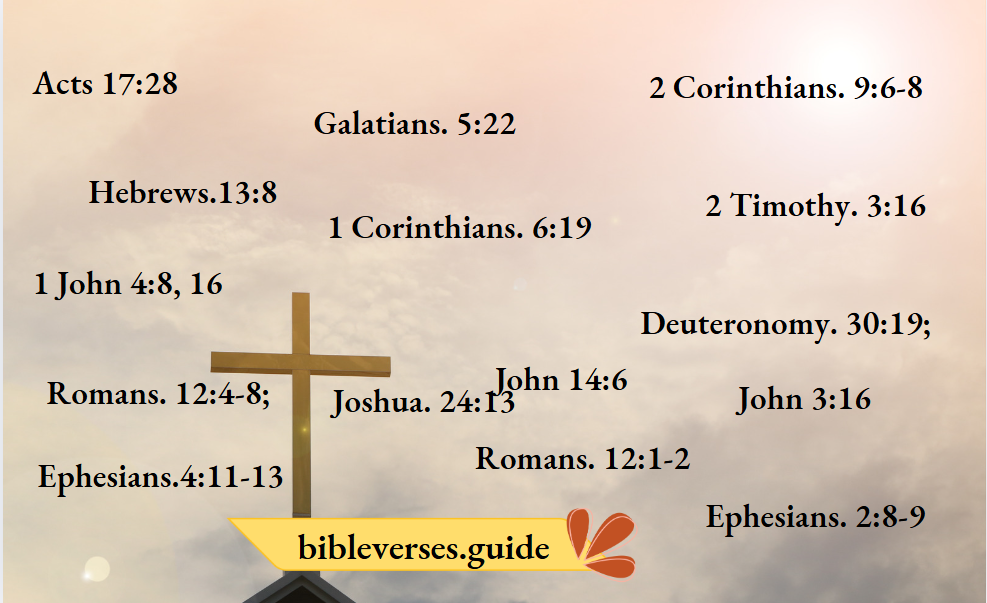
I believe that God is love personified and runs His universe on the principles of love (1 John 4:8, 16). I believe that God has always been true to that principle, past, present, and future (see Heb. 13:8). I believe deeply in the centrality of Jesus Christ in the plan of salvation or the rescue of mankind (see 2 Tim. 3:16; John 14:6).
I believe in the authority of scripture and the right of private judgment with its implications for the idea of tolerance and religious liberty to the extent that it does not violate the picture of God as agape (unconditional, self-emptying, benevolent) love personified (see 1 John 4:8).
I believe in salvation by grace made effective by faith and faith alone as both a divine and human act (see Rom. 12:1-2; Eph. 2:8-9). I believe in freedom of will where God predestines all to be saved but not all choose to be (see Deut. 30:19; Josh. 24:13; John 3:16).
I believe in the sanctity of the common life as expressed in matters of health, relationships, and stewardship (see Acts 17:28; 1 Cor. 6:19; Gal. 5:22; 2 Cor. 9:6- 8). And I believe in the priesthood ofall believers (see Rom. 12:4-8; Eph. 4:11-13).
I am also committed to the belief in the Hebrew thought of man as body, soul (one’s mind, emotions, and will as detailed in Jer. 17:10, Jer. 31:33; Acts 14:2; Col. 3:2; Rev. 2:23; Mark 14:34; Luke 2:35; Matt. 10:28; 1 Cor. 7:37), and spirit (Acts 15:8) alive with breath as a single whole (Gen. 2:7; 3:19; Ps.l15:17; Job 14:12; 19:25-27; Eccles. 9:5; Luke 24:38-39; Rom. 6:23; 1 Cor.l5:51-54; 2 Tim. 4:1; Rev. 20:14; 21:3-4).
I’ll admit that this is in contrast to the Greek thought of dualism, which dominates our Western culture. In this thought, man, though a physical being, also has a soul that is part of yet separable from the physical body. This soul can live independently of the body and separate from it at death. Thus, I suppose you could say that I am a Hebrew Christian living in a Greek-dominated Christian world.
However, the centrality of Jesus Christ is the same for both Jews and Greeks (Gal. 3:26-29). The differences show up in the picture of the nature and character of God; the nature of man, whether mortal, immortal, or conditionally immortal; the state of the dead; and the final end of sin and sinners. All my answers to your questions will reflect my camera angle on the holistic bodily nature of man versus the dualistic nature of man.
My view is by far a minority view in our Western Christian world. Most Christians believe that immediately upon death the soul (as an entity in and of itself that is the full essence of a person) goes to heaven to be with Jesus or is banished from His presence to a place most uncomfortable.
Few make the paradigm shift from Greek to Hebrew thought on the nature of man. Again, all differences aside, the central focus is Jesus Christ and His open door of salvation leading to our atonement or “at-one-ment” with our God and Creator.
It is as simple as God’s willingness to accept us in our current condition and our willingness to accept that acceptance. This is called grace.
The scientific understanding of our world’s place in the solar system and the nature of the universe creates difficulty for many Christians to believe in a literal second coming of Jesus Christ. They find it difficult to envision Him coming in the clouds accompanied by a heavenly host.
If we only had a DVD recording of His ascension to heaven, faith in the coming event might be a little easier to come by. But because of the eyewitness accounts of His ascension, the idea of Jesus’ momentary return was a driving force of the early church.
I concur with those who express doubt that the Christian movement would ever have advanced if Jesus’ return had originally been understood as some event not scheduled for another two or three thousand years. There were early warnings not to give up on that hope of a soon return.
We read in 2 Peter 3:3-4, for example, “You must understand that in the last days, scoffers will come, scoffing and following their own evil desires. They will say, ‘Where is this coming he promised? Ever since our fathers died, everything goes on as it has since the beginning of creation.’”
Today, however, the anticipated hope of the soon return of Jesus Christ has taken a backseat to other aspects of the gospel and various thoughts on end-time events, such as the rapture.
For example, if the secret rapture of the church (which will be no secret to those left behind) is the First evidence of His coming, then that would be the hope of the Christian—and to many it is. The concept of the rapture of the church is a concept that has been popularized by some evangelical churches in recent history.
In Matthew 24:40-41 and Luke 17:34-36, you can find an expression of the rapture. Matthew 24:39b-4l says, “That is how it will be at the coming of the Son of Man. Two men will be in the field; one will be taken and the other left.
Two women will be grinding with a hand mill; one will be taken and the other left.” The following question is raised: Taken to what and left for what?
Note that the verse says, “The coming of the Son of Man,” not man going to the Son. It has always been my understanding that the meaning of the one taken and the other left is that both have the opportunity to meet the Lord in the air, as the apostle Paul expressed in 1 Thessalonians 4:16-17.
The people described above are obviously in close relationships with one another—two men in the field, and two women grinding together. Regardless of the closeness of the relationship, however, the destiny of each is different. There is one taken and one left in each case.
The disciples seemed to understand what it meant to be left, but they questioned Jesus about those taken. As recorded in Luke 17:37, they asked Him, “Where, Lord?” and Jesus replied, “Where there is a dead body, there the vultures will gather.”
This hardly sounds like an ascension into eternal bliss with the Lord in heaven! In the vernacular, we often hear people say things like, “He was taken by a wild animal,” or, “The sea took him,” or, “Such and such a disease took him,” or, “He was taken by cancer.”
What I am suggesting is that the one left describes those who are among the saved and that those taken are the lost who are taken to eternal destruction, having denied themselves by their choices the opportunity to respond to God’s wooing through His Spirit.
In Revelation 6:15-17, these people even call for the rocks to fall upon them. Thus, for me, these verses do not lend substantial support to the concept of the rapture of the saved prior to Jesus’ second coming.
Another concept of the rapture that always seemed to me a bit incongruent with the way God has usually come to mankind in either judgment or redemption is the “second chance” idea of the rapture. With the traditional or popular view, those who are left behind understand that they were not among those who were raptured, but the second coming is still to come.
This gives them a second chance to be saved. But what does this imply about those who died because they were in airplanes with pilots who were raptured or those in buses or cars who died because their drivers were raptured? Where is their second chance?
An even bigger question is this: Did God give a second chance to those who were not in Noah’s boat or those who were destroyed at Sodom and Gomorrah? When destruction came, it was a surprise. That is how the second coming is described. It will come at a time not expected. No second chance will be provided.
The Bible says in Luke 17:28-30, concerning the condition at the time of Jesus’ second coming, “It was the same in the days of Lot. People were eating and drinking, buying and selling, planting and building. But the day Lot left Sodom, fire and sulfur rained down from heaven and destroyed them all. It will be just like this on the day the Son of Man is revealed.”
My understanding of the verses about Jesus’ second coming seems closer to the early church’s understanding. In my opinion, the verses in Matthew 24 and Luke 17 refer to the literal, visible appearance of Jesus Christ.
Keeping those verses in context indicates to me that at this coming all alive will see Him, both saved and lost. Again this is my camera angle. I will say that if the most common view of the rapture is true, I prefer it over the alternative, for those who experience the rapture are not on earth at the time of the great tribulation described in Revelation 15 and 16. Keep in mind that in both views Jesus is coming back for His own. And that is what is most important.
From my own personal understanding of eschatology (end-time events), The concept of the rapture of the church prior to the time of trouble doesn’t seem to apply. Let me give you a brief outline of my current thoughts regarding end-time events.
In doing so, I will be the first to admit that different scholars reach different conclusions as they look at scriptural prophecy in the books of Daniel and Revelation. The bottom line is that Jesus Christ is the victor. It is in Him and Him alone that salvation is obtained (see John 14:6).
With that said and without trying to give scriptural references to each element of my understanding, here are my thoughts. There will be a great time of trouble when God’s Spirit will be withdrawn, allowing Satan and evil’s full expression. God’s Spirit will not leave individuals though. As Jesus said,

Christ’s second coming will be in real-time and history as He visibly descends from the sky. All those who are saved—first the resurrected dead and then those alive at His coming—will meet Jesus Christ in the air and ascend to heaven.
They will all have glorified bodies like Jesus’ body after His resurrection. All those who died in a lost condition prior to His coming will stay dead, and the lost who are alive will die the first common death at the glory of His coming. Thus, Satan will be alone, bound on earth for a thousand years.
The saved will reign with Christ a thousand years in heaven. The time spent in heaven during this period will be like a postgraduate study on the justice and rightness of God’s judgment of the lost and the wonders of the whole process of redemptive history.
It will be a time to get all the answers to the heretofore unanswerable why questions. After a thousand years, Christ will come to earth for the third time, this time with the New Jerusalem.
All the lost will now be raised to life with the same characters and bodies they had at death, and Satan will lead them in one last rebellious effort to overthrow God. Satan, the fallen angels, and lost humanity will recognize that they lack the character and desire to be part of God’s government of love.
The wages of sin spell death, and with nothing more, God could have done or can do to prevent the ultimate consequence of their sin and rebellion, a second and final death comes.
With a breaking heart, as expressed in Hosea 11, Matthew 23:37, and Romans 1, God honors their choice and gives them up, letting them go. Unshielded and like a consuming fire, the brightness of God’s glory cleanses and purifies the earth of the consequences of sin and sinners.
Thus, the lake of fire becomes the place of ultimate second death, where Satan, his evil angels, and all the lost are consumed and annihilated forevermore, the total end of sin and sinners.
The results of and the end to sin and rebellion are permanent, never to rise again. Sin and its consequences have run their full course. There is no place in the earth, under the earth, or beyond the earth where the lost will exist in perpetual suffering.
Life is in God and because of God; therefore, those who do not choose God will have no life, no existence. That’s why Jesus made the comparison to the dead carcasses thrown into the trash heap of Gehenna outside Jerusalem.
Decade after decade smoke continually arose from this desolate place. Thus, it became an apt metaphor for a place of total and permanent destruction.
After the fiery cleansing, the earth and heavens will be created new. God’s original plan for mankind to live in fellowship and harmony with Him will be more glorious and intimate than imaginable, lasting into eternity.
As 1 Corinthians 2:9 says, “No eye has seen, no ear has heard, no mind has conceived what God has prepared for those that love him.” The redemptive sacrifice made by God through Jesus Christ will remain a wonder throughout time, and sin with all its consequences will be completely eliminated, never to rise again.
As a footnote to this description of end-time events, let me again say that the previously outlined scenario makes sense to me in explaining how a loving God would conclude the problem of sin and sinners.
With that said, I am sure I will be surprised at how things actually happen. One thing I truly believe is that the wicked will not be destroyed at the hands of an angry God and that God will not allow the continuous, eternal torture of sinners in a fiery hell, thus bringing no end to the consequence of sin and sinners.
Going back to the question at hand about the soon coming of Jesus, He said that the day and hour no one knows, not even the angels of heaven. (see Matt. 24:36).

As I stated earlier, many have tried to predict the date through various sections of Scripture, especially in Daniel and Revelation. All have been disappointed. We can’t know the time of Jesus’ second coming.
So what do we do with the promise of the second coming? First is the assurance that it will take place. The promises are there, and God is faithful and does not lie. It is the seeming delay that is most troubling. Throughout the centuries Christians have wanted that hope to be realized in their own lifetimes.
As an event, the second coming can be thought of in two ways. First, it is an event that will be immediate and certain at the point of one’s death. At the moment of our death, our next conscious moment will be Christ’s coming.
Secondly, it is an event coming in real-time and history that brings hope, encouragement, and fulfillment of the grandest promise imaginable. Whatever the conditions of life, the promise of the second coming supersedes discouragement and despair.
In Greek thought, as mentioned earlier, there is the belief in the dualistic nature of man, which postulates that at the moment of death the soul, which is a conscious, disembodied spirit, is separated from its earthly body and immediately goes to be with Jesus, consciously awaiting a new body at the second coming.
But others—and I am among this group—understand man as a physical being with a singular physical nature. He is born with a physical body, dies with a physical body, and is resurrected with a physical body in much the same way that Jesus Christ was resurrected with a physical body, all for the purpose of enjoying a new earth created for physical persons. Both concepts, however, share the same hope of man’s glorification in a new body, one that is free from the power and consequence of sin because of the doing and dying of Jesus Christ.
Thus, the second coming of Jesus Christ is one of hope, anticipation, assurance, immediacy (for at the moment of one’s death the next realization is His coming), and future historical reality. It is also a statement about the God who comes, a God who promised His coming and who keeps His promises.
It is an affirmation of a God who loves us and has done everything necessary for that coming. Our Creator—and recreator— is coming again, not just in Spirit, not just as a conceptual truth but physically and with full impact on all our senses. So along with the early Christian believers, I say, “Lord, come quickly!”
Your friend,
Matt