
Inner Beauty In An Age Of Outer Image
Open up a magazine, turn on the TV, watch a movie, or glance up at a highway billboard and you will be getting much more than a carefully crafted message designed to sell you the latest high-priced consumer products.
You will also be getting a not-so-subtle message about what the ideal woman looks like.
You know the type. She is tall and slender, with curvaceous hips and ample breasts. Her skin is as smooth as porcelain. She has brilliant white teeth, which shine from between lush, lipsticked lips.
Her flowing hair cascades over her majestic shoulders. She is decked out in designer duds that look as though they might require an army of maids to keep cleaned and pressed.
And she’s about twenty-five years old. This ideal woman beckons to us from commercials for toothpaste, shampoo, and all the products that promise to help us have a happier, less harried life.
Dressed up in spotless clothes and high heels, she tries to sell us jewelry or refrigerators.
Or dressed down in a bikini or sexy slacks, she tries to sell us automobiles or beer.
But no matter what she’s selling us today, this ideal woman is also promoting the so-called “good life,” which is guaranteed to be ours if we buy all the right products.
Ads help sell products, but they also serve as a constant reminder to women of all ages that they just don’t measure up to society’s lofty standard.
For young girls, this destructive message can lead not only to desperate efforts to buy all the right clothes but also to more disturbing behaviors such as eating disorders and depression.
Who knows what Peter would have thought of our high-gloss, high-pressure ads? He certainly had a different ideal of womanhood.
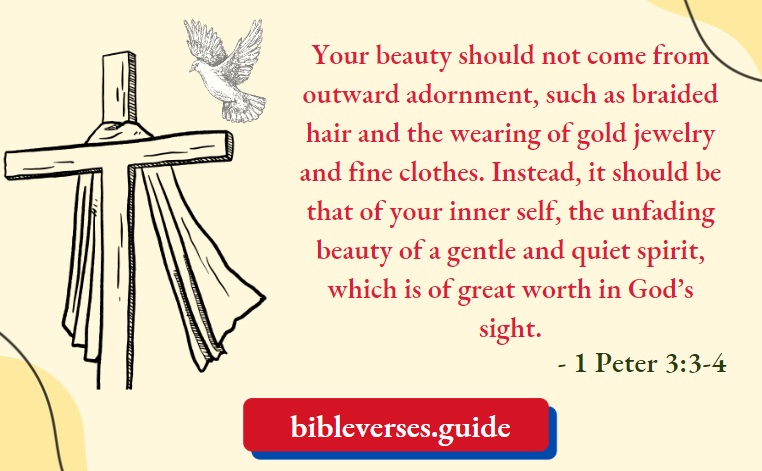
“Your beauty should not come from outward adornment,” he wrote, but from “your inner self, the unfading beauty of a gentle and quiet spirit, which is of great worth in God’s sight.”
Peter wasn’t one who insisted that women remain quiet unless spoken to. His letters counseled men and women to treat one another with love and respect.
But such respect doesn’t come from the outer image. Outward adornments are little more than window dressing. It’s the internal characteristics that make us who we really are.
People have tried to outdo each other ever since primitive human tribes made the first bearskin robes. Christians of Peter’s day had the same problem, even before advertising helped increase desire and spending.
Incessant advertising certainly makes it more difficult to follow Peter’s sage advice.
Every day each one of us is bombarded by TV commercials, ads in magazines and newspapers, billboards that line our roads and highways, and flashing come-ons that confront us every time we surf the Internet.
Designed to prey on our weaknesses and vulnerabilities, these advertising messages do more than sell us products.
They attempt to sell us an entire worldview that claims we are what we wear and what we look like.
In these ever-present sales pitches, the people who drive the right cars, buy the right clothes, and use the right shampoo and makeup invariably find love and happiness, while those who use Brand X are left high and dry.
Surrounded as we are by such a chorus of consumer messages, it may be hard for us to hear Peter’s simple truth that it’s what’s inside that matters most.
But Peter’s message may be just the advice we need to survive in our outward-oriented culture.
Father, help me focus my energy on inner beauty. Make my soul a beautiful thing that radiates your grace and love outward to those with whom I come in contact.