
Chapter 6 Paul’s Letters: Foundations of Christian Doctrine
Paul was referred to by some as the Apostle of Progress; his life was truly progressive in the way in which the world views growth today. Like many, he didn’t get it right the first time, but eventually, he did. Paul progressed in ways that have left many and still leave many in awe. Only a few of Jesus’ twelve apostles could equal the impact Paul had.
This isn’t to downplay their roles and efforts in the establishment and advancement of the early Church; they did very important work. However, Paul gave Christians the gift of his epistles on which the early and modern Church foundations are laid. These foundations still hold firm today because ofthe sacrifices of a man who thought it all as gain to ensure the spread of the good news beyond the borders of Judea
Paul’s letters foundations of Christian doctrine explained
Who is Paul, and what makes the life of this messenger of grace so profound? You are about to get these questions answered, as this chapter is solely dedicated to his background, occupation, service, conversion, trials, missionary journeys, teachings, letters, and ministry in general.
The Early Life Of Apostle Paul
Paul, over time, was known as many things: an Apostle, a spiritual pioneer, a critical thinker, Saint Paul, the teacher of the Gentiles, etc. However, before these names existed, he was just Saul of Tarsus, a tent maker by trade, a Pharisee by upbringing, and a zealous persecutor of the early Christians
Saul was recorded as being born in Tarsus, a vibrant city east of Cilicia. Just as with other prominent figures of old, there are discrepancies in the exact location of his birth. Others believed he was born in a town in Galilee called Giscala and later relocated to Tarsus with his parents in the early years of his life. Ascertaining the exact date of his birth has not been possible, but there have been attempts based
on gathered information. Since he was referred to as a young man during the persecution of Steven in the Book of Acts and was active in his missionary journeys during the 40s and 50s, it was inferred that he must have been born around the time of Jesus, which is 4 BCE, or a little later. His time of death is also estimated to be around 62-64 CE
Growing up in Tarsus held a lot of significance in Paul’s later years. Tarsus was a prominent town and a province ruled by the Romans, which resulted in its rich cultural diversity. Paul’s background as a Roman citizen and a tent maker shaped his ability to adapt to multiple cultures and gave him a sound educational background. This helped him bridge the gap between the Jews and the Gentiles for the gospel’s sake during the fulfillment of his ministry.
His Jewish education was obtained under the tutelage of Gamaliel, a Pharisee and a highly esteemed Jewish rabbi of his time. He also gained proficiency in other essential areas, like being bilingual and learning the craft of tent making, which provided him with practical and essential skills at that time, as well as financial support during his many missionary journeys
Paul’s Transformation; Adversary To Ally
Paul’s conversion from a Pharisee to a major antagonist of the teachings of Pharisaism, a youth from a strongly heathen city to a major critic of all their practices, and a born Hebrew to a strong contender against the Judaic exclusiveness was a miracle
Paul grew up to attain a high level of strictness, which he used in his approach to the persecution ofthe early Church. This was due to his educational upbringing by a well-renowned Jewish teacher, which was in perfect accordance with the laws of his fathers. Because of their rigorous adherence to the Mosaic laws, the Jews are known as one of the strictest sects.
Still known as Saul of Tarsus in the early chapters of Acts, Paul’s devotion to Pharisaism is seen in his zeal towards the persecution of the early Church. He fervently opposed what he considered to be a deviation from Judaism. In the eighth and ninth chapters, it was revealed how far he was willing to go to uphold his beliefs. In Acts 8:1-3 and Acts 9:1-2, Paul’s role was significant in the punishment given to all who chose to follow Jesus, consenting at one point to the stoning of Stephen, the very first Christian martyr.
In his own words, as you would later read in 1 Timothy 1:13, he describes himself at this time of his life as a persecutor, blasphemer, and insolent man. However, all these versions of him were about to change for the better
His victory in conquering and persecuting the Church fueled his ambitions. It raised his stakes when he persecuted Christians from other towns and cities. This pushed him to travel down to Damascus from Jerusalem in the hope of finding followers of Christ there. It was on this very journey that his conversion took place; he was said to be “arrested by God.” As Saul journeyed with his companions, having received a letter from the High priest permitting him to persecute the Christians of the Damascus synagogue, he experienced the most transformative moment of his life. During the encounter, a bright light shone down from heaven upon him, and he heard a voice, as seen in Acts 9:4-6
‘And he fell to the earth, and heard a voice saying unto him, ‘Saul, Saul, why persecutest thou meV And he said, ‘Who art thou, Lord?’ And the Lord said, 7 am Jesus whom thou persecutest: it is hard for thee to kick against the pricks.’ And he, trembling and astonished, said, ‘Lord, what wilt thou have me to do?’ And the Lord said unto him, ‘Arise, and go into the city, and it shall be told thee what thou must do.’
The intensity of the encounter blinded him, and he was supported for the rest of the journey to Damascus. While he was there, he remained blind for three days, and he neither ate nor drank. In those moments, God was instructing one of his servants, Ananias, to go to Paul and help him restore his sight, and Ananias, knowing Paul’s reputation, was hesitant. Nonetheless, he went in full obedience to God’s instructions.
Coming into Paul’s house, he healed, baptized, and filled him with the Holy Spirit, which marked his birthing into the Christian faith. Following his conversion, Paul didn’t delay; he was immediately seen declaring Jesus as Christ in the synagogue. Many found it hard to believe that the leading man in the persecution of the Church, who had come down to Damascus for that very reason, was now advocating for the very cause he had fought against
Although many were astonished, others, like the Jewish leaders, were not pleased and sought to kill him. Being aware of the threat to his life, he escaped in a basket through an opening in the city wall with the help of the disciples present. From then on, he stepped into a new chapter in his life, one completely devoted to the spread of the gospel, and with a change in his name from Saul to Paul.
This new phase in Paul’s life stands as a stark contrast to the pre¬ transformed Saul, which shows the profound impact of his encounter with the risen Christ on the road to Damascus. This transition from persecutor to Apostle highlights the transformative power of Grace and redemption in Paul’s journey.
Christian doctrine from Paul’s letters Bible study
Paul’s Epistles
In the many epistles written by the Apostle Paul, you can perceive his literary prowess. However, the ability to take down his epistles was less attributed to his expertise in writing and more to the Holy Spirit’s divine work through him. Paul’s Letters, being foundational to the New Testament, shaped Christian theology.
Here is a detailed overview of these letters and their purpose;
Romans: Unveiling The Foundations Of Faith
The Book of Romans was originally written for the Christian Church in Rome and, by extension, also for modern Christians today. Outside its powerful message, its dear, comprehensible, concise, and systemic style of presenting the Christian doctrine makes it a quick favorite of young or new Christians. At the beginning of a new Christian’s Bible study, Romans always make it on the list of first reads
The Apostle Paul wrote the Epistle to the Romans to address several key theological and pastoral concerns within the Christian community in Rome. He addressed topics ranging from the believers’ justification by faith and the righteousness of God to the world’s need for salvation.
The theological richness that Romans possess makes it a cornerstone of the Christian doctrine. At the time Apostle Paul wrote this Letter to the Roman Church, the Christian community in Rome consisted of both Jews and Gentiles. It is not news that there was discrimination towards the Gentiles by the Jewish Christians.
Practical life lessons from Paul’s letters in the Bible
In his letter, he emphasized the importance of unity and mutual understanding among them while highlighting their shared salvation through faith in Christ Jesus in Romans 15:5 -7.
It is very easy for strife to come in between relationships when you are not being watchful, even for the most minute reasons. It could be between your spouse, sibling, friend, child, co-worker, etc., but you are encouraged by Paul always to remember that you are to receive each person just the same way Christ received you.
1st and 2nd Corinthians: Wisdom and Guidance for the Church
Similar to Romans’ advocacy for unity and oneness, the books of Corinthians addressed the Church in Corinth, a major city in Greece. It is one of the key books in the New Testament that focuses on a single union within God’s body. Corinth, being a city that served as the center of Greek culture,
was a commercial city teeming with people from all around the world, meaning this was reflected in the total population of the Church. The diverse nature of the Church meant disagreements were almost inevitable, and love and harmony became the second most discussed topic after immorality for the Corinth Christians.
The subject of morality was also a major one for the Corinthian Church, and they struggled greatly with it. Raised in the heart of Greece with its pagan ways, where sexual rites are common occurrences at every feast and ceremony, and words like chastity and monogamy were novel, these new Christians found it difficult to uphold morality. So, Apostle Paul saw the need to put more effort into addressing it.
Why are Paul’s epistles important in Christian doctrine?
Besides Paul’s address of these two topics, he also talked about other things, such as the misuse of spiritual gifts. He gave guidance on such topics as marriage and the Lord’s supper in the first part of Corinthians.
The second part of this book is concerned with Paul’s defense of his apostleship, discussing what the true nature of a Christian ministry should look like and encouraging followers to live in light of the new covenant. Generally, a central theme for both books is an address on the balance of grace and discipline among a diverse Christian community.
Galatians: Freedom In Christ’s Grace
Apostle Paul leads the Galatian Church through a series of teachings and exhortations in his letter to them. Addressed to them at Galatia, his letter was centered on the theme of Grace as he vehemently opposed any form of legalistic teaching making its way into their Church.
In this letter, he aimed to show them their complete sufficiency of faith in Christ for their Salvation, clearing them of any form of doubt that they needed the law, that is, the Jewish tenets, to guarantee their justification in Christ.
Paul’s letters Bible study questions and answers
Key themes in Galatians are the justification of faith, freedom in Christ, and crucifixion with Christ. In Galatians 6:14, Paul informs the Church of Galatia, ”But far be it from me to boast except in the cross of our Lord Jesus Christ, by which the world has been crucified to me, and I to the world.”
Here, he talks to them about being identified in Christ’s death and resurrection and how this union with Christ transforms the Christian life. Another profound scripture on the topic of justification of faith is Galatians 2:16:

This scripture teaches you that justification can only come through one source, which is faith in Christ; any other attempt by one’s effort will prove futile. Trying to earn salvation on your terms and by your effort shows you are undermining the finished work of Christ.
This is said while not undermining the place of spiritual discipline Ephesians: The Unity ofthe Body in Christ While on his third missionary journey Apostle Paul was in the City of Ephesus for more than two years, where he ministered to the people there. Being a city that housed the Greek goddess Artemi’s temple, many opposed his ministry for different reasons. Still, many were also converted to the faith.
After he left, he was imprisoned for the first time, and it is believed that it was there that he wrote the Ephesians Epistle along with other letters to the Philippians, Colossians, and Philemon. The book of Ephesians took on a more formal approach. Whether because ofits importance or his lesser acquaintance with the Church in Ephesus remains unknown.
Paul’s theology of grace and righteousness explained
In this letter, Paul talks about topics that are at the very core of a Christian’s belief in both faith and practice. He addressed topics on the mystery of God’s will, unity in Christ, and spiritual warfare. Within the first three chapters of the letter, Paul talks about how God, through the gift of Grace in Jesus Christ’s death and resurrection, created a special and holy community.
In this community, He has specially chosen individuals whom He has adopted as His sons and daughters through Christ’s accomplishments. Regardless of being a Jew or a Gentile, everyone who becomes a partaker of this grace was once dead spiritually because of their wrongdoings but has now been brought into life through the deeds of Christ alone
While not attempting to address just a particular problem in their morals or theology, his focus was on avoiding future problems by getting the followers of the Ephesian Church to grow in their faith and become mature Christians. After elaborating on these profound theological truths in the first half of the book, Paul straightforwardly expressed his expectation: he envisioned that this community of Christians would embody its heavenly calling.
So, by seeking to divide the letter into segments in his address, although not intentionally, the first part shows you the truth, and by applying the truth, the lifestyle talked about in the second part becomes possible to fulfill. Scriptural verses like Ephesians 1:9-10, Ephesians 4, Ephesians 6, etc., address these topics directly to give you a better understanding.
Philippians: Joy In Unity And Christ-likeness
The book of Philippians is one ofthe books in the New Testament, and it scores as a great hit among today’s Christians due to its great and easily relatable verses All books of the Bible have their fair share of popular verses, but Philippians have a host of them.
A verse like Philippians 1:6, which says, “He who began a good work in you will carry it on to completion until the day of Christ.” conveys hope beautifully; it serves as a reassurance when you feel overwhelmed or on the verge of giving up.
Another one of such great verses that stir up faith within you is Philippians 4:13, which says,
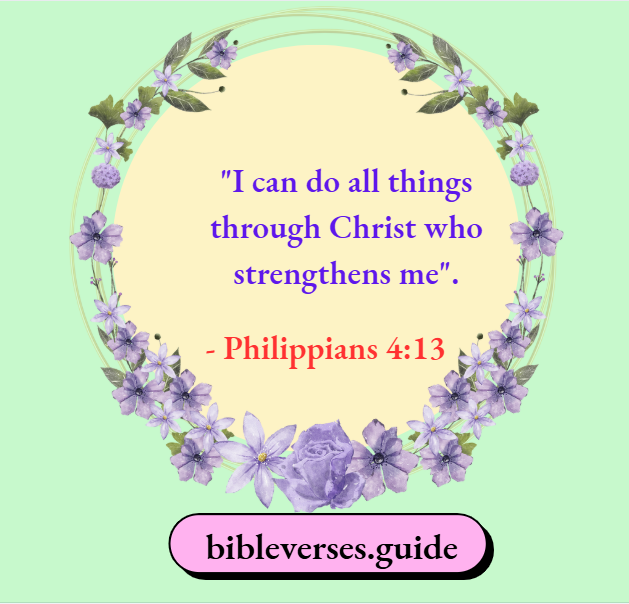
This verse gives you the boldness and confidence to go through the hardest of challenges, the confidence not in your ability but in the excellent power of God. A third one is, “For me to live is Christ and to die is gain/1 as seen in Philippians 1:21.
This statement by Paul shows you the insignificance of this world without the purpose of fulfilling Christ and the reward of a better life to come after this world
However, originally written to the Church in Philippi while Paul was in prison, these verses are loved and appreciated by the Church and were written to address key themes like joy in all circumstances, unity and humility, pressing toward Christlikeness, and the surpassing worth of knowing Christ
Which letters did Paul write in the Bible?
He radiates a theme of joy amidst challenging circumstances. When in prison, he expresses gratitude for the Church’s partnership in the gospel and shares profound insights on Christian living
Colossians: Embracing The Fullness Of Christ’s Supremacy
The Epistle to the Colossians, likely written by Paul during his imprisonment in Rome (around AD 60-62), unveils the profound teachings regarding the supremacy of Christ. This letter, addressed to the Church in Colossae, is a powerful exposition on the all-sufficiency of Christ in matters of faith and
Salvation. The Colossae church was believed to have 3 been established during his third missionary journey by one of his converts, a Colossian visiting Ephesus, Epaphras. In response to the good news he had heard from Paul, he returned to his city to share it with them. This scenario was like the story of the Samaritan woman who came in contact with Jesus in John 4:5-30 and yielded the same result
The first reaction after receiving the gospel with joy is always to share it. As a Christian, proof of the word of God being implanted in your heart is in your desire and zeal to share it with others. Although Paul never had the opportunity to visit the Colossian Church, through his interface with Epaphras, he is made aware ofthe struggles faced in the Church, and he wasted no time in addressing them head-on.
He wrote the Colossian Epistle after finding out that the supremacy of Christ’s rule as the head of the Church and as the son of God was being demeaned by some false teachers
The Church at Colossae was under attack from false teachers who were denigrating the deity of Jesus; they were teaching that He was not actually God. Paul addressed these issues by emphasizing the preeminence of Christ in creation, redemption, and the reconciliation of all things, urging Christians to acknowledge and embrace His comprehensive
supremacy, as you would see in, Colossians 1:15-20, “He is the image of the invisible God, the firstborn ofall creation… For in him all the fullness of God was pleased to dwell.
He also discussed other subjects, like finding complete fullness in God and living life totally in Him. He warned them not to consider other notions like deceptive philosophies and human traditions and to embrace virtues like compassion, kindness, humility, patience, and gentleness in Christ
1st and 2nd Thessalonians: Embracing Hope, Holy Living, And End-Times Expectations
The letters to the Thessalonians, probably written by Paul in the early 50s AD, focused on the anticipation of Christ’s return, and the importance of living a holy life, and guided what to expect in the end times. However, intended for the Christians at Thessalonica, these epistles offer encouragement, practical advice, and insights into what to expect in the future.
Its core message is on the anticipation and hope a Christian should have concerning Christ’s second coming. He addresses their concerns when they inquire about the fate of a departed Christian by teaching them in depth the events that surround Christ’s second coming and practical Holy Christian living, a quiet life, excelling in love, and working diligently
A scripture that can quickly make it onto your list of favorites is 1 Thessalonians 5:16-18. Paul states, ‘Rejoice always, pray without ceasing, give thanks in all circumstances; for this is the will of God in Christ Jesus for you.” It is a soothing and encouraging charge, one that can bring about peace and calm when you hold on to it wholeheartedly.
Other Epistles: Navigating the Pauline Wisdom and Pastoral Counsel
The remaining book collection of Pauline Epistles, comprising Timothy, Titus, Philemon, and Hebrews, adds the extra finesse needed by Christians for a well-grounded understanding of the way of life for the new era of Christianity. Some of these letters may not have been written by Paul directly, but they are in line with his teachings.
They address multiple themes, from topics on leadership and Christian conduct to your relationship with God and Christ’s supremacy. Although some of these subjects have been touched on in the previous books, these last epistles lay a much-needed emphasis on them again for your sake.
For example, the book of Hebrews dedicates ample chapters to talking about the supremacy of Christ. providing crucial insights into the topic of the new covenant and the significance of faith
Moments Of Reflection
- Is there a change in your view of salvation based on Apostle Paul’s teaching of justification by faith?
- How can you contribute to fostering unity within your local Christian community?
- Reflect on Paul’s metaphor of the body. How does it shape your view of diversity within the Church?
- What spiritual gifts do you believe God has given you, and how can you use them to serve others?
- How does Paul’s description of love in Corinthians 13 inspire your relationships with others?
- Reflect on a time when you experienced comfort from God. How did it impact your faith?
- In which areas of your life do you need to pursue reconciliation, following Paul’s teachings?
- How does recognizing the supremacy of Christ influence your perspective on life’s challenges?
- Reflecting on your identity in Christ, how does it shape your self-worth and purpose?
- In challenging circumstances, how can you maintain a spirit of joy, as encouraged by Paul?
- Reflect on the role of gratitude in your life and its connection to joy.
In what way can you cultivate humility in your interactions with others? How does Paul’s model of servant leadership challenge your common perceptions of leadership? The life of the Apostle Paul stands as a testament to the transformative power of God’s grace.
His journey from a zealous persecutor to a devoted follower of Christ reflects the profound impact of encountering Jesus Christ. Paul’s epistles, filled with theological depth and practical wisdom, continue to guide and inspire Christians today. As you navigate the pages of his letters, you will find a road map for living out the Christian faith with authenticity, love, and a steadfast hope in the promises of Christ.
The enduring legacy of Paul extends beyond the 1st-century churches, resonating with believers of every era, inviting them to embrace the grace that transforms lives and to walk in the light of Christ’s redemptive love.
Christian doctrine from Paul’s letters Bible study