
Chapter 2 Exodus And Liberation: Journeying With The Israelites
Walking through the genealogy of the Israelites and how they came to be in Egypt, you will find stories of Adam and Eve, Cain and Abel, Noah, Abraham and Sarah, Isaac and Jacob, and Joseph. The lives of these notable figures in Genesis shaped the frame for the next part of this adventure.
The study of these lives reveals God’s intentionality in bringing His promised people to a land He has prepared. Taking time to study the lives of each person mentioned above will also help in your understanding of the Bible as you progress, and you’ll get to see God’s method of dealing with His people,
The story of the children of Israel in captivity under the rule of the Egyptians, their liberation, and their journey to the proposed promised land is one of great significance. A breakdown of the different timelines in the Bible would be incomplete without a detailed narration of the Israelites’ journey.
Exodus and liberation journeying with the Israelites explained
From the fulfillment of the prophecy, the exceeded time, the cry for help, the raising of a savior to deliver them, the processes of leaving, and the journey itself relates to the life of every individual, even in this present age Here, you will learn lessons that will revolutionize your thought processes
The Settlement
After the death of Joseph in Egypt, it seemed to the Israelites that their best days were behind them. However, from the previous chapter, one can easily deduce that God is completely intentional in His dealings and has a plan and set time for everything. The suffering and slavery of the Israelites in Egypt have been spoken of long before it happened. In the time of Abraham, while he was yet called Abram in Genesis 15, God revealed to him that his descendants would be enslaved in a foreign land for four hundred (400) years.
Although the prophecy stated 400 years, they remained in captivity for 430 years. There are many theories on why Genesis 15 says 400 years and 430 years were recorded in Exodus. One of these theories pins it on Moses’ self-will to act before the set time when he killed an Egyptian.
As ofthe time Moses killed the Egyptians, it was the 3 90th year, and they had ten more years until their liberation. Still, that act, which Moses might have seen as a way to help God or speed things up, was said to bring about the 30-year delay.
How the Exodus story guides Christian life today
His actions towards the Egyptians led him to flee Egypt for the desert, where he stayed for 40 years until God visited him again. In today’s modern age, the same is seen with most people; after getting a sense of God’s will, they get so hasty to see it accomplished and fulfilled that they don’t wait to find out God’s method and pattern of accomplishing it, then messing it up in the process, or delaying it longer than anticipated.
Learning to trust God wholeheartedly to see His will fulfilled in your life is key to growing your relationship with Him. When you take a look at Phil 1:6, you are reminded and assured that what He started, He most certainly can complete and not just complete, but also perfect in your life.
The Beginning of Liberation
The time God met Moses in the desert while he was tending to his father-in-law’s sheep can be tagged as the start of the Israelites’ freedom. Moses witnessed a bush that was ablaze but wasn’t consumed. This incident shaped the rest of his life, as he later went on to deliver the children of Israel
In the presence of God before the burning bush, something significant happened that many people overlook. God didn’t begin to speak to Moses as soon the bush started to burn; He waited until He saw that Moses indicated an interest in the sight before him. Moses said,

Moses was definitely not a stranger to fire as he must have understood the concept of fire on a consumable material like the bush, but his first reaction was not fear or doubt; it was interest. This singular act signaled God to speak. It is not certain if Moses’ words were said out loud or in his heart; the important thing was that God acknowledged it, and afterward, he received his assignment and the direction on how to carry it out. Other noteworthy moments at the burning bush scene are:
What does the Exodus story teach about God’s deliverance?
- The Call of Moses’ Name: He called his name twice. God wanted to establish that he knew him, just as He knows you and everything that concerns you.
- The Holy Ground: God instructed Moses not to draw near until he had taken off his shoes. This shows that God is Holy and will not associate himself with any form of filth. This means you are to approach Him in this manner, not necessarily taking off your shoes but with a consciousness that you are coming before a Holy God. It also shows how you should see yourself. Seeing that you were created in His image, you must not associate with anything that is regarded as filth by your heavenly father
- God’s Introduction: This is crucial every time God speaks. He does not leave it up to chance for the recipient to deduce or decide who He is. He states that it may be known. Here, He introduces himself as the God of his fathers, which also shows a relationship and covenant that goes back long before Moses.
The Message: Moses didn’t leave for Egypt empty; he left with a word. God told him to tell them”I AM”. A knowledge of your affiliations and associations always has a way of influencing your approach toward a new task. Knowing you don’t have to do something alone always comes with a level of confidence. It gets better when you are working with someone reliable, trustworthy, powerful, and influential. He also went with a message for the Children of Israel in Exodus 3:15-17:
“Moreover, God said to Moses, ‘Thus you shall say to the children of Israel: “The LORD God of your fathers, the God of Abraham, the God of Isaac, and the God of Jacob, has sent me to you. This is My name forever, and this is My memorial to all generations. ‘ Go and gather the elders of Israel together\ and say to them, ‘
The LORD God of your fathers; the God of Abraham, of Isaac, and of Jacob, appeared to me, saying, ‘I have surely visited you and seen what is done to you in Egypt; and I have said I will bring you up out of the affliction of Egypt to the land of the Canaanites and the Hittites and the Amorites and the Perizzites and the Hivites and the Jebusites, to a land flowing with milk and honey'”
The Ten Plagues
Upon arrival in Egypt, Aaron spoke to the Elders of Israel on behalf of Moses. Then Moses performed the signs God had instructed him to do, and this made the people believe. With God, you are told to believe by faith and not by sight, but humans are reliant on their senses. They often must see, feel, and smell before they can believe, and God knew this, which is why He enabled Moses to perform the signs.
This shows that results often go further than just words, so you must strive to have results in all you do. With the children of Israel in order, Moses and Aaron proceeded to the palace to speak to Pharaoh. Moses was already pre-informed by God that even with the signs he would show, He would harden Pharaoh’s heart not to release the Israelites, and it happened just as God had said.
He hardened the heart of Pharaoh so He could send the ten plagues to show both the Israelites and Egyptians that He was the only true God. With the hardening of Pharaoh’s heart came a backlash against the Israelites as their labor intensified and became more strenuous.
This bred doubt in the hearts of the children of Israel as they questioned whether the God of their fathers truly sent Moses. It is common for people to embrace doubts and questions and then second-guess every belief once things seem not to go the way they pictured
The First Plague: Water Becomes Blood
Despite the weak attempts of Pharaoh and his magicians to refute and rebut the signs of God, God’s excellence and majesty shone through. Rather than having a change of heart, Pharaoh hardened further, just as God had said he would. This goes to show that only the Holy Spirit can fully bring someone to a place of spiritual illumination and clarity.
The plagues were a show by God to bring to naught and ridicule the supposed prominence ofthe Egyptian deities. The first plague was to make a mockery of the Egyptian god, Hapi.
This was the god ofthe Egyptian river Nile, who was worshiped for his supposed gift of natural fertility to his followers. From verse 14, God, working through Aaron, turned the Nile River into blood, so the Egyptians had to dig the earth to source fresh water. God wasn’t done, so He made it possible for Pharaoh’s magicians to be able to replicate that act to some degree, and his heart was further hardened.
The Second Plague: Multiplication Of Frogs
This next plague was a judgment against the Egyptian goddess of birth, Heqet, who was frog¬ headed. In ancient Egypt, frogs were revered and considered sacred. They represented symbols of generation and fertility. This god and her supposed powers were made a public joke as God caused the Nile to bring forth frogs that invaded every nook and cranny of Egypt aside from the dwelling place of the Israelites. They entered the Egyptian homes and took up all of their space, and when the frogs died, their bodies filled with stink were heaped up in huge piles all over the nation.
It is exciting to read it the way the Bible puts it. The author of Exodus did not mince his words. No one was to be left out in Egypt, from their top-ranking officials to the lowest servants; frogs invaded everyone’s personal space until they were losing their minds!
The Third Plague: Gnats
God took it up a notch in the third plague as the magicians of Egypt couldn’t replicate it and openly declared before Pharaoh, “This is the finger of God. – Exo. 8:9“ The third plague was a judgment against the deity Seth, who is the Egyptian god of the desert. God released gnats into all the land, displaying His sovereignty over sorcery and magic.
Exodus Bible study questions on liberation and faith
The original Hebrew text did not say if these insects were gnats, but the Bible interpreted it to mean either gnats, lice, or some other type of insect, as the word used in the original text meant small insect. The acknowledgment of the magicians showed that they knew this was not just a natural phenomenal occurrence but rather the workings of a higher power. Regardless, Pharaoh’s heart was still hardened.
The Fourth Plague: Swarm of Flies
Next came the flies, and there was a clear distinction between the land where the Israelites dwelled, Goshen, and the lands inhabited by the Egyptians. The Bible describes the plague as a grievous swarm of flies, and they terrorized the Egyptians without fail to the point at which Pharaoh sought out the help of Moses with a promise to let the children of Israel go. However, as you get to read the coming chapters in the Bible, you’ll realize that Pharaoh didn’t keep his promise.
This plague was a judgment brought on Uatchit, the god of flies. God rains down judgment on the so-called gods of the Egyptians to show Pharaoh and his people that there is only one true living God.
The Fifth Plague: Death of Livestock
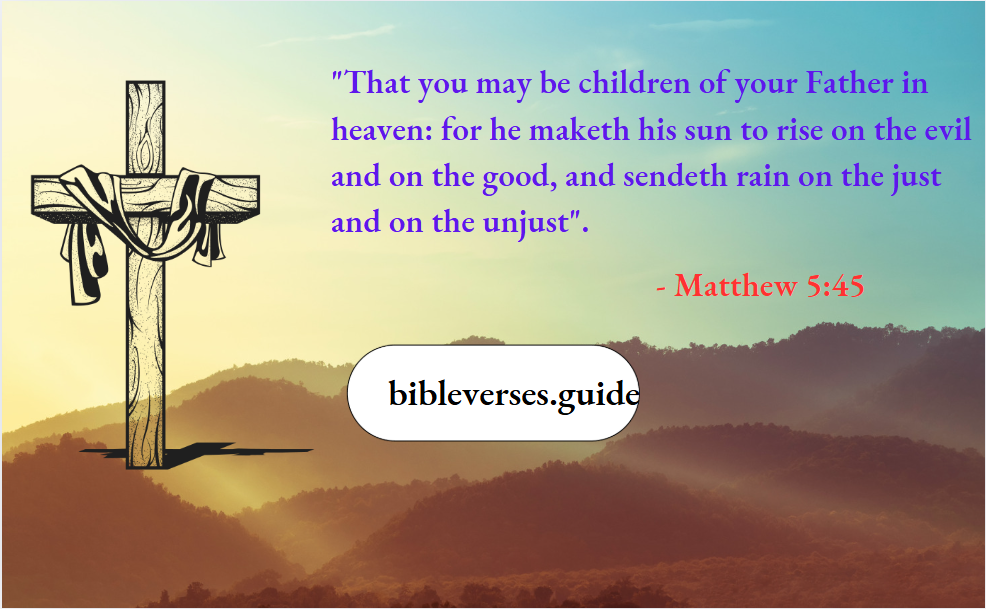
After the fourth plague ended, Pharoah went back on his promise to let the children of Israel go. The fifth plague was brought against two Egyptian gods, who were both depicted as cattle, the god Apis and the goddess Hathor. God, through Moses and Aaron, caused the death of all livestock belonging to the Egyptians, bringing no harm to those of the children of Israel. This shows God’s steady hand of protection over those who choose to obey him. This is not just protection but an all-around provision for His Children. Matt. 5:45 talks about,
The Sixth Plague: Boils
The boils of the sixth plague were intense. It is recorded in the scriptures that the magicians of Egypt could not stand before Pharaoh because they were also inflicted with the same affliction as all the other Egyptians. This significantly showed that the help the Egyptians had, or thought they had, from the magicians failed.
This is applicable to daily living as well. However, it’s not wrong to rely on others; there’s a limit to the help they can offer, but when working with God, there are no fears of being left alone because He always comes through
The Egyptian gods Sunu, Sekhmet, and Isis were the focus of the sixth judgment. These gods represented health, wellness, and disease, so boils were brought to make a mockery of their supposed power
The Seventh Plague: Hail
God sent a message to Pharaoh beforehand to prepare him for this plague, and still, his heart remained hardened, just as God had said. God made it known that He was God, and there was none like him on all the earth. God also informed Pharoah that His presence on the throne was because of him, but he took it for granted. The hail brought judgment on Osiris, Set, and Nut, the gods of crop fertility, storm, and sky, respectively.
So disastrous was the hail that it came with fire, destroying everything left in its wake. God went as far as warning Pharaoh to bring in and store everything alive as the hail would wipe them all out. At this point, division arose among the Egyptians. Some, in fear, went ahead and heeded the
The Ninth Plague: Darkness
The intensity of the darkness of the ninth plague was so much that the darkness was described as something that could be felt. It was judgment brought upon the god of light or the sun god, Re or Amon-Ra. Pharaoh himself was the symbol of this god. To the Egyptians, the sun’s rising and setting signified life and death, meaning that whenever the sun rose in the morning, it meant life to the ancient Egyptians.
Prayer and reflection guide based on the Exodus story
When it set, it meant death. Similar to the third and sixth plagues, this plague came without any warning, isolating the Egyptians not only from the Israelites but also from themselves. The scripture says that no one could move from the point they were because ofthe severity of this plague.
By God taking over and subjecting unearthly darkness on their land, He was declaring ultimate supremacy over every other god, bringing the Egyptian top god into judgment and confining him to the realm of death. It only makes sense with this understanding that the plague of death would come next
The Tenth Plague: Death Of The Firstborn
The death of the firstborns meant and represented a lot. Firstly, firstborns are known to represent new beginnings, pride, hope, and joy; the death of the firstborns shows that this was taken away from the Egyptians. As the Bible describes it, “… great wailing would be heard from them” (Exodus 11:6) at the time that plague would come. Here comes the contrast: in the city of Goshen, the dwelling place ofthe Israelites there was total serenity and tranquility; as God said, not even a dog would bark
A deeper meaning also lies in the dog illustration used, as this final plague also brought judgment on the Egyptian god of the dead or the embalming god, Anubis, depicted as a dog. This reveals God’s deliverance and salvation that brings a peace no one can understand- as seen later in the New Testament in Philippians 4:7.
The death of the firstborns pushed Pharaoh to let the children of Israel go, just as God had said. The Israelites adhered to all the instructions God gave them on their exit from Egypt and caused them to be favorably disposed towards the Egyptians, and they plundered the land, leaving with great spoils.
Road To Freedom
There was immense joy and excitement for the Israelites as they began their journey through the wilderness, but this joy was short-lived, as, after a while of journeying, the Egyptians went after them. Pharaoh’s heart and that of his servants hardened towards the children of Israel, and they regretted letting them go and pursued after them in hopes of getting them back. However, God showed up again for His people; He drowned the Egyptians when He parted the Red Sea through the rod of His servant Moses.
This singular act holds so much significance today for believers as it indicates complete salvation and total deliverance from any oppressor. God didn’t leave anything up to time and chance but rather settled the matter once and for all, declaring total freedom for His people
Moment Of Reflection
- Which of the ten plagues impressed you the most, and why?
- The Children of Israel reacted to the increase in labor after Moses first met with Pharoah. What is usually your first disposition towards God when you face challenges? How do you gauge your faith in God based on your answer?
- Based on God’s dealings with the Israelites and the Egyptians, how do you see the nature of God?
- Write down two characteristics of God that He displayed in the book of Exodus, and think about how these characteristics can affect your life. God is very precise and intentional about everything He does. This is seen in how He meticulously arranged and ordered the ten plagues. When God works, He works on all fronts, never leaving any stone unturned. Any victory in God is always total victory!
- Scripture reflections on the Exodus and liberation journey