Chapter 10 How The Old And New Testament Link
At this point, you already know that the Bible is one big, unified piece from the very start of Genesis until the end of Malachi. The Old Testament prepared the stage and laid the foundation for the good news that the New Testament brings.
The New Testament is more figurative; it puts together everything the Old Testament has been trying to tell you. It is impossible not to see how the Holy Spirit divinely inspired the Bible, as it contains everything you need for your life. Every book from the Old to the New Testament is so beautifully interwoven.
They complement each other, from the creation of Adam to the coming of Jesus, the Prophets of old to the Apostles of the early Church, etc. It is one grand tale of different dispensations whose relevance and significance transcends time, and its lessons are still very much applicable in today’s world.
One section would be incomplete without the other: having the New without the Old just wouldn’t be right, and vice versa; there would be too many unfilled gaps and missing pieces. The Bible will only make sense by merging both parts; you cannot rule out one from the other.
As a matter of fact, most of Jesus1s teaching and that of his apostles always consisted of references from the Old Testament, and this isn’t hard to figure out as modern-day Bibles come with cross-references that point from the Old Testament to the New and the other way around. Nevertheless, the unison between these two sections is bigger than this; the Bible is not just about the story told by the Old Testament, which was later brought to life by Christ in the New Testament.
It tells of God’s unending love, seen in His unrelenting pursuit of humanity, a pursuit of love that brought about the fulfillment of the promise of Jesus Christ as the savior of the world.
This chapter is here to help you simplify the link between the two sections of the Bible, identify similar themes, compare and contrast both themes based on their usage in the different sections, and have a better and more grounded understanding of the Bible in general.
Bible study on Old and New Testament link explained
The Link
It is necessary to understand the link between the Old Testament and the New Testament to help you lay a perspective in your Christian walk and know your place and role in the body of Christ. All through the Old Testament, only the people of Israel were regarded as Gods chosen people.
However, that changed with the coming of Jesus Christ in the New Testament, which brought about a reconciliation between you and God. However, walking under the New Covenant does not diminish the importance of the Old Testament, but rather, a focused look at both sections, side by side, will bring you a better understanding of your place and inheritance as a believer and a child of God.
The New Testament is the fulfillment of the promise made in the Old Testament, and you can’t do one without the other. The Bible is a single story with two parts, the Old and New Testaments, both working together. They validate each other because they share a common author —God.
Although different people physically wrote the Bible, they did so under the inspiration of the Holy Spirit. In 2 Peter 1:21, it’s stated that holy men spoke as the Holy Spirit moved them. This emphasizes that every word in the Bible comes from divine inspiration.
Further confirming this, 2 Timothy 3:16 declares that all Scripture is given by the inspiration of God, serving various purposes. When you understand this, you will realize that God, as the divine author, had a central goal; the revelation of Christ to every Christian. Jesus Himself pointed this out in John 5:39, stating that the Scriptures testify about Him.
So, even though you encounter Jesus directly in the New Testament, His presence has been there from the very beginning of the Bible. The central message all through the books has been Christ, making the Bible a cohesive revelation of God’s plan for His people. Without the knowledge of the fall of man, their feeble attempts to reconcile back to God,
the generation’s worth of efforts made, the promise of a better way, and the anticipation of the fulfillment of that promise, the New Testament would not have as much significance as it does today. A new Christian must get to see where it all began, how one event led to another, and how it relates to them.
So, here are some core themes, events, people, and things that took place in the Old Testament that find more emphasis in the New Testament:
Meaning of Old Testament prophecies fulfilled in New Testament
Exploring The Connection Between Old And New Testaments
The Old Testament and the New Testament may seem like separate books, but they are deeply connected. This section will take you through how the practices, laws, and ceremonies from the old days will help you understand the big picture of God’s plan.
Old Testament Practices Fulfilled In The New Testament
Back in the time of the Old Testament, the children of Israel followed a system of offering animal sacrifices to make up for their sins and obtain a right standing with God. These sacrifices were tedious, as they required specific rules and rituals in Mosaic Law for each of them.
Besides that, they still couldn’t achieve a perfect goal of total cleanliness, as these sacrifices had to be made over and over again. Due to this, the New Testament was made to usher in a one¬ time change in the ways of achieving cleanliness and righteousness in the Old Testament. The old way of sacrificing animals finds its ultimate meaning and completion in the work of Jesus Christ.
He is often called the “Lamb of God” because His sacrifice on the cross became the perfect offering that fulfills the purpose of animal sacrifices once and for all. The Bible says in Hebrews 9:11-12 that “Jesus, by his blood, secured eternal redemption” This means forgiveness and a restored relationship with God.
The very thing they tried so hard to establish and keep in the Old Testament was finally made available. For clarity, Jesus didn’t come to get rid of the Old Testament rules but to fulfill them; this He explained in Matthew 5:17. His sacrifice on the cross totally
The New Testament makes it clear that the sacrifice of Jesus is different from the old animal sacrifices, which only had a temporary impact and a symbol of something better to come. The sacrifice on the cross was a complete and final solution to the problem of sin. In Hebrews 10:19-20.
The Bible, in Hebrews 10:19-20, encourages Christians to confidently approach God because of the sacrifice of Jesus. His sacrifice opens up a new way for everyone to connect with God. In summary, the Old Testament practice of sacrificing animals finds fulfillment in the person and work of Jesus. His sacrifice on the cross brings a whole new approach for people to relate to God.
Comparison of Old Testament rituals and New Testament teachings
Old Testament Laws Fulfilled In The New Testament
One very common thing about the Jewish customs was the many laws they had in place: morals, ceremonial, and civil. These laws were not just for show; they were the guiding force for the children of Israel back then. It was a core part of their lives.
Now, when you look at the New Testament, especially through the teachings of Jesus, you find that these laws remain, but this time, they are fulfilled in a new way. Jesus didn’t come to get rid of the Old Testament laws but to show their true meaning. Somehow, the people had lost their ways and misunderstood everything He had been trying to teach them all through several generations.
Because of His love, He wanted people to understand the heart and spirit behind the rules, not just to follow them externally. In Matthew 5:17, Jesus says,

Bible study guide on how the Old Testament prepares for the New Testament
meaning he wanted to complete the purpose of these laws. He had to show them and everyone after them the true meaning of the law One core example is the command to “love your neighbor” from the Old Testament. In the New Testament, Jesus takes it a step further, teaching everyone not only to love those close to them but even their enemies (Matthew 5:43-44).
This shows a shift from just following rules to letting love transform your heart a key aspect of the fulfillment of the law in the New Testament. This means rather than carrying it out robotically, you should obey these laws out of love for God and His people.
God has always been about the heart rather than the deed. The state of the heart is what matters. When your heart is compelled by love, you will gladly obey every instruction, but if not, it will only seem rigid and forced.
In the Old Testament, the laws given to the Israelites were written on stone, external, and visible. However, with the coming of the New Covenant, there is the fulfillment of the promise in a different and better way: God Himself writes His laws on your heart, emphasizing a personal relationship over external regulations. This promise was mentioned in the Old Testament book of Jeremiah 31:3 3.
The Old Testament laws find a new and dearer understanding in the New Testament. Jesus shows you the heart behind the rules, and the New Covenant brings a personal connection with God. It’s not just about following external laws; it’s about letting love transform you and embracing a deeper relationship with God through the teachings of Jesus, and in doing this, you will effortlessly fulfill every law.
Old Testament Ceremonies Fulfilled In The New Testament
In the Old Testament, certain practices such as circumcision, Passover, and the Sabbath held significant roles in the religious observance of the Israelites; just like their laws, this was also a core part of the Israelites. However, like their laws, it was done without the right understanding.
As you transition into the New Testament, these practices take on a renewed and deeper meaning through the lens of Christ and the Christian faith. The Old Testament showed how they were done, but the New Testament revealed why they are done: not the reason it was done in the Old Testament, but the reason why God established it in the first place.
Circumcision, once a physical covenant marking in the Old Testament, undergoes a profound spiritual transformation in the New Testament. It was well explained in Romans 2:29 when Apostle Paul emphasized that true circumcision is a matter of the heart, achieved through faith in Christ.
It shifted from being just an external ritual to a Christian’s spiritual reality, which symbolizes a profound internal connection with God.
Moving to the Passover, a pivotal event commemorating the Israelites’ liberation from slavery in Egypt, the New Testament reveals Jesus as the ultimate fulfillment of this Old Testament ritual, just like circumcision, its purpose was also reinvented.
In 1 Corinthians 5:7, Apostle Paul, speaking again, describes Christ as the true Passover Lamb, sacrificed for the freedom of believers from spiritual bondage. This verse helps the Christian faith to find its foundation in the deliverance brought about by Jesus’ sacrificial death and His resurrection.
Also, the Sabbath, a day of rest and reflection in the Old Testament, experiences a transformative fulfillment in the teachings of Jesus. In Matthew 11:28-30, Jesus invites believers to find rest not just on a specific day but continuously through a relationship with Him. He emphasizes that the Sabbath is made for man and not man for the Sabbath, as stated in Mark 2:27.
Best verses that link Old Testament to New Testament
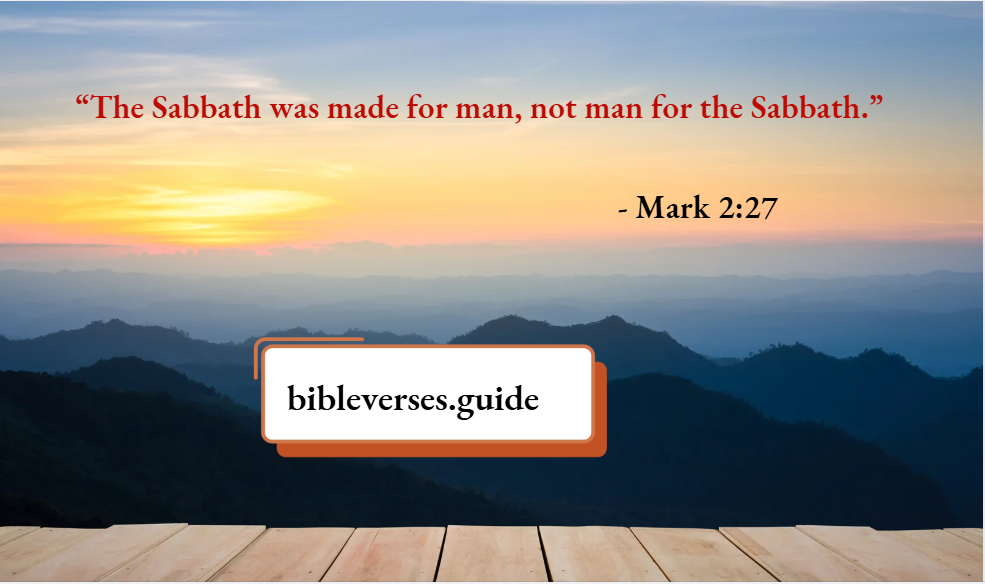
This new understanding emphasizes the Sabbath’s purpose, meaning that its observation extends beyond rigid observance to a relational aspect, where Christians discover peace and renewal for their souls. The teaching reveals that the Sabbath is a gift from God intended to bring restoration and spiritual rejuvenation to humanity. Therefore, in the New Testament context, the Sabbath finds its fulfillment in Jesus, who offers a perpetual and meaningful rest that goes beyond mere adherence to a specific day.
In essence, these Old Testament practices find a richer and more profound meaning in the New Testament. Circumcision becomes a spiritual transformation of the heart through faith, Passover finds fulfillment in Jesus as the liberating Lamb and the Sabbath evolves into a continuous spiritual rest in a relationship with Christ.
These transformations show the spiritual depth that Christ brings to these ancient practices, going beyond mere rituals to a meaningful and ongoing connection with God in the Christian faith. Christ is the heart and life force of the Christian walk; everything else would be mere practices without Him
Old Testament Feast And Festivals Fulfilled In The New Testament
Another Old Testament practice that finds fulfillment and expression in the New Testament is the feasts, like the Feast of Tabernacles and the Feast of Pentecost. These practices held special meaning as celebrations of God’s faithfulness and provision; nevertheless, in the New Testament, these feasts find their fulfillment in Jesus and the events surrounding His life, death, and resurrection, and also in the outpouring of the Holy Spirit.
The Feast of Tabernacles, which is a remembrance of the Israelites’ journey and God’s presence with them in the wilderness, finds fulfillment in the New Testament through Jesus.
When it says in John 1:14 that “the Word became flesh and dwelt among us,” the term ’’dwelt” used in that verse can be translated as “tabernacled” or “Inhabited” from the original Greek word. This means Jesus, in His life here and after, embodies God’s presence among us, providing guidance, protection, and sustenance.
The Feast of Pentecost, initially a harvest celebration, gains new meaning in the New Testament with the arrival of the Holy Spirit. In Acts 2, you see the disciples experience the Holy Spirit coming upon them, which is symbolized by tongues of fire.
This event, described in Acts 2:2-4, marked the beginning of the Church and empowered Christians like yourself to share the message of Christ globally.
So, these Old Testament feasts, although a reminder of God’s faithfulness, are now more than that; they point to the fulfillment of His promises in Christ. Jesus is the living embodiment of the Feast of Tabernacles, providing spiritual guidance and protection.
At the same time, the Feast of Pentecost, with the Holy Spirit’s arrival, signifies the birth of the Church and the ongoing presence of God with His people. In essence, these feasts are not just historical rituals. They are living symbols of God’s redemptive plan.
In Jesus’ the promises of provision, guidance, and the Holy Spirit find their complete fulfillment. As a Christian today, you are invited to celebrate not only the past events but also the present reality of God’s faithfulness in your life.
These feasts were just a glimpse of what was to come; now, they brightly reflect the transformative work of Jesus and the continuous presence ofthe Holy Spirit in establishing and growing the church.
Adam: The First And Second
When you look at how Old Testament practices connect with the New Testament, it’s important to see how Adam and Jesus fit into the picture. The Old Testament sacrifices and rules were like a setup for Jesus to come and fix things.
Jesus Christ, often called the second Adam, was not just the second; He was the last, the perfect Adam. He sorted out the mess caused by the first Adam’s mistakes, which He did by sacrificing himself to make things right with God. A look at yourself, through the lens of Adam and Jesus, is a clear depiction of the former man, which was the old you who died to give way for the new man.
Jesus didn’t just talk about following the rules; He actually lived them out perfectly. This made a big difference and shows you what it means to live a good life under God’s new plan. So, seeing how Jesus handled things compared to Adam is like seeing the old problems get fixed by Jesus. This whole correlation between Adam and Jesus shows you God’s plan for making things right.
Old Testament prophecies Jesus fulfilled in the New Testament
Moments Of Reflection
- How does the idea of Jesus as the fulfillment of Old Testament practices impact your understanding of God’s plan?
- In what ways can you relate the shift from external compliance to internal transformation, as discussed in the context of Old and New Testament laws, to your own life?
- How might the changes to rituals in the New Testament, like circumcision, Passover, and the Sabbath, impact the way you view daily practices in your faith Life?
- Think about the similarities between Adam and Jesus regarding redemption. How does this idea connect with your personal experiences of grace and forgiveness?
- How do you see the concept of God’s promises finding fulfillment in the events of the New Testament shaping your hope and trust in God’s faithfulness?
- How does seeing Jesus as the “Lamb of God,” the ultimate sacrifice, shape your ideas about forgiveness and redemption?
- How do God’s grace, love, and restoration relate to your own experiences of spiritual growth and renewal?
The connection between the Old and New Testament is that of one entity with two parts working side by side to achieve a single goal by turning promises into fulfillment, turning shadows into reality, revealing the broken and flawed areas in humanity, and fixing what is broken through Jesus Christ.
The Old Testament sets things up, and the New Testament makes everything happen. It is a beautiful song of God’s grace, love, and making things right again. The Old and New Testaments reflect an image of the old you and the new you.
comparison of Old Testament rituals and New Testament teachings