Summary of the Book of Judges

Book 7 The Book Of Judges

Who wrote the Book of Judges: Book of Judges is believed that Samuel wrote the Book of Judges

When was Book of Judges written: Sometime after 1;000 B.C.?

Why was it written: To give a historical account of the years following Israel’s entrance into Canaan to the time of the first anointed king of Israel? Judges gives several accounts of s entrance into Canaan to the time of the first anointed king of Israel.

Summary Of The Book Of Judges Explained

Judges also tell of Israel’s disobedience, oppression at the hands of their enemies, their crying out to God for help, and his discipline and rescue.

From a ‘message perspective,’ the book of Judges is a message of salvation because of God’s love, mercy, and grace. Containing the elements of sin, confession, and repentance, the book of Judges could be our story.

Read and Learn More Bible Study For Beginners

Following Joshua’s death, the Israelites asked God who they were supposed to look to for leadership. This was a people who had known only two leaders in their lifetime—Moses and Joshua.

They had the priesthood and the elders of each tribe to guide them through many of the decisions and circumstances they faced, but they honestly didn’t know how to function without an intercessor between them and God.

God answered the Israelites by saying the tribe of Judah would take the role of leadership in regard to fighting the battles they still had to fight.

Times Of War And Peace

While God had given the Israelites victory over their enemies and the Israelites had established the areas of land that they were to call ‘home’, there was still a lot of lands to conquer and battles to fight and win.

Think about it —when have you known anyone to go down without a fight? The Canaanites certainly didn’t. They were at war against the Israelites for years and years following the fall of the walls of Jericho and the battles immediately following.

Disobedience Equals Defeat

After Joshua and the rest of that generation were gone, the next generation paid no attention. And to that one has to ask why? Why didn’t they know?

Disobedience Equals Defeat

The Israelites disobeyed God in a number of ways. They worshipped idols, they rejected the Law; following the laws and rituals of their enemies— enemies they married and added to their families and took as slaves.

As a result of their disobedience, God allowed their enemies to defeat and plunder the Israelites.

God allowed their enemies to defeat and plunder the Israelites

God, however, would not and could not break his promise to Abraham to make Israel into a great nation. So rather than allow the Israelites to be completely destroyed, he provided them with judges. The judges were predominantly men who led Israel in similar fashion to Moses and Joshua.

Most of the time the Israelites turned back to God when a new judge was provided to them, but time and time again they returned to their sinful ways of idol worship and depravity.

Key Themes In The Book Of Judges Overview

Many of the things Israel did in the name of worship to other gods included human sacrifice and horrific sexual sins. The phrases, “Once again the Israelites did evil in the eyes of the LORD…” and “But when they cried out to the LORD…” are repeated over and over again throughout the book of Judges.

The fact that God is both a firm disciplinarian and merciful forgiver towards Israel should come as no surprise, though, because he does the very same for us each and every day of our lives.

A Unique And Prophetic Purpose

By now you should have no doubts that God has a plan and a purpose for everything he does and that his plan and purpose will always win out.

A Unique And Prophetic Purpose

These are the nations the LORD left to test all those Israelites who had not experienced any of the wars in Canaan.

(He did this only to teach warfare to the descendants of the Israelites who had not had previous battle experience): the five rulers of the Philistines, all the Canaanites, the Sidonia’s, and the Hives living in the Lebanon Mountains from Mount Baal Hermon to Lebo Hamah.

Bible Study Guide On The Book Of Judges

This passage answers several questions people often ask about God’s plan for life here on earth as well as this period of time in our history. It tells us:

A Unique And Prophetic Purpose Key Verses

Israel’s disobedience would continue; making it necessary for them to defend themselves.

God would not overlook Israel’s disobedience, but would instead discipline them by not allowing them to enjoy the peace, protection, and prosperity he had promised in return for their faithful and total obedience.

The judges

Over a period of 500 + years, God sent a number of judges to rule over Israel. As stated earlier, the Israelites almost always enjoyed a time of fellowship with God; worshipping him and following the Law under the leadership of the judges.

Biblical Perspective On The Book Of Judges

But after a while, they fell away, at which time God would allow them to be treated harshly by the Philistines and others. Israel spent these five centuries jumping in and out of faith and paying for it every time. They just wouldn’t learn.

Some Of The Most Renowned Judges Include:

  • Toenail: He was the first judge.
  • Ehud: He was the left-handed judge who killed King Eglin (the king of Moab). When Ehud thrust his sword into King Eglin’s stomach, it ‘disappeared’ (even the handle) because King Eglin was so fat. Ehud left the sword in the king and turned and walked away without anyone knowing what he had done.
  • Deborah: Deborah was the only female God chose to lead Israel.
  • Gideon: Gideon is one of the two most famous or well-known judges. Gideon was neither bold nor overly confident, but God saw in him the makings of a great warrior and leader. Gideon had a few trust issues, but God didn’t let those get in the way of Gideon living out God’s purpose for his life. Instead, he helped Gideon work through his doubts. As a result, Gideon led an army of only 300 men to fight and defeat tens of thousands of Midianites and Amalekites.
  • Samson: Samson is listed as a judge in Bible commentaries, but God does tell his parents, Manoah and “Mrs. Manoah” that he was going to give them a son who would begin to deliver the Israelites out of the hands of the Philistines. NOTE: The Philistines were in control of the Israelites for a period of 40 years because of Israel’s disobedience and turning away from God.
  • Eli: Eli was the judge who raised Samuel after Hannah gave Samuel to God to fulfill her promise to him (God) if he would allow her to have a child. Eli was a good and Godly man who took great care in raising Samuel up to be a man of God.
  • Samuel: Samuel was the last judge. He was the judge who (against his wishes) anointed Saul as the first king of Israel.

The Israelites put an end to the ‘system of judges’ when they demanded that Samuel provide them with a king because everyone else around them was ruled by a king. They refused to see and acknowledge that they were under the leadership of the King of kings and LORD of lords.

Samson

Samson was born to a couple who was unable to conceive outside of God’s divine intervention. God told them, however, that the child was to be a Nazirite (Numbers 6).

Samson’s life was full of ups and downs and it would be safe to say he was a man who often lived life by his rules rather than God’s. In the end, however, he honored God and God worked through him to begin restoring Israel as a nation of people who (for a time) worshipped God.

Fighting Among Themselves

While there were definitely times the Israelites argued and disagreed among themselves, they had never fought against each other—not until the end of the book of Judges. found in the nineteenth, twentieth, and twenty-first chapters of Judges is ugly and perverse in a number of ways. It ends by saying,

Book Of Judges Commentary

Fighting Among Themselves

Living this way didn’t work for the Israelites and it won’t work for us, either.

Key Verses In Judges

Every book of the Bible provides us with words of wisdom, instruction, comfort, encouragement, admonishment, warning, promise, and hope.

Let’s look at some of what the Book of Judges has to offer.

Key Verses In Judges

Book of Joshua Chapter 6 Summary

Book 6 The Book Of Joshua

Who wrote the book of Joshua: Joshua (except the last portion, which was written by Elazar?)

When was book of Joshua written: Sometime before 1,000 B.C.

Why was book of Joshua written?

To provide us with the historical account of Israel’s entry into the Promised Land

To provide proof and reminders of God’s miraculous power, his love for his people, and the reliability of his promises

The book of Joshua has three main messages: God will never leave or forsake those who are faithful to him, nothing or no one can thwart God’s plans, and God always makes good on his promises.

Read and Learn More Bible Study For Beginners

The delivery of these messages is loud and clear; being heard through God’s words to Joshua (and others), through God’s miracles, and through the actions of those who live faithful lives.

Be strong And Courageous

After Moses died and the people had mourned him for thirty days, God spoke to Joshua, telling him to get ready—to get the people ready—because they were going to cross the Jordan River into the land of Canaan. God’s words to Joshua were this: “…………

The Book Of Joshua

God went on to tell Joshua that he would be with him just as he was with Moses—to be strong and courageous. God’s assurances and reassurances to Joshua were many. ‘Be strong and courageous…be strong and very courageous’ are words he repeats several times.

Joshua, like Moses, had tremendous faith in the LORD and he was indeed very strong, courageous, and obedient.

An Unlikely Assistant

Following God and Joshua’s conversation about entering the Promised Land, Joshua sent two spies into the land—telling them to pay special attention to the city of Jericho, because that is where they would first enter their new homeland.

It shouldn’t come as any surprise that Joshua sent only two spies. If you will remember, he was one of twelve sent by Moses, but one of only two who reported favorably and with an attitude of faith, that they could indeed take their enemies and conquer the land God had promised to them.

Moses sent twelve—one for each tribe because that is what God had commanded him to do. This gave each tribe ‘equal say’ (even though God knew what that ‘say’ would be). But in sending only two, Joshua knew he would get a true and fair assessment of the situation by men who trusted in God’s promise to give them the land.

Joshua was also dealing with a much shorter time frame because God had told Joshua they had only three days left before crossing the river to begin the siege.

The spies Joshua sent went to Jericho and went to the house of a prostitute named Rahab. Rahab’s house was close to one of the city’s walls, making it an excellent hiding place/quick getaway.

Rahab, like so many others, knew of the Israelites and the divine protection and provision they enjoyed through the power of God. But unlike so many others, because of what she heard and saw, Rahab believed in God and recognized him as the one true God.

So when the spies arrived at her doorstep, Rahab readily took them in and hid them from her own people.

In return for Rahab’s kindness, the spies promised to spare the lives of Rahab and her family—as long as she hung a scarlet cord in the window of the house as a sign for the Israelites to know not to kill her and her family.

Both Rahab and the Israelites did as they said they would and Rahab and her family were spared when the Israelites took the city of Jericho. The experience obviously changed Rahab’s life because she married a descendant of Judah, the oldest son of Jacob (Israel).

Rahab’s husband was Salmon and they had a son they named Boaz. Boaz, as you will remember/learn, that married Ruth, the widowed daughter-in-law of Naomi. Ruth and Boaz’s great-grandson was Being David, and many generations later, our Savior, Jesus.

The lesson to be learned and held deep in our hearts, souls, and minds, in the unlikely assistance from the prostitute Rahab is this: God can and does use whoever he wants and whatever situation he chooses to bring his plan into being.

No one is beyond God’s saving grace—no matter who you are or where you’ve been in life there is a path that leads to God if you choose to take it.

The Walls Fall Down

After the spies returned from Jericho Joshua began preparing the people to cross the Jordan River in order to take the city of Jericho as their own.

The account of crossing the river in Joshua, chapters three and four is filled with examples of God’s divine nature—proof once more that God can and will do anything necessary for those who put their faith in him and to bring his plans to fruition.

After crossing the Jordan River the Israelite army of 40;000 men celebrated the Passover Feast and on that night the manna stopped coming. Never again would the Israelites eat the manna they had eaten for forty years.

The sixth chapter of Joshua provides the details of bringing down the walls of Jericho. Again, the methods God used were extraordinary and miraculous. In resorting to such amazing tactics, God:

  • Removes any cause for doubt from the people of Canaan that he (God) is the one true God
  • Reminds the people of Israel that they are nothing without him (God) and that there is nothing they cannot accomplish when they live within the perimeters of the law He gave them

The walls of Jericho fell under Joshua’s leadership, the Israelites took the city; killing everyone but Rahab and her family.

Conquering And Dividing The Land

Following the victory at Jericho, the Israelites continued taking over the entire land of Canaan. God was with them in every battle; giving them victory over their enemies just as he promised.

All but the final chapter of the book of Joshua is devoted to explaining how Joshua, according to God’s instructions, divided the land between the twelve tribes of Israel.

Joshua’s Farewell To The People

Joshua’s life was a living, breathing example of what it looks like to be a true and faithful servant of God. He listened and obeyed. He put aside his human doubts and fears in order to allow God to work in and through him. He faithfully and diligently led the Israelites into battle time and time again.

Once the land had been conquered and each tribe had settled into the areas assigned to them, Joshua called the people together for one last assembly with them.

In his ‘farewell address’ to the people he instructed them to throw away all foreign gods and yield their hearts wholly and solely to God. And to this, the people replied that they would serve God and only God.

Joshua died at the age of 110 and was buried in the land given to his people by God. No new leader had been appointed; leaving the duties of leadership to the priests and elders of the tribes. During their lifetimes the people of Israel followed God faithfully; remembering all he had done for them in bringing them to the Promised Land of Canaan.

Key Verses In Joshua

Every book of the Bible provides us with words of wisdom, instruction, comfort, encouragement, admonishment, warning, promise, and hope. Let’s look at some of what the Book of Joshua has to offer.

“Be strong and courageous, because you will lead these people to inherit the land I swore to their forefathers to give them. Be strong and very courageous. Be careful to obey all the law my servant Moses gave you; do not turn from it to the right or to the left, that you may be successful wherever you go.” Joshua 1:6-7

“Have I not commanded you? Be strong and courageous. Do not be terrified; do not be discouraged, for the LORD your God will be with you wherever you go.” Joshua 1:9

Key Verses In Joshua

“But if serving the LORD seems undesirable to you, then choose for yourselves this day that you will serve, whether the gods your forefathers served beyond the River or the gods of the Amorites, in whose land you are living. But as for me and my household, we will serve the LORD.” Joshua 24:15

“Then the people answered, “Far be it from us to forsake the LORD to serve other gods!” Joshua 24:16


Deuteronomy 5 Chapter Summary

Book 5 The Book Of Deuteronomy

Who wrote the book of Deuteronomy: Moses When was it written: Between 1446 B.C. and 1406 B.C.

Why Was Deuteronomy Written:

  • Reminds the Israelites of God’s goodness
  • Reminds the Israelites of the laws God gave them
  • Reminds the Israelites of God’s love for them and his boundless grace and mercy
  • Prepares Israel for crossing over the Jordan into the Promised Land
  • Prepares the people for Joshua to assume the role of leader of all of Israel

The book of Deuteronomy is one of the most beautifully written books in the Bible. The book of Deuteronomy is basically a recap of Leviticus and Numbers, but the thing that sets Deuteronomy apart from its predecessors is the emotion and heart that practically jumps off the page and into your heart.

Read and Learn More Bible Study For Beginners

Deuteronomy is the final book of the Bible written by Moses. It is his last work —written shortly before he died. In reading Moses’ words you can feel the intensity of Moses’ desire to leave the people he had invested so very much of himself in on solid spiritual ground.

He knew how quick they were to turn their backs on God. They had done so time and time again and he knew they would do it again. But Moses also knew how very much God loved them and how very much he wanted them to be his wholly devoted people.

So as his final act as their leader, Moses penned this book; reminding them of who they were and begging them to never forget all God had done for them and wanted to do for them in the future.

  • A recount of the battles Israel fought on their way to the Promised Land
  • A reminder that Moses would not be allowed to cross over into Canaan
  • Moses reminds the people of the Ten Commandments and incidents of their disobedience
  • A Re-reading of the Law by Moses
  • Moses’ farewell speech
  • Moses’ blessing to the Israelites
  • The Death of Moses

To this point, we have approached our overview of the Bible by looking at ‘key events’ in order to give you a solid historical foundation to build on. From this point on, however, we will be looking at each book more from the perspective of the message it contains.

God’s message to us. It is a message conveying God’s commands, expectations, and desires for us—his people. It is a message that reminds us of his supremacy, holiness, and power. It is a message of prophecy and the fulfillment of prophecy.

It is the message of the Gospel of salvation through Jesus, the doctrine and purpose of the Church, a warning against living apart from God, and the hope of eternity in heaven for all who accept Jesus as LORD.

Moses wrote Deuteronomy after the Israelites left Horeb. According to the first chapter of Deuteronomy the Israelites were spread out over a larger area of land than they had been since the Exodus. They were no longer living as close together—or as close as several hundred thousand people can.

They were living in the mountains, the Negev (which is the southern desert region of what is now the country of Israel), and along the coast of Canaan and Lebanon as far as the Euphrates River.

The first few two-and-a-half chapters are a recap of the previous months— their defeat of the Amorite kings and the division of the land among some of the tribes of Israel. This land was also to serve as a waiting or holding area for the women, children, and livestock while the Israelites took over the land of Canaan in the not-so-distant future.

Near the end of the third chapter, however, Moses stops to share a bit of his heart in regard to not being allowed to enter the Promised Land. We read in 3:23-28 that Moses pleaded with God to let him enter the land if only just to see it—to see the place he had given so much of himself to bring a bunch of ungrateful, whiny people to.

But God says no. In fact, he essentially tells Moses to stop bugging him about it—that ‘no’ means no. God does, however, consent to let Moses see the land without going in. He instructs Moses to go to the top of Mount Pisgah and look in all directions in order to see the land of Canaan.

This Is An Interesting Part Of The Text For Two Reasons:

1: We see once again that Moses wasn’t afraid to dispute God’s decision. He had done so numerous times, beginning at the burning bush when he tried to convince God he wasn’t the right man for the job. Moses had also argued on behalf of the Israelites on more than one occasion when God wanted to wipe them out.

2: God is less willing to give in to Moses for Moses’ sake than he is for the sake of the Israelites.

In thinking about God’s refusal to change his mind, our first thoughts generally tend to go toward the ‘side’ of God being too harsh. Why forgive the Israelites so many times but not Moses? This mindset, however, is incorrect.

God forgave Moses, but forgiveness isn’t a pass to get what you want. Moses still had to be disciplined for his sin—just as the Israelites were disciplined for theirs.

The Book Of Deuteronomy

From everyone who has been given much, much will be demanded; and from the one who has been entrusted with much, much more will be asked.”

Ultimately, however, we need to understand that God has the power and authority to do as he sees fit and it is our responsibility as his children to respect his demands and his desires and to obey in faith and because of love.

After sharing this part of his heart with us, Moses continues to remind the Israelites (and us) what the Law is about—that it is about developing and maintaining an intimate relationship with God our Creator and Redeemer.

But rather than just reciting the Law, Moses expounds on it by telling the people why and how they should obey as well as the blessings and consequences of doing (or not doing) so.

Obedience Commanded

Moses instructs the people to obey God’s laws so they can enjoy peace, prosperity, and protection that results from doing so.

Idolatry Forbidden

At this point, Israel has already defiled itself by adopting the idols of the Amorites as their gods along with worshipping God. Moses warns the people to get back on track. His warnings are severe, but they are out of genuine concern for the people. They are also prophetic.

We see Moses’ concern for the people in verses twenty through twenty-four when he reminds them that God’s jealousy is all-consuming. He reminds them of some of the disciplines they have already endured as a result of being unfaithful. He even reminds them of the fact that God is disciplining him (Moses) “.. .because of you….”.

Moses’ prophetic statements are found in verses twenty-five through thirty- one. He warns them that when they fail to teach their children to faithfully adhere to the Law, God will scatter them to the far ends of the earth and take away their status as God’s chosen people. Moses’ prophecy is immediately followed by the promise of redemption upon repentance.

From Generation To Generation

The passing down of the Law from generation to generation is of great importance throughout the book of Deuteronomy. It begins in chapter six, where Moses shares God’s command to teach their children the Law. God commands the Israelites to teach their children at home when they are walking when they are sitting, and through example.

Fear The LORD

Chapters six through thirteen are warnings against taking God for granted— for not giving him the reverence and awe he demands and is due. Warnings against allowing anything to assume a place of greater importance in their lives (and ours) are also given, as is the warning to fear God’s anger.

God’s anger is an aspect of his character that often bothers people. How can God be both loving and angry, they want to know. The answer is this: God’s anger is because of his love for us.

God knows what awaits us in our disobedience and what sin brings to our lives, so he becomes angry when we align ourselves with these things. Yes, that anger often results in discipline, but shouldn’t it? Shouldn’t disobedience result in disciplinary action?

Personal And Social Responsibilities

Clean and unclean foods, tithing, debt management, the judicial system, the feasts and holidays to be observed, rules of warfare, the handling of family relationships…all of these were covered under the Law and Moses took the time to remind the people of how they were to conduct themselves.

Exclusivity

Chapter twenty-three of the book of Deuteronomy addresses another issue of God’s character that some like to take issue with. It is the ‘issue’ of exclusivity. The first part of the chapter clearly states that there are some people God will not allow into ‘the assembly’; meaning they are not welcome into the nation (people group) of Israel. That’s right—not welcome.

The reason is both simple and sound. Purity. God was having enough trouble keeping the Israelites on track. Allowing them to add to the problem by inviting idol worship into their presence went against everything God is.

God cannot be in the presence of sin, so to allow them to bring these practices into the Tabernacle would have completely displaced God from his own house of worship. This could not be. In putting laws of exclusivity into place God was protecting his people.

These laws were also meant as a warning for us today—a warning that has gone unheeded. The results of ignoring God’s warnings to not add or subtract from worshipping him and him only can be seen in our society and sadly in many of our churches today. And as a result, we are a society causing considerable displeasure, sadness, and anger in God.

Curses And Blessings

According to God’s instructions, Moses and the Levites (priestly tribe) warn the Israelites against breaking God’s laws by telling they will be cursed by God if they break some specific laws.

The laws that come with curses include:

  • Dishonoring your parents
  • Moving a neighbor’s boundary stone
  • Having sex with an animal
  • Having sex with family members other than your wife
  • Murder
  • Cheating widows, orphans, and the homeless

In contrast to curses, God also promises blessings galore for faithful obedience. Some of the blessings God instructs Moses and the Levites to announce to the people include:

  • Productive crops
  • Success and victory over their enemies
  • Healthy babies
  • Prosperity in all things

A New Leader For The People

After reminding the Israelites of God’s love and commitment to them and their responsibility to honor that commitment with faithful obedience, Moses announced to all of Israel that Joshua would be the one to lead them across the Jordan River and into the Promised Land.

Moses was 120 years old at this point. His age, along with the fact that God would not permit him to enter the land, were the reasons he gave the people for the change in leadership. In turning over the role of leadership to Joshua, Moses was alerting the people that the time for entering into the Promised Land was drawing near.

A new leader for a new life. Moses’ humility, patience, and dauntless perseverance were exactly the qualities needed to get the people to this point. But going into the Promised Land was going to require a leader with the stamina, a fighting spirit teamed with the wisdom that comes only from putting God first, and the ability to keep everyone focused on the task at hand. And God knew Joshua was the man for the job.

Moses’ Farewell Address

Moses’ final days were drawing near. God told him his death was imminent, but not before Moses performed a few final tasks as the leader of Israel.

  • Moses gave the written Law to the priests and directed them to read the entire Law to an assembly of all of Israel every seven years during the Feast of Tabernacles.
  • Moses had a final conversation with God regarding the future of Israel. God told Moses they would reject him (God) and that his patience would come to an end—that the Israelites would be destroyed.
  • Moses wrote a ‘song’ telling the story of his life and read it to the entire assembly of the Israelites.
  • Moses blesses the people tribe by tribe.
  • Moses dies and is buried by God himself. No one knows where Moses is buried, most likely because God did not want Moses’ grave to become a shrine. When Moses died the Bible states that in spite of his age, his strength and eyesight were those of a young man. The Bible also states that there was never a man like Moses prior to his birth, nor one like him since.

Key Verses In Deuteronomy

Every book of the Bible provides us with words of wisdom, instruction, comfort, encouragement, admonishment, warning, promise, and hope. Let’s look at some of what the book of Deuteronomy has to offer.

Key Verses In Deuteronomy

“Hear, O Israel: The LORD our God, the LORD is one. Love the LORD your God with all your heart and with all your soul and with all your strength. These commandments that I give you today are to be upon your hearts.

Impress them on your children. Talk about them when you sit at home when you walk along the road, when you lie down, and when you get up.

The LORD himself goes before you and will be with you

“If you fully obey the LORD your God and carefully follow all his commands I give you today, the LORD your God will set you high above all the nations on earth.” Deuteronomy 28:1

“The LORD himself goes before you and will be with you; he will never leave you nor forsake you. Do not be afraid; do not be discouraged.” Deuteronomy 31:8

“You were shown these things so that you might know that the LORD is God; besides him, there is no other.” Deuteronomy 4:3 5

“Do not follow other gods, the gods of the peoples around you; for the LORD your God, who is among you; is a jealous God and his anger will burn against you; and he will destroy you from the face of the land.” Deuteronomy 6:14-15

He will destroy you from the face of the land

“You saw no form of any kind the day the LORD spoke to you at Hereby out of the fire.

Summary of the Book of Numbers

Book 4 The Book of Numbers

Who wrote the book of Numbers: Moses

When was book of Numbers written: Between 1446 B.C. and 1406 B.C.

Numbers also records the events that took place during the Israelites’ journey from Mt. Sinai through Moab to the border of Canaan (the Promised Land). The incidents recorded in the book of Numbers give undeniable proof of God’s love; care, and forgiveness in times of disobedience.

Summary Of The Book Of Numbers In The Bible

Read and Learn More Bible Study For Beginners

Key Events In Numbers:

  • Census
  • Repetition of the explanation for celebrating the Passover, the dedication of the Tabernacle, and the selection of Aaron’s family for the priesthood
  • Sending the twelve spies to Canaan
  • God punishes the people for their rebellion by extending their journey.
  • The trip to Canaan shouldn’t have taken more than a few months, but instead of their disobedience, it took 40 years.
  • God kills Korah, Dathan, and Abiram for disobeying

Key Themes In The Book Of Numbers Explained

  • Water from a rock
  • The Israelites go to war
  • Balaam’s donkey talks
  • Israel intermingles with Moab; causing God to become angry and punish some with death
  • A second census is taken
  • A ‘road map’ of the Israelites’ journey from Egypt to Canaan
  • Joshua is chosen to replace Moses as the leader of Israel when they enter Canaan

Overview Of The Book Of Numbers

The accounts found throughout the Book of Numbers are not only geographical in nature. The accounts of Israelite history are also spiritual and physical in nature.

As you look at some of the main events recorded in the Book of Numbers you will not be able to ignore the following:

God is almighty and holy God has a sense of creativity like none another God accepts nothing less than our best God accepts nothing less than faithful obedience and devotion God’s way is always best

Census

The first four chapters are a census of the Israelite people. The people were counted by tribes (sons of Jacob/Israel). But in addition to the actual count, God assigned each tribe certain jobs and responsibilities.

Repetition of the explanation for celebrating the Passover, the dedication of the Tabernacle, and the selection of Aaron’s family for the priesthood

Following the census the book of Numbers we are reminded of the importance of the Passover and the fact that God sets the tribe of Levi apart for the priesthood of Israel. Aaron, who was from the tribe of Levi, was, as we already know, the first high priest, and his sons, were the first priests.

As you also learned in the previous chapter on the book of Leviticus, Nadab and Abihu, Aaron’s oldest sons, had to be replaced early on by their younger brothers, Eleazar and Ithamar. The two were replaced after they died as a result of their disrespect for their honorable position and their disobedience toward God in serving their duties.

We are also reminded of and given more details on the subject of dedicating oneself to God by taking a vow of separation. The vow of separation was a time in which the man or woman removed themselves from all work and responsibilities for the purpose of prayer, meditation, worship, and ministering to those in need.

They were dedicating themselves to temporary ministry—much like we do when we go on short-term mission trips.

God gave the name of “Nazirite” to the man or woman who made such a commitment. These people were to never cut their hair, never eat or drink anything made from grapes, and never drink anything fermented.

The Nazirite could not touch anything dead or be around a dead body—even if his or her family members died. The period of separation was usually not more than sixty days long.

But when the period of separation was over, the Nazirites went through a ritual of presentation and sacrifices with the priests to ceremonially and officially end their time of separate or dedicated service.

The exception to the Nazirite vow being for only a few days was Samson, who was to be set apart for life. But just like in so many other instances, God has reasons for choosing the people he chooses to do amazing work for his kingdom here on earth.

Sending The Twelve Spies To Canaan

In the tenth chapter of Numbers, beginning in verse eleven, we learn that the Israelites are finally going to leave Sinai. After spending eleven months and five days there, God led the people by the cloud from Sinai to the Desert of Paran.

Once again we see just how much God cares about even the smallest details of our lives. We see this in the fact that God had a plan for the trip—not only that they were to leave, but how they were to leave. God gave instructions for the order of travel by tribe and the responsibilities of each group during the trip.

One has to wonder how the Israelites felt about leaving. Moses had been promising them for some time that the place they were going was a place with rich, fertile land and abundant resources.

In other words, it was everything Sinai wasn’t. Nevertheless, they had undoubtedly gotten comfortable (as comfortable as possible, that is). They had a routine and they were safe.

The length of time the Israelites spent near Mt. Sinai was the time God intended for solidifying the Israelites into a unified people group—unified with him through the Law.

Biblical Perspective On The Book Of Numbers

It was the time in which God established a chain of command and authority, established guidelines and expectations for worship, and it was a time meant to establish a deeply rooted faith in the hearts and minds of the people he cherished and favored above all others.

Sadly, God’s intentions and desires for his chosen people were not embraced by the Israelites. Instead, they continued to whine and complain about their living conditions and their lack of food.

Their penchant for whining and complaining is interesting when you stop and think about it. Here they are, out from under the cruel and relentless tyranny of their Egyptian masters for less than two weeks when they started complaining the first time (at the Red Sea). From there, things only got worse.

You would think the fact that they were free would have been reason enough to be happy, but these people were free AND experiencing the miraculous power of God first-hand time and time again and it still wasn’t enough.

But then again, is it really so interesting or unusual? Aren’t we free to live an abundant life? Aren’t we free AND living with the option of experiencing the gift of salvation and the power of God in our lives? Yet for all of that, we still whine and complain that it isn’t enough.

God’s patience is far greater than ours, but his patience is not without discipline. We see one example of this in Numbers chapter 11. The people’s complaint this time was the lack of variety in their diet.

They were already tired of manna being their primary source of food. They wanted meat. God knew the health hazards associated with having raw meat and animal waste around. But even more than that, God was angry with the Israelites’ lack of gratitude and appreciation for what was being given to them.

The manna was tasty, filling, and lacking in anything from a nutritional standpoint.

Nevertheless, God gave them what they asked for, but not without a dose of discipline to go along with it. God sent so many quail to fall all around the place where they were camped. The Bible tells us they were piled three feet deep!

God knew there was no way they could consume or preserve that much meat. So when the greediest among them kept eating even after the meat had spoiled in the hot sun; they got food poisoning and died. Those that died were buried there and then the Israelites moved on.

God punishes the people for their rebellion by extending their journey. The trip to Canaan shouldn’t have taken more than a few months, but instead of their disobedience, it took 40 years.

When the Israelites arrived at the Desert of Paran they set up their camp as directed by God through Moses. Shortly after their arrival, God instructed Moses to select twelve men (one from every tribe) to sneak into the land of Canaan. Their job was to spend forty days scouting things out. Among the twelve were Joshua and Caleb.

At the end of the forty days, the spies came back to Moses and the other Israelites to report on what they had learned. Ten of the spies reported nothing but bad news: the people were tall and fierce-looking.

They (the Israelites) didn’t stand a chance against them. The crops were good, and it would be a great place to live, but it couldn’t happen, so they shouldn’t waste their time or the lives of innocent people, trying to take it over.

The people listened to the ten naysayers and once again started grumbling and complaining about their circumstances—how they had left Egypt for nothing. Only Joshua and Caleb looked at the land through eyes of faith and hope—the way God wanted them to.

Joshua and Caleb tried to convince the people that God was indeed with them and would not let them down—that the land was theirs for the taking if they would only have faith. They were unable to convince the others. In fact, the people wanted to stone Joshua and Caleb to silence their ‘foolish talk’.

Moses intervened and was able to save their lives, but he also found himself once again in the position of soothing God’s intense anger against the Israelites and intervening on their behalf.

God’s anger was so great that he once more wanted to destroy them all—all except Moses and his family, through which God said he would ‘build’ a new nation. Moses didn’t hesitate to tell God he did not think this was the way to go.

He countered with the ‘argument’ that the Egyptians would say God wasn’t as powerful and mighty as he claimed to be. Otherwise, he would have been able to deliver the Israelites into Canaan like he said he would.

Before we look at God’s response, let’s take a minute to think about Moses and how he handled this situation. God was essentially handing Moses the opportunity of a lifetime—to be the ancestral father of an entire nation.

But Moses didn’t take it. He could have, but he didn’t. Instead, he humbly reminded God of the promise God had already made to Abraham. Moses truly was a humble man.

Okay, now let’s look at God’s handling of the Israelites’ faithless behavior. As a result of their lack of faith, God said that none of the adults who left Egypt would be allowed to enter Canaan—none but Joshua and Caleb (and at that point, Moses and Aaron, too).

All the rest would die before they crossed the Jordan River into the land he had promised Abraham would be theirs forever.

In order to make that promise come to pass, God said he would make them wander the desert for forty years—one year for each day the naysaying spies had spent scouting out the land.

During those forty years the children would grow and mature; providing an army of men who would be willing and able to fight the battles that would need to be fought in order to conquer the land of Canaan for their own.

Biblical Perspective On The Book Of Numbers

God Kills Korah, Dathan, And Abiram For Disobeying

As stated at the beginning of this chapter, the book of Numbers is filled with historical accounts of Israel’s rebellion and faithless disobedience.

When we look at it in print it is easy for us to shake our heads and ask why they were so stubborn and prideful. Why didn’t they learn? What would it take for them to realize what they had with God and embrace it with thanksgiving?

This is especially true when we read about the deaths of Korah, Dathan, and Abiram. These three men were members of the tribe of Levi—part of the priesthood. But even that was not good enough for them. They wanted more authority and challenged Moses’ authority in their quest to get it.

To show his anger toward the men and to warn everyone else against rising up against Moses, God opened the ground and swallowed the three men, their families, and their tents and belongings. And then the ground closed over them, burying them alive (Numbers 16).

You would think this would be enough to ‘put the fear of God’ into the Israelites. But it wasn’t. Many of them blamed Moses and Aaron for this frightful event; making God so angry that he sent a plague on the people and in just a few hours, we read that 14,700 people died before God relented.

Water From A Rock

God did not allow the people to stay along the borders of Canaan for long because of their disobedience. Their journey through the desert (which was essentially a big circle) wasn’t easy. They often found themselves in need of water. This was the case when they arrived at the Desert of Zin and camped at Kadesh.

Moses and Aaron went to God asking for water for the people. God told Moses to take his staff and together with Aaron, speak to a certain rock in the presence of the Israelites. God told them that when Moses spoke to the rock, water would pour out of it for the people to drink.

Moses and Aaron went to the rock as they were told. When everyone was gathered around them, however, their negativity got the best of Moses. So instead of speaking to the rock, Moses raised his arm reprimanded the people, and struck the rock with his staff twice.

Water poured out just as God promised it would, but what happened next is undoubtedly one of the most difficult parts of scripture to read and understand…

“But the LORD said to Moses and Aaron, “Because you did not trust in me enough to honor me as holy in the sight of the Israelites, you will not bring this community into the land I give them.”

Yes, you’ve read correctly—God was not going to allow Aaron and Moses to enter the Promised Land. After seeing and conversing with God face to face, Moses would not be allowed to go in.

After putting up with near-constant whining and complaining (and 3 8 more years of it to go), Moses would not be allowed to enter the land flowing with milk and honey. One mistake. One indiscretion and God took from Moses the reward for his entire mission.

It doesn’t seem fair, does it? At the very least it seems too harsh, doesn’t it? Doesn’t Moses deserve a ‘pass’? No, from a human perspective, it doesn’t seem fair. Yes, from a human perspective, it does seem a bit harsh. But no, Moses doesn’t deserve a ‘pass’. None of us does. None of us deserves anything good from God.

In spite of the fact that no one other than God, Moses, and Aaron knew Moses had disobeyed God, God couldn’t let it go. God had to be able to depend on Moses’ complete obedience.

Biblical Perspective On The Book Of Numbers

Moses could not be allowed to see himself as anything other than God’s instrument and beloved child—something Moses momentarily lost sight of when he said, “…must we bring you water out of this rock?”

Thinking about Moses and the price he paid for his act of disobedience, should make us extremely and humbly grateful for the gift of Jesus’ sacrificial death on the cross for our sins. It was the sacrifice that made restitution for our sins and allowed us to seek forgiveness in repentance and the hope of the eternal promised land of heaven.

After leaving Kadesh the Israelites traveled to Mt. Hor. It was at Mt. Hor that Aaron died and the entire Israelite nation mourned his death for thirty days.

The Israelites Go To War

After Aaron’s death, the Israelites entered into a period of being at war. As they traveled toward their final destination they came into contact with Canaanites, Moabites, and Amorites.

God was with them each and every time —giving Israel victory over their opponents.

After the defeat of King Og in Bashan, the Israelites took possession of the land and settled there for a while. When they left Bashan the Israelites camped in the plains of Moab along the Jordan River across from Jericho— near the place they would later camp while preparing to take the city of Jericho.

It was during this time that one of the most amazing (and fun) accounts in history….

Balaam’s Donkey Talks

Balak, who was the king of Moab at the time, was aware of the success the Israelites had wherever they went. He was terrified of what they would do when they reached his territory. In an attempt to stop the Israelites, Balak sent for a man named Balaam, who was obviously a soothsayer or mystic.

They sent for him in hopes of getting him to put a curse on the Israelites.

The Account Of Balaam Is Recorded In Numbers 22 And In A Nutshell, Is This:

Balaam refused to go with Balak’s men unless God wanted him to go. God told Balaam to go, but he was not to do or say anything God didn’t instruct him to do or say. Balaam’s heart wasn’t in the right place, though.

As he set off to meet with Balak, God knew Balaam’s thoughts were not what they should be, so God sent an angel to block the path so Balaam’s donkey could not pass. Balaam gets the donkey to go around the angel, only to have his way blocked again.

When the donkey crushes Balaam’s foot against a stone wall of a vineyard along the side of the road while trying to get around the angel (which Balaam couldn’t see), Balaam gets angry and begins to beat the donkey.

Book Of Numbers Commentary And Summary

Now we get to the amazing part of this event—God allows the donkey to speak. Audible words just like you and me. The donkey reminds Balaam that he has been a faithful donkey and that his actions could not be helped because there was an angel blocking his way. God then ‘opens’ Balaam’s eyes; allowing him to see the angel, too.

We have no reason to believe Balaam was a follower of God, but in this instance, he listened and obeyed. He did not curse the Israelites and moved forward into Moab.

Israel Intermingles With Moab; Causing God To Become Angry And Punish Some By Death

Moving deeper into Moab was the beginning of the end for the Israelites. It was an end that wouldn’t come for 528 and 664 years (the number of years from the exodus from Egypt and the fall of Israel to the Assyrians and the fall of Judah to the Babylonians).

But it was, nonetheless, the beginning of the end because it was during this time that the Israelites rejected God as the one true God.

The Israelites rejected God’s command to stay away from the Moabites. Instead, the men indulged in sexually immoral acts with the Moabite women and the women of Israel with the men of Moab. These relationships led to idol worship with the Moabites.

In the twenty-fifth chapter of Numbers, we read once again that God took severe measures against Israel to punish them for their disobedience and rejection of his being. Once again we see the Israelites falling to the sins of arrogant pride and a severe lack of faith.

More Details Of Battles And A ‘Road Map’ Of The Israelites’ Journey From Egypt To Canaan

Following the telling of God’s anger with Israel because of their idol worship, we are given a road map of sorts outlining the forty-year journey of the Israelites that would finally take them to the entrance into the Promised Land.

We are also given the details of additional battles fought and won by the Israelites along the way and reminders to the people of the feasts and holidays God had put into place when he originally gave Moses the Law to give to the people.

Another census is also taken of the people.

Joshua Is Chosen To Replace Moses As The Leader Of Israel When They Enter Canaan

As the book of Numbers comes to an end we learn that God has chosen Joshua to succeed Moses as the leader of Israel. Joshua will be the one to lead Israel across the Jordan and into the Promised Land of Canaan.

In addition to appointing Joshua as Moses’ successor, God also instructs Moses on how to divide the spoils of war among the twelve tribes, lays out the boundaries of Canaan, designates towns that will belong to the Levites for carrying out their priestly duties, and establishes cities of refuge for the Israelites.

The cities of refuge (six in all) were strategically placed throughout Canaan and were cities in which anyone who committed a crime could go and live safely until he could stand trial for his crime.

Book Of Numbers Commentary And Summary

The journey was almost over.

Key Verses In Numbers:

Every book of the Bible provides us with words of wisdom, instruction, comfort, encouragement, admonishment, warning, promise, and hope. Let’s look at some of what the Book of Numbers has to offer.

Joshua Is Chosen To Replace Moses As The Leader Of Israel When They Enter Canaan


Summary of the Book of Leviticus

Book 3 The Book Of Leviticus

Who wrote the book of Leviticus: Moses

When was Leviticus: Moses written: Between 1446 B.C. and 1406 B.C.

Why Was Leviticus: Moses Written:

To instruct the people of Israel on what it means to be holy, how to live under the direction and leadership of God, how to live a physically and spiritually clean life, to establish laws of the land, a judicial system, and how to approach God for the purpose of repentance and seeking forgiveness for sins.

Read and Learn More Bible Study For Beginners

Key Events In Leviticus:

  • God speaks to Moses—giving him ALL the laws pertaining to sacrifices, offerings, treating and preventing sickness and disease, hygiene, sex, food, and legal matters.
  • A more detailed description of the priesthood is given
  • God strikes Nadab and Abihu dead for disobeying him

The Law of Moses was given to the Israelites for a number of reasons: spiritual guidance, procedures for worship and atonement for sins, personal hygiene, safety, societal law, judiciary procedures, and the general good of the people.

The Mosaic Law, which was given to Moses by God on Mt. Sinai, is still being adhered to by Jews (Israelites) today. The extent to which it is followed, however, depends upon the sect of Judaism a person is associated with.

  • Orthodox Jews follow the Law (called the Torah) to the extent that is humanly possible.
  • Conservative Jews follow the Law very closely but have allowed themselves to let go of those laws that no longer apply to modern society. For example, the laws pertaining to the uncleanliness of a woman following childbirth. A woman is not considered dirty or unclean.
  • Reform Jews are much more lenient or liberal in their adherence to the Law. They follow the law with a more philosophical approach; meaning the Law is viewed more as a guide than a rule book. For example, pork and other forbidden foods in the Law are not off-limits with Reform Jews because they can now be eaten safely due to modern processing practices.

To help you understand just how thorough and detailed the Law is, we are going to look at some of the basic laws God gave his people in a number of different ‘categories’. We will also look at why God gave the people the laws he gave them.

In looking at the Law of Moses it is important to remember that everything God says and does is perfect and in accordance with his perfect plan.

Jesus himself was raised in a home that adhered strictly to Jewish Law. But at the onset of his ministry, he made it clear that his purpose was to bring fulfillment to the Law. No longer would the system of sacrifices and burnt offerings be necessary.

Jesus would be the ultimate sacrifice for our sins. So while Jesus’ death on the cross took away the need for us to follow the Law of Moses, much of the law is repeated in the New Testament; making it relevant and valid for us today.

As Jesus said, he didn’t come to abolish the Law, but to fulfill it. Our purpose, therefore, is also to fulfill the Law of Moses by living obediently to the laws and teachings of Jesus.

God speaks to Moses—giving him ALL the laws pertaining to sacrifices, offerings, treating and preventing sickness and disease, hygiene, sex, food, and legal matters.

Rather than discuss the Law, let’s look at portions of the Law. As you read through this partial list, think about the relevance and practicality of each one—the physical, moral, and social ramifications of adherence or disobedience to them.

The laws for sacrifice are given first in the book of Leviticus. This is only right since God expected and accepted nothing less than being number one in the lives of his people. The laws of sacrifice were meant to make the people contrite and penitent.

The laws of sacrifice were also meant to humble them; causing them to realize how completely inadequate they were without God’s divine protection and provision.

The Five Offerings Of Sacrifice Were:

Burnt Offering: A voluntary act of worship, atonement for unintentional sin, and an expression of commitment and complete surrender to God. A bull, ram, or male dove with no defect were the acceptable burnt offering sacrifices.

Grain Offering: A voluntary act of worship recognizing God’s goodness and provision. Grain, fine flour, olive oil, incense, baked bread, or wafers were offered. No yeast or honey was allowed to be a part of anything baked that was given as a grain offering. Drink offerings of wine were also included in the grain offerings from time to time.

Fellowship Offering: A voluntary act of worship, thanksgiving, and fellowship. Any animal without defect from a herd or flock or a variety of bread was used in the fellowship offering.

Sin offering: This was a mandatory offering that served as atonement for specific unintentional sins. It was an offering of confession, forgiveness, and cleansing from being defiled. The animal used for a sin-offering sacrifice depended upon who you were.

The priests were required to sacrifice a young bull. Leaders of families offered a male goat, the common person offered a female goat, and the poor offered either a dove or a tithe (a tenth of a portion) of fine flour.

Sacrificial Offerings had to be presented in a very precise and detailed manner. The offerings of sacrifice were also a means of providing food to the priests and their families. For example, portions of the grain offerings were burned on the altar as an offering to God, and portions were given to the priests and their families to eat.

This only makes sense due to the fact that the priests were not allowed to farm or make a living any other way, so this was God’s way of providing for them—much like we support missionaries and pay our preachers today.

Clean And Unclean Foods were a priority with God when giving his people laws to live by. God commanded the people to eat only animals with split hooves AND that chewed their cuds and fish that had fins and scales.

Animals the Israelites were allowed to eat include cows, sheep, and most fish. The Israelites could also eat insects with jointed legs that hopped—locusts, grasshoppers, and crickets, for example. The foods God allowed the Israelites to eat were clean foods. Anything else was considered unclean.

God wasn’t ‘playing favorites’ when selecting the foods suitable for consumption. All of God’s creation is precious to him and every single living thing serves useful purposes. The distinctions between clean and unclean animals were given for the safety of the people.

Clean animals are animals that don’t consume waste or carcasses—both of which harbor bacteria that would be dangerous for human consumption. To eat unclean animals would have been the same as eating meat infected with listeria, e-coli, or other life-threatening bacteria.

Laws about infectious diseases, childbirth, mold and mildew, and discharges from the body were instituted for the health and safety of everyone.

Infectious skin diseases such as ringworm, yeast infections, thrush, scabies, lice, and rashes from toxic plants were a problem for the people of Israel just like they are for us today. The people of Israel, however, didn’t have antibiotics, anti-itch creams, or steroids like cortisone to help get rid of these things.

People dealing with any of these things were removed from the general population for a period of time. They also went through a ritual of bathing and shaving their heads (if appropriate), their clothes were washed or burned, and they had to present themselves to the priest for examination in order to be declared clean so they could return to their families.

Once a person was pronounced clean, they had to offer sacrifices to God as a final step to returning to their families.

God instructs the people to isolate any garment showing signs of mold

Mold, which is a fungus, causes breathing problems, rashes, headaches, and nausea, and sometimes leads to chronic and more serious health issues.

Once the item had been isolated the priests were to clean it in a specific manner and set it aside to see if the mold would die. If so, the garment could be returned to the owner after a period of time that served to ensure the mold would not return. If, however, the mold could not be cleaned from the garment, the garment was burned.

The original Hebrew text uses the word ‘leprosy’ instead of mold. Leprosy, we know, is an incurable disease of the skin that is highly contagious and even more feared. So the fact that the original text refers to mold as leprous is quite telling of the severity of the problem.

Discharges from the body were also considered unclean. The discharges included blood following childbirth and a woman’s monthly period, semen, puss from sores, and bleeding from cuts.

The uncleanliness attached to these functions was a method God used to instill practices of good hygiene in his people more than anything else. In the instance of childbirth, the required time of removal from normal duties allowed the mother to heal and rest her body—something she would not have done or been allowed to do in Egypt.

Laws about sex are of great importance to God. God went into explicit detail concerning unlawful sexual activities.

His attention to detail tells us two very important things:

God has clear and definite intentions for sex.

The Book Of Leviticus

As you look at some of the laws regarding sex God gave the Israelites, it is obvious that God’s intention is that sex is between a husband and wife (male and female) only.

  • Do not have sexual relations with your mother.
  • Do not have sexual relations with your son’s daughter.
  • Do not have sexual relations with your father’s sister.
  • Do not have sexual relations with your brother’s wife.
  • Do not have sexual relations with both a woman and her daughter.
  • Do not have sexual relations with your neighbor’s wife.
  • Do not lie with a man as one lies with a woman; that is detestable.
  • Do not have sexual relations with an animal and defile yourself with it.
  • A woman must not present herself to an animal to have sexual relations with it; that is a perversion.

Societal laws are an absolute must in order for people to co-exist. As our creator, God knows this. As you read through some of the societal laws God gave the Israelites, consider how these same laws (or variances of them) keep our society in check still today:

  • Do not steal.
  • Do not defraud your neighbor or rob him.
  • Do not hold back the wages of a hired man overnight.
  • Do not pervert justice; do not show partiality to the poor or favoritism to the great, but judge your neighbor fairly.
  • Do not hate your brother in your heart.
  • Do not seek revenge or bear a grudge against one of your people, but love your neighbor as yourself.
  • Do not mate with different kinds of animals.
  • Do not practice divination or sorcery.
  • Do not cut your bodies or put tattoo marks on yourselves.
  • Rise in the presence of the aged, show respect for the elderly, and revere your God. I am the LORD your God.

Because God created the universe, he knows that if not treated with care and respect, it will not be able to ‘live up to its potential’. In order to guard against this, he commanded that every seventh year would be a Sabbath year.

During the Sabbath year, the land was to lie dormant—no crops were to be planted or harvested, the vineyards were not to be pruned, and so forth. They were to use whatever the land produced on its own during that year. They were to have faith that God would provide for their needs while giving their land the rest it needed.

In similar fashion, God established the Year of Jubilee for the Israelites. The Year of Jubilee also happened every fiftieth year. In that year all debts were canceled, the land was returned to its original owner, and slaves were returned to their families.

This ensured that no Israelite would ever be forever enslaved or without their inheritance. The Year of Jubilee was also a Sabbath Year, so the people lived on what was naturally produced by the land.

If you will remember, just prior to leaving Egypt, God commanded the Israelites to prepare and eat the first Passover Meal in preparation for leaving and in commemoration and celebration of being spared from the death angel passing over the houses of the Egyptians.

When God gave Moses the instructions for the Passover, he told Moses that the Passover was to be eaten and celebrated every year at that same time—and it is. Jews and Christians around the world celebrate the Exodus from Egypt this way even still today.

Feasts and holidays were also included in the giving of the Mosaic Law. In addition to the Passover, God also instituted other feasts and holidays to be celebrated by the Israelites each year.

  • The feast of unleavened bread follows the celebration of the Passover. It is a seven-day period in which no bread made with yeast is to be eaten, fire offerings were to be made to the LORD, and the people gathered for a time of worship.
  • The Offering of the Firstfruits was a feast to celebrate the harvest. The first grain harvested, along with a lamb and fine flour was to be offered to the LORD as a burnt offering.
  • The Feast of Weeks followed fifty days after the Offering of First fruits. This feast included burnt offerings of rams or bulls as well as grain offerings. This feast also included a time of worship and feasting for the people.
  • The Feast of Trumpets was celebrated on the first day of the seventh month. The people gathered together in worship, blasted trumpets, and presented an offering of fire to the LORD.
  • The Day of Atonement took place on the tenth day of the seventh month. This was a day of fasting from everything. It was a day of complete denial of all food, water, and activity as a show of complete dependence on God.
  • Shortly after the Day of Atonement came a seven-day celebration called the Feast of the Tabernacles. Day one of the celebration included a worship service. Burnt offerings were made on all seven days, and the final day was a day of worship much like the first.

God is a loving and just (fair) God. In addition to the sacrifices God required for unintentional sins, there were also promises of reward for keeping the Law as well as punishments for breaking the law.

The most frequent punishments included being cut off from the people, cut off from God, or the death penalty. Restitution in the way of repayment in the value of what was taken was also required when appropriate.

As for the blessings or rewards for their obedience, God promised many things. Let’s look at what he said in Leviticus 26:3-13 to see what those promises were…

“If you follow my decrees and are careful to obey my commands, I will send you rain in its season, and the ground will yield its crops and the trees of the field their fruit. Your threshing will continue until the grape harvest and the grape harvest will continue until planting, and you will eat all the food you want and live in safety on your land.

I will grant peace in the land, and you will lie down and no one will make you afraid. I will remove savage beasts from the land, and the sword will not pass through your country. You will pursue your enemies, and they will fall by the sword before you.

Five of you will chase a hundred, and a hundred of you will chase ten thousand, and your enemies will fall by the sword before you. I will look on you with favor and make you fruitful and increase your numbers, and I will keep my covenant with you.

You will still be eating last year’s harvest when you will have to move it out to make room for the new. I will put my dwelling place among you, and I will not abhor you. I will walk among you and be your God, and you will be my people.

I am the LORD your God, who brought you out of Egypt so that you would no longer be slaves to the Egyptians; I broke the bars of your yoke and enabled you to walk with heads held high.”

Those are some amazing promises made by the amazing and almighty God. Isn’t it a shame Israel was too stubborn and prideful to submit? Oh, what a life they would have had if only…

A More Detailed Description Of The Priesthood Is Given

The eighth and ninth chapters of Leviticus outline details of the priests’ duties, the shares of sacrifices they are entitled to, and the need for the priests to be completely devoted to the LORD and to honoring the Law.

The symbolism between the priesthood and their job as a mediator between the people and God and that of Jesus as a mediator between us and God is obvious to those who know who Jesus is and what he did while here on earth. Jesus is now our ‘high priest’.

God Strikes Nadab And Abihu Dead For Disobeying Him

Shortly after the establishment of the Law and the priesthood, Aaron’s sons, Nadab and Abihu, who were also serving in the priesthood, disobeyed God. And as a result, God killed them. The reason God killed Nadab and Abihu was, in a word, DISOBEDIENCE.

Many people read the account of their death in Leviticus 10 and wonder why God reacted so severely. It was just fire with incense. Right? No, not right.

In the Hebrew text the ‘unauthorized fire’ is ‘strange fire’; meaning it was not offered at the request or command of God. It was not part of any offering God had instituted and was not offered in the way God had commanded the priests to take this sort of action.

In breaking so many of the rules God had set into place, Nadab and Abihu demonstrated a severe lack of respect and disregard for God and for the position of leadership they had been placed in.

God could not tolerate their lack of obedience because they were to set an example for everyone else. If God allowed these two to be so blatantly disobedient, the rest of Israel would feel free to bend whatever rules they wanted to bend…or break.

As we know from prior incidents (the golden calf) and many more to come, the Israelites did not need any encouragement to disobey God. So in some ways, God made an example out of these two wayward priests. The deaths of Nadab and Abihu were God’s way of reiterating his holiness and his insistence on complete obedience and faithfulness to him.

The final chapter of Leviticus is subtitled “Redeeming what is the LORD’S” in Bibles that have subtitles within each book.

This final section of the Law reveals what was to be done when they made commitments to God to dedicate themselves or their children to God or dedicate extra crops or livestock as offerings of thanksgiving, God declares that the monetary value he places on these things must be given as an offering.

This is worth noting because, in conclusion to the Law, God gives the people one final reminder that they are his people and all that they have is from him.


More Than Just Words On A Page

More Than Just Words On A Page

So far we’ve given you several practical ways to help you memorize scripture, but now I think it’s time we talk about the ‘why’ of memorizing and how to prepare your heart and your mind for what you are doing.

Why you need to memorize Bible verses

Aside from the obvious fact that memorizing verses from the Bible makes you more sure of who you are as a Christian and what God expects from his children, there are several important reasons for memorizing scripture.

  • The Holy Spirit will bring these words to mind when you need comfort, strength, and encouragement, and want to share your joy, thankfulness, and excitement with the LORD.
  • You will be better equipped to share your faith with others.
  • You will be better equipped to defend your faith and beliefs when others question or persecute you.
  • Knowing God’s Word provides a strong foundation for making Godly choices and decisions rather than listening to the worldview of things.
  • As a Christian, it is essential that you know why you believe what you believe and that you know what God wants and expects from you.

Read and Learn More Memorize Bible Scripture and Verses Quickly and Easily

Memorize Bible

How to memorize

We already talked about some ways to remember Bible lines, but it won’t help if you aren’t ready for this spiritual journey, even if you have pretty notecards and the most dedicated group members in the world.

Whatever you do won’t work unless you make up your mind and heart to take God’s Word into those places.

Get rid of the “I can’t” attitude first. You won’t be able to do something if you think you can’t. The second thing is that your heart needs to be right. For God’s Word to really stick with you, you have to want to know it.

You might be able to remember the words better if you do it just because you want to or because you want other people to think you are smart about the Bible, but you won’t really understand what they mean. Their words and deeds won’t change the way you think, feel, or act.

Remember that the best results come from having the clearest intentions.

Before you start to read and study, take a few minutes to pray. Ask God to help you understand what you are reading and memorising, and to give you the power to remember those words forever.

If you want to remember a line, read it in the right context. This is very important because it will almost always help you understand better and remember.

Why? Because you are remembering a thought, a command from God, or words of comfort, wisdom, or teaching for God instead of a few sentences.

In most Bibles, the first part of a piece of scripture (within the chapter) has a title or heading. You should read a few lines before and after the one you are trying to remember so that you can fully understand what it means.

Otherwise, you might find it harder to understand and remember what you’re reading, or even worse, you might get the word wrong.

This made me hate life because the work that was done under the sun hurt me. Running after the wind, it all doesn’t matter.

If you just tried to remember that line, it would make you feel like life isn’t meant to be fun and that enjoying what you do is pointless. Yes? Solomon is telling us that life is about more than material things and joys of this world, if you read the verse in its proper context.

He’s saying that these things don’t matter or have any value in light of what will happen when we die. Instead, he says, we should focus on living a good life here that will give those who come after us hope of spending eternity with God.


That’s quite a difference, isn’t it?

I think it is safe to say this would never be an intentional act on your part, so please take the time to be sure you get the context and true meaning of what is being said before memorizing a verse.

The Bible you use should be a translation rather than a version of the Bible. So what’s the difference?

TRANSLATION: A literal conversion of the original text from the Hebrew, Greek, and Aramaic languages spoken at the time of the writing by the authors of the Bible. The King James was the first translation and uses ‘thou’ ‘shall’ ‘shalt’, ‘thee’ ‘thy’, and ‘thine’ quite often.

There is nothing wrong with that and it is correct. The NIV translation, which came later, has replaced those words with ‘you’, ‘will’, ‘should’ ‘your’, and other grammatically and translationally correct pronouns.

NOTE: I know that NIV stands for New International Version, which seems to present itself as an oxymoron, of sorts, but rest assured that the NIV is a translation rather than a version of the Bible.

VERSION: An interpretation of a translation of the Bible by a single person or group of people for the intended purpose of making the Bible easier to understand. Now while that may sound like a great and even sensible idea, it doesn’t always work out that way. The writers of the various versions of the Bible are not:

  • Using the original Hebrew, Greek, and Aramaic text
  • As concerned about the literal translation of the Word as they are in the digestible (easily understood) presentation
  • Accurate

That last one (accurate) may make some of you uneasy and leave you wondering how or why these versions of the Bible would be inaccurate, so let’s talk briefly about it before we go on.

More Than Just Words On A Page

HOW: The fact that the writers of the many different versions of the Bible are not using original text leaves lots of room for error. This can be coupled with the fact that the purpose of putting these versions out there is to make the Bible more appealing or easy for people. This takes us to the ‘why’.

WHY: Jesus plainly tells us that he is the way, truth, and light and that the only way to the Father God is through him. I don’t know about you, but I don’t think it gets much plainer than that. Even a small child can understand this statement and the fact that obedience to Jesus is what it takes to be with God.

The trouble with this is that even though it is simple to understand, it’s not always as simple to do it. Why? We don’t want to give up our sinful lifestyles. We don’t want to give back to God what he gave us in the first place.

We don’t want to be made to feel guilty for not serving in our church, being pure until our wedding night, being faithful to our spouse, gossiping about anyone and everyone, lying, cheating on our taxes, partying and getting drunk, treating others rudely, and all those other things Jesus says cannot be a part of who we are when we are with him.

So…the versions of the Bible water down the truth of God’s Word. They make it easier to go along with because the way many of them are written doesn’t make us nearly as uncomfortable. For example, the NIV translation says:

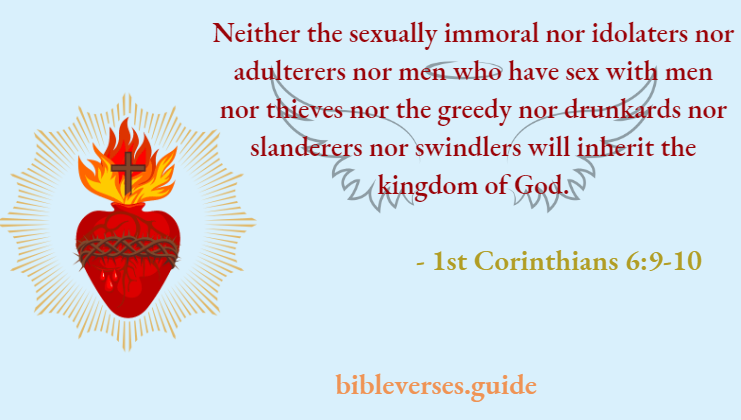
Or do you not know that wrongdoers will not inherit the kingdom of God? Do not be deceived:

Now look at these same verses as written in The Message…a loose version of the Bible.

Don’t you realize that this is not the way to live? Unjust people who don’t care about God will not be joining in his kingdom. Those who use and abuse each other, use and abuse sex, use and abuse the earth and everything in it, don’t qualify as citizens in God’s kingdom.

That’s quite a difference, don’t you agree? The Message leaves it wide open for the reader to decide what his or her definition of abusing each other, abusing sex, or abusing the earth is. These are not things that have been left for us to decide these are things God decided. We only have the right to choose whether or not we want to obey him.

All that being said, I will say that not all versions are as loosely written, nor is it wrong or bad to have a version of the Bible to look at for comparison when studying the Bible. Children’s Bibles are another exception to this rule.

Toddlers and preschoolers are blessed to have a variety of beautiful picture story Bibles that introduce them to the power and glory of God and his son, Jesus. But to use a version rather than a translation as your sole source of Bible study and memorization is not wise.

Using the translated text is ALWAYS better than using someone’s idea of what the verse means.

A Great Place To Start

A Great Place To Start

One step at a time is how you learned to walk. When you first learned to drive, you didn’t feel confident until you drove a few miles.

Before you knew that four times four is sixteen or that A minus B is equal to C times five, you also had to learn that two plus two is four.

What’s the point? Reading and remembering the Bible doesn’t have to be done very quickly or in large amounts. Not how many lines you remember, but how well you understand and know the ones you do remember.

Here is a list of Bible verses that are very important to Christians and people who want to know more about God. There is a long list. Don’t let that make you feel bad or scared.

You don’t have to learn any of them or all of them in one night. Go through them. Choose the three you want to learn first.

Once you remember those three, you can move on to the next three… and the next thirty-three… But don’t forget to say the ones you already know at least three or four times a week to keep them fresh in your mind.

If you’re new to all of this, I know it sounds scary, but it’s not. You can and will get the information and wisdom you need to remember his Word from God. It’s as easy as asking for it and taking it.

Read and Learn More Memorize Bible Scripture and Verses Quickly and Easily

You will remember the lines as well as the “Happy Birthday” song, your child’s birthday, or the password to your email account if you read them.

NOTE: The verses are in no particular order of importance.

In the beginning God created the heavens and the earth

You shall not bow down to them or worship them; for I the LORD your God am a jealous God, punishing the children for the sin of the fathers to the third and fourth generation of those who hate me, but showing love to a thousand generations of those who love me and keep my commandments.

You shall not misuse the name of the LORD your God, for the LORD will not hold anyone guiltless who misuses his name. Remember the Sabbath day by keeping it holy. Six days you shall labor and do all your work, but the seventh day is a Sabbath to the LORD your God.

On it, you shall not do any work, neither you, nor your son or daughter, nor your manservant or maidservant, nor your animals, nor the alien within your gates. For in six days, the LORD made the heavens and the earth, the sea and all that is in them, but he rested on the seventh day.

Therefore the LORD blessed the Sabbath day and made it holy. Honor your father and your mother, so that you may live long in the land the LORD your God is giving you. You shall not murder. You shall not commit adultery. You shall not steal.

You shall not give false testimony against your neighbor. You shall not covet your neighbor’s house. You shall not covet your neighbor’s wife, or his manservants or maidservant, his ox, or donkey, or anything that belongs to your neighbor.”

There is no one holy like the LORD

Esther 4:14 “For if you remain silent at this time, relief and deliverance for the Jews will arise from another place, but you and your father’s family will perish. And who knows but that you have come to a royal position for such a time as this?”

Job 4:17-18 “Blessed is the man whom God corrects, so do not despise the discipline of the Almighty. For he wounds, but he also binds up, he injures, but his hands also heal.”

Submit to God and be at peace with him; in this way prosperity will come to you

Whatever he does prospers. Not so the wicked! They are like chaff that the wind blows away. Therefore the wicked will not stand in the judgment, nor sinners in the assembly of the righteous. For the LORD watches over the way of the righteous, but the way of the wicked will perish.”

Psalm 5:3 “In the morning, O LORD, you hear my voice; in the morning I lay my requests before you and wait in expectation.”

Psalm 9:10 “Those who know your name will trust in you, for you, LORD

Psalm 16:5-6 “LORD, you have assigned me my portion and my cup, you have made my lot secure. The boundary lines have fallen for me in pleasant places; surely I have a delightful inheritance.”

Psalm 19:14 “May the words of my mouth and the meditation of my heart be pleasing in your sight, O LORD, my Rock and my Redeemer.”

For the word of the LORD is right and true; he is faithful

Psalm 139:14 “I praise you because I am fearfully and wonderfully made; your works are wonderful, I know that full well.”

Proverbs 1:7 “The fear of the LORD is the beginning of knowledge, but fools despise wisdom and discipline.”

Proverbs 4:23 “Above all else, guard your heart, for it is the wellspring of life.”

Proverbs 6:16-19 “There are six things the LORD hates, seven that are detestable to him: haughty eyes, a lying tongue, hands that shed innocent blood, a heart the devises wicked schemes, feet that are quick to rush into evil, a false witness who pours out lies and a man who stirs up dissension among brothers.”

Wealth is worthless in the day of wrath, but righteousness delivers from death

Proverbs 19:21 “Many are the plans in a man’s heart, but it is the LORD’s purpose that prevails.”

Ecclesiastes 3:1-8 “There is a time for everything, and a season for everything activity under heaven: a time to be born and a time to die, a time to plant and a time to uproot, a time to kill and a time to heal, a time to tear down and a time to build.

a time to weep and a time to laugh, a time to mourn and a time to dance, a time to scatter stones and a time to gather them, a time to embrace and a time to refrain, a time to search and a time to give up.

A time to keep and a time to throw away, a time to tear and a time to mend, a time to be silent and a time to speak, a time to love and a time to hate, a time for war and a time for peace.”

A good name is better than fine perfume, and the day of death better than the day of birth

Isaiah 40:8 “The grass withers and the flowers fall, but the word of our God stands forever.”

Isaiah 40:28 “Do you not know? Have you not heard? The LORD is the everlasting God, the Creator of the ends of the earth. He will not grow tired or weary, and his understanding no one can fathom.”

Isaiah 59:1 “Surely the arm of the LORD is not too short to save, nor his ear too dull to hear.”

Jeremiah 29:11-13 “For I know the plans I have for you, declares the LORD, plans to prosper you and not to harm you, plans to give you hope and a future. Then you will call upon me and come and pray to me, and I will listen to you. You will seek me and find me when you seek me with all your heart.”

Matthew 5:3-10 “Blessed are the poor in spirit, for theirs is the kingdom of heaven. Blessed are those who mourn, for they will be comforted. Blessed are the meek, for they will inherit the earth.

Blessed are those who hunger and thirst for righteousness, for they will be filled. Blessed are the merciful, for they will be shown mercy. Blessed are the pure in heart, for they will see God. Blessed are the peacemakers, for they will be called the sons of God. Blessed are those who are persecuted because of righteousness, for theirs in the kingdom of heaven.”

Matthew 6:9-15 “This, then, is how you should pray: Our Father in heaven, hallowed be your name, your kingdom come, you will be done on earth as it is in heaven. Give us today our daily bread. Forgive us our debts, as we also have forgiven our debtors.

And lead us not into temptation, but deliver us from the evil one. For if you forgive men when they sin against you, your heavenly Father will also forgive you. But if you do not forgive men their sins, your Father will not forgive your sins.”

Simon Peter answered You are the Christ the Son of the living God

Matthew 28:18-20 “Then Jesus came to them and said, “All authority in heaven and on earth has been given to. Therefore, go and make disciples of all nations, baptizing them.

In the name of the Father and of the Son and of the Holy Spirit, and teaching them to obey everything I have commanded you. And surely I am with you always to the very end of the age.”

Mark 3:16-18 “These are the twelve he appointed: Simon (to whom he gave the name Peter); James son of Zebedee and his brother John (to them he gave the name Boanerges, which means Sons of Thunder); Andrew, Philip, Bartholomew, Matthew, Thomas, James son of Alphaeus, Thaddaeus, Simon the Zealot and Judas Iscariot, who betrayed him.”

Mark 14: 22-24 “While they were eating, Jesus took bread, gave thanks and broke it and gave it to his disciples, saying, “Take it; this is my body.” Then he took the cup, gave thanks, and offered it to them, and they all drank from it. “This is my blood of the covenant, which is poured out for many,” he said to them.”

Mark 16:16 “Whoever believes and is baptized will be saved, but whoever does not believe will be condemned.”

Luke 1:37 “For nothing is impossible with God.”

Luke 23:46 “Then Jesus called out with a loud voice, “Father, into your hands I commit my spirit.” When had said this, he breathed his last.”

In the beginning was the Word

Acts 2:38 “Peter replied, “Repent and be baptized, every one of you, in the name of Jesus Christ for the forgiveness of your sins. And you will receive the gift of the Holy Spirit.”

Acts 22:16 “And now what are you waiting for? Get up, be baptized, and wash your sins away, calling on his name.”

Romans 1:16 “I am not ashamed of the gospel, because it is the power of God for the salvation of everyone who believers: first for the Jew, then for the Gentile.”

Romans 2:6 “God will give to each person according to what he has done.”

Romans 3:23-24 “For all have sinned and fall short of the glory of God, and are justified freely by his grace through the redemption that came by Christ Jesus.”

Romans 5:8 “But God demonstrates his own love for us in this: While we were still sinners, Christ died for us.”

Romans 6:1-2 “What shall we say, then? Shall we go on sinning so that grace may increase? By no means! We died to sin; how can we live in it any longer?”

Christ Jesus our LORD

Romans 13:1 “Everyone must submit himself to the governing authorities, for there is no authority except that which God has established. The authorities that exist have been established by God.”

1st Corinthians 10:13 “No temptation has seized you except what is common to man. And God is faithful; he will not let you be tempted beyond what you can bear. But when you are tempted, he will provide a way out so that you can stand up under it.”

1st Corinthians 13:4-7 “Love is patent, love is kind It does not envy, it does not boast, it is not proud. It is not rude, it is not self-seeking, it is not easily angered, and it keeps no record of wrongs, Love does not delight in evil but rejoices with the truth. It always projects, always trusts, always hopes, always perseveres.

1st Corinthians 15:33 “Do not be misled: “Bad company corrupts good character”.

2nd Corinthians 9:6-7 “Remember this: Whoever sows sparingly will also reap sparingly, and whoever sows generously will also reap generously. Each man should give what he has decided in his heart to give, not reluctantly or under compulsion, for God loves a cheerful giver.”

Galatians 3:27 “For all of you who were baptized into Christ have clothed yourselves with Christ.”

Stars in the universe

Philippians 4:6-7 “Do not be anxious about anything, but in everything, by prayer and petition, with thanksgiving, present your requests to God. And the peace of God, which transcends all understanding, will guard your hearts and your minds in Christ Jesus.”

1st Thessalonians 5:16-18 “Be joyful always, pray continually; give thanks in all circumstances, for this is God’s will for you in Christ Jesus.”

1st Timothy 4:12 “Don’t let anyone look down on you because you are young, but set an example for the believers in speech, in life, in love, in faith and in purity.”

Hebrews 10:23 “Let us hold unswervingly to the hope we profess, for he who promised is faithful.”

Hebrews 10:26-27 “If we deliberately keep on sinning after we have received the knowledge of the truth, no sacrifice for sins is left, but only a fearful expectation of judgment and the raging fire that will consume the enemies of God.”

Jesus Christ is the same yesterday and today and forever

James 1:19 “My dear brothers take note of this: Everyone should be quick to listen, slow to speak, and slow to become angry.”

James 3:17 “But the wisdom that comes from heaven is first of all pure; then peace-loving, considerate, submissive, full of mercy and good fruit, impartial and sincere.”

1st Peter 3:15 “But in your hearts set apart Christ as LORD. Always be prepared to give an answer to everyone who asks you to give the reason for the hope that you have. But do this with gentleness and respect.”

1st Peter 5:6-7 “Humble yourselves, therefore, under God’s mighty hand, that he may lift you up in due time. Cast all your anxiety on him because he cares for you.”

1st John 1:8-9 “If we claim to be without sin, we deceive ourselves and the truth is not in us. If we confess our sins, he is faithful and just and will forgive us our sins and purify us from all unrighteousness.”

God lives forever

Memorize With Other Christians

Memorize With Other Christians

A great way to grow and mature in Christ is to study and memorise with other Christians. They can help you and hold you accountable.

Most groups like this will get together once a week for an hour to read, pray, work on memory verses, and spend time with each other. You not only learn by learning and doing memory work with other Christians at this kind of meeting, but you also get to know each other better.

Having a friendship makes studying with someone more important and useful. As time goes on, you learn to trust each other. Being around each other doesn’t make you feel bad or scared, so you can relax and let God’s Word speak to your heart and mind.

People often meet in small groups to study the Bible these days. But the groups that work together to memorise Scripture have the most profound effect on the lives of those in the group and on those they interact with. Read what Dale has to say if you don’t agree…

I’ve been a Christian for a long time. I like reading my Bible every day and am a leader in my church. It’s not hard for me to find Bible lines that I want to share with others or use in a lesson, but I’ve never tried to remember them.

I was sure I could not. Not me. But when our preacher asked me to join a serious Bible study group where we would learn several important Bible lines by heart, I agreed. I was still sure I would never be able to do it, but I chose to try anyway.

The group was great. Eight of us had been going to church together for years. Someone who was afraid of the memory work was not the only old person in the group.

Read and Learn More Memorize Bible Scripture and Verses Quickly and Easily

So every week, we would pair up and read our texts to each other. Even though it was hard at first, I found that it wasn’t as bad or as hard as I thought it would be after memorising a few lines.

You can always ask someone to read the verse to you or read it out loud to yourself if none of these ways of listening to memorise Bible verses sound good to you or are easy for you to use.

Reading the line out loud to yourself over and over again does work, take it from someone who learns best by hearing.

When you read verses out loud to other people, especially young children, you have someone to listen while you and your child learn to say the verse by heart. Some people need to feel accountable, but reading it out loud to yourself doesn’t do that for me.

Hearing the words, even if it’s their own voice, helps a lot of people remember them. If reading God’s Word out loud is the best way for you to remember it, do it. You can do it to music, an app on your phone, or just to yourself as you study. It will make a huge difference in your life.

Memorize With Other Christians

Write On

Writing verses down on note cards, in a small notebook, or using the ‘sticky note’ function of your tablet, laptop, or phone, is how some people memorize best.

Writing the verses down requires you to look at them and think about what you are writing. In some ways, this method makes the verses more real just words you read on a page.

Writing the verses down gives you the ability to take them with you everywhere you go; meaning you can look at them and work on memorizing them anytime and anywhere. If you write the verses you want to memorize on notecards, you can put them on:

  • Your mirror
  • Cabinet of closet doors
  • In your Bible to be part of your daily Bible study
  • On the treadmill so you can memorize and walk at the same time
  • By the TV remote to remind you of what is really important
  • On your pillow or on your nightstand to say before you go to bed each night
  • By the coffee maker so you can work on them while you enjoy your morning coffee
  • On the dashboard of your car

Some people who memorize best by writing verses keep a notebook-virtual or hard copy-in which they write the verses they are memorizing over and over…and over again. In doing so they are able to remember the verses because they have to put focused thought on what they are writing.

As for putting them on your phone or computer, I think it’s safe to say you will rarely be more than an arm’s reach away from these things, so you will have plenty of opportunities to stop what you are doing for a few minutes several times a day to work on memorizing God’s Word.

Remember, though, you have to make and take those opportunities in order for them to produce results. I sent myself an email from one account to another. It listed several of the verses I want to memorize.

Every time I check my email, I take a few minutes to read that one, too. I say the verses I’ve already memorized so I don’t forget them and then work on the next one.

Sometimes I say them out loud and other times I say them to myself-depending on where I am. This might not work for everyone, but it’s worked for me. -Dave

Once you have a verse or verses memorized, you can also ask someone to test or quiz you on what you’ve learned. This proved to be highly effective in the study group Darla was in…

We used notecards in our group. On one side we wrote the verse and where it is found and on the other side we only wrote where the verse was found.

We would quiz each other by holding up the side of the card with the scripture references and our partner would have to say the verse. It was a great way to learn.

If you are unsure of how Darla’s group’s flashcard system worked, look at the example below that follows to help you better understand it.

Christ for the forgiveness

I realize some of you may not have the blessing of having others to study and memorize with or the time to do so on a regular basis. Sometimes life requires us to set our study time late at night or early in the morning when we have a bit of quiet time to ourselves-neither being conducive to studying with a group.

If this is the case, you can still use the flashcard system—it just might not be quite as much fun doing it by yourself as it is doing it with a group of your brothers and sisters in Christ.

NOTE: The flashcard system is also a great way for families to work together to commit Bible verses to memory. School-age children are familiar with this form of learning and usually pick it up quite easily.

Let your artistic side show through

Artistic side

No one said memorizing Bible verses was supposed to be boring. When making your notecards or notes on your phone or computer, get creative! Use bright-colored markers and paper or cards. There are lots of options out there so don’t think you have to settle for boring old white cards or even the neon-colored ones if that isn’t your ‘thing’.

You can use a journal or create a SMASH book of Bible verses complete with doodles, drawings, stickers, or whatever you want to add.

Use different fonts to emphasize words or phrases in a verse you are having trouble with to help them stand out. Use fonts that are fun to look at ones that remind you of the doodling you did when you were a kid.

If you write out your cards, write them out in your best handwriting. This small, seemingly unimportant gesture makes you focus on what is being written and subconsciously retains at least a portion of it. Your neatness also validates the fact that God’s Word is worth your best effort.

The Israelites were instructed by Moses to make the Law a prominent part of their lives. He told them to talk about it, bind it to their foreheads, and make it visible in their homes

We’re no longer under the Law of Moses, but these verses can and should still apply to us today in regard to both the Old and New Testaments.

Memorize God’s Word With Your Family

Memorize God’s Word With Your Family

Family devotions are NEVER a bad idea. But when you add an element of memorization to it, you can challenge and encourage each other to learn…in a not-too-competitive way, of course.

Memorizing Bible verses as a family is a wonderful way to make God’s presence in your home real and genuine. Memorizing as a family also:

  • Encourages you to not give up
  • Holds you accountable for the commitment you’ve made to memorize a verse (or verses)
  • Brings an added sense of unity to your family
  • Allows you to work as a team and not feel so alone in your quest to put God’s Word to memory

Don’t make it a burden or drudgery, though. Make it fun! Make it enjoyable, and make it easy so no one gets discouraged.

Memorize God's Word With Your Family

At the dinner table

Say the verse you are working on together at the dinner table a few times while eating. For example, whenever Dad says, “Forks down.” it’s time to say the verse.

Read and Learn More Memorize Bible Scripture and Verses Quickly and Easily

Or…once everyone is fairly familiar with the verse, make it a requirement that they have to say it from memory before they get dessert or leave the table.

Write it on their…

Write the verse on a sticky note or note card and put it in your purse, lunch bag, briefcase, or book bag so you will see it throughout the day.

Write the verse in marker or lipstick on your house’s bathroom mirrors.

For example kitchen cabinets, the dashboard of the car, on the front of the microwave, on the TV remote…

Place a notecard with the verse on everyone’s pillow and let it be the last thing they look at each night before going to bed.

And the award goes to…

Reward yourselves when you memorize three or four verses. You can do this on an individual basis or make it a family affair. When doing it on an individual basis, it is important to remember to strike a balance between rewarding those who have memorized their verses and not making other family members (especially children) feel unaccomplished

Note: If doing individual awards, never compare one child’s accomplishments to another’s.

Some of the individual awards you might offer include:

  • A chore-free day
  • A later bedtime for a day or two
  • Playdate with a friend
  • Choosing something to do with just mom or dad
  • Choosing the movie for family movie night
  • A small gift such as a book, craft kit, trip to the yogurt or ice cream shop, or something else the person will enjoy NOTE: Moms, especially like a few hours of ‘me time’

Family rewards could include:

  • A special dinner out
  • A trip to the zoo or other fun activity
  • Making homemade ice cream together
  • Staying up late, eating popcorn, and watching a movie together
  • A family evening at the bowling alley
  • A backyard game night

For all the right reasons

Memorizing Bible verses with your family can sometimes cause us (and especially children) to learn the verses for the sake of ‘winning’ rather than for putting God’s Word into their hearts and minds. You can also avoid the competition mindset between your children by not having that mindset yourself.

Consistency

Also, it’s helpful to review the words you already know every once in a while. Do it now, or you’ll forget them and all your hard work will be for nothing.

If you are memorising to know God’s Word, share God’s Word with others, and grow closer to God, you should go over the verses over and over to keep them fresh in your mind.

My friend had learned many Bible verses by heart over the years, but one day she chose to learn the whole Sermon on the Mount (Matthew 5–7).

Small steps at a time. Every day, before she learned new lines, she would say the ones she already knew. She made it a point to say all three chapters to herself every day as she walked.

It had a long time. After that, she missed a few days here and there. Do you know what took place? Some of the lines got harder for her to read. A lot of it she could still say word for word, but some parts were off.

You don’t learn a song just to not sing it again, do you? The same thing happens when you try to remember Bible verses.