
Chapter 6 Getting Closer To God Through The Gospels
Bible study aims to help you connect with God more profoundly. The entire sixty-six books of the Bible are God’s attempt to bring Himself closer to His people.
From the Old Testament to the New Testament, believers can experience God through numerous bible stories and understand how faithful He is to those He calls his own.
Since the beginning of this book, the Bible characters studied were from the Old Testament. Women who had never met Jesus nor His disciples yet still believed in the God of their fathers.
The people of the Old Testament had no one to bring them the good news, but like Joshua, they and their households could choose to serve the Lord even amid confusion.
This chapter centers on deepening and nurturing your relationship with God through Jesus’ teachings and stories in the Gospels.
Read and Learn More Bible Study Acts Chapter wise
So, it is time to explore books in the New Testament. This chapter aims to inspire you to follow the examples of Jesus and his disciples, fostering a closer and more personal connection with God.
The word gospel is derived from the Old English Godspell, which translates from the Greek word euangelion, meaning good news or good telling. This word described important news, like when a king won a battle or something good happened in the kingdom.
The meaning of the word gospel became much deeper when Jesus came, over 400 years after the last book of the Old Testament was written. It became the perfect word for the special message Jesus brought to the world.
The Messiah came with a message of hope for people who felt lost or without help. He came to bring freedom to those who were suffering or feeling trapped. So, the word gospel became closely linked with the story of Jesus.
Jesus and his disciples left the body of Christ with many interactions and examples to help shape the believers’ minds into one fit for a glorious life with God.
The Core Teachings Of The Gospels
The Gospels are the books in the Bible that tell about the life and ministry of Jesus. They were written to teach and show believers who Jesus was, what He did, and why He came.
The Gospels center around the good news Jesus Christ came to share with the entire world. What was this good news? It is the message about God’s unending love for mankind and how they could have a close relationship with Him.
Each Gospel provides a unique view of Jesus’ life, His teachings, His miracles, and His compassion for people. The Gospels are the four accounts written by Jesus’ disciples. It made sense to call them “Gospels” because they all shared the same good news that Jesus came to bring.
The first four books of the New Testament, Matthew, Mark, Luke, and John, are like four windows offering an insider’s perspective of Jesus’ life from different angles.
Each highlights various aspects of Jesus’ life and ministry, but they all portray his love for people and his desire to bring them closer to God.
Key Moments In Jesus’ Ministry
The Sermon On The Mount
The sermon beginning with a blessing is God’s way of assuring you of His unwavering promise of blessing. The aim is to remind you of His intention to bless you and His unfailing promises.
The Sermon on the Mount is in the book of Matthew, from chapter 5 to chapter 7. It was Jesus’ longest teaching in the Gospels.
The sermon laid out Jesus’ moral vision for humanity. Jesus teaches a large crowd how to live if they want to follow God. He centered on humility, compassion, and forgiveness.
The sermon starts with the Beatitudes, a series of blessings describing the attitudes and actions that please God.
Matthew 5:1-12:
“Now when Jesus saw the crowds, he went up to a mountainside and sat down. His disciples came to him, and he began to teach them. He said: “Blessed are the poor in spirit, for theirs is the kingdom of heaven.
Blessed are those who mourn, for they will be comforted. Blessed are the meek, for they will inherit the earth. Blessed are those who hunger and thirst for righteousness, for they will be filled.
Blessed are the merciful, for they will be shown mercy. Blessed are the pure in heart, for they will see God. Blessed are the peacemakers, for they will be called children of God.
Blessed are those who are persecuted because of righteousness, for theirs is the kingdom of heaven. Blessed are you when people insult you, persecute you, and falsely say all kinds of evil against you because of me.
Rejoice and be glad because great is your reward in heaven, for in the same way they persecuted the prophets who were before you.”
Beatitudes means a state of supreme happiness. So, this first part of the sermon was Jesus teaching the people that true happiness comes from living in a way that is pleasing to God. These mental states of mind became the blueprint for all who would become His disciples.
As He continued, Jesus referred to the believer as the light in a world of darkness and as the salt adding taste to the world around them:
“You are the salt of the earth. But if the salt loses its saltiness, how can it be made salty again? It is no longer good for anything except to be thrown out and trampled underfoot. You are the light of the world.
A town built on a hill cannot be hidden. Neither do people light a lamp and put it under a bowl. Instead, they put it on its stand, and it gives light to everyone in the house.
In the same way, let your light shine before others, that they may see your good deeds and glorify your Father in heaven.” Matthew 5:13-16
He further tells them about acceptably fulfilling the law. He gave them a deeper understanding of God’s commandments concerning murder (Matthew 5:21-25), adultery (Matthew 5:27-30), divorce (Matthew 5:31-32), oaths (Matthew 5:33-37), and vengeance (an eye for an eye) (Matthew 5:38-42).
Jesus taught that it is not enough to avoid murdering someone. He explained that if you are angry with someone without a good reason, you have broken the commandment because of murder in your heart.
Speaking on adultery, He said even looking at a person with lust is committing adultery in your heart. He admonished Christians to control what they do, think, and feel.
Think of what the world would be like if people truly obeyed these teachings, not only in their actions but also in their hearts. It would be like heaven.
There would be no road rage, no shouting matches, no malice, no unnecessary violence, and no harsh words hurting others. People would be more patient and understanding and work hard to solve problems peacefully.
Instead of winning arguments, they would focus on finding solutions and making peace. If the commandment against lust were obeyed in spirit, there would be no infidelity, and marriages would be stronger and happier.
Families would be more stable, and children would grow up in loving homes. There would be no need for pornography, etc. The industry would run out of business instead of flourishing like today. The world would be a much better place if everyone lived according to the law’s spirit.
Also, Jesus gave the most difficult instructions to follow: “Love your enemies” (Matthew 5:44) and “Be perfect, just as your Father in heaven is perfect” (Matthew 5:48).
God is perfect because God is love. Usually, when people are hurt, their first reaction is to hurt their offenders back or hold a grudge.
However, Jesus says to love those who mistreat you, forgive them, and pray for them. This love is not easy, but it is the love God shows to all people.
God’s love is unconditional. He cares deeply for everyone, even those who do not believe in Him or respect His name. He loves those who reject Him or use His name in vain.
His love is not based on what you do or don’t do. His love stems from His character and desire for everyone to know Him.
In Matthew 6, Jesus shifted the focus to trusting God and seeking His kingdom first. He tells the people not to worry about their daily needs, like food and clothing, because God knows what they need and will provide. He says, “Seek first the kingdom of God and His righteousness, and all these things will be added to you” Matthew 6:33.
Remember how the Bible says in Psalms 23:1, “The Lord is my shepherd, I lack nothing,” Psalms 34:10 says, “The lions may grow weak and hungry, but those who seek the LORD lack no good thing.” Jesus was merely establishing what had been said centuries before Him. It shows that God is indeed faithful. When you seek and trust Him, He will bless you with every good thing.
The sermon included a session on being sincere in your actions and not only doing things to look good in front of others. Jesus talks about giving to the needy, praying, and fasting privately rather than doing these things to show off. God looks at the heart, and He values genuine devotion over outward appearances, 1 Samuel 16:17:
“But the LORD said unto Samuel, “Look not on his countenance or on the height of his stature, because I have refused him; for the LORD seeth not as man seeth. For man looketh on the outward appearance, but the LORD looketh on the heart.”
When you do good things quietly and sincerely, without seeking praise from others, it indicates your love for God is real and you are more concerned about what God thinks than what people think.
The Sermon on the Mount provides many lessons on how to live a life that is pleasing to God. You will learn to become humbler, loving, forgiving, and sincere if you study and meditate on it. You will grow closer to God and live in a way that reflects His love and righteousness.
Famous Parables
Jesus was famously known for speaking in parables in public places. It usually left the people confused. He did his best to explain them without using complex words. His disciples also had problems understanding His parables. So, He took His time to break it down, saying,

But what does a parable mean? A parable is a simple story using everyday situations to illustrate a more profound spiritual truth. Some of the most famous parables Jesus told include:
The Parable Of The Good Samaritan (Luke 10:29-37)
“But he wanted to justify himself, so he asked Jesus, “And who is my neighbor?” In reply, Jesus said: “A man was going down from Jerusalem to Jericho when he was attacked by robbers.
They stripped him of his clothes, beat him, and went away, leaving him half dead. A priest happened to be going down the same road, and when he saw the man, he passed by on the other side.
So, too, a Levite, when he came to the place and saw him, passed by on the other side. But a Samaritan, as he traveled, came where the man was; and when he saw him, he took pity on him.
He went to him and bandaged his wounds, pouring on oil and wine. Then he put the man on his own donkey, brought him to an inn, and took care of him.
The next day he took out two denarii and gave them to the innkeeper. ‘Look after him,’ he said, ‘and when I return, I will reimburse you for any extra expense you may have.’
“Which of these three do you think was a neighbor to the man who fell into the hands of robbers?” The expert in the law replied, “The one who had mercy on him.” Jesus told him, “Go and do likewise.”
In this story, a man is traveling from Jerusalem to Jericho when he is attacked by robbers, beaten, and left for dead. Several people pass by without helping him.
Finally, a Samaritan — a person from Samaria whom the Jews did not like — bandages the man’s wounds, takes him to an inn and pays for his care.
Jesus told this parable to encourage believers to act lovingly and caringly show kindness, compassion, and mercy to everyone because true neighborliness comes from the heart.
The Parable Of The Prodigal Son (Luke 15:11-32)
“Jesus continued: “There was a man who had two sons. The younger one said to his father, ‘Father, give me my share of the estate.’ So, he divided his property between them.
Not long after that, the younger son got together all he had, set off for a distant country and there squandered his wealth in wild living.
After he had spent everything, there was a severe famine in that whole country, and he began to be in need. So, he went and hired himself out to a citizen of that country, who sent him to his fields to feed pigs.
He longed to fill his stomach with the pods that the pigs were eating, but no one gave him anything. When he came to his senses, he said, ‘How many of my father’s hired servants have food to spare, and here I am starving to death! I will set out and go back to my father and say to him: Father, I have sinned against heaven and against you.
I am no longer worthy to be called your son; make me like one of your hired servants.’ So, he got up and went to his father.
But while he was still a long way off, his father saw him and was filled with compassion for him; he ran to his son, threw his arms around him, and kissed him.
The son said to him, ‘Father, I have sinned against heaven and against you. I am no longer worthy to be called your son.’ But the father said to his servants, ‘Quick! Bring the best robe and put it on him.
Put a ring on his finger and sandals on his feet. Bring the fattened calf and kill it. Let’s have a feast and celebrate. For this son of mine was dead and is alive again; he was lost and is found.’
So, they began to celebrate. Meanwhile, the older son was in the field. When he came to the house, he heard music and dancing. So, he called one of the servants and asked him what was going on.
‘Your brother has come,’ he replied, ‘and your father has killed the fattened calf because he has him back safe and sound.’ The older brother became angry and refused to go in.
So, his father went out and pleaded with him. But he answered his father, ‘Look! All these years I’ve been slaving for you and never disobeyed your orders.
Yet you never gave me even a young goat so I could celebrate with my friends. But when this son of yours who has squandered your property with prostitutes comes home, you kill the fattened calf for him!’ My son,’ the father said, ‘you are always with me, and everything I have is yours. But we had to celebrate and be glad because this brother of yours was dead and is alive again; he was lost and is found.”
Like most people, the prodigal son wanted to live independently of his father. Jesus told this story to help people understand the depth of God’s love.
It didn’t matter how long the son was gone, what he did with his father’s money, or how he looked when he returned. His father readily received him with open arms and a kiss.
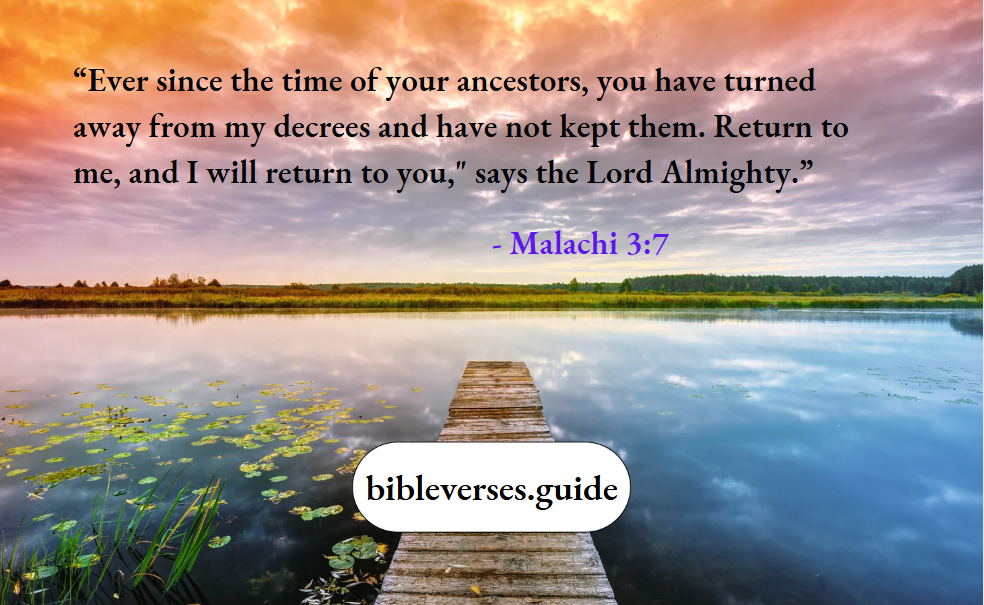
In the parable, the prodigal son represents people who have journeyed on their own, far from God. The father represents God, who is unconditional in His love.
A God willing to accept you whenever you acknowledge your mistakes and return to Him. 1 John 1:9, “If we confess our sins, he is faithful and just and will forgive us our sins and purify us from all unrighteousness.” Malachi 3:7:
The Parable Of The Lost Sheep (Luke 15:1-7)
“Now the tax collectors and sinners were all gathering around to hear Jesus. 2 But the Pharisees and the teachers of the law muttered, “This man welcomes sinners and eats with them.” Then Jesus told them this parable: “Suppose one of you has a hundred sheep and loses one of them.
Doesn’t he leave the ninety-nine in the open country and go after the lost sheep until he finds it? And when he finds it, he joyfully puts it on his shoulders and goes home.
Then he calls his friends and neighbors together and says, ‘Rejoice with me; I have found my lost sheep.’ I tell you that in the same way, there will be more rejoicing in heaven over one sinner who repents than over ninety-nine righteous persons who do not need to repent.”
Jesus used this parable to explain how important every soul is to God. Leaving an entire flock of sheep to chase after one is not something many would do. But God is not man. He doesn’t think like one. He wants all sinners to repent and draw close to Him. The Lord said in Ezekiel 18:23:
“Do I take any pleasure in the death of the wicked? Declares the Sovereign Lord. Rather, am I not pleased when they turn from their ways and live?”
He was immensely fond of King David because, while tending to his father’s sheep, David would chase and kill wild animals that tried to take his sheep.
He could have run back home to tell his father that the lion and the bear attacked them. Instead, he kept the rest safe and chased after the animals because of one sheep. God loves all His children, and His mercy endures forever. Isaiah 43:4 says:

King David wrote a Psalm on God’s love:
“Give thanks to the Lord, for he is good. His love endures forever. Give thanks to the God of gods. His love endures forever…” Psalm 136
These are a few parables Jesus told. You can study many more during your Bible study.
- Parable of the Sower (Mark 4:1-20)
- Parable of the Pharisee and Publican (Luke 18:9-14)
- Parable of the Mustard Seed (Matthew 13:31-32)
- Parable of the Ten Virgins (Matthew 25:1-13)
- Parable of the Lost Coin (Luke 15:8-10)
- Parable of the Talents (Matthew 25:14-30)
Notable Miracles
The Feeding Of The Five Thousand (Matthew 14:13-21)
The four gospels recount a miracle where Jesus fed five thousand people with only five loaves of bread and two fish. It was such a dramatic day.
One moment, the disciples were anxious and worrying about how to feed the multitude. A thanksgiving prayer with five loaves of bread and two fishes later, Jesus performed a miracle.
Everyone ate until full, and there were leftovers. The disciples couldn’t believe their eyes. This miracle was Jesus’ way of showing the people that nothing was impossible with God. In Psalm 78:22-24, King David testified of God’s ability to perform a miracle like this:
“…for they did not believe in God or trust in his deliverance. Yet he gave a command to the skies above and opened the doors of the heavens; he rained down manna for the people to eat, and he gave them the grain of heaven.” Read the original story in Exodus 16.
Always have faith in God’s provision and be willing to share what you have. God can multiply your small offerings to meet greater needs in the blink of an eye. Matthew 19:26, “…With man this is impossible, but with God all things are possible.”
Jesus Walking On Water (Matthew 14:22-32)
Have you ever looked at the ocean? Have you truly observed the ocean and watched how the water moves? What about its depth? Have you ever thought about the depth of an ocean? Water is larger than the entire land area on Earth.
Water holds immense energy when it flows, which is called kinetic energy. Researchers learned that water covers over 70 percent of the Earth’s surface, and 96.5 percent is seawater.
Now, with this context in mind, picture Jesus walking on water – not a fountain, a stream, a lake, or a river, but a sea. A sea! He did so with a calm and unbothered demeanor. He walked majestically like the King He is.
He could have even been reading a scroll as He walked, paying no mind to the sea, only looking up to see He was on the right path to the boat as if it was an everyday activity. He asked Peter to come to Him, and Peter walked water until he allowed fear to cloud his mind.
This miracle happened after the feeding of the five thousand. Jesus sent His disciples ahead in a boat while He went up a mountain to pray.
The disciples’ boat was far from land during the night, and the wind was strong. Jesus came to them, walking on the water.
The disciples were terrified, thinking He was a ghost, but Jesus reassured them, saying, “Take courage! It is I. Don’t be afraid.”
When Peter began to sink, Jesus reached out and caught him, saying, “You of little faith, why did you doubt?” Faith helps you overcome fear; however, it disguises itself. This miracle shows that Jesus will always help when you call out to Him.
The Woman With A Blood Issue
The story of the woman with the issue of blood is in three of the four gospels. This woman had suffered from this health challenge for over twelve years.
Unlike the man at the pool of Bethesda, who had no one, the woman had people and money. She had been to the hospital several times, and presumably, doctors avoided her. Seeing a patient suffering from an illness you’ve tried over and over to cure is like a blow to your profession.
The woman spent all her money and time for more than 12 years looking for a solution to her predicament. All efforts were fruitless. One day, she heard Jesus was visiting the house of a synagogue leader in her area.
She said to herself, “If I just touch his clothes, I will be healed.” The miracle happened the moment she touched His garment. Suddenly, the blood dried up, and she was free.
Jesus felt power leave His body, and He perceived that someone with faith had touched Him – faith that was hard to ignore. He turned and asked, “Who touched my clothes?” But his disciples answered that it could have been anyone because a large crowd followed them. However, Jesus was no ordinary man. He knew it was someone special and kept looking.
The woman realized He would search until He found her, so she presented herself to Him. Jesus looked at her and smiled.
He said to her, “Daughter, your faith has healed you. Go in peace and be freed from your suffering.” This marked the end of her predicament.
What is that issue causing you heartache and distress? It doesn’t matter how long or what the doctors call it. Jesus can heal you. Reach out to Him in faith today and receive your healing. In Isaiah 53:4, Prophet Isaiah prophesied about Jesus:
“Surely, he took up our pain and bore our suffering, yet we considered him punished by God, stricken by him, and afflicted.
But he was pierced for our transgressions, he was crushed for our iniquities; the punishment that brought us peace was on him, and by his wounds, we are healed.”
There are many other miracles in the gospels like these. Here are some you can study and meditate on later:
- The healing of the man born blind (John 9:1-12)
- The man at the pool of Bethesda (John 5:1-15)
- Turning water into wine (John 2:1-11)
- Raising Lazarus from the dead (John 11:1-43)
- Calming the storm (Mark 4:35-41)
Through these miracles, Jesus reveals the compassionate and powerful nature of God. When Jesus heals the sick, feeds the hungry, or raises the dead, He demonstrates His divine power and displays how active God is in the lives of those who trust and believe in Him.
Love, Compassion, and Forgiveness:
Central Themes In The Gospels
In drawing closer to God, you cannot overemphasize the love, compassion, and forgiveness. Jesus admonishes believers to love each other as He loves them in John 13:34.
Love is a spiritual force keeping God close to you. Chapter 4, on love and compassion, had more to say about this with scriptures and Bible characters who were agents of love and compassion.
Kindness or compassion is about noticing when someone needs help and helping them like Jesus did. It is not about noticing a problem and then going home to gossip about it with your friends.
From the story of the Good Samaritan, you can see genuine kindness goes beyond what’s typical or expected. The Good Samaritan helped a hurt stranger, even though they weren’t of the same social status or culture. Showing kindness to loved ones and strangers is one way to live a Godly life, the life Christ lived.
Regarding forgiveness, Jesus teaches that you must forgive others to receive God’s forgiveness (Matthew 6:14-15). Forgiveness frees you from the burden of bitterness and allows you to experience the fullness of God’s grace.
You feel lighter and more peaceful the moment you let go of anger or hurt. You reflect God’s forgiving nature, which opens the door for deeper communion with Him if you practice forgiveness.
The Model For Discipleship And Spiritual Growth
Jesus’ interactions with His disciples provide a model for discipleship and spiritual growth. He taught them through His words and by His example.
He demonstrated how to live obediently to God, serve others, and remain faithful even in challenges. He imbibed in them the vital characteristics of true leadership: service, humility, and love.
Jesus called them to be with Him, to learn from Him, and to support one another. They were His family, friends, and community.
A community like that is essential for nurturing a relationship with God because it provides encouragement, accountability, and a shared faith experience. So, even as you pursue spiritual growth, keep room for creating or joining a community that loves God like you do. You can learn from each other’s experiences and encounters with God.
Journaling Prompt
Create a weekly devotion plan based on the Gospels. Each day, read a passage from the Gospels you wrote about in your journal (make it stand out by adding creativity), reflect on its meaning, and write down how you can apply it to your life. Use this practice to nurture and strengthen your relationship with God.