
Chapter 3 Courageous Leaders In Exodus
The Bible has many stories of women who displayed courage despite adversities. Some are known, while most are not. Like the silent characters in the background who get things done, these women actively serve in their capacity. Some were even more courageous than men, contributing to fulfilling God’s plan for the Israelites.
The book of Exodus captures the stories of these women. They include Jochebed, Miriam, Shiphrah, Puah, and Pharaoh’s daughter. This chapter explores the lives of these courageous women and how they defied the norms, took risks, and significantly impacted the course of events.
You might read about these names for the first time, but rest assured, their stories will inspire you. By the end of this chapter, you will have experienced the strength and determination of the women of Exodus. Are you ready to discover how powerful you are as a woman when you choose to be brave? Find a quiet place. It’s time to study.
Read and Learn More Bible Study Acts Chapter wise
Jochebed | The Prophetic Womb (Exodus 2)
Her name may not be as popular as her children’s, but no one would know of the prophet Moses and the priest Aaron if it wasn’t for her sacrifice and courage. Jochebed was a woman of great courage and strong faith. She was a Levite and married Amram (Exodus 2:1).
They got married in the land of Egypt during the reign of a new Pharaoh, who knew nothing about Joseph and how he helped Egypt become a place of abundance. This new Pharaoh saw how the children of Israel were multiplying and sought to turn them into slaves because he was afraid of them.
His fear caused him to pass a decree that all newly born male children by Hebrew women be killed. Unfortunately, Jochebed was also a Hebrew woman and became pregnant during this period. When she gave birth and saw that the baby was a boy, she was sorely afraid.
Looking at the child, she realized he was no ordinary child. So, she did the unthinkable. She could tell God had a plan for her son’s life, so she chose faith over fear. She hid the baby from Pharaoh and his minions for as long as possible. She succeeded for three months. She carefully moved him around, fed him, and protected him with wisdom, knowing the consequences of her actions if caught. God watched over her and her son.
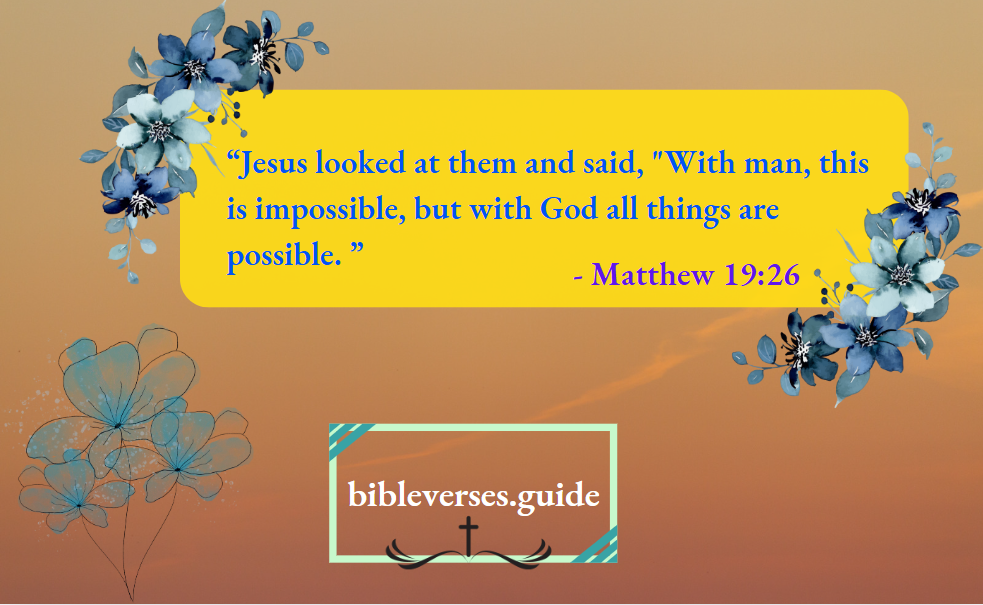
After the third month, Jochebed realized she could no longer hide him. So, she crafted a sturdy basket, and with faith that could move mountains, she placed her baby boy inside the basket and on the river Nile. She carefully used materials that would keep the basket afloat. After praying to God to keep her child safe, she turned and walked away. Matthew 19:26:
As God would have it, the baby floated to the side of the river into the brushes, where the Pharoah’s daughter came to have her bath. The princess saw the floating basket and opened it. The baby cried, and she felt pity for him. As she carried the child, she was at a loss for what to do with it until a little girl ran to her and offered to help her find a nurse.
Unbeknownst to the princess, the little girl was the baby’s big sister, and the nurse she found was the baby’s mother. Jochebed couldn’t contain her joy at being reunited with her son under the watchful eye of the princess. She finally had the chance to nurse the baby without fear of being killed by Pharaoh. She never exposed herself to the princess. She was known as the baby’s nurse and had no problems with the title.
Raising the boy, Jochebed taught him the ways of the Lord. She let him know he was an Israelite, not an Egyptian, even though he was groomed and treated like an Egyptian prince. The baby grew into a fine young man in the Egyptian palace, but his heart was with his people as his mother taught him.
This baby was the prophet Moses. The same Moses God used to lead the Israelites out of slavery and bondage in the land of Egypt, where they had suffered for over 430 years. Jochebed’s courage and unshakable faith in God to make a way where they seemed to be none made her the mother of influential figures in the Bible, Miriam, Moses, and Aaron, who grew up to be prophets.
Her faith and courage are why the Israelites tasted freedom after so many centuries. Jochebed is a testament to how one woman can impact generations by being brave, courageous, and having faith in God.
Miriam | The Prophetess (Exodus 2)
Jochebed’s firstborn, Miriam, is another influential figure in the Bible that many don’t know about. Her role in the deliverance of Israel is often overlooked. She was born during a dangerous time in Egypt when Pharaoh decreed all the Hebrew male infants be killed.
God, in his infinite wisdom, caused her to be born a girl so she could play her role without being noticed or affected by the decree passed over the land. When her baby brother, Moses, was born, their mother, Jochebed, hid him for three months. Miriam did all she could to help her mom protect Moses. She looked after him when their mom couldn’t.
She was the one who warned her mom when officers or soldiers were approaching so she could quickly hide the baby. As a little girl, Miriam was efficient as the protective big sister.
Like her mother, Miriam had faith that Moses would grow and become a great man. Determined to keep the child safe, Miriam would protect him with her fife.
When their mother set baby Moses in a basket and placed him on the river Nile, Miriam’s eyes shone with unshed tears but steeled her heart and trusted God as her mother had taught her.
After her mother had left the river, Miriam remained close to the river bank, watching her baby brother like his guardian angel float on the river.
Alert and attentive, she followed the basket’s movement with remarkable bravery and maturity unusual for someone her age. She watched as the princess and her maidens came to the river and hid while keeping an eye on the floating basket. To her greatest surprise, the basket floated to the princess. The princess took her brother out of the river and the basket.
Miriam boldly approached the princess and sweetly offered to help her find a Hebrew woman to nurse the baby. Pharaoh’s daughter agreed without hesitation.
Miriam quickly ran to tell her mother about God’s miracle. The young girl reappeared at the river bank with her mother and a bright smile on her face.
She was so excited (Exodus 2:4-9). This act saved Moses’ life and allowed Jochebed to care for her son during his early years. She used this time to instill in Moses the faith and identity of his Hebrew heritage.
By the time she reached adulthood, Miriam was a prophetess alongside her brothers Moses and Aaron, who also became a prophet and a priest. After the Israelites’ dramatic escape from Egypt, when God parted the Red Sea, allowing them to cross safely, and then drowned the pursuing Egyptian army, Miriam led the women of Israel in a song of victory. She took a tambourine in her hand, and all the women followed her with tambourines and dancing. Miriam sang:
“Sing to the LORD, for he has triumphed gloriously; the horse and his rider he has thrown into the sea” (Exodus 15:20-21) And this pleased the Lord. As an adult, Miriam’s role among the Israelites became more prominent.
She is referred to as a prophetess, indicating her spiritual significance and leadership among her people (Exodus 15:20). This moment demonstrated her leadership and her deep faith in God.
She played a vital role in encouraging and uplifting the people’s spirits through worship and praise, celebrating God’s deliverance and mighty acts.
Like every human, Miriam wasn’t perfect. Once, she spoke against Moses, saying: “Has the LORD indeed spoken only through Moses? Has he not spoken through us also?” (Numbers 12:2)
God heard this and was displeased with their challenge to Moses’ authority. God called Moses, Aaron, and Miriam to the Tent of Meeting and descended in a pillar of cloud. God defended Moses, saying he was unlike any prophet because He spoke to Moses “face to face” (Numbers 12:8).
As a punishment for her actions, Miriam was struck with leprosy, her skin becoming “white as snow” (Numbers 12:10). Moses interceded for Miriam, and God instructed that she be confined outside their camp for seven days after which He would heal her.
She obeyed and was healed. It was a humbling lesson for Miriam, and despite her moment of weakness, she remained a respected leader among the Israelites.
Shiphrah And Puah | The Courageous
Midwives (Exodus 1)
During Pharaoh’s decree to kill all male infants born by Hebrew women, God strategically placed two Hebrew midwives in Egypt to save some children. Shiphrah and Paul stood up to one of the most powerful rulers in the world out of fear of God and little respect for their lives.
Pharaoh feared the Israelites would become too powerful and join Egypt’s enemies whenever war broke out. He forced the Israelites into harsh labor and oppressed them. However, instead of reducing, the number of Israelites grew. They multiplied and spread further across Egypt.
Realizing his plan failed, Pharaoh tried another strategy. He got into the business of shedding innocent blood – the blood of young infant males. He aimed to control Israel’s population to ensure they never became as mighty as the Egyptians.
For his plan to work, he summoned the midwives who tended to the Hebrew women because he couldn’t appear the instant a child was born to kill the males.
As God would have it, the midwives in charge were Shiphrah and Puah women who feared God. Pharaoh gave them a direct command that put the women in a dangerous and difficult position.
If they obeyed Pharaoh, they would go against their conscience and God’s will. However, they would face severe punishment, even death, if disobeyed.
Their fear of God won the battle because, as Proverbs 29:25 says: “Fear of man will prove to be a snare, but whoever trusts in the Lord is kept safe.”
They knew that life is sacred, and God gives life and has the right to take it. So, they disobeyed Pharaoh’s order. They risked their lives and freedom to let the male babies live instead of killing them.
It was a brave and risky decision. They had faith and courage to stand up to powerful authority, knowing that what they did was right before God, even if dangerous.
When Pharaoh learned that the number of babies born was increasing instead of decreasing, he called the women to his palace and questioned them. The women answered him with wisdom, explaining that the wives had already delivered the babies by the time they arrived at a Hebrew house. There was nothing they could do about it. Pharaoh believed them.
God was pleased with Shiphrah and Puah for their fear of Him and their courage to do what was right. God blessed them because they feared Him and chose to preserve life. The Bible says that God dealt well with the midwives, and because they feared Him, He gave them families of their own:
“So God was kind to the midwives and the people increased and became even more numerous. And because the midwives feared God, he gave them families of their own…” (Exodus 1:20—21) God sees peoples’ hearts and blesses those who stand for the truth, even when the odds are against them.
Pharaoh’s Daughter | Moses’s
Foster Mom (Exodus 2)
Did you know that Moses’ biological mother did not name him? Indeed not. Even though he reunited with his mom after the Nile River drama, she never named him because he was not her son – at least to the rest of Egypt and for the sake of both their lives.
Pharaoh’s daughter named Moses in Exodus 2:10:

From the moment Pharaoh’s daughter laid her eyes on the little crying mess that floated in a basket on the river, she felt responsible for the child.
Interestingly, she knew the boy was Hebrew. She also knew the decree her father, the Pharaoh, had passed concerning them:
“She opened it and saw the baby. He was crying, and she felt sorry for him. “This is one of the Hebrew babies,” she said.” (Exodus 2:6)
However, the princess was not heartless like her father. Pharaoh’s daughter took the crying boy from the basket and consoled him. She felt much compassion for the baby. While she tended to the child, cooing and rocking him back and forth, a little girl ran up to her.
Her maidens tried to stop the girl, but Pharaoh’s daughter told them to let her through. The girl told the princess she knew someone who would take good care of the baby. It was painfully obvious the princess had no idea what to do with the baby as it wailed.
Pharaoh’s daughter consented, and the little girl disappeared only to reappear with a middle-aged, pleasant-looking woman. The princess watched with wide eyes how the baby immediately became quiet the moment the woman took him from her arms. ‘This little girl is a godsend,’ she thought.
She told the woman to take the child with her and nurse him, offering to pay the woman wages for caring for the boy. The woman happily agreed. Exodus 2:9: “Pharaoh’s daughter said to her, “Take this baby and nurse him for me, and I will pay you ” So, the woman took the baby and nursed him.”
When the child grew, his mother (the nurse) returned him to Pharaoh’s daughter. She was pleased with how much he had grown. The princess took the boy and named him Moses. From that moment onward, he became her son and was raised as a prince in Pharaoh’s palace.
Rescuing a Hebrew child was risky, probably one of the riskiest things Pharaoh’s daughter had ever done. But she did it, anyway. Her kindness and compassion fueled her courage to keep the boy under Pharaoh’s roof. Her fear of her father and his decree were less important than her humanity. She was determined to do what was right. Pharaoh’s daughter unknowingly aligned with God’s purpose and made a name for herself as a great woman in the Bible.
The story of Moses and the deliverance of Israel cannot be recounted without mentioning the kind and courageous princess. She could have easily turned a blind eye to the floating basket or had the baby presented to her father when she saw he was Hebrew. Hence, a divine Pharaoh’s daughter became an influential figure in Israel’s history intervention. She understood God’s purpose for this child and was ready to play her part in it, even if it went against her people.
Lessons To Learn From The Courageous
Women of Exodus
You can learn many lessons from Jochebed, Miriam, Shiphrah, Puah, and Pharaoh’s daughter. These women acted bravely under challenging situations and wrote their names in the sands of time. They became icons, women known for their courage, faith in God, and compassion for humanity.
You can see a good display of the power of a mother’s love and faith in the story of Jochebed. Despite the fear and danger that clouded the land, Jochebed chose to protect her son.
She hid Moses for three months, bravely keeping him safe even though she knew she would be severely punished if caught. She displayed more of her brave side as she set the baby on the river because she did not know what would happen to him.
From Jochebed’s story, you learn that courage is trusting in a plan greater than yours, even when the future is uncertain, not just jumping headfirst into a situation. Her faith in God’s plan for her son gave her the strength to let him go.
Would you have done the same if you were in her shoes? The courageous big sister, Miriam, took responsibility at a young age. As she watched the basket float away from her mother on its own accord, she couldn’t do much to help her brother, but she stayed. She couldn’t swim to the baby if the basket suddenly got punctured and sank. She watched him go regardless.
The little girl knew something the adults didn’t, and she was there for it. She wanted to ensure nothing happened to her baby brother. Miriam quickly seized the opportunity when Pharaoh’s daughter found the basket and saw Moses inside.
Sometimes, opportunities can be spotted from a mile away if people are as discerning as Miriam. They can make the most of it as God would have wanted. Miriam painted a clear picture in her story: courage is not about age or size; it is willing to step up and help when things don’t go as smoothly as expected. It means being watchful, wise, and ready to act, even when scared or unsure.
The two Hebrew midwives feared the Pharaoh, but their fear of God was greater. Are you a person who fears God? Will you willingly go against laws if they do not align with God’s will? It’s usually easier said than done, but Shiphrah and Puah proved that with their courage, it was doable.
They blatantly disobeyed the Pharaoh and used their wisdom to evade punishment. Their actions could have cost them everything, but they put God first.
Matthew 6:33 says:

These women loved not their lives. Instead, they dedicated their lives to ensuring the Hebrew children were born and grew mighty no matter the cost.
What about Pharaoh’s daughter? She was the daughter of the man who ordered the killings of the babies, yet she was unafraid to keep one under his roof. She took Moses into her home and raised him as her son, even though she knew it went against her father’s rule.
Courage means following your heart and being kind, even when it goes against what people expect from you, like Pharaoh’s daughter, so long as it is right in God’s eyes. Being kind can lead to brave decisions, and compassion is strength.
Courage comes in many forms. You can see how it is beautifully displayed in these women’s lives. It can be shown through faith, responsibility, doing what is right, or being compassionate.
Journaling Prompt
Write a letter to one of the women in Exodus that inspires you. Tell her about your struggles and how her story of bravery and resilience helped you.