Judges 7 Gideon’s Victory Through God’s Power

Judges 7 Gideon’s Victory Through God’s Power

Judges 7:1 Then Jerubbaal, who is Gideon, and all the people that were with him, rose up early, and pitched beside the well of Harod: so that the host of the Midianites were on the north side of them, by the hill of Moreh, in the valley,

Judges 7:2 And the LORD said unto Gideon, The people that are with thee are too many for me to give the Midianites into their hands, lest Israel vaunt themselves against me, saying, Mine own hand hath saved me.

1 Chronicles1 Kings1 SamuelMark
2 KingsGenesisDeuteronomyJudges
EphesiansExodusGalatiansLeviticus
ProverbsSong of Soloman2 SamuelPhilippians

Judges 7:3 Now therefore go to, proclaim in the ears of the people, saying, Whosoever is fearful and afraid, let him return and depart early from mount Gilead. And there returned of the people twenty and two thousand, and there remained ten thousand.

Read and Learn More Judges: A Journey Through Leadership, Faith, and God’s Deliverance

Judges 7:4 And the LORD said unto Gideon, The people are yet too many; bring them down unto the water, and I will try them for thee there: and it shall be, that of whom I say unto thee, This shall go with thee, the same shall go with thee; and of whomsoever I say unto thee, This shall not go with thee, the same shall not go.

Judges 7:5 So he brought down the people unto the water: and the LORD said unto Gideon, Everyone that lappeth of the water with his tongue, as a dog lappeth, him shalt thou set by himself; likewise every one that boweth down upon his knees to drink.

Judges 7:6 And the number of them that lapped, putting their hand to their mouth, were three hundred men: but all the rest of the people bowed down upon their knees to drink water.

Judges 7-7

Judges 7:8 So the people took victuals in their hand, and their trumpets: and he sent all the rest of Israel every man unto his tent, and retained those three hundred men: and the host of Midian was beneath him in the valley.

Judges 7:9 It And it came to pass the same night, that the LORD said unto him, Arise, get thee down unto the host; for 1 have delivered it into thine hand.

Judges 7:10 But if thou fear to go down, go thou with Phurah thy servant down to the host:

Judges 7:11 And thou shalt hear what they say; and afterward shall thine hands be strengthened to go down unto the host. Then went he down with Phurah his servant unto the outside of the armed men that were in the host.

Judges 7:12 And the Midianites and the Amalekites and all the children of the east lay along in the valley like grasshoppers for multitude; and their camels were without number, as the sand by the sea side for multitude.

Judges 7:13 And when Gideon was come, behold, there was a man that told a dream unto his fellow, and said, Behold, I dreamed a dream, and, lo, a cake of barley bread tumbled into the host of Midian, and came unto a tent, and smote it that it fell, and overturned it, that the tent lay along.

Judges 7:14 And his fellow answered and said, This is nothing else save the sword of Gideon the son of Joash, a man of Israel: for into his hand hath God delivered Midian, and all the host.

Judges 7:15 And it was so, when Gideon heard the telling of the dream, and the interpretation thereof, that he worshipped, and returned into the host of Israel, and said, Arise; for the LORD hath delivered into your hand the host of Midian.

Judges 7:16 And he divided the three hundred men into three companies, and he put a trumpet in every man’s hand, with empty pitchers, and lamps within the pitchers.

Judges 7:17 And he said unto them, Look on me, and do likewise: and, behold, when I come to the outside of the camp, it shall be that, as I do, so shall ye do.

Judges 7:18 When I blow with a trumpet, I and all that are with me, then blow ye the trumpets also on every side of all the camp, and say, The sword of the LORD, and of Gideon.

Judges 7:19 If So Gideon, and the hundred men that were with him, came unto the outside of the camp in the beginning of the middle watch; and they had but newly set the watch: and they blew the trumpets, and brake the pitchers that were in their hands.

Judges 7:20 And the three companies blew the trumpets, and brake the pitchers, and held the lamps in their left hands, and the trumpets in their right hands to blow withal: and they cried, The sword of the LORD, and of Gideon.

Judges 7:21 And they stood every man in his place round about the camp: and all the host ran, and cried, and fled.

Judges 7:22 And the three hundred blew the trumpets, and the LORD set every man’s sword against his fellow, even throughout all the host: and the host fled to Beth-shittah in Zererath, and to the border of Abelmeholah, unto Tabbath.

Judges 7-23

Judges 7:24 And Gideon sent messengers throughout all mount Ephraim, saying, Come down against the Midianites, and take before them the waters unto Beth-barah and Jordan. Then all the men of Ephraim gathered themselves together and took the waters unto Beth-barah and Jordan.

Judges 7:25 And they took two princes of the Midianites, Oreb and Zeeb; and they slew Oreb upon the rock Oreb, and Zeeb they slew at the winepress of Zeeb, and pursued Midian, and brought the heads of Oreb and Zeeb to Gideon on the other side Jordan

Judges 9 A Warning Against Ungodly Ambition

Judges 9 A Warning Against Ungodly Ambition

Judges 9:1 And Abimelech the son of Jerubbaal went to Shechem unto his mother’s brethren, and communed with them, and with all the family ofthe house of his mother’s father, saying,

Judges 9:2 Speak, I pray you, in the ears of all the men of Shechem, Whether is better for you, either that all the sons of Jerubbaal, which are threescore and ten persons, reign over you, or that one reign over you? remember also that I am your bone and your flesh.

1 Chronicles1 Kings1 SamuelMark
2 KingsGenesisDeuteronomyJudges
EphesiansExodusGalatiansLeviticus
ProverbsSong of Soloman2 SamuelPhilippians

Judges 9:3 And his mother’s brethren spake of him in the ears of all the men of Shechem all these words: and their hearts inclined to follow Abimelech; for they said, He is our brother.

Read and Learn More Judges: A Journey Through Leadership, Faith, and God’s Deliverance

Judges 9:4 And they gave him threescore and ten pieces of silver out of the house of Baal-berith, wherewith Abimelech hired vain and light persons, which followed him.

Judges 9:5 And he went unto his father’s house at Ophrah, and slew his brethren the sons of Zerubbabel, being threescore and ten persons, upon one stone: notwithstanding yet Jotham the youngest son of Jerubbaal was left; for he hid himself.

Judges 9-6

Judges 9:7 And when they told it to Jotham, he went and stood in the top of mount Gerizim, and lifted up his voice, and cried, and said unto them, Hearken unto me, ye men of Shechem, that God may hearken unto you.

Judges 9:8 The trees went forth on a time to anoint a king over them; and they said unto the olive tree, Reign thou over us.

Judges 9:9 But the olive tree said unto them, Should 1 leave my fatness, wherewith by me they honour God and man, and go to be promoted over the trees?

Judges 9:10 And the trees said to the fig tree, Come thou, and reign over us.

Judges 9:11 But the fig tree said unto them, Should I forsake my sweetness, and my good fruit, and go to be promoted over the trees?

Judges 9:12 Then said the trees unto the vine, Come thou and reign over us.

Judges 9:13 And the vine said unto them, Should I leave my wine, which cheereth God and man, and go to be promoted over the trees?

Judges 9:14 Then said all the trees unto the bramble, Come thou and reign over us.

Judges 9:15 And the bramble said unto the trees, If in truth ye anoint me king over you, then come and put your trust in my shadow: and ifnot, let fire come out ofthe bramble, and devour the cedars of Lebanon.

Judges 9:16 Now therefore, if ye have done truly and sincerely, in that ye have made Abimelech king, and if ye have dealt well with Jerubbaal and his house, and have done unto him according to the deserving of his hands;

Judges 9:17 (For my father fought for you, and adventured his life far, and delivered you out of the hand of Midian:

Judges 9:18 And ye are risen up against my father’s house this day and have slain his sons, threescore and ten persons, upon one stone, and have made Abimelech, the son of his maidservant, king over the men of Shechem, because he is your brother

Judges 9:19 If ye then have dealt truly and sincerely with Jerubbaal and with his house this day, then rejoice ye in Abimelech, and let him also rejoice in you:

Judges 9:20 But if not, let fire come out from Abimelech, and devour the men of Shechem, and the house of Millo; and let fire come out from the men of Shechem, and from the house of Millo, and devour Abimelech.

Judges 9:21 And Jotham ran away and fled, and went to Beer, and dwelt there, for fear of Abimelech his brother.

Judges 9:22 When Abimelech had reigned three years over Israel,

Judges 9:23 Then God sent an evil spirit between Abimelech and the men of Shechem, and the men of Shechem dealt treacherously with Abimelech:

Judges 9:24 That the cruelty done to the threescore and ten sons ofJerubbaal might come, and their blood be laid upon Abimelech their brother, which slew them; and upon the men of Shechem, which aided him in the killing of his brethren.

Judges 9-25

Judges 9:26 And Gaal the son of Ebed came with his brethren, and went over to Shechem: and the men of Shechem put their confidence in him.

Judges 9:27 And they went out into the fields, and gathered their vineyards, and trode the grapes, and made merry, and went into the house of their god, and did eat and drink, and cursed Abimelech.

Judges 9:28 And Gaal the son of Ebed said, Who is Abimelech, and who is Shechem, that we should serve him? is not he the son of Jerubbaal? and Zebul his officer? serve the men of Hamor the father of Shechem: for why should we serve him?

Judges 9:29 And would to God this people were under my hand! then would I remove Abimelech? And he said to Abimelech, Increase thine army, and come out.

Judges 9:30 And when Zebul the ruler of the city heard the words of Gaal the son of Ebed, his anger was kindled.

Judges 9:31 And he sent messengers unto Abimelech privily, saying, Behold, Gaal the son of Ebed and his brethren be come to Shechem; and, behold, they fortify the city against thee.

Judges 9:32 Now therefore up by night, thou and the people that is with thee, and lie in wait in the field:

Judges 9:33 And it shall be, that in the morning, as soon as the sun is up, thou shalt rise early, and set upon the city: and, behold, when he and the people that is with him come out against thee, then mayest thou do to them as thou shalt find occasion.

Judges 9:34 And Abimelech rose up, and all the people that were with him, by night, and they laid wait against Shechem in four companies.

Judges 9:35 And Gaal the son of Ebed went out, and stood in the entering of the gate of the city: and Abimelech rose up, and the people that were with him, from lying in wait.

Judges 9:36 And when Gaal saw the people, he said to Zebul, Behold, there come people down from the top of the mountains. And Zebul said unto him, Thou seest the shadow ofthe mountains as if they were men.

Judges 9:37 And Gaal spake again and said, See there come people down by the middle of the land, and another company come along by the plain of Meonenim.

Judges 9:38 Then said Zebul unto him, Where is now thy mouth, wherewith thou saidst, Who is Abimelech, that we should serve him? is not this the people that thou hast despised? go out, I pray now and fight with them.

Judges 9:39 And Gaal went out before the men of Shechem and fought with Abimelech.

Judges 9:40 And Abimelech chased him, and he fled before him, and many were overthrown and wounded, even unto the entering ofthe gate.

Judges 9:41 And Abimelech dwelt at Arumah: and Zebul thrust out Gaal and his brethren, that they should not dwell in Shechem.

Judges 9-42

Judges 9:43 And he took the people, and divided them into three companies, and laid wait in the field, and looked, and, behold, the people were come forth out of the city; and he rose up against them, and smote them.

Judges 9:44 And Abimelech, and the company that was with him, rushed forward, and stood in the entering of the gate of the city: and the two other companies ran upon all the people that were in the fields, and slew them.

Judges 9:45 And Abimelech fought against the city all that day’ and he took the city, and slew the people that was therein, and beat down the city, and sowed it with salt.

Judges 9:46 If And when all the men of the tower of Shechem heard that they entered into a hold of the house of the god Berith.

Judges 9:47 And it was told Abimelech, that all the men of the tower of Shechem were gathered together.

Judges 9:48 And Abimelech gat him up to mount Zalmon, he and all the people that were with him; and Abimelech took an axe in his hand, and cut down a bough from the trees, and took it, and laid it on his shoulder, and said unto the people that were with him, What ye have seen me do, make haste, and do as I have done.

Judges 9:49 And all the people likewise cut down every man his bough, and followed Abimelech, and put them to the hold, and set the hold on fire upon them; so that all the men of the tower of Shechem died also, about a thousand men and women.

Judges 9:50 Then went Abimelech to Thebez and encamped against Thebez, and took it.

Judges 9:51 But there was a strong tower within the city, and thither fled all the men and women, and all they of the city, and shut it to them, and get them up to the top ofthe tower.

Judges 9:52 And Abimelech came unto the tower and fought against it, and went hard unto the door of the tower to burn it with fire.

Judges 9:53 And a certain woman cast a piece of a millstone upon Abimelech’s head, and all to brake his skull.

Judges 9:54 Then he called hastily unto the young man his armourbearer, and said unto him, Draw thy sword, and slay me, that men say not of me, A woman slew him. And his young man thrust him through, and he died.

Judges 9-55

Judges 9:56 Thus God rendered the wickedness of Abimelech, which he did unto his father, in slaying his seventy brethren:

Judges 9:57 And all the evil of the men of Shechem did God render upon their heads: and upon them came the curse of Jotham the son of Jerubbaal

Judges 8 Gideon’s Triumph And Trials Of Leadership

Judges 8 Gideon’s Triumph And Trials Of Leadership

Judges 8:1 And the men of Ephraim said unto him, Why hast thou served us thus, that thou calledst us not, when thou wentest to fight with the Midianites? And they did chide with him sharply

Judges 8:2 And he said unto them, What have I done now in comparison of you? Is not the gleaning of the grapes of Ephraim better than the vintage of Abi-ezer?

1 Chronicles1 Kings1 SamuelMark
2 KingsGenesisDeuteronomyJudges
EphesiansExodusGalatiansLeviticus
ProverbsSong of Soloman2 SamuelPhilippians

Judges 8:3 God hath delivered into your hands the princes of Midian, Oreb and Zeeb; and what was I able to do in comparison of you? Then their anger was abated toward him when he had said that.

Read and Learn More Judges: A Journey Through Leadership, Faith, and God’s Deliverance

Judges 8:4 And Gideon came to Jordan and passed over, he, and the three hundred men that were with him, faint, yet pursuing them.

Judges 8:5 And he said unto the men of Succoth, Give, I pray you, loaves of bread unto the people that follow me; for they be faint, and I am pursuing after Zebah and Zalmunna, kings of Midian.

Judges 8:6 And the princes of Succoth said, Are the hands of Zebah and Zalmunna now in thine hand, that we should give bread unto thine army?

Judges 8-7

Judges 8:8 And he went up thence to Penuel, and spake unto them likewise: and the men of Penuel answered him as the men of Succoth had answered him.

Judges 8:9 And he spake also unto the men of Penuel, saying, When I come again in peace, I will break down this tower.

Judges 8:10 Now Zebah and Zalmunna were in Karkor, and their hosts with them, about fifteen thousand men, all that were left of all the hosts of the children ofthe east: for there fell an hundred and twenty thousand men that drew sword.

Judges 8:11 And Gideon went up by the way of them that dwelt in tents on the east of Nobah and Jogbehah, and smote the host: for the host was secure.

Judges 8:12 And when Zebah and Zalmunna fled, he pursued after them, and took the two kings of Midian, Zebah and Zalmunna, and discomfited all the host.

Judges 8:13 And Gideon the son of Joash returned from battle before the sun was up,

Judges 8:14 And caught a young man of the men of Succoth, and inquired of him: and he described unto him the princes of Succoth, and the elders thereof, even threescore and seventeen men.

Judges 8:15 And he came unto the men of Succoth, and said, Behold Zebah and Zalmunna, with whom ye did upbraid me, saying, Are the hands of Zebah and Zalmunna now in thine hand, that we should give bread unto thy men that are weary?

Judges 8:16 And he took the elders ofthe city, and thorns ofthe wilderness and briers, and with them he taught the men of Succoth.

Judges 8:17 And he beat down the tower of Penuel and slew the men of the city

Judges 8:18 Then said he unto Zebah and Zalmunna, What manner of men were they whom ye slew at Tabor? And they answered, As thou art, so were they; each one resembled the children of a king.

Judges 8:19 And he said, They were my brethren, even the sons of my mother: as the LORD liveth, if ye had saved them alive, I would not slay you.

Judges 8:20 And he said unto Jether his firstborn, Up, and slay them. But the youth drew not his sword: for he feared because he was yet a youth.

Judges 8:21 Then Zebah and Zalmunna said, Rise thou, and fall upon us: for as the man is, so is his strength. And Gideon arose and slew Zebah and Zalmunna, and took away the ornaments that were on their camels’ necks.

Judges 8:22 Then the men of Israel said unto Gideon, Rule thou over us, both thou, and thy son, and thy son’s son also: for thou hast delivered us from the hand of Midian.

Judges 8-23

Judges 8:24 And Gideon said unto them, I would desire a request of you, that ye would give me every man the earrings of his prey. (For they had golden earrings because they were Ishmaelites.)

Judges 8:25 And they answered, We will willingly give them. And they spread agarment and did cast therein every man the earrings of his prey.

Judges 8:26 And the weight of the golden earrings that he requested was a thousand and seven hundred shekels of gold; beside ornaments, and collars, and purple raiment that was on the kings of Midian, and beside the chains that were about their camels’ necks.

Judges 8:27 And Gideon made an ephod thereof, and put it in his city, even in Ophrah: and all Israel went thither a whoring after it: which thing became a snare unto Gideon, and to his house.

Judges 8:28 Thus was Midian subdued before the children of Israel, so that they lifted up their heads no more. And the country was in quietness forty years in the days of Gideon

Judges 8:29 And Jerubbaalthe son of Joash went and dwelt in his own house.

Judges 8:30 And Gideon had threescore and ten sons of his body begotten: for he had many wives.

Judges 8-31


Judges 8:32 And Gideon the son of Joash died in a good old age and was buried in the sepulchre of Joash his father, in Ophrah ofthe Abi-ezrites.

Judges 8:33 And it came to pass, as soon as Gideon was dead, that the children of Israel turned again, and went a whoring after Baalim, and made Baal-Berith their god.

Judges 8:34 And the children of Israel remembered not the LORD their God, who had delivered them out of the hands of all their enemies on every side:

Judges 8:35 Neither shewed they kindness to the house of Jerubbaal, namely, Gideon, according to all the goodness which he had shewed unto Israel

Understanding OCD: Types, Causes, Symptoms, and Effective Treatments

Chapter 1 Understanding OCD

Obsessive-compulsive disorder (OCD) is a mental health condition characterized by intrusive, obsessive thoughts and repetitive, compulsive behaviors that interfere with daily life. this disorder affects millions of people worldwide, and although it can be managed through treatment, it can be a challenging and debilitating condition for those who suffer from it.

The origins of OCD are typically traced back to genetic, environmental, and psychological factors. It is believed that imbalances in certain brain chemicals, such as serotonin, may play a role in the development of the disorder. Additionally, some studies have suggested a genetic predisposition to OCD. However, the exact cause remains unknown.

Obsessions are recurrent thoughts, images, or impulses experienced as distressing or inappropriate. These thoughts can be disturbing and difficult to control, causing significant anxiety for individuals with OCD. Common obsessions include contamination (e.g., fear of germs), aggression fear of causing harm to oneself or others), and religious or superstitious beliefs (For Example, fear of sin).

Read and Learn More OCD Management Made Simple: Top Strategies and Insights

Compulsions are repetitive behaviors or mental rituals performed in response to an obsession. These actions are usually intended to alleviate the distress caused by the obsession. Some examples of common compulsions include excessive hand washing, cleaning, counting objects in specific patterns, or repeating numerical sequences in one’s head.

OCD symptoms often follow an obsession-compulsion cycle. The individual experiences an obsessive thought that causes anxiety; they then engage in compulsive behaviors to lessen the anxiety caused by the obsession, but doing so only provides temporary relief. The obsessive thoughts return, sometimes more prominently than before, leading to increased compulsive behavior thus perpetuating the cycle.

OCD can severely impact a person’s quality of life. For example, someone with contamination fears may spend hours each day washing their hands or avoiding touching certain objects; this can interfere with daily tasks like eating and working at a job. Moreover, OCD can strain relationships, as loved ones often struggle to understand the intensity of the individual’s thoughts and behaviors.

Diagnosing OCD can be a challenge because symptoms can overlap with other disorders. For instance, excessive hand-washing can appear in both OCD and general anxiety disorder. It is important to consult with a mental health professional to determine whether the symptoms meet the criteria for OCD or another condition.

A thorough assessment typically involves discussing the individual’s obsessions and compulsions, frequency, duration, and how they impact daily life. The professional then utilizes diagnostic tools like the Yale-Brown Obsessive-Compulsive Scale (Y-BOCS) to determine the severity.

Treatment for OCD often involves a combination of medications and psychotherapy. Selective serotonin reuptake inhibitors (SSRIs) are a common class of antidepressant medications used in treating OCD. They increase serotonin levels in the brain, which helps patients gain more control over their obsessive thoughts and compulsive behaviors.

Cognitive-behavioral therapy (CBT) is another effective treatment for OCD. In CBT, individuals work with a therapist to identify thought patterns contributing to their anxiety and develop new ways of coping with obsessive thoughts.

A specialized form of CBT called Exposure and Response Prevention (ERP) has proven beneficial in treating OCD. In ERP, people confront their fears through

Gradually controlled exposure to situations that trigger obsessions while refraining from engaging in compulsive rituals. Through repeated practice, patients eventually desensitize themselves to these triggers and learn healthier ways to manage their distress

Support groups can also be helpful for individuals living with OCD. These gatherings allow people in similar situations to share their experiences, encourage one another, and learn new coping strategies.

Obsessive Compulsive Disorder is a mental health condition marked by intrusive thoughts and repetitive behaviors that can significantly impact daily functioning, relationships, work-life balance, and overall quality of life.

Although the exact cause remains unknown, OCD can be managed effectively with medication, cognitive-behavioral therapy, and support from friends, family, and support groups.

Recognizing the symptoms and seeking appropriate treatment from a mental health professional is crucial for overcoming the challenges that OCD presents.

Types Of Obsessions And Compulsions

Obsessions are persistent, unwanted thoughts, images, or impulses that cause anxiety and distress, while compulsions are repetitive behaviors or mental rituals to reduce the anxiety associated with these obsessions. This section aims to raise awareness about the various OCD obsessions and compulsions, helping those affected recognize their symptoms and seek appropriate help.

There are numerous types of obsessions in OCD, which can be broadly categorized into the following groups:

1. Contamination Obsessions: Individuals experiencing contamination-related obsessions fear germs, dirt, or harmful substances and are often extremely concerned about cleanliness. They may also worry about contracting or spreading illness or diseases.

2. Harm Obsessions: This type of obsession involves a persistent concern about causing harm to oneself or others. People with harm-related obsessions may have intrusive thoughts about accidents, injury, or violent acts and struggle to be sure they haven’t inadvertently caused harm.

3. Relationship Obsessions: People with relationship-centered OCD may obsess over the perception that their romantic relationship is flawed or insufficient. They may also struggle with constant doubts about their commitment, compatibility, or feelings toward their partner.

4. Sexual Obsessions: Those struggling with sexual obsessions may experience unwanted, intrusive thoughts related to inappropriate sexual behavior. The content of these thoughts might include taboo subjects or unwanted sexual images that often trigger feelings of guilt and shame.

5. Religious Obsessions: individuals experiencing religious obsessions might fixate on moral issues or concern themselves excessively with particular religious practices or rules. They may experience intrusive thoughts about blasphemy or have extreme anxieties about sinning.

6. Symmetry And Exactness Obsessions: These types of obsessions involve a desire for orderliness, precision, balance, and arrangement in all aspects of life. Affected individuals typically undergo severe distress if things are perceived as asymmetrical, uneven, disorganized, or out of place.

Understanding OCD Types Of Obsessions And Compulsions


Some common types of compulsions include:

1. Cleaning and Washing: This compulsion is usually linked with contamination obsessions, where the individual may repeatedly wash their hands, clean surfaces, or even engage in excessive showering.

2. Checking: A person with checking compulsions may check things repeatedly to make sure they have avoided harm or danger. They might verify if the door is locked or if appliances are turned off multiple times before leaving the house.

3. Repeating Rituals: Some individuals with OCD have repetitive rituals they feel compelled to perform. These can appear in various forms, such as saying a specific word multiple times, tapping objects, or re¬ reading sentences. Often these rituals are believed to prevent negative outcomes.

4. Mental Reassurance and Rumination: Those with mental compulsions might seek repeated reassurance from others or spend extensive time pondering intricate details, attempting to solve problems and gain certainty about their thoughts or decision-making.

5. Hoarding: In some cases, an individual with OCD may engage in hoarding behaviors, such as collecting large amounts of items they don’t need and cannot get rid of due to fear of contamination or anxiety about losing something important.

6. Organizing and Arranging: Those struggling with a compulsion for organization might spend excessive time arranging objects by size, color, shape, or other characteristics. Their distress is significantly alleviated when the desired orderliness has been achieved.

It is essential for individuals experiencing symptoms of OCD to recognize that their compulsions are brought on by irrational fears rooted in their obsessive thoughts – not by any real danger or threat.

Seeking professional help from a mental health practitioner can aid in learning strategies to challenge these thoughts and manage compulsions effectively

Understanding the various types of obsessions and compulsions enables those affected by OCD to recognize their symptoms and create a shared experience. By dismantling misconceptions about the disorder, we can facilitate empathy and reduce stigma for those with OCD

Prevalence And Impact Of Obsessive-Compulsive Disorder (Ocd)

Characterized by obsessive thoughts and compulsive behaviors, OCD can significantly impact an individual’s quality of life, disrupt relationships, and hinder personal development. Understanding the prevalence and impact of OCD is crucial to developing effective support strategies for those affected According to the World Health Organization, OCD is one ofthe top 20 causes of illness-related disability worldwide for individuals aged 15 to 44 (World Health Organization, n.d.).

Studies estimate that OCD affects around 2% to 3% of the global population (Ruscio et al, 2010). In countries such as the United States of America, approximately 1 in 40 adults are affected by the disorder (Anxiety & Depression Association of America, n.d.)

Despite being a common mental health disorder, OCD often goes undiagnosed due to several factors. For instance, those with the condition may be hesitant to share their symptoms due to embarrassment or fear of being judged by others.

Additionally, healthcare providers may lack the necessary knowledge and understanding to diagnose an individual suffering from OCD accurately. As a result, studies have shown that many individuals wait several years before seeking help for their condition (Torres et al., 2007)

The impact of OCD on sufferers can be severe and far-reaching. The intrusive thoughts and persistent behaviors accompanying the disorder can make it difficult for those affected to function in various settings, such as work, school, and social circumstances. These unwanted thoughts can also create significant distress and anxiety for the individual experiencing them.

Another aspect that adds to the severity of OCD is that it often co-occurs with other mental health conditions. Research has shown that individuals with OCD are at increased risk for depression, anxiety disorders, eating disorders, and attention deficit hyperactivity disorder (ADHD), among others (Van Ameringen et al., 2019).

The presence of comorbid conditions can make it more challenging for individuals to manage their OCD symptoms and may also create more obstacles when seeking appropriate treatment.

Moreover, the impact of OCD is not limited to the individual suffering from the disorder. Family members and close friends may also be affected by witnessing the struggles that their loved ones face daily.

These relationships can become strained by constant “reassurance-seeking” behaviors by the person with OCD or conflicts arising from attempts to help alleviate their symptoms. As a result, individuals with OCD may experience increased feelings of isolation and loneliness, further impacting their overall mental health.

Regarding its economic impact, OCD has been linked to higher healthcare costs and decreased productivity in the workplace. Studies have shown that individuals with OCD have higher utilization rates of mental health services and more extended hospital stays, resulting in increased costs for both patients and healthcare providers (Smit et al., 2011). Not only does this create financial difficulties for those directly dealing with the disorder, but it also strains healthcare systems.

Furthermore, the inability to effectively manage intrusive thoughts and compulsive behaviors can lead to decreased productivity at work and even unemployment. A study conducted by Kamath et al. (2014) found that close to half of the individuals suffering from OCD in their sample were facing difficulties holding down a job.

Thus, this demonstrates how implications for employment stability and earning potential are notable challenges faced by those with OCD.

Contemporary society has become increasingly aware of mental health conditions; however, misinformation and negative stereotypes surrounding OCD still exist. This can contribute to misperceptions about the nature of the condition, further stigmatizing those who suffer from it.

Raising awareness about the prevalence and impact of this debilitating disorder is vital in terms of early detection and diagnosis, as well as providing support and appropriate treatment options for those affected.

The prevalence and impact of OCD are significant, affecting individuals who suffer from the disorder and their families. The consequences can be seen in daily functioning, relationships, mental health, work productivity, and healthcare costs.

It is essential to recognize that OCD is not rare, with millions of people experiencing its life-altering effects daily.

Acknowledging its prevalence, raising awareness about the damaging repercussions of this complex condition, and improving access to appropriate treatment are necessary steps in addressing the challenges faced by those with OCD.

The Science Behind Ocd: Brain And Neurotransmitters

Understanding the science behind OCD, specifically the role of the brain and neurotransmitters, can help identify its causes, develop effective treatments, and reduce the stigma surrounding the condition.

OCD is believed to be caused by a complex interplay of genetic, environmental, and neurobiological factors. Research indicates that individuals with OCD have dysfunction in specific brain regions and imbalances in neurotransmitter systems.

Brain Regions Implicated In Ocd

Several brain regions have been implicated in developing and maintaining OCD symptoms. These areas are essential in various functions, such as processing emotions, decision-making, and executing behaviors.

1. Orbitofrontal Cortex (OFC): The OFC lies above the eye sockets at the front part of the brain. It is involved in decision-making processes and assigning values to outcomes. In OCD patients, hyperactivity in this area has been linked to an inability to distinguish between important and unimportant stimuli, leading to excessive focus on irrelevant or insignificant details.

2. Anterior Cingulate Cortex (ACC): The ACC is deep within the brain’s frontal lobes. It is crucial in controlling cognitive processes such as attention allocation and regulating emotions. In individuals with OCD, there may be overactivity or dysregulation in this area leading to heightened awareness of intrusive thoughts and urges.

3. Basal Ganglia: These are a group of subcortical structures that coordinate motor movements and regulate habit formation. Abnormalities within the basal ganglia have been implicated in facilitating repetitive behaviors characteristic of OCD.

4. Thalamus: The thalamus is a part of the brain that serves as a relay station for sensory information. In patients with OCD, evidence suggests that the thalamus is hyperactive, causing recurring thoughts and difficulty regulating them.
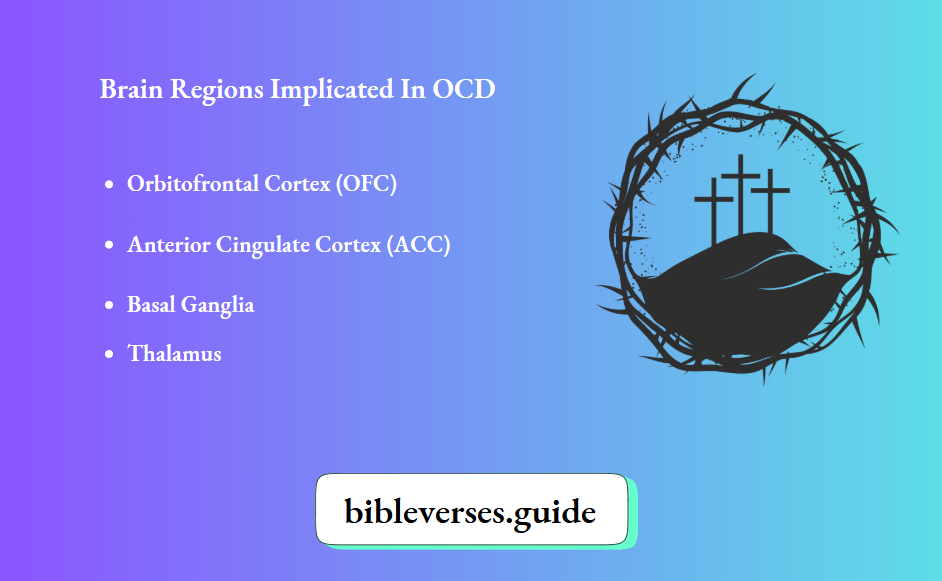
Understanding OCD Brain Regions Implicated In OCD

Neurotransmitters Involved In Ocd

Neurotransmitters are chemical messengers that enable communication between nerve cells in the brain. Imbalances or dysfunction in certain neurotransmitter systems have been implicated in OCD development and maintenance. The three primary neurotransmitters involved are serotonin, dopamine, and glutamate.

1. Serotonin: Serotonin levels are thought to play a critical role in OCD pathophysiology due to evidence from pharmacological studies. Selective serotonin reuptake inhibitors (SSRIs), medications that increase serotonin availability, have been shown to reduce OCD symptoms effectively However, some studies suggest that not all individuals with OCD benefit from SSRIs, indicating that the relationship between serotonin and the disorder may be more complex than initially assumed.

2. Dopamine: Dopamine is involved in reward¬ seeking behavior and habit formation. This neurotransmitter has been linked to compulsion in various disorders, including OCD. Some clinical studies suggest that medications affecting dopamine levels can also lead to improvements in OCD symptoms, but further research is needed to understand how it contributes to the development of the disorder.

3. Glutamate: Glutamate is an excitatory neurotransmitter responsible for neuronal communication and facilitating learning processes. Emerging evidence suggests that individuals with OCD may have abnormal glutamate activity within critical brain regions like the OFC and basal ganglia. As research progresses, it may provide opportunities for developing new therapeutic interventions targeting glutamate-related mechanisms in the
brain

Future Research Directions

While significant advances have been made in understanding the neuroscience behind OCD, much remains to be discovered about the exact causes and mechanisms underlying this debilitating condition. To improve our understanding, future research should focus on:

1. Identifying genetic factors that may increase vulnerability to OCD; this may enable early interventions and personalized treatments.

2. Investigating the role of environmental factors, such as childhood trauma, that might contribute to the development of OCD.

3. Examining the potential synergistic relationships between neurotransmitter systems in OCD may present a more nuanced understanding of its pathophysiology and facilitate the development of more targeted treatments.

By uncovering how the brain and neurotransmitters contribute to OCD, researchers and clinicians can develop more effective interventions, bring hope to those affected by this condition, and help them lead fulfilling lives without being enslaved by their obsessions and compulsions.



Understanding OCD: Breaking the Cycle of Obsessions and Compulsions

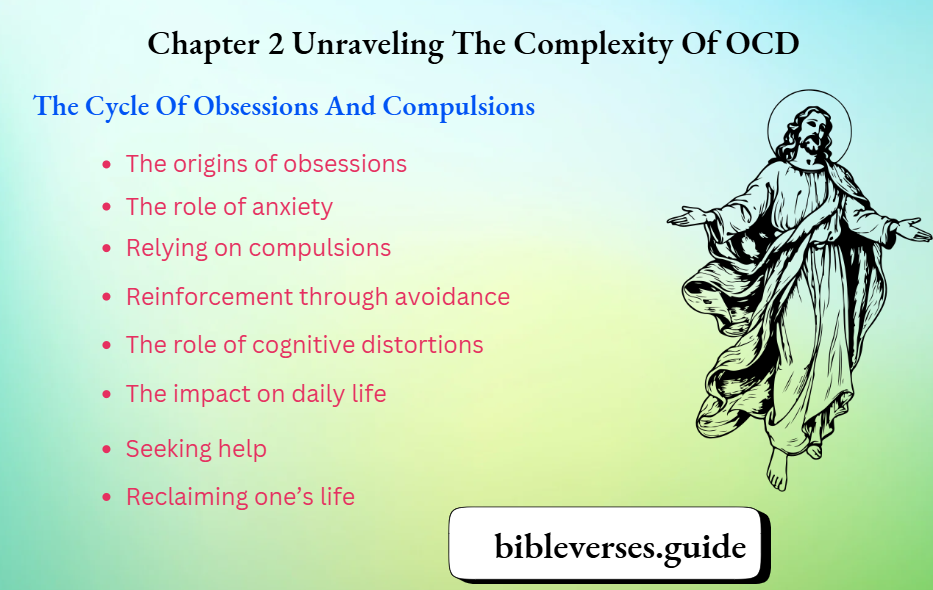
Chapter 2 Unraveling The Complexity Of OCD

In this chapter, we delve deeper into the intricacies of obsessive-compulsive disorder. We begin by exploring the nature of intrusive thoughts and their triggers, shedding light on the psychological aspects contributing to OCD. Next, we examine the perpetuating cycle of obsessions and compulsions, illustrating how they fuel each other and create a relentless loop for those affected.

We will also debunk common misconceptions about OCD, demystifying this complex condition and highlighting the differences between everyday habits and true symptoms. Lastly, we discuss ways to break the stigma surrounding mental health, advocating for increased awareness and understanding of this disorder —journey with us as we unravel the enigma that is OCD.

Exploring Intrusive Thoughts And Their Triggers

Intrusive thoughts can take various forms but tend to share certain characteristics. These include being persistent, involuntary, and distressing for the individual experiencing them. While everyone has occasional unwanted thoughts from time to time, those with OCD often struggle with their frequency and intensity. Some common themes of intrusive thoughts in OCD include fears of harming oneself or others, disturbing sexual or violent imagery, fears of contamination or illness, and excessive concern with symmetry or order.

Read and Learn More OCD Management Made Simple: Top Strategies and Insights

The precise causes of intrusive thoughts in OCD are not entirely understood, but several factors have been implicated. Genetics plays a role since OCD often runs in families, with research suggesting that specific genes may be involved in the disorder’s development. Additionally, neurobiological factors such as imbalances in serotonin levels have been associated with OCD symptomatology.

Cognitive theories of OCD suggest that intrusive thoughts result from dysfunctional thought patterns or cognitive biases. For example, those with OCD may have a heightened sense of responsibility for the potential outcomes of their actions or an inflated importance of their thoughts. This could lead to increased vigilance and a greater focus on perceived environmental threats or dangers.

Triggers for intrusive thoughts in OCD can vary depending on the individual’s particular obsessions or themes. However, some common triggers include:

1. Stressors: Increased stress levels often exacerbate OCD symptoms since stress can heighten overall anxiety levels making intrusive thoughts more likely.

2. Visual or sensory cues: People with OCD might be triggered by specific images, objects, or sensations relevant to their obsessions. For example, seeing a knife could trigger intrusive thoughts about harming oneself or others for someone with harm-related OCD

3. Exposure to personal fears: Encountering reminders of one’s specific obsessions can lead to the onset of intrusive thoughts. For example, if someone is afraid of germs, merely being near a public restroom might trigger their compulsive thinking about the potential spread of germs.

4. Cognitive distortions: Dysfunctional thought patterns linked to OCD can serve as triggers for intrusive thoughts. For instance, an individual engaging in “all-or-nothing” thinking might consider any minor deviation from perfect symmetry unacceptable, provoking distressing mental images.

Managing and coping with intrusive thoughts in OCD often involves a combination of psychological and pharmacological interventions. Some evidence-based strategies include:

1. Cognitive Behavioral Therapy (CBT): This form of psychotherapy aims to help individuals identify and challenge cognitive distortions associated with OCD and develop healthier thought patterns. It often includes exposure and response prevention (ERP), where individuals gradually confront feared situations without engaging in compulsive behaviors.

2. Mindfulness and Acceptance-Based Approaches: These therapeutic techniques teach clients to observe and accept their intrusive thoughts non-judgmentally rather than trying to suppress or control them. By doing so, they can reduce the distress associated with these thoughts and decrease their overall impact

3. Medications: Selective serotonin reuptake inhibitors (SSRIs) are commonly prescribed for people with OCD because they help regulate serotonin levels in the brain. These medications can reduce the frequency and intensity of intrusive thoughts and compulsive behaviors for many individuals.

Further research into the etiology and treatment of intrusive thoughts in OCD will undoubtedly lead to even better options for those affected by this debilitating mental health condition

The Cycle Of Obsessions And Compulsions

At the heart of OCD lies an unrelenting cycle of obsessions and compulsions, contributing to the overall symptoms in individuals diagnosed with this disorder. These behaviors aim to reduce the distressing emotions caused by the obsession but only provide temporary relief. Obsessions and compulsions form a vicious cycle that often disrupts an individual’s daily life.

The section details the psychological process behind this cycle and discusses how various factors contribute to the maintenance and prevalence of obsessions and compulsions in an individual’s life.

1. The origins of obsessions: Obsessions can be triggered by several factors, from personal experiences and memories to environmental stimuli and learned behaviors. Often, intrusive thoughts are associated with underlying conflicts or unresolved emotions in an individual’s life. These intrusive thoughts provoke uneasiness or discomfort seeking immediate relief becomes a priority for the individual.

2. The role of anxiety: Anxiety plays a significant role in the cycle of obsessions and compulsions. Experiencing obsessive thoughts causes distressing feelings such as fear, uncertainty, and anxiety. These feelings often prompt individuals to seek relief through behaviors that they believe will help eliminate or control their intrusive thoughts.

3. Relying on compulsions: Compulsive behaviors are typically irrational or excessive responses to obsessive thoughts aimed at reducing anxiety and distress. For example, someone with an irrational fear of germs may resort to excessive handwashing or cleaning rituals. While these behaviors might temporarily relieve anxiety, they can reinforce the cycle of obsessions and compulsions by associating relief exclusively with these actions.

4. Reinforcement through avoidance: As individuals start developing compulsive behaviors in response to their obsessive thoughts, they may also begin avoiding situations that trigger those thoughts. This avoidance further reinforces the obsessions and compulsions by limiting opportunities for individuals to confront and overcome their fears. For instance, a person who fears flying may avoid booking flights, strengthening their obsessive fear.

5. The role of cognitive distortions: Cognitive distortions contribute to the maintenance and development of obsessive and compulsive behaviors. For example, individuals may overestimate the probability that a feared event will occur or believe that the consequences of not acting upon their compulsions would be catastrophic.

They might also believe that their thoughts are entirely within their control and have the power to influence external events; consequently, they perceive their intrusive thoughts as reflections of reality.

6. The impact on daily life: The cycle of obsessions and compulsions can harm an individual’s daily functioning and overall quality of life. It consumes significant time and energy, often interfering with work, school, relationships, and leisure activities. Furthermore, living with constant anxiety and stress negatively affects an individual’s physical health in the long term.

7. Seeking help: Breaking free from the cycle of obsessions and compulsions is challenging, but professional help through therapy can be highly beneficial. Cognitive-behavioral therapy (CBT) is considered the gold standard treatment for obsessive-compulsive disorder (OCD), as it addresses the thought patterns underlying the obsessions and the compulsive behaviors they produce.

8. Reclaiming one’s life: Recovery from obsessions and compulsions involves recognizing triggers for intrusive thoughts, challenging cognitive distortions, learning healthier thinking patterns, and gradually exposing oneself to feared situations or stimuli without resorting to compulsive behaviors. Over time, individuals can learn to manage their thoughts while accepting anxiety and uncertainty as inevitable.

The cycle of obsessions and compulsions is a complex interplay of thoughts, emotions, and behaviors that can significantly impact an individual’s life. Understanding its underlying mechanisms is necessary to break this cycle and reclaim a sense of control, balance, and peace.

With support from therapy, self-help resources, and the courage to face fear head-on, individuals can overcome the grip of obsessive-compulsive patterns and achieve greater psychological well-being.

Unraveling The Complexity Of OCD The Cycle Of Obsessions And Compulsions

Common Misconceptions About OCD

Although awareness of OCD has increased in recent years, many misconceptions about the disorder persist. This section aims to clarify some common misconceptions so that people can better understand the nature of OCD, recognize its symptoms, and support those affected by the disorder.

1. OCD is just about cleanliness and organization: One of the most prevalent misconceptions about OCD is that it solely revolves around cleanliness and organization. Although these can be symptoms of OCD, they are not exclusive to the disorder. Obsessions manifest as fears or distressing thoughts about harm, contamination, religion, or morally inappropriate behavior.

Compulsions are the repetitive actions performed to alleviate these obsessive thoughts. They can include excessive hand washing, cleaning, counting, checking, repeating words or phrases, or arranging items in a specific order.

2. People with OCD can “snap out of it” or “stop worrying”: Telling someone with OCD to stop worrying or snap out of their compulsions is akin to telling an asthmatic to breathe normally. OCD is a complex mental health disorder triggered by brain chemistry and neural functioning imbalances. People with OCD often recognize their obsessions and compulsions as irrational but cannot control them without appropriate treatment and support.

3. Everyone has a little OCD: While it’s accurate that most people have experienced repetitive thoughts or engaged in certain rituals occasionally, this does not mean everyone has a touch of OCD.

These occasional habits do not compare to the severe impact that true OCD has on an individual’s life. The persistent and distressing nature of obsessions combined with the time-consuming nature of compulsions can often impede a person’s ability to function normally across various aspects of life, including family, work, and social relationships.

4. OCD is caused by stress or trauma: Although stress and trauma can exacerbate existing symptoms or trigger the disorder in certain individuals, OCD does not have a single cause. Research suggests that a combination of genetic, biological, environmental, and psychological factors can contribute to the development of OCD. It is crucial to note that experiencing stress or trauma does not guarantee the development of OCD.

5. OCD only affects adults: OCD affects people across all age groups, including children and adolescents. It is estimated that approximately 1-3% of children and adolescents worldwide suffer from OCD. Early diagnosis and intervention are critical for young people with the disorder as they struggle to cope with the symptoms during their developmental years.

6. All people with OCD are high-strung and perfectionists: OCD is a heterogeneous disorder with many symptoms and severity levels. While some individuals with OCD may display perfectionistic tendencies or heightened anxiety, it is incorrect to stereotype all people with OCD as having these traits. The symptoms and behavior exhibited by someone with OCD result from the disorder rather than an inherent personality trait.

7. There is no effective treatment for OCD: This misconception may stem from the portrayal of untreatable or IFquirky” characters in popular media. However, many evidence-based interventions have proven to be effective in treating OCD. Cognitive Behavioral Therapy (CBT), particularly Exposure and Response Prevention (ERP), has significantly reduced obsessions and compulsions. Alongside therapy, medications such as selective serotonin reuptake inhibitors (SSRIs) can help alleviate symptoms

It is crucial to dispel these common misconceptions about OCD so that people can better understand the complexity of this mental health condition. By spreading awareness and fostering empathy, we can help individuals with OCD feel supported as they navigate their journey toward recovery.

Breaking The Stigma: Advocating For Mental Health Awareness

Despite the prevalence of OCD, a stigma is still attached to this mental health issue. Many people mistakenly believe that OCD is merely a personality quirk or a harmless habit, which minimizes the severity of the disorder and reinforces harmful myths. Advocating for mental health awareness, particularly surrounding OCD, is crucial for breaking down these misconceptions and fostering understanding and empathy.

One key aspect of breaking the stigma surrounding OCD is educating others about the true nature of this disorder. This explains that OCD is not synonymous with a desire for cleanliness or orderliness. While some individuals with OCD may have compulsions related to cleanliness, this is not the case for all sufferers.

Individuals with OCD may have obsessions and compulsions around themes such as fear of harming others, guilt over perceived sins, or intrusive sexual thoughts.

Educating the public about the wide range of symptoms associated with OCD can help dispel misconceptions about what the disorder looks like. Additionally, it’s important to emphasize that individuals with OCD are affected regardless of their desires – they cannot simply “snap out” of their condition or “turn off” their intrusive thoughts.

Another way to break the stigma surrounding OCD is by sharing personal stories and experiences. Hearing firsthand accounts from individuals with OCD can provide valuable insight into daily challenges.

By emphasizing feelings of anxiety, fear, and frustration that accompany obsessions and compulsions, we can help create empathy for those struggling with this mental health disorder.

Featuring public figures and celebrities who have been open about their experiences with OCD is another effective way to raise awareness and normalize the discussion of mental health.

High-profile individuals such as Maria Bamford, Howie Mandel, and Lena Dunham have bravely shared their stories of living with OCD, which can help dispel stereotypes and encourage others to seek help or speak openly about their struggles.

Advocating for mental health also includes supporting legislative change that recognizes and addresses the needs of individuals with OCD. This can include pushing for insurance coverage for mental health treatments, greater access to qualified therapists, and increased funding for research on effective treatments for OCD.

Additionally, destigmatizing OCD involves addressing harmful language in society. This includes recognizing that using phrases such as “I’m so OCD” to describe a preference for organization or neatness perpetuates misconceptions about the disorder. Educating people about the true nature of OCD can help curb this sort of language and contribute to a more accurate understanding of the condition.

Creating safe spaces for individuals with OCD is also essential for breaking the stigma surrounding this mental health issue. Support groups and online forums can allow people to share their experiences, challenges, and victories in their fight against OCD. These platforms allow sufferers to connect with others who understand their struggles and offer encouragement and understanding in a judgment free environment.

Moreover, empathy and support from friends and family play an important role in breaking the stigma around OCD. We can create an environment where individuals feel seen and understood by simply listening to loved ones living with this disorder, validating their feelings, and offering a helping hand when needed.

Challenging stereotypes surrounding mental illness is crucial not only for those personally affected by OCD but also contributes to the broader conversation surrounding mental health awareness. By understanding that mental illness does not discriminate – it affects people from all walks of life we foster a sense of unity in fighting against stigma. Breaking the stigma around OCD requires a collective effort to address misconceptions, share personal stories, advocate for legislative change,

create safe spaces for support, and practice empathy when discussing mental health issues. Doing so can pave the way for a world where those struggling with OCD and other mental health disorders feel seen, heard, and understood.


Recognizing the Signs and Symptoms of OCD

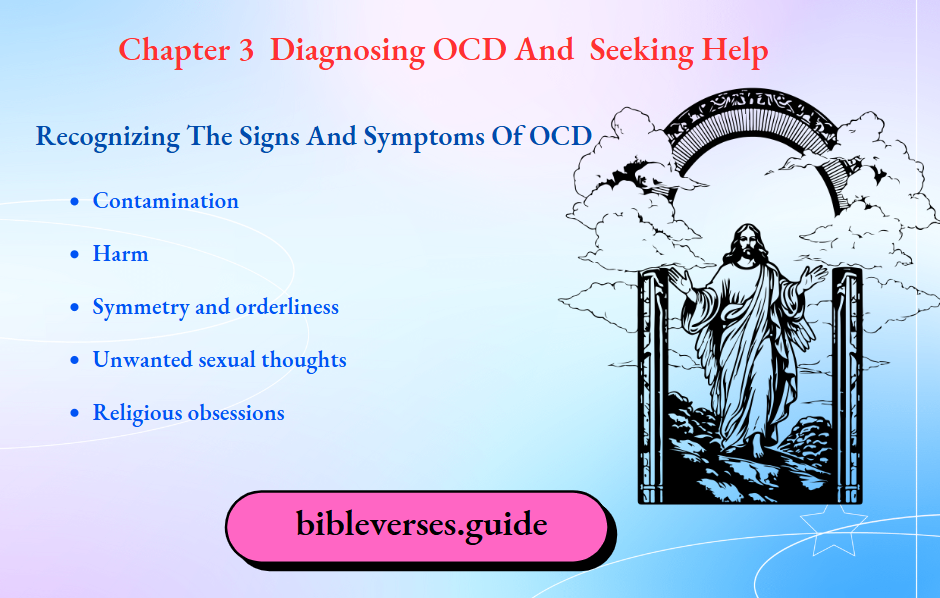
Chapter 3 Diagnosing OCD And Seeking Help

Individuals with OCD often know that their obsessions and compulsions are irrational, but they cannot control them. Diagnosing OCD can be challenging because the symptoms can vary widely from person to person and can be easily mistaken for other conditions. In this chapter, we start by exploring how to recognize the signs and symptoms of OCD, allowing you to identify any potential red flags in yourself or your loved ones.

OCD signs and symptoms

Next, we discuss co-occurring disorders that may complicate one’s experience with OCD and the importance of understanding their simultaneous impact. We then guide you through the diagnostic process, providing insights into what to expect during evaluations and assessments.

Lastly, we emphasize the importance of finding the right mental health professional specializing in treating OCD. With their expertise and guidance, you will be better equipped to recover and regain control of your life.

Read and Learn More OCD Management Made Simple: Top Strategies and Insights

Recognizing The Signs And Symptoms Of OCD or Early signs of OCD

Obsessive-Compulsive (OCD) is characterized by recurring, unwanted thoughts, images, or impulses (obsessions) and repetitive behaviors or mental acts performed to alleviate those obsessions (compulsions).

These symptoms cause the person significant distress and interfere with daily functioning. Recognizing the signs and symptoms of OCD can help someone seek treatment sooner and improve their quality of life.

Obsessions can manifest in various ways, depending on the individual. Some common signs include:

1. Contamination: Fear of germs, dirt, or contamination may lead someone with OCD to avoid certain situations or objects considered unclean. They may worry about getting sick or passing germs to others.

2. Harm: Some individuals may experience intrusive thoughts involving hurting themselves or others, even though they don’t want to act on these thoughts. They may fear that something terrible will happen if they don’t engage in particular rituals or behaviors.

3. Symmetry and orderliness: A need for everything to be perfectly aligned or organized can be seen in some people with OCD. They may worry that if things are not in order, they will bring harm to themselves or others.

4. Unwanted sexual thoughts: Some individuals with OCD struggle with invasive, unwanted sexual thoughts about taboo subjects or inappropriate behaviors. These obsessions cause significant distress and embarrassment.

5. Religious obsessions: Some individuals with OCD have obsessions related to religious themes, such as sinning, offending God, or being punished after death.

Diagnosing OCD And Seeking Help Recognizing The Signs And Symptoms Of OCD

OCD signs and symptoms

Compulsions are repetitive actions performed to reduce the anxiety associated with the obsessions. These can be behaviors that others observe or mental rituals that occur internally. Common compulsions include:

1. washing and cleaning: People with OCD may constantly wash their hands, shower multiple times daily, or excessively clean objects to alleviate contamination fears.

2. Checking: Individuals may repeatedly check if doors are locked, appliances are turned off, or they haven’t harmed anyone. This behavior is performed
with the hope of preventing harm or disasters.

3. Counting or repeating: Engaging in counting or repeating certain actions a specific number of times to help reduce anxiety is another compulsive behavior seen among individuals with OCD.

4. Mental rituals: Mental rituals may involve repeating phrases, prayers, or visualizing safe images to counteract the distress caused by obsessions.

5. Ordering and arranging: OCD sufferers may compulsively arrange objects in a particular way or pattern to create a sense of order and symmetry.

Understanding OCD

Individuals with OCD may also avoid certain situations to prevent obsessions from occurring. For example, someone with contamination fears may avoid public restrooms or handshakes.

OCD symptoms can vary in intensity and frequency over time, and individuals can experience good and bad days. It is essential to recognize these signs and seek professional help if you suspect that you or someone you know might be dealing with OCD.

Treatment for OCD typically involves a combination of cognitive-behavioral therapy (CBT) and medication. CBT aims to help the individual recognize their obsessive thoughts as irrational and develop healthy coping strategies. Exposure and response prevention (ERP), a specific type of CBT, is often used to help individuals confront their fears gradually while resisting the urge to perform compulsions.

Another effective form of treatment for OCD is acceptance and commitment therapy (ACT), which focuses on accepting the presence of obsessive thoughts rather than trying to eliminate them. ACT encourages individuals to pursue valued goals despite dealing with uncomfortable thoughts.

Medications, such as selective serotonin reuptake inhibitors (SSRIs), can also be used alongside therapy for those struggling with OCD symptoms. These medications help improve mood, decrease anxiety, and relieve the intensity of obsessive thoughts and compulsions.

Recognizing the signs and symptoms of OCD can pave the way for those suffering to receive appropriate treatment and significantly improve their quality of life. Early intervention is key, so if you or someone you know may be exhibiting signs of OCD, it is crucial to consult with a mental health professional as soon as possible.

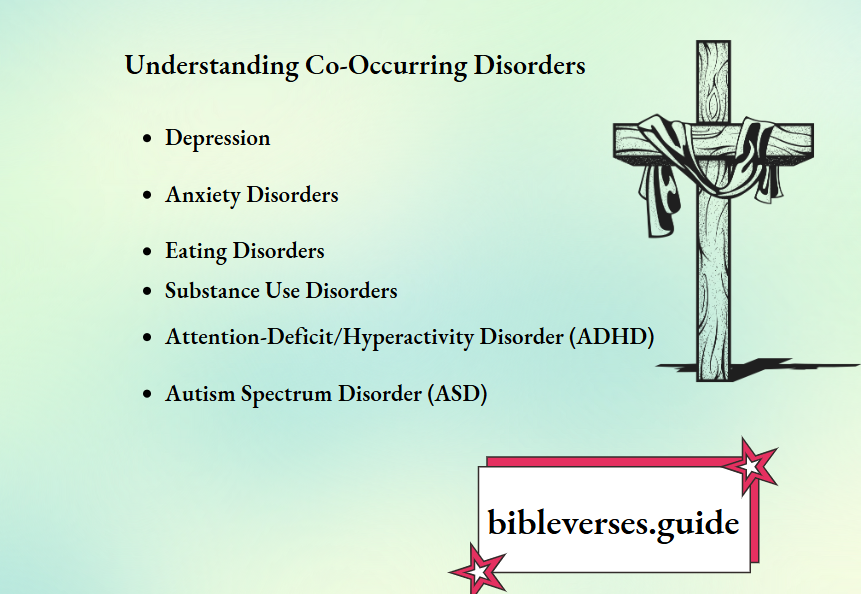
Understanding Co-Occurring Disorders

It is common for individuals with OCD to experience co-occurring disorders, which are additional mental health issues alongside their primary diagnosis. Understanding and addressing these co-occurring disorders can be crucial to treatment and long-term recovery outcomes.

The term “co-occurring disorders” refers to the presence of two or more mental health diagnoses in an individual. This can include mood, anxiety, eating, and substance use disorders. These co-occurring conditions often interact, complicating the treatment process and creating a more complex clinical picture. Some common co-occurring disorders that are found in individuals with OCD include:

1. Depression: Studies suggest that anywhere from 30% to 50% of individuals with OCD suffer from depression at some point. This co-occurrence tends to exacerbate the symptoms of both conditions, resulting in more intense distress, incapacity, and higher rates of suicidality.

2. Anxiety Disorders: People with OCD are at an elevated risk for developing other anxiety disorders, such as generalized anxiety disorder (GAD), panic disorder, social anxiety disorder (SAD), and post-traumatic stress disorder (PTSD). This is due to overlapping diagnostic criteria and shared neurobiological underpinnings. Like depression, comorbid anxiety can compound the severity of OCD symptoms.

3. Eating Disorders: There is a significant correlation between OCD and eating disorders like anorexia nervosa, bulimia nervosa, and binge-eating disorder. The focus on ritualistic behavior in both conditions can create a vicious cycle where obsessive thoughts feed disordered eating patterns and vice versa.

4. Substance Use Disorders: Research has shown that individuals with OCD are more likely to develop substance use disorders, particularly alcohol or drug dependence. The relationship between these two conditions is complex, as substances might be used as a form of self-medication to alleviate the anxiety and distress associated with OCD.

5. Attention-Deficit/Hyperactivity Disorder (ADHD): Some evidence suggests that there may be a connection between ADHD and OCD, particularly in cases where inattention and impulsivity symptoms overlap. This comorbidity can make it difficult for affected individuals to concentrate, focus on tasks, and regulate their emotions effectively.

6. Autism Spectrum Disorder (ASD): A growing body of research indicates that individuals with ASD are more likely to develop OCD than the general population. This co-occurrence has been attributed to shared genetic vulnerabilities and abnormalities in brain functioning related to repetitive behaviors.

Diagnosing OCD And Seeking Help Understanding Co-Occurring Disorders

Understanding the intricate relationship between OCD and co-occurring disorders is important for several reasons:

1. Treatment Implications: The presence of co¬ occurring disorders can complicate the process of diagnosing and treating OCD. When multiple conditions are at play, clinicians must identify and address each issue individually to enhance the effectiveness of treatment. This often requires a multidisciplinary approach involving psychiatrists, psychologists, social workers, and other mental health professionals.

2. Prognosis: Individuals with co-occurring disorders tend to have more severe symptoms, greater functional impairments, and poorer recovery outcomes than those with a single diagnosis. Early detection and comprehensive treatment of additional mental health issues can significantly improve the long-term prognosis of individuals with OCD.

3. Stigma Reduction: Recognizing the interconnectedness of mental health conditions can help reduce stigma by fostering societal empathy and understanding. Increased awareness about co¬ occurring disorders can promote open dialogue about mental health challenges and encourage people to seek appropriate support without fear of judgment. By recognizing, diagnosing, and addressing these additional issues, mental health professionals can help individuals with OCD develop more effective treatment plans and achieve better recovery outcomes in the long run

Navigating The Diagnostic Process

OCD can significantly impact an individual’s daily functioning, relationships, and overall quality of life. It is essential to navigate the diagnostic process effectively to receive appropriate treatment.

The first step in the process is familiarizing oneself with the symptoms and warning signs of OCD. Obsessions are often characterized by persistent thoughts, images, or intrusive impulses that cause distress.

Examples can include concerns about contamination, unwanted sexual thoughts, or an exaggerated sense of responsibility for others’ safety. Compulsions are repetitive behaviors or mental acts to neutralize these obsessions, like excessive hand¬ washing, checking locks repeatedly, or reviewing past events for mistakes.

It’s important to acknowledge that everyone may occasionally exhibit compulsive behaviors or experience intrusive thoughts. However, it becomes a concern when these thoughts and actions consume a significant amount of time (one hour or more per day), cause immense distress, and impair daily functioning.

A critical component in navigating the diagnostic process is self-assessment. Keeping notes on the frequency and nature of obsessive thoughts and compulsions experienced over time can be helpful. Tracking these experiences systematically can help provide an informative picture of the severity of an individual’s symptomatic presentation.

Next, consultation with a healthcare professional will be necessary for diagnosis. Primary care physicians may provide initial guidance but often refer individuals to licensed mental health professionals (such as psychologists, psychiatrists, and psychiatric nurse practitioners) who specialize in assessing and treating OCD.

During this process, being open and honest about symptoms with your healthcare provider is essential. Be prepared to share details about past traumas, existing medical conditions, medications taken, or substance use history. These factors can all contribute to developing OCD symptoms or mimic their presentation.

A mental health professional will conduct a thorough interview and assessment to rule out other possible explanations for symptoms, discern whether they fit the criteria for OCD, and determine their severity.

This evaluation may include utilizing standardized tools like the Yale-Brown Obsessive Compulsive Scale (Y-BOCS) to assess the condition accurately.

OCD diagnosis

If a diagnosis of OCD is confirmed, it’s important to consider accessing appropriate treatment. Cognitive Behavioral Therapy (CBT) with a component called Exposure and Response Prevention (ERP) is particularly effective in addressing OCD symptoms. With ERP, individuals confront situations that trigger obsessions and learn ways to resist engaging in compulsions. Over time, this practice can help reduce anxiety levels and obsessive thoughts frequency

Alternatively, medications such as Selective Serotonin Reuptake Inhibitors (SSRIs) may be prescribed by a psychiatrist to help alleviate OCD symptoms. These drugs increase serotonin availability in the brain, which has been shown to improve mood regulation and decrease anxiety. Medication management is often paired with CBT or other therapeutic approaches for greater symptom relief

It’s important to remain patient during the diagnostic process as it may only sometimes yield immediate answers. Obtaining a correct diagnosis may sometimes require additional assessments and consultations with various healthcare practitioners in mental health.

Developing a support network of family members, friends, or support groups for people with OCD can be essential in coping with the challenges experienced throughout this process.

Lastly, consider educating yourself on the disorder and available resources regarding information gathering, self-help techniques, advocacy initiatives, or connecting with like-minded individuals with similar experiences. This proactive strategy empowers individuals navigating through their journey of OCD diagnosis and treatment.

Individuals who suspect they may have OCD should be aware of the symptoms, engage in self-assessment, consult with reputable healthcare professionals, consider treatment options, and adopt a supportive and proactive approach.

By following these measures, one can effectively navigate the diagnostic process for OCD and pave the way toward improved well-being and mental health.

Finding The Right Mental Health Professional For OCD

Those affected by OCD must find the right mental health professional to help them manage their symptoms and lead a fulfilling life. Mental health professionals are trained to diagnose and treat various mental health disorders, including OCD. It is essential to consider several factors to find the right mental health professional for your specific needs.

1. Credentials and Training: When seeking a mental health professional, it’s crucial to look for their educational background, licensure, and experience in diagnosing and treating OCD. Choose a professional licensed to practice in your area with specialized training in cognitive-behavioral therapy (CBT), particularly exposure and response prevention (ERP), the gold standard treatment for OCD.

2. Compatibility: The therapeutic relationship between you and your mental health professional plays a significant role in successful treatment outcomes. Choose someone with whom you feel comfortable discussing your obsessions and compulsions. A compatible therapist can help you establish trust, address concerns openly, and build a collaborative treatment plan

3. Treatment Approach: Mental health professionals may use different approaches when treating OCD. Besides CBT and ERP, some therapists might employ techniques such as acceptance and commitment therapy (ACT), dialectical behavior therapy (DBT), or pharmacotherapy (medication management). Ensure the chosen mental health professional uses evidence-based methods relevant to your condition and personal preferences.

4. Accessibility: Consider practical factors such as location, availability, schedule flexibility, and session frequency when selecting a mental health professional. You might have specific preferences or requirements, such as online sessions, evening or weekend appointments, or group therapy options. Also, confirm whether they accept your insurance or have a sliding-scale payment system

5. Patient Reviews and Recommendations: Contact OCD support groups, friends, family members, or healthcare professionals for recommendations on mental health providers experienced in treating OCD. You can also check online reviews from previous clients to better understand their treatment style and effectiveness.

OCD diagnosis

Once you have identified potential mental health professionals, schedule an initial appointment to discuss your concerns, ask questions, and evaluate their expertise. Some crucial questions you might consider asking include:

  • How long have you been working with individuals with OCD?
  • What is your approach to treating OCD? – How familiar are you with ERP therapy?
  • Can you provide references or testimonials from clients with OCD who have achieved positive results under your care?
  • How often will we meet for sessions, and how long does treatment typically last?

The mental health professional should answer your questions clearly and honestly. Please consider their communication style, empathy level, and willingness to collaborate to create a tailored and effective treatment plan.

Remember that finding the right mental health professional for OCD might take time and effort. You may need to consult multiple therapists before finding someone who meets your needs and preferences.

However, don’t be discouraged; the right professional can empower you to manage your symptoms, improve your well-being, and lead a rewarding life despite OCD’s challenges.

OCD warning signs

During the treatment process, keep an open line of communication with your mental health professional. Be honest about the strategies’ effectiveness and address any concerns as they arise. The relationship between therapist and client is essential to achieving long-term success in managing OCD symptoms.

Finding the right mental health professional for treating OCD requires careful consideration of several factors such as credentials, compatibility, treatment approach, accessibility, and recommendations.

Through research, consultation, communication, and persistence, you can find a provider that helps you successfully manage your symptoms so that OCD no longer controls your life.

Effective Strategies for Managing OCD: CBT, ERP, and Mindfulness Techniques

Chapter 4 Managing OCD: Practical Coping Strategies

In managing OCD, finding effective strategies to cope with intrusive thoughts, obsessions, and compulsions is critical. This chapter introduces various practical and evidence-based approaches to improve one’s quality of life significantly. Explore the benefits of Cognitive Behavioral Therapy (CBT) for OCD, a proven technique for identifying and challenging irrational thought patterns.

Dive into Exposure and Response Prevention (ERP) therapies and learn how to face your fears head-on while resisting the urge to perform compulsive rituals.

Discover the power of mindfulness and meditation in enhancing anxiety relief by cultivating self-awareness and control over intrusive thoughts. Finally, be guided through building a personalized coping toolkit tailored to your unique challenges, empowering you to lead a life free from OCD’s grasp. By combining these valuable skills, managing OCD effectively becomes an attainable goal.

Read and Learn More OCD Management Made Simple: Top Strategies and Insights

Cognitive Behavioral Therapy (Cbt) For Ocd

Cognitive Behavioral Therapy (CBT) is a widely accepted evidence-based treatment for OCD that focuses on the connection between an individual’s thoughts, feelings, and behaviors.

CBT for OCD involves teaching patients specific skills and strategies to help them better understand and manage their obsessive thoughts and compulsive behaviors. The main components of CBT for OCD include exposure and response prevention (ERP) and cognitive restructuring.

ERP is considered the gold standard for treating OCD. It involves gradually exposing patients to the feared stimuli or situations that trigger their obsessions while encouraging them not to engage in any response or compulsion to alleviate the distress caused by the obsession.

Over time, repeated exposures lead patients to experience lower anxiety related to their obsessions, helping them learn that they can endure uncomfortable emotions without resorting to compulsive behaviors.

For example, a person with OCD who fears germs might be asked first to touch a doorknob without immediately washing their hands afterward. As their anxiety decreases with repeated exposures, they may progress towards touching other surfaces perceived as contaminated and progressively delaying hand washing.

In addition to ERF, CBT for OCD includes cognitive restructuring techniques that help patients identify and challenge distorted thinking patterns related to their fears and obsessions. Patients learn how their thoughts influence their emotions and behaviors, helping them recognize irrational beliefs contributing to OCD symptoms. Cognitive restructuring may involve helping patients learn how to:

  1. Identify problematic thought patterns, such as catastrophizing or overgeneralizing.
  2. Recognize the connection between distorted thinking and their emotional response.
  3. Evaluate the evidence supporting their beliefs, considering alternative explanations.
  4. Generate more balanced interpretations of their experiences, reducing anxiety and compulsive behavior.

For instance, a person with OCD might have the irrational belief that if they do not repeatedly check that their doors and windows are locked, something terrible will happen to their family.

They could be encouraged to evaluate the evidence supporting this belief through cognitive restructuring and consider alternative thoughts (e.g., locking doors and windows once is enough to keep their family safe)

Combining ERP with Cognitive Restructuring

In many cases, clinicians will blend ERP and cognitive restructuring techniques within a comprehensive CBT treatment plan for OCD. This approach helps patients tackle their obsessions and compulsions on multiple fronts, addressing the disorder’s behavioral and cognitive aspects.

In addition to individual therapy sessions, CBT for OCD can be conducted in group settings or through self-help manuals guided by a trained professional. Research has shown that internet or telephone-based CBT can also effectively treat OCD when in-person sessions are impossible.

The benefits of CBT for OCD have been demonstrated in numerous clinical trials that show significant reductions in obsessive-compulsive symptoms following treatment. Many people who undergo CBT for OCD experience long-lasting improvements even after therapy has concluded.

However, like any treatment approach, it is essential to recognize that CBT might not work equally well for everyone. Some individuals may require adjunct medication alongside therapy or other therapies such as Acceptance and Commitment Therapy (ACT) or mindfulness-based approaches.

Furthermore, engaging in CBT for OCD requires commitment and active participation from patients who face difficult emotions as part of the therapeutic process. The therapy’s success depends on the patient’s willingness to confront their fears and work on changing their thought patterns and behaviors.

Cognitive Behavioral Therapy is an evidence-based treatment for OCD that targets the condition’s cognitive and behavioral aspects. By incorporating techniques such as Exposure and Response Prevention and cognitive restructuring, CBT is highly effective in reducing obsessions and compulsions associated with OCD.

As with any therapeutic approach, individual results may vary; thus, it’s crucial to work collaboratively with a mental health professional to determine the best course of treatment.

Exposure And Response Prevention (ERP) Techniques

Exposure and Response Prevention (ERP) is a highly effective therapeutic approach to treating obsessive-compulsive disorder (OCD).

ERP is a type of cognitive-behavioral therapy (CBT) that aims to help individuals with OCD break the cycle of obsessions and compulsions by exposing them to their feared triggers and teaching them strategies to resist engaging in compulsive behaviors.

The core principle underlying ERP is that when people repeatedly face their anxiety-provoking situations without engaging in their typical compulsions, they gradually become less distressed by those situations.

This process occurs through habituation, which refers to the natural decrease in emotional intensity associated with certain triggers over time. With continued practice of ERP techniques, clients learn new ways of coping with their anxiety without resorting to compulsions.

Several ERP techniques are employed in the treatment of OCD. Some common examples include:

1. In Vivo Exposure: This technique involves confrontation of real-life situations that trigger an individual’s obsessions and compulsions. For example, someone who has an obsessive fear of contamination might be asked to touch a commonly used object, such as a doorknob or light switch, without washing their hands afterward.

2. Imaginal Exposure: Imaginal exposure involves creating vivid mental images of anxiety-provoking situations and imagining oneself facing these situations without performing compulsions. This technique is particularly useful for treating fears that cannot be directly experienced in real life, for example, sexual or violent intrusive thoughts.

3. Interoceptive Exposure: In this technique, clients engage in activities that provoke physiological sensations associated with their obsessions or compulsions. For instance, someone with a fear of suffocation might induce the sensation of shortness of breath through specific breathing exercises.

4. Situational Exposure: This technique systematically exposes oneself to situations that may trigger obsessions or compulsions. For example, if people fear crowded places, they might start by visiting a small gathering and gradually progress to larger crowds as their anxiety decreases.

5. Ritual Prevention: As the name suggests, this technique prevents clients from engaging in compulsive behaviors or rituals stemming from their obsessions. This is usually paired with one or more exposure techniques to maximize treatment effectiveness.

Before beginning an ERP program, therapists assess the severity of an individual’s OCD symptoms and develop a personalized exposure hierarchy. This hierarchy ranks different anxiety-provoking situations by difficulty level, allowing clients to work through their fears methodically and at a manageable pace.

Managing OCD Practical Coping Strategies Several ERP Techniques Are Employed In The Treatment Of OCD

As individuals progress through their exposure hierarchy, they acquire new skills for coping with anxiety without resorting to compulsions. Some strategies include:

1. Mindfulness involves cultivating nonjudgmental awareness of one’s thoughts, feelings, and bodily sensations without trying to control or change them.

2. Cognitive Restructuring: This technique helps clients identify and challenge irrational thought patterns that contribute to their anxiety and replace them with more adaptive ways of thinking.

3. Acceptance and Commitment Therapy (ACT): ACT emphasizes non-judgmentally embracing one’s inner experiences, clarifying personal values, and acting on values-based goals.

4. Relaxation Training: Techniques such as deep breathing exercises, progressive muscle relaxation (PMR), or guided imagery can help manage the anxiety experienced during ERP sessions.

ERP has been proven highly effective in treating OCD and improving the quality of life for individuals. Research shows that approximately 70-80% of clients who receive ERP demonstrate a significant reduction in OCD-related symptoms over time. Numerous studies have found it more effective than other treatment approaches like medication management and general CBT.

By approaching anxiety-provoking situations head-on and refraining from compulsive behaviors, individuals can gradually reduce their anxiety and break the debilitating cycle of OCD.

With the guidance of a knowledgeable therapist and continued practice, ERP has the potential to bring about significant improvement in the lives of those suffering from OCD

Mindfulness And Meditation For Anxiety Relief

Those who struggle with OCD often experience high stress and anxiety levels, which can be debilitating and significantly impact their daily lives. Fortunately, mindfulness and meditation practices have shown promise in relieving anxiety associated with OCD.

Mindfulness originated from Buddhist meditative practices and has been adapted in Western psychology to help people better understand their thoughts and feelings without judgment. Mindfulness is paying attention to the present moment without judgment or reaction.

We can learn to respond more effectively to challenging situations by developing greater awareness of our thoughts and emotions.

Meditation focuses the mind on a specific thought, object, or activity to achieve a calm state of mind. There are various forms of meditation,

such as mindfulness meditation, loving-kindness meditation, and body scan meditation. In recent years, meditative practices have become popular to manage stress, and anxiety and improve overall well-being.

There is growing evidence that practicing mindfulness and meditation techniques can be helpful for individuals suffering from OCD-related anxiety. These practices have been shown to reduce anxiety levels by changing how we think about our thoughts and emotions.

Research studies have found that mindfulness-based interventions can help people with OCD respond more adaptively to intrusive thoughts and reduce compulsive behaviors.

There is growing evidence that practicing mindfulness and meditation techniques can be helpful for individuals suffering from OCD-related anxiety. These practices have been shown to reduce anxiety levels by changing how we think about our thoughts and emotions.

Research studies have found that mindfulness-based interventions can help people with OCD respond more adaptively to intrusive thoughts and reduce compulsive behaviors.

Another aspect of mindfulness that can be helpful for anxiety relief in OCD is the practice of self-compassion. By focusing on loving-kindness meditation, individuals with OCD can learn to be kinder and more accepting of themselves, which has been shown to reduce anxiety levels.

This practice encourages individuals to extend compassionate feelings towards themselves and others, creating a sense of connectedness that may help reduce anxiety related to social interactions or fear of judgment.

Body scan meditation is another mindfulness technique that can benefit those with OCD. During body scan meditation, individuals focus on different parts of their bodies while becoming aware of any sensations they may feel.

Through this process, practitioners can develop greater self-awareness and learn how anxiety manifests physically within their bodies. This form of meditation has been shown to help people with OCD develop skills for tolerating distressing emotions without resorting to compulsive behaviors.

When incorporating mindfulness and meditation practices into your daily routine, starting slowly and building up gradually is important. Begin with short practice periods each day and gradually increase the length as you become more comfortable with the techniques. Over time, you will likely notice reduced anxiety levels and increased emotional resilience as you continue practicing these skills.

While these practices may not cure OCD, they can significantly improve an individual’s ability to manage stress and anxiety related to their condition. By incorporating mindfulness and meditation practices in daily life, those with OCD can work towards improved mental well-being and a greater sense of overall peace.

Building A Personalized Coping Toolkit

Living with Obsessive-Compulsive Disorder (OCD) Can be an overwhelming and isolating experience. However, learning to manage this condition is not impossible. Creating a personalized coping toolkit tailored to your unique challenges can help you lead a life free from OCDhs grasp. This guide will walk you through the process of building your toolkit.

1. Identify your symptoms and triggers: The first step in developing a personalized coping toolkit is to identify the specific symptoms and triggers of your OCD. Keep a journal or use an app to track your thoughts, feelings, and behaviors for several weeks. Notice any patterns or recurring themes in your obsessions and compulsions. Take note of situations, contexts, or stressors that exacerbate your symptoms.

2. Educate yourself about OCD: Understanding the nature and mechanics of OCD is crucial for building an effective coping toolkit. Educate yourself about this mental health disorder by reading books, articles, and research. Speak with healthcare professionals or attend support groups to learn from others who have successfully managed their OCD symptoms.

3. Seek professional guidance: Working closely with a mental health professional, such as a psychiatrist or a psychologist specializing in OCD, can be incredibly helpful in building your toolkit. They can provide valuable insights into proven strategies for managing obsessions and compulsions and help you develop an individualized treatment plan tailored to your needs.

4. Build healthy routines: Creating a daily routine centered around good habits can significantly improve your ability to manage OCD symptoms and provide a clear structure to your day. Ensure you make time for regular exercise, proper nutrition, sufficient sleep, relaxation exercises, and social interaction.

5. Develop personalized coping strategies: As you better understand your OCD symptoms, you can develop personalized coping strategies tailored to your unique challenges. Examples include:

  • Cognitive-behavioral techniques: Cognitive restructuring or thought-stopping techniques can help you adapt more to obsessive thoughts.
  • Exposure and response prevention (ERP): Creating opportunities for gradual controlled exposure to feared situations can significantly reduce anxiety and compulsive behavior.
  • Mindfulness practices: Mindfulness meditation or other mindfulness-based exercises can help you develop greater awareness and acceptance of your thoughts and feelings.

6. Create a support network: A strong support network will be essential for long-term success in managing your OCD symptoms. Talk openly with friends and family about your experiences and seek their encouragement, understanding, and empathy. You may also want to join an OCD support group or an online forum where you can connect with others who share similar experiences

7. Utilize helpful resources: There’s an abundance of resources available for individuals living with OCD – including books, websites, podcasts, mobile apps, workshops, and seminars. Seek out those that resonate with you and provide the most practical assistance for building yourcoping toolkit.

8. Continue ongoing self-assessment: Regular self-assessment is vital for creating a personalized coping toolkit tailored to your unique challenges. Continually evaluate and tweak the best strategies for managing your symptoms while eliminating those that don’t prove effective.

9. Foster self-compassion: It’s important to remember that building a personalized coping toolkit requires patience, persistence, and practice. Be kind and compassionate toward yourself as you navigate this journey toward mental health and well-being.

10. Embrace progress over perfection: Overcoming OCD doesn’t mean eliminating all obsessions or compulsions but rather learning to live fulfilling lives regardless of their presence. Acknowledge each small step toward progress as a significant marker of growth.


10 Effective Strategies for Managing OCD at Work and School

Chapter 5 Thriving At Work And School

OCD can significantly affect an individual’s daily life, including their performance at work and school. However, with the right strategies and support, individuals with OCD can experience success in both academics and the workplace.

This chapter delves into the challenges and solutions for individuals with OCD aiming to thrive in work and school settings. We’ll explore strategies to balance OCD management with professional responsibilities, ensuring one’s mental health does not compromise career aspirations.

Next, we uncover effective communication techniques for discussing OCD with employers and educators, fostering understanding and support in these crucial relationships.

We then identify methods to cope with OCD symptoms in the workplace or school, promoting overall well-being and productivity. Lastly, we share practical tips for achieving academic success with OCD, empowering students to excel academically while managing their condition.

Together, these topics provide a comprehensive guide for those striving to succeed in both personal growth and professional development despite the challenges posed by OCD.

Read and Learn More OCD Management Made Simple: Top Strategies and Insights

Balancing OCD Management With Professional Responsibilities

Obsessive-Compulsive Disorder (OCD) is a mental health condition that can cause tremendous distress, interfering with a person’s daily life and professional {responsibilities. It is characterized by obsessions and compulsions – irrational thoughts or fears that cause repetitive behaviors or mental rituals.

The challenge for those who suffer from this disorder lies in maintaining a balance between managing the symptoms and meeting the demands of their work environment.

Professional environments often require individuals to adhere to specific rules, meet deadlines, and focus on precise details. For some individuals with OCD, these expectations may exacerbate the disorder while simultaneously creating a sense of urgency that cannot be ignored.

The resulting distress can lead to diminished productivity and strained professional relationships. However, there are strategies for balancing OCD management with professional responsibilities.

1. Develop a proper understanding of OCD: Understanding the nature of OCD and its symptoms is crucial for managing it effectively in the workplace. Educating oneself about the disorder provides insight into personal triggers, which can help develop coping mechanisms to minimize disruptive thoughts or behaviors.

2. Seek professional help: It is essential for individuals dealing with OCD to work with a therapist or psychiatrist to learn appropriate management techniques. Cognitive Behavioral Therapy (CBT) has proven successful in treating OCD by helping patients identify and replace obsessive thoughts with healthier thinking patterns.

3. Establish a support network: Communicating one’s struggles with trusted colleagues or supervisors can help create a supportive environment. This thoughtful disclosure may prompt empathy from others who can act as allies, offering guidance during difficult moments or providing flexibility regarding deadlines and task expectations.

4. Employ effective time-management techniques: Prioritizing tasks, delegating appropriately, and breaking large tasks into smaller components can alleviate symptoms related to procrastination commonly experienced by individuals with OCD. Implementing an organizational system can help maintain focus and establish realistic timelines.

5. Practice healthy self-care: Embracing daily habits that improve physical, emotional, and mental well-being can contribute to effective OCD management. Engaging in physical exercise, getting enough sleep, and consuming a balanced diet are essential aspects of self-care.

6. Set realistic expectations and boundaries: Avoid placing excessive pressure on oneself to fulfill all professional responsibilities flawlessly. Establishing boundaries that protect against over-commitment can help prevent exacerbating symptoms of OCD, such as stress-induced anxiety or burnout.

7. Utilize relaxation techniques: Deep-breathing exercises, progressive muscle relaxation, or mindfulness meditation can be useful tools in reducing anxiety associated with OCD. Incorporating these techniques into the workday may help relieve stress and enhance focus.

8. Advocate for workplace accommodations: Some individuals with OCD may benefit from specific work environments or schedule adjustments. For example, flexible hours or frequent short breaks might allow someone with OCD to manage their symptoms better. Communicating these needs to employers can foster solutions that promote a productive and supportive workplace.

9. Acknowledge achievements: Recognizing personal successes and improvements helps to build confidence in one’s ability to manage OCD while also meeting professional responsibilities effectively. Celebrating small victories serves as motivation and offers encouragement for continued targeted efforts at balancing the disorder within the workplace.

10. Review progress periodically: Continual reflection on how different strategies have contributed (or detracted) from balancing OCD management with professional responsibilities is essential in maintaining this equilibrium. Reassessing the effectiveness of current practices will enable necessary adjustments, ensuring that sustained progress is made.

Managing OCD within professional life might seem daunting; however, it is essential to remember that a successful balance is attainable through persistence, dedication, and strategic planning. By incorporating these tips into daily routines and workplace dynamics, individuals struggling with OCD can take control of their lives while achieving success in their professional endeavors.

Communicating With Employers And Educators About OCD

For those with OCD, navigating through everyday situations, from school or university to the workplace, can be challenging. Communicating with employers and educators about this condition is crucial to fostering a supportive environment that allows individuals with OCD to excel academically and professionally.

In both education and employment, those with OCD need to engage in open dialogue and communication about their condition. This not only raises awareness but also aids in fostering understanding within the institution or workplace. Here are some tips that may help when discussing this challenging topic

1. Be open and honest: Try your best to be open and honest about your OCD when talking with employers or educators. Inform them of your specific challenges, such as certain compulsions or obsessions that could impact your work or study. This will help them better understand your needs and make appropriate accommodations if necessary.

2. Choose the right time and setting: If possible, find an appropriate time and place for your conversation that is free from distractions. This will allow you both to focus on the discussion without feeling rushed, allowing for more meaningful conversation.

3. Educate with factual information: Providing factual information about OCD may help educate those around you who may not understand it accurately. It’s important to dispel misconceptions and clarify various aspects of OCD, such as compulsions, obsessions, triggers, and coping mechanisms.

4. Disclose your limitations: Explain how your symptoms may affect your daily functioning in education and work settings. For instance, you might need extra time during exams due to obsessive thought patterns or have difficulty completing certain tasks during employment because of compulsions.

5. Ask for accommodations: Request specific accommodations or support that you believe will help you succeed academically or professionally. This could include extended deadlines, access to a private workspace, extra breaks during the day, or adjusted work hours,

6. Describe your coping strategies: Let your employer or educator know how you manage your symptoms and show that you’re working on finding strategies for dealing with your OCD. This can give them confidence in your ability to take responsibility and adapt to challenges.

7. Keep the lines of communication open: Make it clear that you’re willing to discuss any concerns and answer questions about your OCD if needed. Maintain an open dialogue with employers and educators so they feel included in your support network.

8. Offer resources: Direct them to organizations like the International OCD Foundation, where they can find more information and resources on obsessive-compulsive disorder.

9. Be patient: It’s essential to remember that this may be a new topic for some people and that they may not fully understand the implications of OCD at first. Be patient and prepared to educate those around you as needed. It may take time for them to grasp the challenges you face fully.

10. Use positive language: When discussing OCD, try using empowering, non-judgmental language that emphasizes resilience and overcoming adversity rather than focusing solely on this disorder’s challenges. This can create a more positive narrative about living with OCD while acknowledging its impact on daily life.

By effectively communicating with employers and educators about OCD, we can create positive change and foster increased understanding, empathy, and support for those with this mental health condition.

This open dialogue paves the way for workplace accommodations, academic success, personal well¬ being, and reduced stigma surrounding mental health disorders like OCD.

Communicating openly about one’s OCD is vital in ensuring success in academia or professional life. By educating others about this misunderstood condition and asking for necessary accommodations, individuals living with OCD can promote understanding, receive support, and create a more inclusive environment that benefits everyone.

Coping With OCD In The Workplace Or School Environment

One of the challenges many individuals with OCD face is managing their symptoms in environments such as the workplace or school. This section highlights strategies for coping with OCD in these settings

1. Understand your triggers: Identifying and acknowledging specific triggers can help you anticipate and manage situations that may exacerbate your OCD symptoms. Take the time to recognize what provokes your obsessions and compulsions and develop coping strategies tailored to these triggers.

2. Develop a support network: It is crucial to have people who understand your condition and are willing to listen and provide support when needed. Contact friends, family members, or colleagues who can encourage and advise you when you struggle at work or school.

3. Inform key individuals: Although you may be hesitant to disclose your condition, it can be beneficial to inform supervisors, teachers, or management about your OCD to ensure they provide necessary accommodations. Sharing information about your disorder allows them to understand your needs and challenges better.

4. Seek professional help: If you haven’t already, consider seeking treatment from a mental health professional specializing in OCD. They can offer guidance on coping mechanisms to help you manage stress and equip you with useful tools that enable better functioning in work or school environments.

5. Prioritize self-care: Balancing work or school demands can often lead to neglecting personal well-being; however, maintaining a healthy lifestyle is vital. Ensure you get adequate sleep, exercise regularly, eat nutritiously, and engage in joyful and relaxed activities.

6. Establish a consistent routine: Implementing a structured daily schedule can benefit those with OCD, as it helps maintain a sense of certainty and control. Plan your tasks at specific times, set achievable goals, and stick to the routine as much as possible.

7. Create an organized workspace: Maintaining a clean and organized work or study space can reduce stress and make it easier to focus on tasks. Dedicate time to decluttering, organizing materials, and creating a calming environment.

8. Utilize technology: Technology can create reminders, organize schedules, and track important deadlines. These tools can decrease anxiety related to procrastination or forgetfulness often associated with OCD.

9. Implement relaxation techniques: Incorporate relaxation techniques such as deep breathing exercises, mindfulness meditation, or progressive muscle relaxation into your daily routine. These practices can help you manage the stress associated with work or school settings, ultimately making OCD symptoms more manageable

10. Be patient with yourself: Remember that no one is perfect, and being kind to yourself is essential when facing challenges in the workplace or school. Acknowledge your progress and remind yourself of your ability to overcome obstacles related to OCD.

For those struggling with OCD in work or school environments, seeking support from others is crucial. Establishing open communication with supervisors, colleagues, teachers, or classmates may pave the way for understanding and potential accommodations that ease the burden of managing symptoms in these settings.

Incorporating self-care routines into daily life can help maintain physical health and emotional well¬ being. This includes exercise, proper nutrition, sleep hygiene, mindfulness practices, and engaging in enjoyable hobbies.

Utilizing available resources such as technology can aid in managing tasks efficiently while relieving the anxiety that comes with being disorganized or forgetful. Maintaining an orderly work or study space also ensures a sense of control over one’s surroundings.

Finally, patience is key when living with OCD. Focusing on your accomplishments rather than shortcomings is essential for fostering self¬ compassion and perseverance. Remember that even small steps can significantly impact achieving a healthier, more balanced life, despite the challenges OCD may present in the workplace or school environment.

Tips For Academic Success With OCD

Obsessive-compulsive disorder (OCD) is a mental health condition that can challenge students to pursue academic success. However, with the right strategies and support systems, students with OCD can achieve their academic goals and thrive in their educational pursuits. This section will discuss several tips for academic success, specifically tailored for students with OCD.

1. Develop and maintain a structured routine: A significant aspect of managing OCD is having a consistent daily routine. This helps reduce anxiety by providing predictability and stability, which are essential for coping with the unpredictable nature of OCD symptoms. Create a daily schedule that includes time for class, studying, self-care activities, and leisure.

2. Break tasks into smaller pieces: Large tasks can be overwhelming for students with OCD, as they may lead to increased anxiety and difficulty concentrating on the task at hand. Break larger tasks into smaller, more manageable steps so they feel less daunting. This approach will also help you make progress without becoming overwhelmed or discouraged

3. Prioritize tasks: In addition to breaking tasks down into smaller pieces, it is essential to prioritize them based on urgency and importance. Create a daily to-do list where you note important tasks that need attention before moving on to less pressing assignments

4. Develop study strategies: Find study techniques that work best for you while keeping your OCD symptoms in mind – these may involve developing mnemonic devices, using flashcards, or summarizing information in your own words. Opt for strategies that help minimize anxiety and manage repetitive thoughts or compulsions.

5. Stay organized: Keep your work area clean and organized to reduce distractions and create an environment conducive to learning. Use tools such as agendas, calendars, binders, or apps to maintain orderliness in physical spaces and your academic workload.

6. Seek professional help: If you find that your OCD symptoms are interfering significantly with your ability to achieve academic success, consider seeking help from a mental health professional. They can provide guidance, support, and tools to help manage your OCD more effectively.

7. Develop a support system: Having a circle of friends, family members, and faculty who understand your needs and are willing to make accommodations is vital for academic success. Share your concerns and experiences with people close to you or join an OCD support group in your area or online to connect with others facing similar challenges.

8. Communicate with faculty: Inform your professors or instructors about your OCD diagnosis and any accommodations needed to ensure a fair learning experience. Providing them with an understanding of your needs will allow them to make adjustments and be more supportive throughout the academic journey.

9. Utilize academic resources: Many universities offer resources such as tutoring services, counseling centers, disability offices, and academic skills workshops. Take advantage of these resources to receive additional help managing your OCD while pursuing your education.

10. Practice self-care: Managing OCD can be mentally and emotionally exhausting; self-care is essential for maintaining overall well-being and managing stress. Make time for activities that help you relax and unwind, such as exercise, meditation, hobbies, or spending time with loved ones.

11. Be patient and compassionate towards yourself: Progress may be challenging sometimes, but remember that you are not alone in navigating this journey. Be kind to yourself and recognize the effort you have put into managing your OCD and pursuing academic success despite your obstacles.

12. Develop coping strategies for stress: Stress can exacerbate OCD symptoms; developing healthy coping mechanisms is crucial for maintaining mental health during challenging academic moments. Techniques such as deep breathing exercises, visualization meditations, progressive muscle relaxation, or journaling may help combat stress.

Academic success with OCD may require more effort and support than students without the disorder. Implementing these tips alongside a tailored treatment plan, students with OCD can excel in their studies and overcome challenges that may arise. Remember to be patient with yourself, rely on your support network, and seek professional help when needed to navigate the academic journey successfully.

Building Strong Relationships While Living with OCD: Challenges and Strategies

Chapter 6 Nurturing Relationships And Social Connections

This chapter explores the challenges and strategies involved in cultivating meaningful connections for individuals living with obsessive-compulsive disorder. The journey begins with a deep dive into the impact of OCD on interpersonal relationships, highlighting both common struggles and potential growth opportunities. Next, we tackle the crucial topic of communication, offering guidance on effectively sharing your experiences with family and friends and fostering empathy and understanding.

Our exploration continues into romantic relationships, where we discuss navigating these unique dynamics with compassion and insight. Lastly, we focus on creating a supportive social network, providing practical tips for building a community that uplifts and empowers individuals with OCD, enabling them to lead fulfilling lives despite their daily battles.

Read and Learn More OCD Management Made Simple: Top Strategies and Insights

OCD And Interpersonal Relationships

One of the primary challenges those with OCD face in maintaining healthy relationships is the inability to communicate their experiences effectively. The intrusive thoughts of OCD can be incredibly personal and difficult to explain to those who have never experienced them.

Moreover, individuals with OCD may fear judgment or rejection from their loved ones should they share their struggles. This fear can lead to a cycle of secrecy and isolation within relationships, which may ultimately contribute to increased anxiety for both parties.

Another major hurdle that those with OCD must navigate in their interpersonal relationships is the time-consuming nature of their compulsions. Many people with OCD spend hours each day engaging in rituals or repetitive behaviors designed to alleviate the distress caused by their obsessions.

This time commitment often means that those with OCD may struggle to balance managing their symptoms and nurturing their relationships. In some cases, this can even lead to resentment or feeling misunderstood by the individual with OCD and their loved ones.

In addition, people with OCD may have difficulties opening up emotionally or sharing intimate moments due to anxieties surrounding contamination or making mistakes. These fears can make it difficult for individuals with OCD to fully engage in close relationships, leading to feelings of loneliness and isolation.

The impact of OCD on interpersonal relationships extends beyond the immediate emotional ramifications ofthe disorder itself. The unpredictable nature of obsessions and compulsions can make it difficult for both partners in a relationship to establish routines or plan events together.

In some cases, this unpredictability can result in the partner without OCD becoming an unwitting participant in the individual’s compulsions, creating tension and animosity within the relationship.

Furthermore, the ongoing emotional strain accompanying OCD can contribute to difficulties coping with other stressors, such as financial struggles or health concerns, exacerbating the effects of the disorder on relationships.

Despite these challenges, people with OCD can establish and maintain fulfilling relationships by combining self-awareness, communication, and mutual support. For those with OCD who seek to build healthy relationships, it is essential to recognize and acknowledge how their obsessions and compulsions may impact their interpersonal connections.

They can develop strategies to mitigate intimate moments due to anxieties surrounding contamination or making mistakes. These fears can make it difficult for individuals with OCD to fully engage in close relationships, leading to feelings of loneliness and isolation.

The impact of OCD on interpersonal relationships extends beyond the immediate emotional ramifications ofthe disorder itself. The unpredictable nature of obsessions and compulsions can make it difficult for both partners in a relationship to establish routines or plan events together.

In some cases, this unpredictability can result in the partner without OCD becoming an unwitting participant in the individual’s compulsions, creating tension and animosity within the relationship. Furthermore, the ongoing emotional strain accompanying OCD can contribute to difficulties coping with other stressors, such as financial struggles or health concerns, exacerbating the effects of the disorder on relationships.

Despite these challenges, people with OCD can establish and maintain fulfilling relationships by combining self-awareness, communication, and mutual support. For those with OCD who seek to build healthy relationships, it is essential to recognize and acknowledge how their obsessions and compulsions may impact their interpersonal connections. They can develop strategies to mitigate these effects and create a strong foundation for open dialogue within their relationships.

In addition to self-reflection and awareness, communication is crucial to any successful relationship where one partner has OCD. Openly discussing one’s experiences with OCD – including addressing fears surrounding judgment or rejection – can help both parties better understand each other’s needs and expectations.

Moreover, engaging in regular discussions about how OCD affects their relationship enables both partners to identify potential areas for growth, fostering ongoing personal development and closeness.

Finally, mutual support is key in maintaining fulfilling interpersonal relationships between people with OCD and their loved ones. This support may take many forms, from actively participating in treatment plans to providing a listening ear during moments of distress.

Both parties within the relationship need to commit to offering non-judgmental support and understanding as they navigate the intricacies of life with OCD.

Cultivating healthy interpersonal relationships while living with OCD is challenging but not impossible. By acknowledging the impact of OCD on themselves and their loved ones, individuals with this disorder can work towards developing crucial skills for effective communication and mutual support.

Through continued dedication to growth and understanding, those with OCD- in concert with their partners – can nurture fulfilling connections that foster emotional well-being for all involved.

Communicating With Family And Friends About OCD

One of the challenges many individuals with OCD face is learning how to communicate their struggles to family and friends effectively. This can be daunting, but it’s essential for fostering understanding, support, and successful treatment outcomes.

For those living with OCD, fostering empathy and understanding from close friends and family can be vital in helping manage the condition effectively. Sharing your experiences with OCD can be challenging, particularly when articulating your thoughts and emotions to others. However, it’s important to remember that being open about your condition is vital to creating a supportive network for yourself.

When discussing your OCD with loved ones, try using simple analogies to help convey the turmoil you experience. You might compare your obsessions to a broken record or an invasive pop-up ad that constantly requires dismissal.

Making relatable comparisons help reduce the stigma associated with mental health conditions and makes your experiences more understandable. Additionally, provide specific examples of your obsessive thoughts and compulsive behaviors.

Be honest about how these symptoms affect your life and the steps you’re taking to manage them. Make sure that you emphasize that OCD is not a choice – it’s a genuine medical condition that requires professional treatment.

Another critical aspect of communicating about OCD is discussing how it impacts relationships. Family members and friends must understand that your condition may sometimes cause strain or tension. Still, they can be essential in supporting your recovery journey by remaining patient and empathetic.

Here are some tips on how to communicate effectively about OCD with family and friends:

1. Choose the right time and place: Pick a comfortable environment to discuss your condition without feeling rushed or judged openly. Ensure distractions are minimized so everyone can devote their full attention to the conversation.

2. Be honest and open: Share your thoughts, feelings, and experiences about living with OCD frankly. While it might be difficult initially, opening up about how the condition affects your day-to-day life will help others gain insight into what you go through regularly.

3. Educate those around you: Offer educational resources such as books, articles, or videos that explain OCD in more detail. By doing this, you’ll provide them with the knowledge they need to understand the challenges you face better.

4. Don’t be afraid to seek support: Let your loved ones know what support system you need. Create a dialogue around what works best for you— emotional support, reminders to engage in therapy or medication management, or simply just having someone to listen when things get tough.

5. Practice patience: It may take some time for others to fully understand the complexities of OCD and how it affects you personally. Remember that everyone has different levels of knowledge about mental health conditions, so try to be patient and understanding if they have questions or concerns.

6. Share successes and progress: Let those around you know when you’ve made strides in managing your OCD. Celebrate milestones together, whether overcoming a specific fear or completing a challenging therapy exercise. This allows your loved ones to see how their support contributes to your improvement

7. Set boundaries: Be clear about what you’re comfortable discussing and what might be off-limits. Those who care about you must understand your need for privacy while being informed about your condition.

8. Normalize the conversation: Dispelling stigma around OCD is important, so make an effort to make the conversation as normal as talking about any other health concern. Doing so can foster empathy and help others understand that struggling with OCD is not a character flaw but an ongoing challenge that requires support and understanding.

9. Encourage empathy: While actions speak louder than words, proactively encouraging your loved ones to place themselves in your shoes can also help promote empathy and understanding. Ask them to consider how they would feel if they were experiencing the symptoms of OCD, which will ultimately allow them to process better and comprehend what you’re going through.

10. Accept that not everyone will understand: Despite all your efforts, some individuals may struggle to fully grasp the challenges associated with living with OCD. Remember that this doesn’t necessarily reflect who they are as friends or family members; rather, it highlights their limitations when understanding mental health conditions.

By taking these steps to communicate with your family and friends about OCD effectively, you’ll create an environment where empathy and understanding are encouraged. This can lead to a sturdier support network that aids in making the journey toward managing OCD more manageable for yourself and those who care about you.

Nurturing Relationships And Social Connections Communicating With Family And Friends About OCD

Navigating Romantic Relationships With Understanding

Romantic relationships can be challenging, but when one or both partners are dealing with obsessive-compulsive disorder (OCD), it can add another layer of complexity to the relationship. However, with understanding, compassion, and effective communication, couples can navigate the challenges of experiencing OCD together.

When entering into a romantic relationship with someone with OCD or if you have OCD yourself, it’s essential to approach the challenges with understanding. Below are some suggestions on how couples can navigate their relationships while managing the symptoms of OCD.

1. Educate Yourself About OCD: Education is key to understanding your partner’s experience with OCD. Learning about the disorder will help you better comprehend the thought processes and behaviors associated with it. There is abundant information available on reputable websites, in books, and through mental health professionals that can provide insights into the experience of individuals living with OCD.

2. Open Communication: Open communication is critical in any relationship but becomes even more crucial when one partner has a mental health condition like OCD. Encourage your partner to talk openly about their thoughts, feelings, and fears associated with their obsessions and compulsions.

It’s essential to approach these conversations with empathy and without judgment. Create a safe space for your partner to express themselves honestly without fear of criticism or stigma

3. Set Boundaries: As much as you want to support your partner in their struggle with OCD, it’s crucial to establish healthy boundaries for yourself in the process. You are not responsible for ” fixing” your partner or becoming their therapist.

Setting boundaries might mean not allowing yourself to get overly involved in your partner’s rituals or preventing their compulsions from dictating the course of your day-to-day life. Communicate these boundaries to your partner and work together to find a balance that respects your needs

4. Support Treatment: Encouraging your partner to seek professional help, if they haven’t already, can be an essential aspect of supporting them in managing their OCD. It may involve finding a therapist specializing in OCD, attending support group meetings, or researching appropriate medication options.

Supporting treatment doesn’t mean you have to dictate the course of therapy or accompany them to every appointment. Instead, work with your partner to identify specific ways you can support their recovery, such as providing emotional encouragement, helping locate resources, or offering practical assistance with appointments.

5. Practice Patience: Patience is vital when navigating a romantic relationship with someone with OCD. Progress in managing OCD symptoms may be slow, and setbacks are common. Understanding that recovery is a process and not an overnight change will help both you and your partner maintain realistic expectations for one another. Celebrate small victories such as a successful session with a therapist or breaking a cycle of obsessions, and express appreciation for your partner’s efforts to improve their mental health.

6. Prioritize Self-Care: Self-care is crucial for both partners when maintaining a healthy relationship. Balancing the emotional and practical demands of supporting someone with OCD can be challenging. Make sure you regularly take time out for yourself whether through hobbies, exercise, or spending time with friends to maintain your well-being.

For those living with OCD, actively engaging in self-care practices will also help improve symptoms and promote overall mental health within the context of the relationship.

Navigating romantic relationships when one partner has OCD may present unique challenges. However, couples can face these obstacles together by orienting themselves toward understanding, compassion, and effective communication.

Prioritizing education about OCD, practicing open communication and setting boundaries, supporting treatment, and practicing patience and self-care, can significantly improve the quality and resilience of relationships impacted by OCD.

Nurturing Relationships And Social Connections Navigating Romantic Relationships With Understanding

Building A Supportive Social Network

Social support is crucial in improving mental well¬ being, as with any other mental illness. A supportive social network enables better management of OCD symptoms and promotes emotional resilience. Here are some guidelines for creating and maintaining a robust support system for individuals with OCD.

1. Education and awareness: The first step in fostering a supportive social network is educating yourself and others about OCD. Understanding the disorder helps people become empathetic toward those struggling with it. Read extensively about the disorder, symptomatology, and common misconceptions to counteract stigma. Attend workshops, join online forums, or consult mental health professionals to increase your knowledge.

2. Communication: Open communication lays the groundwork for developing a strong support system. For individuals with OCD, sharing their struggles can be incredibly daunting. To ease this process and ensure their feelings are understood and respected, create a safe space to discuss their experiences without fear of judgment or ridicule openly.

3. Encourage self-help strategies: Numerous self-help strategies have been proven effective in managing OCD symptoms and promoting emotional well-being. Encourage individuals with OCD to practice mindfulness exercises, cognitive-behavioral techniques (CBT), exposure-response prevention (ERP), stress reduction techniques, journaling, or use mobile apps designed to manage OCD symptoms.

4. Join support groups: Support groups provide essential emotional reassurance while providing valuable coping tools and resources. Individuals with OCD can benefit significantly from joining local or online support groups where they can connect with others facing similar challenges.

5. Create understanding environments: Society’s lack of understanding and misconceptions surrounding mental illnesses can amplify negative feelings, making individuals with OCD feel alienated and misunderstood. To counteract this, create environments where people understand and accept variations in mental health, allowing those with OCD to feel more secure about themselves.

6. Foster empathy and compassion: Emotional support is one of the crucial pillars of a supportive social network. Respond with empathy and understanding when someone with OCD shares their thoughts or problems. Strive to be nonjudgmental and provide active listening to create a caring atmosphere.

7. Advocate for mental health: Raise awareness about OCD through various channels (physical or virtual), such as disseminating information through articles, blogs, or podcasts to address misconceptions, promote understanding, and create an inclusive society.

8. Encourage professional help: Managing OCD is an intricate process that often necessitates professional assistance. Encourage individuals with severe symptoms to consult psychologists or psychiatrists so they can gain access to appropriate treatment options, including therapy and medications.

9. Leverage the power of technology: Advancements in technology have provided valuable tools for managing and creating connections among people with OCD. Social media platforms, specialized chat rooms, online forums, video conferences, and messaging apps serve as conduits for expanding one’s supportive network.

10. Prioritize self-care: Help individuals integrate self-care practices into their daily routines, including exercise, nutrition, sleep hygiene, mindfulness techniques, and engaging in hobbies that promote relaxation and well-being.

11. Set realistic goals and expectations: Recovering from OCD is a lifelong process characterized by progressions and setbacks. Help individuals set achievable goals concerning managing symptoms and encourage them in their journey at their own pace while celebrating small accomplishments.

Building a supportive social network is vital for better managing OCD symptoms and overall well¬ being. Developing awareness about the disorder, advocating for mental health initiatives, providing emotional support, and guiding toward professional help are crucial steps in fostering an inclusive, understanding, and empowering environment for individuals with OCD. With effort and persistence, this supportive network can prove invaluable in improving mental health.


Parenting with OCD: Strategies to Overcome Challenges and Foster a Nurturing Home

Chapter 7 Parenting With OCD: Challenges And Strategies

Parenting with OCD can be a challenging and exhausting experience. Parents with OCD must develop coping mechanisms and seek support from trusted friends, family, and mental health professionals to ensure they provide their children with a nurturing environment.

In this chapter, we delve into the complex world of parenting with OCD, discussing the intersection of personal challenges and the responsibilities of raising children. Well, explore how parents with OCD can address their fears and anxieties to provide a nurturing home environment while still balancing their self-care.

Additionally, we’ll learn how parents can effectively support children who may exhibit OCD or OCD-like behaviors. By understanding these challenges and implementing effective strategies, parents with OCD can take steps toward fostering a supportive and loving atmosphere in their homes.

Read and Learn More OCD Management Made Simple: Top Strategies and Insights

Addressing Fears And Anxieties

Parenting can be an immensely fulfilling and rewarding experience; however, for people living with Obsessive-Compulsive Disorder (OCD), parenting may come with unique challenges. Being a parent often triggers anxieties about cleanliness, safety, and other aspects of raising a happy and healthy child. The good news is that with proper support and tools, people with OCD can become successful parents and effectively address the fears and anxieties arising from their condition.

Firstly, it’s essential to understand the nature of OCD. In simple terms, OCD is a disorder characterized by persistent intrusive thoughts (obsessions) that lead to repetitive behaviors (compulsions). People with OCD often need to perform these compulsions to reduce the anxiety resulting from obsessions. For parents with OCD, the obsessions may gravitate toward their children’s well-being

One primary concern parents with OCD may face is excessive cleaning due to fear of germs, illness, or infection. This behavior can lead to significant distress both for the parent and child. To begin addressing this anxiety, it is helpful for the parent to recognize that cleanliness is essential but not at the cost of constant obsession over sanitation.

Developing a structured cleaning routine that follows reasonable hygiene guidelines can help alleviate anxiety while ensuring a clean home environment.

In addition to maintaining a healthy balance in cleanliness, parents with OCD need to foster trust and open communication within the family. Partners should be supportive and understanding of each other’s mental health needs but also set boundaries so as not to enable unhealthy behaviors.

Awareness programs and therapy sessions aimed at educating partners can assist in developing empathy toward one another’s challenges.

Children should also be educated about their parents’ condition in an age-appropriate manner. This knowledge will enable them to understand their parent’s actions better and encourage open conversations about their feelings and anxieties. Promoting a healthy dialogue within the family unit can improve emotional understanding and coping mechanisms.

Another common fear for parents with OCD is the fear of harm to their children. This could manifest in constant worry about accidents, illnesses, or abductions. While these fears may be natural for any parent to an extent, they can become exaggerated and overwhelming for someone with OCD. Developing a toolbox of coping strategies to deal with these anxieties is essential, such as grounding exercises and cognitive-behavioral therapy (CBT).

Seeking professional help is crucial for parents struggling with these intense fears. A licensed therapist or psychiatrist can work with individuals on specific techniques and approaches tailored to their needs, such as exposure and response prevention (ERP) therapy. ERP involves gradually facing one’s fears in a controlled environment while resisting compulsions, reducing anxiety over time.

Support groups are another invaluable resource for parents with OCD. Connecting with peers who face similar challenges can provide emotional support and practical advice while creating opportunities for socialization and networking. Sometimes, being able to share personal experiences and feel understood by others who have faced similar struggles can be therapeutic in itself.

Balancing self-care with the demands of parenting is essential for parents living with OCD. Getting adequate rest, engaging in relaxation techniques like meditation or yoga, and practicing proper nutrition are important aspects of maintaining mental health. Parents should also ensure they have some personal time devoted to hobbies or activities they enjoy.

Ultimately, parenting with OCD requires persistence and patience from the individual and their loved ones. By addressing fears and anxieties head-on, seeking professional help, cultivating open communication channels within the family unit, collaborating with support networks, and prioritizing self-care, parents can successfully manage the unique challenges presented by their condition.

Creating A Nurturing Home Environment

To create a nurturing home environment for your children, it is essential to understand and address the impact of OCD on your parenting style and family dynamics. By doing so, you can ensure your children grow up in a space that prioritizes their well-being, providing them with the love, support, and stability they need. Here are some ways to create a nurturing environment for your family while managing your OCD symptoms.

1. Seek professional help: If you haven’t already, receiving an accurate diagnosis and treatment plan from a mental health professional is crucial. Cognitive-behavioral therapy (CBT) and exposure and response prevention (ERP) effectively manage OCD symptoms. Pharmacological treatments such as selective serotonin reuptake inhibitors (SSRIs) may also help. With appropriate guidance and support, you will be better equipped to manage your thoughts and compulsions while fostering a loving environment for your children.

2. Educate yourself and your children: Understand that parenting will be different for you than for someone without OCD. Familiarize yourself with coping strategies that help you navigate challenges related to OCD while educating your children about the condition in an age-appropriate manner. This will allow them to understand what you’re going through and develop empathy for your struggles.

3. Build a support network: Reach out to friends, family members, or other parents who have experienced similar struggles in raising children while dealing with mental health challenges. Engaging with others can provide valuable insights into effective parenting techniques and offer emotional support when needed. Administrative and practical efforts like joining local or online OCD support groups can be invaluable in gaining information on resources.

4. Create routines: Establishing daily routines for both the parent and child can benefit a family with a parent suffering from OCD, as it can help manage anxiety and uncertainty. Routines can provide structure and predictability, encouraging a sense of stability within the household. In addition, routines can help you manage your compulsions by scheduling time for self-care activities, such as meditating or engaging in hobbies that provide relaxation and reduce stress levels

5. Communicate openly: Honesty and open communication are essential for nurturing healthy relationships within your family. Talk to your spouse or partner about your struggles with OCD and collaborate on managing the parenting workload. Working together to minimize the effects of OCD on parenting responsibilities can lead to increased understanding and support from your partner and minimize feelings of guilt or inadequacy. Please encourage your children to express their emotions, too, as it will help them develop healthy coping mechanisms for stress.

6. Set boundaries: While it’s essential to address OCD symptoms, avoid allowing them to dominate your household. Set limits on how much time you spend catering to compulsions and consciously prioritize quality family time instead. Establishing these boundaries will help balance managing your mental health and creating a nurturing home environment.

7. Practice self-compassion: Parents who deal with OCD often struggle with feelings of guilt, shame, or failure in their role as caregivers. It’s important to remind yourself that every parent makes mistakes, and having OCD does not diminish your ability to raise happy, healthy children. Embrace self-compassion instead of self-criticism while recognizing that being loving, nurturing parents involves prioritizing self-care.

8. Promote independence in your children: Encourage them to develop autonomy by giving them age-appropriate responsibilities around the house, teaching them problem-solving skills, and empowering them when making decisions. Promoting independence in this way alleviates the pressure on yourself as a parent while fostering essential life skills in your children.

9. Provide a safe and nurturing environment: Ensure your home is a space where your children feel loved, supported, and secure. Create an atmosphere of emotional safety by being present, attentive, and empathetic to their needs. Encourage open dialogue and expression of emotions.

10. Maintain balance: The key to parenting with OCD is finding a balance that helps manage symptoms while not sacrificing the nurturing home environment every child deserves. Early intervention and continued treatment can help you effectively cope with your OCD while providing the best possible environment for your children to thrive.

Parenting With OCD Challenges And Strategies Creating A Nurturing Home Environment

Balancing Parental Responsibilities With Self-Care

Parenting is an immensely rewarding and challenging experience, and the endeavor becomes especially complex for parents diagnosed with obsessive-compulsive disorder (OCD). Being a parent requires a great deal of patience, understanding, and love, but when OCD enters the mix, the challenges can become magnified. However, by effectively balancing parental responsibilities with self-care, parents with OCD can raise happy and healthy children while addressing their needs.

For instance, parents with OCD may worry excessively about keeping their children safe, consistently ensuring a germ-free environment, or adhering to strict routines. Additionally, these individuals may experience anxiety when their children disobey certain rules or orders.

One of the most important things a parent with OCD needs to recognize is that it is possible to be a good parent despite their disorder. Acknowledging that nobody is perfect helps in reducing self-imposed expectations and guilt. Seeking professional help in the form of cognitive-behavioral therapy (CBT) or medication can help improve one’s mental well-being and become better equipped to cope with challenging situations that may arise while parenting.

Prioritizing self-care is crucial for parents with OCD to ensure they can continue providing optimum care for their children. Self-care involves understanding personal limits and learning to mentally, emotionally, and physically recharge.

This could involve exercising regularly, maintaining a healthy diet, getting enough sleep, and taking time for hobbies or activities that bring joy or relaxation. Parents must open communication channels within the family and educate their spouse or partner about their disorder. Having regular check-ins on how each member feels fosters an environment

where everyone feels supported and cared for. In addition, children can also be educated on the subject so they understand that their parent’s behavior is not their fault. This helps foster empathy and patience in children and reduces the chances of negative or confused emotions toward their OCD-affected parent.

Support groups can play a critical role in empowering parents with OCD. Participating in support groups allows one to meet others going through similar experiences and share coping strategies, challenges, and successes. Additionally, the emotional support received from such groups may lead to improved overall mental health.

Time management skills are valuable for parents with OCD, as it’s essential to have healthy routines and boundaries that cater to parenting responsibilities and self-care needs. Keeping a schedule that outlines daily activities particularly self-care-related, helps maintain balance amidst the inevitable unpredictability of parenting.

Parents with OCD must differentiate between their obsessions and legitimate concerns regarding their child’s safety or well-being. Identifying when intrusive thoughts are taking over and impacting decision-making capability is essential. Establishing strategies such as practicing mindfulness techniques or engaging in distraction can temporarily relieve these thoughts.

Finally, self-compassion is key for parents with OCD. Individuals need to acknowledge their strengths and achievements and give themselves credit for what they do well as parents. This helps in building resilience against the inevitable hard days of parenting.

Parenting with OCD is undoubtedly challenging, but embracing a proactive approach focused on balance and self-care makes it possible for these parents to provide excellent care for their children and themselves. Committing to professional help, engaging in open communication with family members, participating in support networks, implementing time management strategies, differentiating legitimate concerns from obsessions, and practicing self-compassion are all essential components of achieving this harmony while parenting OCD

With unwavering determination and an appropriate support system, parents with OCD can successfully navigate the ups and downs of parenthood while effectively managing their disorder. As a result, they can cultivate a happy, healthy, and supportive environment for their children to grow and thrive.

Supporting Children With Ocd Or Ocd-Like Behaviors

Children with OCD might experience obsessive thoughts about germs, danger, or hurting others and may repeatedly engage in compulsive rituals such as hand washing, counting, or checking locks. Addressing and supporting a child with OCD or OCDlike behaviors can be challenging, but with patience, understanding, and a proper support system, parents and caregivers can make a significant difference in their child’s life.

1. Understanding OCD in Children: The first key to supporting children with OCD is understanding the nature of the disorder. It’s essential to recognize that children with OCD are not just being overly dramatic or manipulative their obsessive thoughts are genuine and can cause them severe distress. Educate yourself about the symptoms of OCD in children and be aware of any changes in your child’s behavior.

2. Create a Safe Environment: Creating a safe and supportive environment for children with OCD involves fostering open communication and providing reassurance. Please encourage your child to share their fears and concerns without judgment, making it clear that you are there to listen and offer support. Validate their feelings while helping them understand that certain thoughts or behaviors might stem from their OCD rather than real threats.

3. Seek Professional Help: Do not hesitate to seek professional help if you believe your child may be dealing with OCD. A mental health professional specializing in treating children can assess your child’s symptoms and recommend appropriate interventions. Cognitive Behavioral Therapy (CBT), specifically Exposure and Response Prevention (ERP), is the most effective treatment for OCD in children. This therapy helps kids gradually face their fears without engaging in compulsive behaviors.

4. Collaborate with School Staff: It is crucial to collaborate with school staff if your child’s OCD symptoms impact their education. Share your concerns with teachers, counselors, and administrators so they can understand and accommodate your child’s needs. This communication can help ensure that your child receives appropriate support within the school environment and has the best chance at academic success.

5. Establish Routines and Set Limits: Routines work well for children with OCD, providing stability and security. Establishing daily routines for waking up, meals, homework, playtime, and bedtime can be especially helpful in reducing anxiety. However, it’s vital to set limits on compulsive behaviors. Please encourage your child to resist obsessive thoughts or rituals while also creating a plan to manage their anxiety in healthier ways.

6. Encourage Flexibility: Ensuring room for flexibility within the daily routine is essential for children with OCD. Please encourage them to adapt when changes happen and engage in activities that promote adaptability, such as puzzles, games, or sports. This can help them develop resilience and learn not to rely excessively on rigid routines.

7. Build a Support Network: Children with OCD need a strong support network of professionals, family, friends, and educators who understand their struggles and can encourage them when needed Connect with other families with children with OCD by joining support groups online or in your community. Sharing experiences can provide invaluable insights into managing the disorder while easing feelings of isolation.

8. Practice Self-Care: Parents and caregivers should prioritize self-care when supporting a child with OCD. It is essential to remain patient and empathetic while managing stress levels effectively. Engage in activities you enjoy, contact friends for support, or consider seeking therapy.

Parenting With OCD Challenges And Strategies Supporting Children With OCD or OCD-Like Behaviors

Supporting children with OCD involves understanding the disorder’s nature, creating a safe environment at home and school settings, seeking professional help, establishing routines while promoting flexibility, building a strong support network, and practicing self-care as parents or caregivers.

With the appropriate combination of interventions, understanding, and compassion, children with OCD can develop the necessary skills to manage their condition more effectively and lead happy, fulfilling lives.