The Angel In The Pool

The Angel In The Pool

Facts do not cease to exist because they are ignored. — Aldous Huxley

Our journey has come full circle. We find ourselves back at that pivotal moment for Jimmy, a scene that has echoed throughout our narrative.

This silence was more than just an awkward pause; it was the detonation of a ticking time bomb, as poignantly captured by Dr. Daniel B. Wallace. That moment not only sowed doubt in Jimmy’s heart but also redefined our quest for clarity.

John 5 Bible lesson angel troubled waters

1 John 5-4

This was more than a mere challenge between two colleagues. It was a watershed moment, a profound awakening to the complexities and nuances of biblical textual history.

As Jimmy’s fingers traced the pages, seeking a verse that wasn’t there, the reality dawned upon him – the Bible, his source of truth and guidance, wasn’t as straightforward as he had assumed.

This realization wasn’t just personal but a microcosm of a broader, more significant journey of understanding that many believers and seekers of truth embark upon.

And now, we shift our focus to the setting of John 5:4, the pivotal narrative that ignited Jimmy’s path of questioning and deconstruction.

For you, dear reader, this exploration promises to be a journey toward greater understanding and curiosity.

The Set Up

Pool of Bethesda healing miracle controversy

The scene is set in the bustling heart of Jerusalem during a Jewish festival near the Sheep Gate at the pool of Bethesda “Now there is in Jerusalem by the Sheep Gate a pool, in Aramaic called Bethesda, which has five roofed colonnades.

In these lay a multitude of invalids—blind, lame, and paralyzed”. This locale, more than just a body of water, holds a profound cultural and religious significance, especially during the Jewish festivals.

Architecturally notable for its five covered colonnades, Bethesda stands as a symbol of hope and despair intertwined.

It is here that a multitude of society’s most afflicted gather – the blind, the lame, and the paralyzed.

Each one harbors a hope for healing; they lie under the shelter of the colonnades, creating a tapestry of human needs and expectations.

This setting is not just a backdrop; it’s a poignant representation of the era’s social and religious complexities and a focal point of deep-seated beliefs in miraculous interventions.

Explanation of John 5:3-4 and the angel at Bethesda pool

John 5-1-3

Amidst this backdrop arises an evident question: Why was this pool such a magnet for the masses? It appears the missing verse holds the key.

The answer is vital, not just for our understanding but for Jimmy’s redemption. If he had been armed with the knowledge we’re about to explore, Jimmy could have met Frank’s challenge head-on.

Now, as we unravel the deeper layers of the story around Bethesda and its missing verse, we’re not only seeking answers but also equipping Jimmy and readers like you.

Let’s journey together, diving into the depths of this mystery, ensuring that should another Frank ever question our Jimmy, he’ll be ready.

But I Like This One Better

Indeed, on the surface, this missing verse appears to offer a rational explanation for the somewhat perplexing scenario set around the Bethesda pool.

It neatly ties together the loose ends, explaining why the multitude of people gathered there and why the water’s stirring was so significant.

It also sheds light on the plight of the invalid man who laments, “…Sir, I have no one to put me into the pool when the water is stirred up, and while I am going another step down before me”.

The missing verse provides a coherent narrative: it clarifies the man’s presence, the importance of the stirring waters, and the ensuing rush of people eager to enter the pool during this miraculous moment.

Without this verse, the story might appear somewhat enigmatic, lacking crucial background information.

Some argue that retaining it in the Bible is essential to preserve this context and prevent confusion.

Biblical interpretation of the pool of Bethesda healing story

John 5-7

But, as we delve deeper, we’re confronted with a familiar dilemma, one that echoes the narrative of Eve in the garden.

The mere fact that something might enhance clarity does not necessarily establish its originality and, thus, its status as God’s inspired word.

So, what compelling evidence leads textual scholars to assert that this verse may not be part of the original text?

Let’s explore the layers of this mystery and unearth the reasons behind this scholarly conclusion.

The Evidence

Absence From the Most Authoritative Manuscripts: The verse is conspicuously absent from many of the esteemed and widely-regarded manuscripts. Notably, the Latin Vulgate, an essential text in the Christian textual tradition, does not include it.

Manuscript Annotations: At least 20 manuscripts annotate this verse with an Obelus or Asterisk. Such markings indicate early copyists’ suspicions about the verse’s authenticity, suggesting that it might not be original or warranted closer scrutiny.

Deviation From Johannine Language: The verse’s linguistic style is distinct from the usual Johannine tone, hinting at a different author. Of these, the last four terms are particularly remarkable, as they do not appear anywhere else in the entire New Testament.

Presence of Variant Readings: Among the manuscripts that do include this verse, there is a variety of readings. This lack of consistency suggests that the verse was possibly a later insertion.

Without a solid, longstanding tradition, its form and content varied from manuscript to manuscript as multiple versions circulated and were copied several times.

Compound Evidence

Reading this, you might be scratching your head, wondering, “Is it really that black and white? Perhaps we’re still waiting to find those old manuscripts that contain this verse. What if those ancient scribes were a little quick to mark this verse with symbols of doubt?

And isn’t it possible that John, for some reason, chose to use a unique set of words just for this specific section? Plus, if there were accidental omissions early on, scribes trying to fix it later could have led to the varied versions we see.”

It’s human nature to seek explanations, especially when what we’re hearing challenges our understanding. If we stretch our imagination, we can probably develop an alternate theory for each piece of evidence presented.

But let’s look at the big picture: the missing verse in critical old manuscripts, those doubt-filled marks, the out-of-character writing style, and the different ways the verse appears in various copies.

When you pile all this evidence on the scale, it tips pretty heavily in one direction. The chances that this verse was part of the original story seem slim.

If we were placing bets on whether John originally penned this verse, would you really put your money on it?

Many suggest that early Christians intentionally removed this verse, but these theories often lack concrete backing. The most plausible explanation is that the verse wasn’t originally in John’s gospel.

This absence of context for why sick individuals gathered at the pool might have troubled some Christians, prompting them to bridge this gap.

This scenario recalls the reflections we explored in a previous chapter, drawing from Eve’s actions in the Garden of Eden.

Bible story of angel healing water

As discussed, Eve’s choices underscore the dangers of altering God’s words. This emphasizes that we shouldn’t add to the Bible simply for our comfort or alleged logic.

The presence of invalids at the pool might be attributed to the popular beliefs of that time. People at that time may have genuinely believed the pool had miraculous healing properties. But widespread belief doesn’t necessarily mean it’s true.

If we accept every verse as God’s inspired word without proper scrutiny, we risk misrepresenting God’s intentions and teachings.

In other words, insisting on including a verse despite evidence to the contrary could lead us to make potentially false claims about God. We might even suggest the opposite of what God intended.

Jesus’s choice to heal the invalid could be a deliberate act to show that true healing comes from God alone, not mere superstitions.

Angel at the pool of Bethesda theological explanation

Conclusion

It serves as a poignant reminder of Jimmy’s struggle with the missing verses, and how, despite his genuine faith, he was left grappling with unsettling uncertainties.

Such moments underscore the necessity for discernment and careful interpretation when engaging with scripture. It is crucial to approach these texts with a willingness to understand and an openness to learn.

Just as Jimmy encountered unforeseen challenges in his faith journey, the complexities of the Bible can sometimes lead us to unexpected revelations.

Proverbs 30-5-6

As we draw this chapter to a close, the timeless wisdom of Proverbs resonates with profound relevance: “Every word of God proves true; he is a shield to those who take refuge in him.

Do not add to his words, lest he rebuke you and you be found a liar”. Such counsel beckons us to tread thoughtfully and reverently through the sacred corridors of scripture.

Here, we’ll see another instance where traditions and external influences might have shaped the biblical text.

Baptism, a deeply significant sacrament in Christianity, has been a point of contention for centuries. Acts 8:37 presents us with a valuable lesson about the impact of tradition on scripture and the need for a thorough examination.

Acts 8-37


So What?

So What?

I would rather have questions that can’t be answered than answers that can’t be questioned. — Richard Feynman

The journey through the intricacies of textual criticism and the examination of the 16 ‘missing’ verses in the New Testament has, undoubtedly, elicited a spectrum of responses.

Reflecting on my own experience as a 21-year-old in South Korea, encountering this material for the first time, I recall the thrill of peeling back layers of history to understand the origins of the Bible.

That same sense of wonder and curiosity is what I hope to ignite in you, dear reader.

Bible study practical application questions

A Complex Heritage

For some, this book may have unraveled a tapestry of perfection they believed the Bible to be, introducing them instead to a text with a rich, complex, and human history.

This revelation can be disconcerting, but it’s also an invitation—a call to engage with the Bible not as an untouchable relic but as a living document that has weathered the passage of time, bearing the marks of its journey.

Traditions In The Face Of Evidence

In the realm of biblical scholarship and personal faith, we often encounter individuals firmly rooted in their convictions, impervious to the evidence laid before them.

This steadfastness, while admirable in its loyalty, can sometimes hinder the pursuit of historical and textual authenticity.

Notably, there are those within the King James Only movement who, despite their extensive knowledge and academic prowess, choose to uphold the sanctity of these 16 verses as original.

I have encountered pastors and theologians adorned with doctoral degrees and versed in the ancient tongues of scripture, who nonetheless cling to their traditions despite overwhelming evidence.

Their stance is not so much a reflection of ignorance but rather an unwavering commitment to a legacy they hold dear.

Similarly, there exists another faction that advocates for a ‘Traditional Text,’ often perceived as the bedrock of the Reformation and the historical church.

Proponents of this view argue that the Textus Receptus, the foundational text for the King James Version, represents the authentic lineage of biblical manuscripts revered by the reformers and the early church.

However, a closer examination reveals that these assertions often serve as a smokescreen, a veil obscuring a deeper allegiance to tradition rather than historical accuracy.

As you, the reader, navigate the intricate web of theories and interpretations that have burgeoned in the digital age, I offer a word of caution.

Proverbs 30-5-6

Be vigilant against the allure of conforming the Word to fit within the comfortable confines of preconceived notions.

The path to understanding is not always aligned with the familiar routes of tradition; sometimes, it requires the courage to venture into uncharted territories guided by evidence and an earnest desire for truth.

A Challenge For The Apathetic

Addressing the ‘Franks’ of the world—the skeptics, the critics, the indifferent—it’s essential to acknowledge that the Bible’s significance extends far beyond the pews and pulpits.

This book is as much for you as it is for the devout believer. The Bible, irrespective of one’s personal beliefs regarding its divine inspiration, stands as an unparalleled cultural and historical phenomenon.

One of its most profound impacts has been on developing modern democratic systems, particularly the concept of checks and balances.

This principle, which is pivotal in preventing the concentration of power and ensuring accountability, resonates with the biblical understanding that all humans are fallible and susceptible to corruption if given unchecked authority.

Siritual impact of Bible verses explained

This view, stemming from the Bible’s insights into human nature, has been instrumental in shaping political systems that seek to mitigate the risks of absolute power.

Genesis 9-6

This reverence for life has been foundational in shaping laws and societal norms across civilizations.

Turning to the realm of language, the Bible has left an indelible mark on the English lexicon.

Phrases such as “a drop in the bucket,” ”the writing on the wall,” ”the salt of the earth,” and ”a wolf in sheep’s clothing” have seeped into everyday language, often used without a second thought to their scriptural origins.

Other expressions like ”by the skin of one’s teeth,” ”the blind leading the blind,” and ”a thorn in the flesh” further showcase the Bible’s linguistic legacy, demonstrating how its narratives and teachings have become interwoven with the tapestry of English idioms.

How to apply Bible verses to daily life

The Bible’s influence on arts and literature is profound and multifaceted, leaving an indelible mark across centuries of creative expression.

Its impact extends from the ethereal beauty of the Sistine Chapel’s frescoes, where biblical scenes are rendered with divine grace, to the intricate verses of John Milton’s ”Paradise Lost,” where the cosmic struggle between good and evil is poetically explored.

This influence weaves its way through the tapestry of the Western canon, with Dante’s “Divine Comedy” taking readers on an allegorical journey through Hell, Purgatory, and Paradise, and Shakespeare’s plays often drawing upon biblical themes and allusions.

The Bible’s narratives resonate with the allegorical pilgrimage in John Bunyan’s “Pilgrim’s Progress” and echo through the moral quandaries faced by characters in Fyodor Dostoevsky’s profound novels.

Moreover, the Bible’s themes of redemption, sacrifice, and virtue reverberate through the pages of countless literary works, even in more contemporary literature, such as C.S.

Lewis’s “Chronicles of Narnia” and J.R.R. Tolkien’s “The Lord of the Rings,” the biblical motifs of moral conflict, ultimate sacrifice, and the triumph of good over evil are deeply embedded.

These modern masterpieces, much like their predecessors, draw heavily upon the rich tapestry of biblical morality and symbolism.

The Bible’s pervasive influence is undeniable, with its principles and narratives shaping legal frameworks, inspiring artistic creations, and enriching language.

Its impact is a testament to its role as a cultural leviathan. Its shadows are long and far-reaching across the annals of human civilization.

For the skeptic, I say: Your engagement with the Bible need not be one of faith but one of intellectual curiosity.

Understanding its origins, its textual journey through history, and the debates around it enriches your grasp of humanity’s story.

It offers insight into the human condition, the struggle for meaning, and the quest for the transcendent.

And for the apathetic, the challenge is to awaken a sense of wonder and inquiry. Whether you are moved by faith or fascinated by history, the Bible stands as a testament to human endeavor and thought.

Its narratives have comforted millions, inspired remarkable acts of compassion, and provoked profound philosophical and ethical debates. To engage with the Bible is to engage with a living history, one that continues to shape the contours of the present.

So, whether you approach this ancient text as a ‘Frank,’ a ‘Jimmy,’ or someone in between, recognize that the Bible’s story is interwoven with our own. Its pages offer a mirror to our past and a lens through which to view our present.

In its verses—contested or cherished—we find reflections of our own struggles, joys, fears, and hopes.

Embracing the Bible’s history, with all its complexities and controversies, is to embrace a rich heritage that has, for better or worse, profoundly shaped the world we inhabit.

The Cautionary Tale

Jimmy’s journey, a parable of many contemporary believers, illuminates a profound truth: Ignorance is not bliss when it comes to matters of faith.

The tale of his encounter with Frank is not just a narrative; it’s a reflection of a recurring reality.

Many Christians, like Jimmy, stand on the precipice of doubt when faced with the complexities of the Bible that they haven’t been prepared to address.

This book serves as a vital resource in bridging the chasm of understanding that can erode the foundations of belief.

It’s not just a collection of facts and theories; it’s an invitation to engage with the Bible at a deeper level.

For those who find their faith wavering like Jimmy, this book offers a lifeline—a chance to explore the historical and textual landscape of the Bible with transparency and rigor.

The importance of addressing textual criticism in the New Testament and its challenges cannot be overstated. Encouraging open dialogue and education on textual criticism isn’t just an academic exercise; it’s a matter of spiritual urgency.

Bible reflection questions for daily living

It is about fortifying faith against the torrents of skepticism and preserving the integrity of our belief systems.

Transparency isn’t a threat to faith; instead, it’s the bedrock upon which a more resilient and informed faith is built.

As you turn the final pages of this book, I urge you not to view it as the end of a journey but as the beginning of a deeper quest for understanding.

Share this knowledge, engage in conversations, and be a beacon of transparency in a world that often gravitates towards simplistic answers.

The path of informed faith is one of strength and conviction, capable of withstanding the torrents of doubt and the questions of skeptics.

Let us walk this path together, building a community of believers not afraid to ask hard questions and seek truthful answers.

A Call To Pastors And Leaders

In an era where knowledge is at our fingertips, the church can no longer afford to confine discussions of biblical textual criticism to the quiet corners of theological seminaries.

The digital age has democratized information, bringing academic discourse to the public square.

This shift has left many believers vulnerable as they encounter challenges to their faith on social media, in classrooms, and even in casual conversations.

It’s an undeniable reality that numerous pastors and Christian leaders are navigating their ministries without a comprehensive understanding of the Bible’s textual history.

This knowledge gap isn’t just unfortunate; it’s a ticking time bomb for the faith of countless believers who look to these leaders for guidance.

Spiritual impact of Bible verses explained

The ramifications of this gap can no longer be ignored, as the faith of believers like Jimmy hangs in the balance.

The call for transparency and education is more than a gentle suggestion; it’s an urgent plea.

It’s time for pastors, theologians, and Christian educators to equip themselves and their congregations with a robust understanding of the Bible’s historical and textual journey.

Bible verses interpretation for real life

The goal isn’t to erode faith but to reinforce it with the pillars of knowledge and understanding.

The Bible, a treasure trove of spiritual wisdom, deserves to be studied and appreciated in its full historical context.

Shrouding its textual evolution in mystery does a disservice to its richness and to the believers who seek to deepen their faith.

By embracing transparency, the church can foster a faith that isn’t easily shaken by doubts or external challenges.

In this critical juncture, the role of pastors and Christian leaders is pivotal. It is their responsibility to bridge the chasm between academia and the pew, bringing the fruits of scholarly research into the light of day.

By doing so, they will not only be safeguarding the faith of their congregations but also honoring the sacred text they hold dear.

As a community of believers, we must move forward with a commitment to educate, understand, and grow.

Bible study method “so what” explained

Let us leave behind the era of uninformed faith and step into a future where knowledge and belief walk hand in hand.

It is through this journey of enlightenment that the church will stand firm, rooted in truth, and unwavering in the face of doubt.

Why Not Renumber?

Why Not Renumber?

The only true wisdom is in knowing you know nothing. — Socrates

In this chapter, we enter a space of deep reflection and continuous inquiry into the textual history of the New Testament, specifically addressing the enigmatic case of the so-called ”16 missing verses.”

Our exploration is not exhaustive but serves as a springboard for further questions and discussions that may naturally arise from the content covered in previous chapters.

Throughout this journey, we’ve traversed the landscapes of history, theology, and textual criticism, uncovering insights and challenges along the way.

Yet, the nature of our subject is such that it opens doors to further questions, some of which we may have touched upon indirectly or which stem from the intricate interplay of the topics we’ve discussed.

These questions, while not directly handled in the preceding chapters, are nonetheless crucial for a comprehensive understanding of the issues at hand.

They invite us to look beyond what has been presented, encouraging a spirit of curiosity and a desire for deeper knowledge.

The aim of this chapter is not to provide definitive answers to all potential questions but to acknowledge their validity and to encourage readers to pursue these inquiries with rigor and openness.

Bible textual criticism verse renumbering explained

The only true wisdom is in knowing you know nothing

As we navigate these considerations, let us do so with humility and a commitment to truth, ever mindful of the profound impact that our engagement with Scripture has on our faith, our communities, and the world at large.

“Why Not Re-Number The Verse Number System?”

The question about verse renumbering in Bibles is indeed a sharp one: If these verses are not original, why do we persist in publishing Bibles with gaps in the verse numbering?

The rationale behind this is rooted in practicality. By the time textual scholars had reached a consensus on these 16 verses as later additions, the existing verse numbering system had already been deeply entrenched in religious discourse.

Commentaries, sermons, academic works, and even personal notes and memories had anchored themselves to this framework.

Altering the verse numbers to fill these vacancies would not only disrupt the flow of chapters but also render a vast corpus of theological and scholarly material obsolete.

Imagine the confusion of referencing a verse in an older commentary only to find the number no longer aligns with contemporary editions. The inconvenience and potential for miscommunication would be significant.

In light of this, biblical scholars and publishers have opted for a less disruptive approach.

Much like how architects and airlines used to treat the number 13, sidestepping it in floor and seat numbering, Bible publishers omit the number of the non-original verse while maintaining the established sequence.

This allows continuity with historical and existing materials while acknowledging the textual findings.

This decision places an onus on the reader to be informed about these textual nuances. As someone delving into this book, you are now equipped with this understanding, enabling you to navigate the biblical text with a discerning eye.

Why Keep The Verses In The Footnotes?

A more detailed way to ask this question is “If these verses are surely not original and don’t belong in the Bible Why don’t Bible publishers simply remove the verses identified as nonoriginal instead of just relegating them to footnotes or brackets?”

When addressing this question, we venture into the complex interplay between tradition, scholarly integrity, and commercial considerations.

Why Keep The Verses In The Footnotes

On the other hand, they recognize the deep-seated traditions and emotional attachments that readers have to certain verses, especially in the English-speaking world where phrases from the King James Version have deeply permeated religious and cultural consciousness.

Including the contested verses in the footnotes serves as a compromise. It acknowledges their historical significance and their impact on Christian thought, liturgy, and art, while also staying true to the commitment to providing a text that reflects the earliest and most reliable manuscripts.

This approach allows readers to be aware of the verses’ existence and their traditional use, even as they are informed of their dubious origin.

Moreover, Bible publishing is not immune to market forces. Publishers are cognizant that completely omitting these verses could alienate a significant portion of their market base.

It’s a pragmatic decision—retaining these verses in footnotes appeases traditionalists and ensures that their product remains accessible and appealing to a broad audience. After all, publishing houses, though they may serve a religious market, are businesses with financial imperatives.

By placing these verses in footnotes, publishers essentially delegate the decision-making to the readers.

They provide the text as well as the historical and scholarly context, allowing individuals to make informed decisions about the scripture’s interpretation and application in their personal faith journey.

This approach respects the diversity of belief and practice within Christianity, recognizing that each reader’s engagement with the text is shaped by a unique tapestry of faith, culture, and understanding.

Is The Entire Bible Up For Discussion Now?

Another way to ask this is “If we accept that some verses were added later, doesn’t that open the door to questioning the entirety of the biblical text?”

Firstly, it’s essential to acknowledge that textual criticism, the discipline devoted to studying and rectifying textual errors and variations, has significantly stabilized the biblical text.

Prominent scholars like Bart Ehrman, despite their critical stance, affirm that most of the New Testament text is secure and that current scholarly efforts are akin to “minor tinkering.”

Such an assertion comes from a place of extensive research and a robust body of evidence, indicating that the majority of the biblical text has been transmitted with a high degree of fidelity.

It’s also important to understand that the concern about textual additions and alterations is not unique to modernity. Ancient Christians were aware of variant readings and even engaged in discussions about them.

However, their approach was less rigid than the modern quest for textual perfection. They operated with an understanding that the essence of the scripture, its theological and moral teachings, remained intact despite minor textual variations

In this context, textual criticism serves not as a tool to undermine the scripture but as a means to ensure its integrity.

The fact that we can identify and discuss these textual additions is a testament to the maturity and precision of the discipline.

It demonstrates a robust methodological framework that enables scholars to discern the original text with a considerable degree of certainty

Moreover, it’s crucial to differentiate between textual variants that affect theological doctrines and those that do not. Most textual variants are minor and do not alter the core tenets of the Christian faith.

The few significant variants, like the ones discussed in this book, are well-documented and openly discussed within scholarly circles and increasingly in lay communities.

In conclusion, questioning and critically examining the biblical text is not a slippery slope that endangers the entirety of scripture. Instead, it’s a process that strengthens the text’s integrity, transparency, and reliability.

We should view textual criticism as a gift to the faith community— a tool that helps preserve the scripture’s authenticity and ensures that its teachings are transmitted as accurately as possible to future generations.

Can Bible verse numbering be changed if verses are added later

How Can We Explain The Issue Of Missing Verses To Children Or New Believers Without Shaking Their Confidence In The Scriptures?

Navigating the delicate topic of the Bible’s textual variations with children and new believers calls for a blend of straightforward honesty and considerate sensitivity.

The essence of the Christian faith, embodying love, grace, and redemption through Jesus’ life, remains unwavering—much like the central halls of a grand, ancient mansion.

Yet, just as such a venerable structure inevitably bears marks of restoration over time, so does the biblical text reflect the diligent care of countless generations dedicated to preserving its message.

In the digital age, where information flows abundantly, it is crucial to foster a spirit of inquisitiveness rather than fear of the unknown.

Encouraging questions and exploration within one’s own faith community helps build a robust belief system, one that is not easily unsettled by challenges.

However, it is vital to remember that sheltering children or new believers from the realities of textual criticism does a disservice to their spiritual maturity.

Instead, let these conversations arise organically, and be prepared to engage in them when the time comes.

It is through community and shared experiences that faith is nurtured and strengthened. Openly discussing doubts and questions within a supportive faith community can provide invaluable insights and reassurance.

By adopting an approach that is both candid and nurturing, we equip ourselves and others to embrace the complexities of the biblical text with confidence and curiosity.

This path ensures that our engagement with the Scriptures is grounded in authenticity and enriched by collective wisdom.

How Can I Summarize This Book In Conversation?

A more detailed way to ask this is: “How can I succinctly explain the essence of textual criticism to someone during a casual conversation, especially when faced with comments suggesting that multiple translations of the Bible have obscured its original message?”

In casual conversation, you might approach it this way: “I see where you’re coming from, but it’s actually a bit different.

Imagine we have a 100-piece jigsaw puzzle, but we’ve found 150 pieces. This is similar to how we’ve received the biblical texts. Due to the ‘tenacity’ of the text, as Dr. James White puts it, it was more common for content to be added rather than deleted or altered.

So, our task with textual criticism isn’t about guessing what was originally there; it’s about sifting through the extra pieces to reconstruct the original image as accurately as possible.

Also, it’s a misconception that the Bible has been translated numerous times through various languages. In reality, translations are typically made directly from the original Hebrew, Aramaic, and Greek texts into the target language, like English.

And speaking of Greek, it’s not an inaccessible language. Many Christians, from scholars to everyday believers, learn biblical Greek to engage with the New Testament in its original language.

It’s a bit like learning a new hobby – challenging but entirely possible and incredibly rewarding.

So, while the idea of a ‘game of telephone’ might seem plausible at first glance, the reality of how we’ve received and translated the Bible is far more direct and reliable.”

Bible manuscript differences verse numbering debate

Is The Bible Not Perfect And Without Error?

There are various ways to ask this same question: “Given that there are verses in the Bible whose authenticity is debated, such as the latter four of the previously mentioned ‘missing verses’, and considering that at one time all 16 were deemed scriptural but now are not, does this indicate that the Bible contains errors?

Moreover, how does this align with the doctrine of plenary verbal inspiration, and how should we address the question of whether the Bible is perfect?”

The concept of the Bible containing ‘mistakes’ can be a bit of a misnomer. When we talk about the ‘missing verses’ or textual variations, we’re referring to the copies of the original manuscripts, not the original texts themselves.

The original writings (autographs) are what many believe were inspired and without error. However, as these texts were hand-copied over the centuries, scribes made errors or sometimes included marginal notes in the text, leading to the variations we observe today.

When addressing the question, ‘Is the Bible perfect?’ it’s essential to differentiate between the divine inspiration of the original texts and the human process of transmission over time.

The doctrine of plenary verbal inspiration holds that every word of the original texts was inspired by God. However, this does not extend to the copies and translations made thereafter.

This means that while the original texts are considered inerrant and infallible, the copies we have may contain discrepancies, though these are overwhelmingly minor and do not impact the core doctrines of the Christian faith.

So, when someone asks if the Bible has mistakes, a nuanced response is that the Bible, in its original manuscripts, is believed to be perfect and without error. However, the copies we possess, while remarkably accurate, may contain variations, which is why the field of textual criticism is vital in helping us discern the most likely original wording.

Understanding this distinction can help reconcile the concept of a divinely inspired text with the reality of its human transmission through history.

Does The Old Testament Have Its Own 16 Missing Verses?

Another way to ask this is “How does the process of textual criticism apply to the Old Testament compared to the New Testament? Are there notable differences in the methodology or findings? Specifically, are there instances in the Old Testament similar to the ‘missing’ verses we find in the New Testament, and how do scholars approach these discrepancies?”

While the New Testament has its unique textual history, the Old Testament, or Hebrew Bible, has its own set of textual variances and historical developments. One primary difference is the source texts.

For the New Testament, we rely primarily on Greek manuscripts, whereas for the Old Testament, the primary language is Hebrew, with significant ancient translations like the Septuagint (Greek) and the Vulgate (Latin).

The Dead Sea Scrolls, discovered in the mid-20th century, have provided us with some of the oldest known Hebrew manuscripts of the Old Testament, offering valuable insights into the text’s history.

As for ‘missing’ verses, the situation in the Old Testament is somewhat different. There aren’t 16 missing verses in the Old Testament analogous to the New Testament situation. However, there are textual variations, additions, and omissions found among the different manuscripts.

For instance, comparisons between the Masoretic Text (the traditional Hebrew text) and the Septuagint reveal differences in wording, verse structure, and even the presence or absence of certain passages.

In the Old Testament, one notable example is the ending of the Book of Job, which differs between the Septuagint and the Masoretic Text.

Textual criticism of the Old Testament, therefore, requires a slightly different approach, considering the diverse manuscript traditions and the longer history of transmission.

The process involves comparing various sources, including the Masoretic Text, the Septuagint, the Samaritan Pentateuch, the Dead Sea Scrolls, and others to reconstruct the most likely original text.

Despite these complexities, it’s important to note that the core messages and narratives of the Old Testament remain consistent across these different textual traditions. The variations do not substantially alter the theological or moral teachings of the scriptures.

Just like with the New Testament, textual criticism of the Old Testament is a careful and scholarly pursuit that seeks to understand the nuances of the text as accurately as possible.

Can’t We Just Ignore All Of This For The Sake Of Unity?

The decision to include or exclude certain verses in the Bible is not merely a matter of preference or unity; it’s a matter of truth and fidelity to the original manuscripts.

While the sentiment to maintain unity is commendable, it cannot come at the cost of compromising the integrity of the Scriptures.

The verses in question, though not drastically altering doctrine, were not part of the original texts as established by extensive scholarly research and textual criticism.

Unity in the Christian community is essential, but it should be grounded in truth. If we include verses for the sake of unity despite knowing they were not in the original manuscripts, we risk diluting the very foundation of our faith—the Word of God.

Such a compromise could be seen as prioritizing comfort over truth, which is a slippery slope. Once we start adjusting the Scriptures to avoid conflict or maintain unity, where do we draw the line?

Moreover, as the story of Frank and Jimmy illustrates, knowledge about these verses and the history of textual criticism is already out in the open.

Skeptics and opponents of Christianity are aware of these issues and often use them to challenge the reliability of the Bible.

If Christians are ignorant of these matters or choose to overlook them for the sake of unity, they become vulnerable to such challenges and are ill-prepared to defend their faith.

Therefore, while unity is important, it should not supersede the commitment to truth and the integrity of God’s Word. Christians should be united, not in ignoring difficult issues, but in seeking truth, embracing scholarly research, and being equipped to address challenges to their faith with knowledge and confidence.

This approach not only strengthens the individual believer but also fortifies the Christian community as a whole against external criticism.

Impact of traditional verse numbering on Bible interpretation

Conclusion

As we draw this chapter—and indeed, this book—to a close, it’s essential to recognize that what we’ve embarked upon is merely the beginning of a far broader, deeper journey.

The world of textual criticism, with its myriad complexities and nuances, extends well beyond the ”16 missing verses” we’ve delved into.

The questions we’ve wrestled with, the historical nuances we’ve uncovered, and the scholarly debates we’ve explored are but glimpses into a vast landscape of biblical scholarship.

This book, while centered on a specific aspect of New Testament textual criticism, aims to serve as a catalyst for a more extensive, more profound inquiry.

The hope is that the discussions we’ve had, the evidence we’ve scrutinized, and the perspectives we’ve considered have equipped you with a foundation to not just ask questions but to actively seek answers.

Textual criticism, at its core, is a discipline marked by continuous discovery and perpetual learning. In this light, the ”16 missing verses” are not just topics of study; they are doorways into a grander conversation about faith, history, and the text of the Bible.

As you step beyond the pages of this book, may you do so with a heightened sense of curiosity and a robust desire to delve deeper.

May the insights you’ve gained here be the seeds that inspire further exploration, leading you to new questions, new learnings, and a richer appreciation of the intricate tapestry of biblical texts.

The journey of textual criticism is long and winding, filled with both challenges and rewards. But it’s a journey well worth undertaking, for it deepens our understanding, strengthens our faith, and connects us more intimately to the timeless narrative of the Scriptures.

So, as we conclude, let this not be an end but a beginning—a starting point for your continued exploration into the fascinating realm of biblical scholarship.

The ”16 missing verses” are just the threshold. Beyond them lies a world of discovery waiting for you.

I hope this book has not only informed you but inspired you to keep asking questions, keep seeking answers, and keep growing in your understanding of the sacred texts that have shaped our world.



A Hill (Not) To Die On

A Hill (Not) To Die On

As we embark on this chapter, we’re shifting gears a bit. While the intrigue of Acts 8:37 might have been intense and filled with layered complexities, our next set of verses offers a different kind of exploration.

Drawing parallels with the hero’s journey, our previous chapters were a voyage through the unknown, navigating through the most intricate terrains of New Testament textual criticism.

Bible verse about picking your battles

Proverbs 25-2

Now, as we transition from the unfamiliar world to the familiar, you, dear reader, are equipped with tools and insights from our shared journey.

The evidence surrounding these verses might not be as overwhelmingly conclusive or certain, yet it’s precisely this ambiguity that grants you the liberty to ponder, question, and analyze.

This chapter is an invitation – not just to learn but to actively participate in the journey. With the foundational knowledge you’ve gathered thus far, you’re empowered to explore these verses with newfound confidence.

You’ve transcended the threshold of the unknown, and now, it’s your turn to tread the path of the known, wielding the tools of textual criticism to illuminate your path. It’s important to acknowledge that our levels of certainty regarding these verses may vary.

Unlike some of the previous verses we’ve scrutinized, which were bolstered by substantial manuscript evidence and scholarly consensus, the verses in this chapter don’t quite share the same weight of evidence.

This doesn’t diminish their value for study but rather emphasizes the importance of approaching them with an open mind and a readiness to embrace varying degrees of certainty.

Let’s dive in, not with the intent of reaching definitive conclusions for every verse, but with the joy of exploration and the thrill of personal discovery.

Christian living how to choose battles worth fighting

Acts 15:34

In the narrative of Acts 15, we encounter a particularly intriguing segment beginning with verse 30. Here, Paul, Barnabas, Judas (also known as Barsabbas), and Silas undertake a mission to Antioch, their purpose being to deliver a letter to the local congregation.

The record states, “And after they had spent some time, they were sent off in peace by the brothers to those who had sent them” (Acts 15:33). Now, the elusive missing verse, Acts 15:34, interjects

When you proceed to Acts 15:35, it states: “But Paul and Barnabas remained in Antioch, teaching and preaching the word of the Lord, with many others also.”

Given this narrative progression, if one were to skip over the omitted verse, a reader might easily conclude that Silas left with Judas, as implied in verse 33.

change your perspective on conflict Christian mindset

Acts 15-34

This creates a slight discontinuity because, by the time we reach verse 40, Silas seemingly reappears alongside Paul: “But Paul chose Silas and departed, having been commended by the brothers to the grace of the Lord” (Acts 15:40).

This hints at the importance of the absent verse in providing clarity about Silas’s actions and presence in the unfolding events.

The Reasons

In the case of Acts 15:34, the central reason it’s often viewed as non-original is the presence of several variant readings. Each of these versions appears to attempt to reconcile the seeming discrepancy of Silas’s presence in verse 40.

The recorded variations of this verse include:

  • “But it seemed good to Silas to remain there.”
  • “But it seemed good to Silas that they should remain.”
  • “But it seemed good to Silas that they remain, and Judas journeyed alone.”

The situation surrounding Acts 15:34 bears similarities to another verse we’ve previously delved into, John 5:4. In both cases, it seems the verses were introduced to clarify ambiguities or fill perceived gaps in the narrative.

1 John 5-4

Without this verse, the sudden mention of an angel stirring the waters might leave readers puzzled. By introducing the verse, early transcribers were trying to offer clarity and context.

Similarly, the variants of Acts 15:34 might have been introduced to account for Silas’s sudden reappearance in verse 40.

Without this verse, readers might wonder why Silas, who seemed to have departed earlier, was suddenly back with Paul.

In both instances, it seems as though early Christians, perhaps with the best of intentions, sought to ‘fix’ what they saw as narrative inconsistencies or missing details.

Given these discrepancies, coupled with its absence from key manuscripts, many textual critics lean towards considering this verse as non-original.

Nevertheless, the evidence surrounding this verse isn’t as unequivocal as that for some of the previously discussed verses.

Thus, I’d encourage readers to delve deeper into the available resources on this verse and arrive at their personal insights and conclusions.

Christian maturity and choosing battles wisely

Acts 24:7

Acts 24:7 emerges within a courtroom drama set in Caesarea, where Paul stands accused before Felix, the Roman governor.

The accusations against Paul are spearheaded by Tertullus, a skilled orator who paints Paul as a malefactor and agitator, stirring up dissension among Jews across the Roman Empire.

Tertullus’s rhetoric is incisive, casting Paul as a ringleader of the Nazarene sect and an instigator attempting to desecrate the sacred precincts of the Temple.

The disputed verse, Acts 24:7, inserts itself into this legal narrative, ostensibly providing a rationale for the Roman intervention in Paul’s arrest:

Acts 24-7

This verse appears to offer a glimpse into the chaotic events surrounding Paul’s arrest, highlighting the Roman commander Lysias’s forceful extraction of Paul from what could have escalated into a lethal confrontation.

The inclusion of this verse adds a layer of dramatic tension to the account, underscoring the volatile environment in which early Christians operated and the complex interplay between Jewish authorities and Roman officials. However, there are two crucial reasons for its exclusion from modern bibles.

First, the absence of this verse in key early manuscripts casts a shadow over its authenticity, leaving scholars to ponder whether it was actually part of Luke’s original work or a later editorial insertion, perhaps intended to elucidate the sequence of events leading to Paul’s trial before Felix.

The second issue lies in the grammatical structure of the surrounding verses. The abrupt employment of the aorist tense verb [eKpaiqoapev], rendered as “seized him,” is linguistically jarring if directly followed by verse eight.

This anomaly has led some scholars to postulate that verse seven might have been interpolated to fix this grammatical discontinuity.

The rationale behind the potential inclusion of this verse is an attempt to smooth the narrative transition. However, the evidence is not definitive, leaving room for debate among textual scholars.

As with many textual variants, the absence of clear-cut answers invites further examination. Thus, it is recommended that readers engage with the available evidence and scholarly discourse to formulate their own conclusions regarding the authenticity of Acts 24:7.

Difference between essential doctrine and preference

Acts 28:29

In the unfolding narrative of Acts 28:29, we find the apostle Paul, under house arrest in Rome, engaged in a pivotal dialogue with the local Jewish leadership.

This encounter is set against the backdrop of Paul’s tireless efforts to articulate the fulfillment of Old Testament prophecies through the life and ministry of Jesus, presenting Him as the long-awaited Messiah.

The dialogue reaches a crescendo in Acts 28:28, wherein Paul, having encountered resistance and skepticism from his audience, makes a declarative and somewhat divisive statement: ”Therefore let it be known to you that this salvation of God has been sent to the Gentiles; they will listen” (Acts 28:28).

This proclamation underscores a critical shift in the early Christian mission, pivoting from a predominantly Jewish context to a broader Gentile audience.

Acts 28-29

The inclusion of this verse paints a vivid picture of the aftermath of Paul’s declaration, depicting a Jewish audience riven by internal conflict, possibly grappling with the theological implications of a message of salvation extended beyond the confines of their own community.

Despite its narrative appeal, the verse is conspicuously absent from several early and significant manuscripts, raising questions about its authenticity. The difficulty for textual critics is reconciling this absence with the coherence of the narrative.

Was this verse an editorial addition aimed at providing closure to the scene, or was it an original part of Luke’s account that was somehow lost in the transmission of the text over the centuries?

Textual critics approach such uncertainties with a blend of scholarly rigor and interpretative caution, acknowledging the complexities inherent in reconstructing a text with a diverse manuscript tradition.

In this spirit, the reader is encouraged to engage with the evidence, considering both the internal dynamics of the narrative and the external witness of the manuscript tradition.

Romans 16:24

In the closing chapter of the Epistle to the Romans, Paul’s farewell benediction encapsulates his desire for the recipients of his letter. Nestled within these concluding remarks is Romans 16:24

This verse, seemingly straightforward in its content, presents a problem in the manuscript tradition.

Its textual journey is indeed peculiar; it appears to be a nomadic phrase skipping around seeking a permanent home within the text. In some manuscripts, it echoes the sentiment of verse 20, almost verbatim, appearing after verse 27.

Romans 16-24

In others, it supplants verse 20 entirely, and in others, it finds its place following verse 23. This migratory behavior in the manuscript tradition raises significant questions about its originality and intended placement.

What could account for such variability in its location? One might speculate that early scribes, recognizing the edifying nature of the benediction, felt compelled to ensure its inclusion yet were uncertain about its proper positioning within the epistle.

Alternatively, it could suggest that the verse was a later liturgical addition, a common blessing that found its way into the text through the devotional practices of the scribe.

Despite its ubiquity and seemingly benign content, the verse’s wandering nature in the manuscript tradition serves as a potent indicator that it may not have been part of the original text as penned by Paul.

As with the other verses we’ve examined, this instance invites readers to embark on their own journey of exploration.

By delving into the textual evidence and considering the complexities of the manuscript tradition, one can arrive at an informed perspective on the verse’s authenticity.

Conclusion

As we wrap up this chapter, we’ve reached the end of our exploration into the New Testament’s 16 elusive verses. Step by step, we’ve peeled back the layers of historical context, examined manuscript evidence, and considered expert opinions, turning what once seemed like a mystery into a clear story of how these verses have been handed down through time.

A Hill Not To Die On

Keep this table close at hand. It’s a condensed guide that sums up what we’ve learned together.

Think of it not just as a quick reference but as a badge of the journey you’ve completed With this chapter behind us, remember that the knowledge you’ve acquired isn’t just an endpoint—it’s a starting point for new conversations.

You’re now ready to tackle questions, clear up confusion, and share the intriguing tale of these verses with others. The verses might not be “missing” anymore, but the discussions they spark and the curiosity they kindle are just getting started.


Hey, Can I Copy Your Homework?

Hey, Can I Copy Your Homework?

It’s Time! — Bruce Buffer

The time has finally come for us to delve into the intriguing case of the alleged 16 missing verses. Over the next four chapters, we will dissect each verse meticulously, relying on textual criticism tools that consider all extant manuscript evidence.

This chapter will address the initial 10 of the 16 absent verses, all of which are found in the synoptic gospels: Matthew, Mark, and Luke. Chapter seven will shed light on John 5:4, highlighting its profound theological consequences.

Chapter eight zeroes in on Acts 8:37, illustrating how a staunch attachment to tradition can muddle our discernment, leading us astray. Chapter nine will delve into the concluding four verses in Acts and Romans. Let the exploration commence!

Missing verses in the Bible explained textual criticism

Here We Go!

It’s vital to underscore that these initial 10 verses are absent in the most revered and dependable manuscripts.

This observation itself lends credence to the belief that these verses might not be genuine and, hence, may not have a rightful place in the Bible’s text.

Further complicating their authenticity are indications of parallel corruption and the inclusion of marginal annotations.

In the preceding chapter, we discussed the possibility of parallel narratives in the synoptic gospels, inadvertently leading scribes to unintentionally incorporate elements from one gospel into another.

Given the striking resemblances among the gospels of Matthew, Mark, and Luke, a scribe familiar with Mark might unknowingly infuse elements from it into Matthew. This scenario likely accounts for a significant portion of these 10 verses.

Additionally, early Christians occasionally jotted down notes on their manuscripts’ margins. Successive scribes, uncertain about the note’s origin, would sometimes incorporate these annotations into the main text, mistaking them for genuine content.

This form of inadvertent corruption might also be at play for some of the 10 verses.

A notable consequence of these corruptions is the striking similarity of all 10 missing verses to passages either within the same book, in another book, or even within the same chapter.

This leads us to the concept of “borrowing”—where content seems to have transitioned from one location to another.

Let’s now unravel the origins and fate of these elusive verses.

Bible textual criticism missing verses synoptic gospels explained

Matthew 17:21

After the disciples fail to heal a demon-possessed boy in Matthew 17:19-20, Jesus intervenes, highlighting the potency of prayer and fasting.

It provides a potent message about faith and the essential spiritual tools needed for overcoming powerful adversities. Critics worry its removal may minimize the importance Jesus placed on fasting.

Yet, its potential interpolation from another Gospel raises authenticity doubts. Many believe that its presence accentuates vital spiritual practices. Matthew 17:21 appears to have been borrowed from Mark 9:29.

The original context in Mark underscores faith’s significance when Jesus heals the boy, and Matthew’s version amplifies the role of fasting.

But this kind never comes out except by prayer and fasting And he said to them, “This kind cannot be driven out by anything but prayer.”

Analysis of absent verses in Matthew Mark and Luke manuscripts

Matthew 17-21

Matthew 18:11

In Matthew 18:11, as Jesus discusses greatness in the Kingdom of Heaven, He emphasizes the worth of every individual, drawing parallels with the parable of a lost sheep. This verse underlines Jesus’ salvific mission – His purpose to rescue the lost.

Omitting this might seem to reduce Jesus’ redemptive role. However, Matthew 18:11 was likely borrowed from Luke 19:10 suggesting it was not original.

Matthew 18-11

Matthew 23:14

In Matthew 23:14, Jesus criticizes the Pharisees for their hypocrisy, specifically condemning them for exploiting widows under the guise of long prayers.

It shines a spotlight on the malpractices of religious leaders, reinforcing Jesus’ call for genuine faith. Its removal might be seen as downplaying religious hypocrisy.

The corresponding accounts in Mark 12:40 and Luke 20:47 similarly expose the Pharisees’ duplicity, underscoring the corruption Jesus challenged. the varied placements in different manuscripts raise questions about their originality.

Matthew 23-14

How biblical textual critics determine missing verses authenticity

Mark 7:16


After a discourse about inner impurity in Mark 7:16, rather than external factors defiling a person, this verse invites listeners to heed. It acts as a clarion call to understand and internalize Jesus’ revolutionary teachings.

By omitting it, some believe we might overlook the emphasis on personal introspection. Yet, its repetition in Mark 4:9 and 4:23 hints it might not be original.

Mark 7-16

Mark 9:44 And 9:46

In Mark 9:44 And 9:46, Jesus offers a stern warning about sin’s consequences, referencing the undying worm and unquenchable fire. These verses give a visceral portrayal of hell, emphasizing sin’s grave repercussions.

Removing them might seem like an attempt to soften the hell doctrine. Still, they appear to be borrowed from Mark 9:48 which is in the exact same chapter, casting doubt on their authenticity.

Mark 9-44 And 9-46

Mark 11:26

Following a lesson on prayer’s power and faith in Mark 11:20-25, this verse stresses the importance of mutual forgiveness.

It draws a parallel between divine forgiveness and our need to forgive others, emphasizing a central Christian tenet.

Some feel its removal weakens the forgiveness doctrine. However, its similarity with Matthew 6:15 suggests it might have been borrowed.

Mark 11-26

Analysis of absent verses in Matthew Mark and Luke manuscripts

Mark 15:28

As Jesus is crucified in Mark 15, this verse connects the event to an Old Testament prophecy, showing Jesus’ life as a fulfillment of the Old Testament scriptures. It bolsters the view of Jesus as the prophesied Messiah.

Its omission may seem to reduce the emphasis on prophecy fulfillment. Mark 15:28 probably originated as a marginal note referencing Luke 22:37 that a copyist later added to the main text.

It’s interesting because Mark doesn’t often connect events in Jesus’ life to Old Testament predictions, so this verse is unusual for Mark’s style.

Mark 15-28

Luke 17:36

This verse offers teachings on the end times, with this verse acting as a cryptic warning. It underlines the unpredictability and suddenness of the final judgment, urging preparedness. Removing this verse could lessen the urgency to be spiritually vigilant.

Luke 17:36 presents a unique case. There is a slight chance it was part of Luke’s original text and got lost due to homoeoteleuton, where similar endings of words led to a portion being skipped.

However, when we consider the majority of manuscript evidence, it seems more probable that this verse was not originally in Luke and may have been inserted from Matthew 24:40 by a scribe familiar with both texts.

Luke 17-36

Luke 23:17

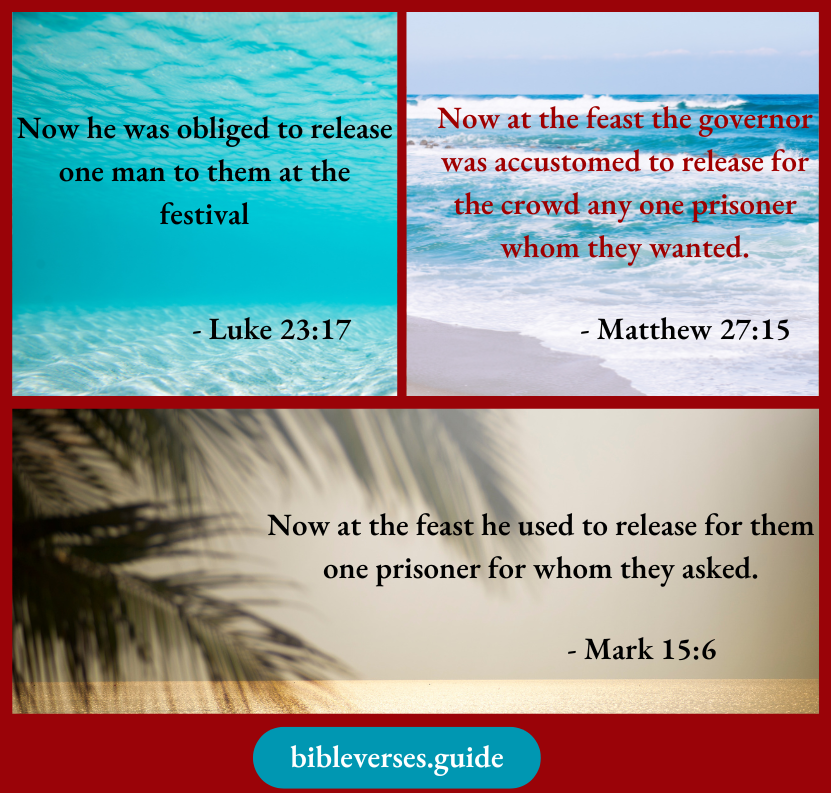
During Jesus’ trial in Luke 23:13-16, Pilate tries to release a prisoner, following a custom during the feast. This custom, also reflected in Matthew 27:15 and Mark 15:6, demonstrates Roman authority while appeasing the Jewish populace.

By omitting this, one might lose the cultural context of Jesus’ trial. Luke 23:17 presents another unique case, appearing in various locations in the manuscript tradition. In some texts, it’s positioned here, while in others, it’s found after verse 19.

This verse, which likely originated as a marginal note to provide context for the unfolding events, seems to have been borrowed from the parallel accounts in Matthew and Mark.

Its variable placement across manuscripts suggests its later addition to the text rather than being part of the original narrative crafted by Luke.

Luke 23-17

Bible textual criticism missing verses synoptic gospels explained

Resist Harmonization

As we delve deeper into the enigma of the absent verses in the synoptic gospels—Matthew, Mark, and Luke—, we encounter a crucial junction in our understanding.

These three gospels, akin to distinct lenses through which we view the life of Jesus, offer us a rich tapestry of perspectives, each invaluable in its unique portrayal.

They are not meant to be carbon copies of one another; rather, their power lies in their differences, their individual colors and contours that bring the narrative to life.

Historically, well-intentioned scribes, perhaps driven by a desire for uniformity, inadvertently harmonized these accounts, blending the edges and colors that made each gospel stand out.

These scribes, likely acting without malice, inadvertently altered the text, adding elements from one gospel to another. Such actions, though perhaps accidental, muddled the distinct voices that are the very essence of the synoptic tradition.

Today, we stand at a crossroads. Advocates for the inclusion of these absent verses, albeit unintentionally, may be walking a similar path as those early scribes.

To insist on retaining these verses in the face of compelling manuscript evidence is to partake in a modern act of harmonization.

It is an endeavor that, however well-meaning, threatens to dilute the unique voices of Matthew, Mark, and Luke—voices that together create a more nuanced and vibrant portrayal of the Gospel story.

In our journey through the absent verses, we’ve not only encountered the artistry of these theological narratives but also the precision of textual criticism.

This scientific approach to the scripture does not detract from the spiritual richness of the text; rather, it serves to safeguard it.

By understanding the origins and transmission of these verses, we are better equipped to appreciate the gospels in their authentic form, honoring the distinct voices that have echoed through the ages.

It is, therefore, not just an academic responsibility but a spiritual imperative to resist the urge to harmonize.

Our task is not to iron out the creases but to appreciate the fabric in its original, unaltered beauty. Let us embrace the differences, the idiosyncrasies, and the unique narratives that each gospel presents.

In doing so, we honor the meticulous work of the early Christians who compiled these texts, and we uphold the integrity of the synoptic tradition.

Conclusion

Navigating through the intricacies of the Bible’s verses can be a profoundly moving experience. We’ve already journeyed together, hand in hand, through 10 of the 16 so-called “missing verses.”

It’s been a reflective path where we’ve not only pondered why these verses might be a source of discomfort for many if removed but also earnestly sought clarity on their origins.

In doing so, we’ve discovered that these verses, while rich in historical and contextual value, should not hold the weight of scripture.

Do you remember our earlier conversations about the hero’s journey? That age-old narrative of adventure, trials, and transformation? As we move deeper into our exploration, we find ourselves approaching the hero’s “Abyss.”

It’s a pivotal point in our journey where the challenges are profound; the truths might be unsettling, but the promise of insight is unparalleled.

These verses, their history, and the weight they carry in theological discussions might challenge our comfort zones, prompting us to question and re-evaluate. But it’s within such depths of reflection that we often find the most profound clarity.

I invite you, dear reader, with heartfelt sincerity, to take a deep breath, open your mind, and walk with me into these transformative chapters.

Every step promises to be an enlightening dance between faith, history, and understanding. Together, we’ll immerse, reflect, and emerge with newfound wisdom.

Acts: One Week In The Bible

Acts: One Week In The Bible

Day 1 Acts 1:8

Story

A small village has been without electricity for months due to a broken power line. The villagers have been relying on candlelight and firewood for cooking and warmth. When necessary, they have had to rely on people in the neighboring villages for assistance.

They have heard that a new power plant will restore the broken power line soon. The villagers eagerly await its arrival. It’s hard to get much done without the needed power.

They hope that once the power is restored, they will be able to accomplish tasks they have been unable to do without electricity, such as running refrigerators, powering computers, and charging phones, as well as having brighter lights for studying and working at night.

The entire village is filled with anticipation and excitement as they wait for the power source to arrive with its opportunities and possibilities.

Acts one week reading plan Bible study

Acts 1-8

Consider

We all need power to carry out Christ’s mission. This verse is Jesus’ last instruction to his disciples and us before he ascends to heaven.

Jesus tells them that they will receive power from the Holy Spirit and that their mission is to be witnesses of Jesus to all people, from Jerusalem (where they were) to all the regions of the world.

The central idea is that followers of Jesus will get power from the Holy Spirit to talk about him and share his message. This is not just for a special group of people but all believers. Every believer has a responsibility to share their faith. We are not just saved for ourselves, but also to help others.

Question: How can we be more open to the idea of being used by the Holy Spirit to spread the Good News?

Prayer

“Heavenly Father, please help us be witnesses for Jesus in our local area and beyond. Help us to share the good news of your love and salvation through Jesus, with those around us, and to reach the ends of the earth with the message of hope in you. We pray in the holy name of Jesus, Amen.”

One week Bible reading plan for the Book of Acts

Day 2 Acts 2:38

Story

A group of scientists discovered that their cure for a deadly disease had unintended consequences. The cure they developed had the side effect of causing a new, even more dangerous illness. People who took the cure showed symptoms of the new disease. Panic spread quickly.

The scientists realized they had made a huge mistake. They called a wise mentor for guidance. The mentor listened carefully to their situation.

The mentor advised them to take responsibility for their actions and work tirelessly to collaborate with experts. Find a new cure as fast as possible.

They finally found a cure. The community was relieved and grateful, and the scientists were hailed as heroes for their efforts to rectify their mistakes.

The scientists learned the importance of being responsible, transparent, and ethical. They made a commitment to be more cautious in the future.

Acts chapter‑by‑chapter one week study guide

Acts 2-38

Consider

The Day of Pentecost occurred 50 days after the Jewish festival of Passover. On this day; the disciples of Jesus gathered together in Jerusalem, and they were suddenly filled with the Holy Spirit.

The Holy Spirit empowered the disciples to speak in different languages, which allowed them to spread the message of Jesus to people from many different nations and backgrounds.

Peter’s message to the crowd on the Day of Pentecost was a call to repentance and baptism in the name of Jesus for the forgiveness of sins.

This message remains relevant for believers today, as repentance and faith in Jesus remain central to the Christian faith.

Question: How does the gift of the Holy Spirit empower us to share the message of Jesus with others?

Prayer

Dear Lord, We ask that you fill us with your Holy Spirit so that we may have the power to share your message of repentance and faith in Jesus.

Help us repent of our sins and turn to you with all our hearts, so that we may receive the forgiveness you offer. We pray in the name of Jesus. Amen.

One week study on Acts with meaning and verses

Day 3 Acts 8:36

Story

Benjamin had always dreamed of starting his own business but had been held back by fear of failure and lack of resources. However, after attending a motivational seminar, he became inspired to act and make his dreams a reality.

Suddenly, Benjamin came across an advertisement for a business incubator program that provides mentorship, resources, and funding to aspiring entrepreneurs.

Benjamin thought, “Why not now?” and decided to apply for the program.

After a rigorous selection process, Benjamin was accepted and given the support he needed to start his own business. Over time, his business became a huge success, and Benjamin lived the life he had always dreamed of.

He realized that if he had not taken that opportunity to overcome his fears and try something new, he would have missed out on his greatest accomplishment.

Acts 8-36

Consider

This verse comes from the story of Philip and the Ethiopian eunuch, in which Philip is explaining the good news of Jesus to the eunuch, who then expresses a desire to be baptized.

The eunuch, a non-Jew, recognizes the power of the gospel and wants to be baptized. He is willing to convert and become a follower of Jesus.

Anyone, regardless of their background, their race, or their life situation, can be baptized and become a follower of Jesus. No one should be excluded.

This verse highlights the importance of the sacrament of baptism and its role in our walk of faith. It’s often the first step of our obedience.

7‑day plan for reading the Book of Acts

Question: What can we learn about the role of baptism in the early Christian Church from this passage?

Prayer

“Heavenly Father, we ask for the courage to share the salvation message through Jesus Christ with those who are seeking it.

May we teach others the value of baptism. Help us be ready to answer the hope within us and lead others to faith in Jesus. This we pray. Amen.”

Day 4 Acts 9:5

Now get up and go into the city, and you will be told what you must do.”

Story

A young man named Lucas always dreamed of becoming a famous musician. He was talented and worked hard, playing gigs at local venues and building a fanbase.

He even auditioned for a popular singing competition and made it to the final round. But just before the final performance, he suffered a serious injury that affected his vocal cords. He was devastated and felt like his dream was over.

However, after some time, Lucas realized that he had a passion for teaching music to others. He started giving lessons to kids in his neighborhood and found a sense of fulfillment in helping them pursue their own musical dreams.

He eventually opened his own music school and became known as a skilled and patient instructor. Despite the unexpected turn of events, Lucas found happiness and success in a new direction, and he was grateful for the opportunity to discover his true calling.

Daily Bible reading plan for Acts for beginners

Acts 9-5

Consider

Saul’s sudden conversion experience on his way to Damascus led to a dramatic transformation. He had a vision of Jesus, who spoke to him and asked him why he was persecuting him.

Jesus can reveal himself to anyone, even those who oppose him. No one is beyond redemption. Jesus can change hearts and minds. Remember that no matter how far someone has gone from God, He is able to reach out to them and bring them back.

It also means that we should listen and obey when Jesus speaks to us.

Question: How can we be open to Jesus transforming our lives so that we follow his commands?

Prayer

“Heavenly Father, we read about Saul’s conversion and his transformation from a persecutor to a devout follower of Jesus. We ask for the grace of repentance, as Saul did, and to be open to your will and guidance in our lives.

Help us to trust in your power to change our hearts and lives, and to be willing to share the message of salvation through Jesus Christ with others. In the name of Jesus, Amen.”

Acts reading plan for Christians in one week

Day 5 Acts 12:12

Story

Carter was a hardworking man who once found himself in a dangerous situation. During a business trip to a foreign country, he was kidnapped by a group of armed men. The kidnappers demanded a hefty ransom for his release, leaving Carter’s family and friends desperate for his safe return.

They turned to prayer, gathering with friends and family to ask for God’s protection and help. Despite the dangerous conditions, Carter remained calm and prayed for a miracle.

Suddenly, he heard a commotion outside the door to his cell and saw a chance to escape. With the kidnappers being distracted, he quickly opened the door and ran to safety.

Eventually, Carter was reunited with his loved ones who were overjoyed to see him. They all acknowledged that prayer played a significant role in helping Carter escape the danger and return home safely. They thanked God for His protection.

Acts 12-12

Church group one week Bible study on Acts

Consider

King Herod had killed the Apostle James and then arrested Peter. James the brother of Jesus took over the leadership of their Jerusalem church. Then an angel miraculously set Peter free.

After his escape, Peter went to the house of Mary, where the believers were praying for his safety.

The situation is humorous when Peter arrives and Rhoda doesn’t open the door, but we know everything turned out all right. Peter might have been frustrated at the time, but their prayers were answered. This shows us the power of prayer.

We should always pray for others and trust in God’s ability to intervene in their lives.

Question: How can we be more intentional in praying for those who are facing difficult situations?

Prayer

“Heavenly Father, we read of the miraculous deliverance of Peter from prison by an angel. We thank you for your protection and deliverance in our lives and for the reminder of your power. Help us to trust in your power to deliver us from harm and to have faith in your protection for us. Amen.”

Acts one week faith growth reading guide

Day 6 Acts 13:2

Story

Janine was a 30-year-old graphic designer who had always felt unfulfilled in her job. Despite her success in the industry and admiration from her colleagues, she couldn’t shake the feeling that she must be meant to do something more.

She stumbled upon a volunteer opportunity to design posters for a local non-profit organization. She jumped at the chance to use her skills for a good cause and found herself completely absorbed in the project.

As she worked on the designs, she realized that this was the kind of work that made her feel like she was making a difference.

Janine soon left her job to start her own design firm, specializing in creating visual materials for non-profit organizations. A sense of purpose drove her work. She often thought back to the moment when she discovered her true calling and was grateful for the opportunity to live a life that aligned with her values and passions.

Acts 13-2

Daily reflections on the Book of Acts in one week

Consider

Saul grew up in Tarsus and then excelled in theological school in Jerusalem. He persecuted Christians until his conversion on the Damascus Road.

Later he returned home to Tarsus. Barnabas went to get him in Acts 11:25 and brought Saul (later called Paul) to Antioch for years of ministry.

Acts 11-25

Now the church was ready to send them out on a missionary journey. The Holy Spirit spoke to the church leaders while they were worshiping and fasting.

They responded by setting apart Barnabas and Saul for their missionary calling. Let us consider God’s plan for our own lives.

Question: How can we be more open to being set apart by God for a specific purpose?

Prayer

“Heavenly Father, we see the guidance of the Holy Spirit in the selection of Paul and Barnabas for a mission. We ask for the guidance of the Holy Spirit in our lives and for the wisdom to follow His leadership.

Help us to be open to the Spirit’s guidance in our decisions and actions, and to be willing to go where He leads us to reach others. We pray in the beloved name of Jesus, Amen.”

Application of Acts teachings in a one week plan

Day 7 Acts 20:35

Story

Al volunteered at a local food bank packing boxes of food to be delivered to families in need when he found an extra box of canned goods. Instead of just adding it to the pile, he personally delivered it to a family he knew was struggling.

They were thrilled at the unexpected delivery when Al arrived at their doorstep. They invited him in for a cup of coffee. While there, they mentioned that they needed a new roof for their home, and they didn’t have the money to fix it.

Al knew a contractor specializing in roofing, and he offered to connect the family with them. The contractor did a great job, and the family was forever grateful.

The family then referred several new customers to the contractor, which increased business for the contractor. Al helped make an important connection by giving the extra food box that allowed the contractor to grow their business.

Acts 20-35

Consider

This verse comes from Paul’s farewell speech to the elders of the Ephesian church. He reminds them of the importance of serving others with a reference to the words of Jesus. He said it’s more blessed to give than to receive. This is one of those rare quotes from Jesus not found in the Gospels.

We should be actively serving and helping others, especially those who are weak or in need. It’s a call to be selfless and to put others’ needs before our own. Christianity is not just about receiving blessings from God but also about being a blessing to others.

Best one week reading plan for Acts for youth

Question: How can we be more conscious of giving or serving others in our everyday lives?

Prayer

“Heavenly Father, Paul reminds us that giving is more blessed than receiving. Thanks for the blessings you have given us. We ask that you help us be generous with what you have entrusted to us.

Please help us to put others’ needs above our own, to serve selflessly, and to give our time, resources, and talents to further our kingdom. We pray in the generous name of Jesus, Amen.”

The Bible

The Bible

The Bible is a book inspired by God, with many stories, prophecies, and messages. Although the Bible is thousands of years old, it is still the most popular book sold each year. Many people are convinced the Bible is outdated or has not progressed with the changing times; however, the Bible has proven over and over again that it has stood the test of time.

Every day millions of people look to the scriptures for hope, assurance, promises, and a guide for how to live their lives. The Bible has never come up empty, and it has been a driving force for many, to keep them grounded and focused.

The Bible is a kind of blueprint on how life should be lived, but, as seen in the scriptures, everyone fails, and we are all notorious for falling short of God’s desire and plan. But of course, God knew that we would.

The Bible is divided into two parts, the Old Testament, and the New Testament and each are very distinctive. The Old Testament gives an account of the beginning of time, God’s creation, and how much he loved mankind.

However, the Old Testament also reveals God’s anger as a result of sin and our separation from God. God did not want to be separated from his people, he wanted to bridge the gap, and that is why he sent us a Savior. Although the Savior was prophesized throughout the Old Testament, it wasn’t until the New Testament that he was born.

The Old Testament is the Law, and the New Testament is the New Covenant, Jesus Christ. Throughout the Old Testament, we see the continual struggles that the Israelites and the Gentiles had with obeying God and his commands.

The people wander off and do their own thing, they disobey God, and they worship idols. The struggle to obey God’s Law is a continual theme throughout the Old Testament. The Law was given by God, knowing that it could not be maintained by the people.

Sin and disobeying God separated us from our Creator, and, God wanted that gap bridged. In the New Testament, we see God’s perfect plan unfold, and hope is restored. Christ comes, the Savior of the earth, who will save the people from their sins. As prophesized, he is born in Bethlehem, is crucified on the cross, and is resurrected so that salvation has been restored.

The Bible is a manual of how Christians should live their lives, but it is also a tool to help us recognize that we cannot do this on our own strength – we need help, hope, and a Savior, and that Savior is Jesus Christ.

As you read through this book, you will see how each Book of the Bible is unique, but also how they all connect together. From the creation to the imminent end times, the story unfolds through historical books, poetic books, prophetic books, and letters to the churches.

The Bible is filled with many exciting and scandalous stories, examples of failure and success, falling and rising again, and hope and glory.

Through the Bible, we clearly see that God is pursuing all of us, both Jews and Gentiles. He loves us unconditionally and has paved the way to be with us; however, the choice is up to us.

In the end, we will all stand before God and give an account for our lives. However, on that day, many of us will enter the gates of heaven, while others will not. The Bible is a roadmap to everlasting life with Jesus Christ.

The Bible is comprised of 66 books: 39 in the Old Testament, and 27 in the New Testament. The books are categorized as follows.

Difference between Old Testament and New Testament explained

Bible Basics

The Bible was written over a period of nearly 1,500 years by 40 people. The earliest books were written by Moses over a period of about 40 years, spanning from (approx.) 1450 BC to 1410 BC.

BC means before the birth of Christ (Jesus). The last book of the Bible, which is Revelation, was written around 100 AD.

AD means after the death and resurrection of Christ.

This is interesting in the fact that not one single word in the Bible contradicts another. In other words, the prophecies and historical accounts in the earliest books of the Bible are spoken of and fulfilled hundreds of years later in the later books of the Bible in detail.

Another piece of proof that points to the Bible’s relevancy is the fact that it doesn’t try to stand alone; meaning it isn’t ‘afraid’ to be scrutinized or examined. For example, in 1st Kings 14:19, we read: The other events of Jeroboam’s reign, his wars, and how he ruled, are written in the book of the annals of the kings of Israel.

This is just one of many examples of what I’m talking about.

The Bible is as true as it gets. It is our guidebook for life. It is the proof of how and why we exist. It is a book of promises that cannot and will not be broken. In short and in the words of Moses in Deuteronomy 32:47, the words of the Bible are not idle words – they are your life.

Bible Basics 101

Before we actually get into what the Bible has to say let’s get familiar with some of the basics of the Bible.

The Bible consists of 66 books and is divided into two main sections:

  • Old Testament
  • New Testament

The word ’testament’ means contract. And what is a contract? It is an agreement between two or more people. This is fitting due to the fact that the Bible contains God’s promises to us in return for our faith and obedience to him. God agrees to bless, comfort, protect, provide for us, and save us from an eternity in hell in return for our following him faithfully.

But why bother? When you buy a house you enter into the contract because you want to make a particular place your home. When you accept employment, you agree to give your best effort to your job because you want to use your skills and earn a paycheck.

From the employer’s perspective, he or she enters into the contract because they want someone they can depend on to represent their place of business in an accurate and positive manner.

So what about the Bible? What is the underlying cause or reason God instituted this contract between us and him? Love. Unconditional, unmerited love.

Yes, it really is that simple. God created us out of love, so it is only natural that he would take whatever measures or actions were necessary to protect that love. Think about it—as a parent aren’t you committed to doing and saying whatever is necessary for your children to know you love them?

The Old Testament consists of 39 books and contains the history of the world up to the period in which the Persian Empire was the most powerful in the world. It was during this time that Malachi wrote the last book of the Old Testament.
The books of the Bible are not presented in chronological order of when they were written, but rather they are given to us in a historically chronological order. For example, most theologians believe Job was written before some of the books that come before it in the Bible. But how could that be? How could Job be before Adam, Noah, and Abraham?

I’m so glad you asked and I’ll be happy to answer your questions…

1: He wasn’t before Adam. No one other than God came before Adam. Just because Job may have been written before God directed Moses to write the book of Genesis and those that come immediately after it doesn’t mean Job’s story took place prior to the events in the first books of the Bible. It’s like telling a story and then going back with a “Meanwhile, back at the ranch….”

This is highly plausible and something we see God doing throughout the Bible

Summary and meaning of the Bible book by boo

For example, we read that man and woman were created on the sixth day, that God blessed them, gave them specific jobs, and told them what they were to do and what they were to eat.

Then God looked at them and proclaimed this final piece of his ‘creation puzzle’ very good (in comparison to ‘just’ good after he created everything else).

Beginning in verse of Genesis we read a more detailed account of that day’s events. It even comes after we read that God rested on the seventh day.

The fact that this more detailed account comes after we know God rested on the seventh day and after the initial and somewhat abridged version of the event doesn’t automatically mean it was a separate event. It just means God chose to go back and give us more details before going on with the rest of the story.

2: We know Job was post-Noah because he, well, because he was. The Bible leaves no room for doubt that Noah and his family (8 people in all) were the ONLY people to survive the flood that covered the entire earth.

And since Job was not one of Noah’s sons, then we know Job had to come after Noah. In fact, we know it had to be at least three generations after Noah because Job is not listed as one of Noah’s grandsons.

Noah’s son, Shem, however, is listed as the father of Uz; meaning his sons, grandsons, etc. are where the people group in this country or tribe came from. And since we know Job was from the land of Uz (Job 1), it only makes sense to assume that Job was a descendent of Shem.

3: As for being before or after Abram (later Abraham), it is quite possible or even probable that he lived either prior to Abram/Abraham, or a generation or two after Abraham lived. The reasons for placing a job in either one of these periods of time include:

  • Uz, where Job was from) is mentioned only in listing the descendants of Shem, in introducing Job to us, in the book of Lamentations where it is referencing Shem’s descendants again, and finally in the book of Jeremiah where a historical reference is made to all the kings of Uz. The area or land of Uz had ceased to exist (at least by that name) by the time Moses and the Israelites came onto the scene.
  • Job is said to be a very Godly and faithful man. In fact, God tells Satan that there is no other man like him. So had he lived during the time of Abraham, it would have been reasonable for God to have chosen Job as the father of the Israelites. As for coming after Abraham, it doesn’t make much sense to think that God felt Job was like none other—specifically Jacob. That leaves us with putting Job’s lifetime prior to Abraham’s. This timeline is most feasible because it would ‘allow’ God to give Job the honor of being the most faithful of men, but a man who simply didn’t fit into God’s timeline for bringing about the nation of Israel.
  • There are several other evidences throughout the Book of Job that place him in this period of time. These evidences include:
  • The names of his so-called friends and comforters are known rulers and dignitaries of prominent people groups during this period of time.
  • The raiders who come to ravage Job’s farm and livestock come from areas near the assumed location of Uz.

Other books of the Old Testament including Esther, Psalm, Proverbs, and Ecclesiastes were written during different periods of history in the nation of Israel. But rather than inserting them between the chronological history of Israel and later Israel and Judah, they are simply given to us after we read the historical documentation God provides us with.

The same can be said for the books of the prophets. Take Jeremiah, for example. God first called Jeremiah to be a prophet during the reign of King Josiah in Judah. Daniel began prophesying shortly after Israel was taken captive by the Babylonians under the rule of Nebuchadnezzar and continued into the reign of King Darius.

But again, rather than insert these books into the middle of the historical timeline accounts of the kingdoms, God simply led those putting the manuscripts together to put them as a group.

It isn’t all that difficult to see the method of organization.

  • Genesis, Exodus, Leviticus, Numbers, and Deuteronomy are the books of the Mosaic Law (and history)
  • Joshua, Judges, Ruth, 1st and 2nd Samuel, 1st and 2nd Kings, 1st and 2nd Chronicles, Ezra, Nehemiah, and Esther are books of history
  • Job, Psalms, Proverbs, Ecclesiastes, and Song of Solomon are the books of wisdom and poetry
  • Isaiah, Jeremiah, Lamentations, Ezekiel, and Daniel are the major prophets
  • Hosea, Joel, Amos, Obadiah, Jonah, Micah, Nahum, Habakkuk, Zephaniah, Haggai, Zechariah, and Malachi are the minor prophets

The book of Malachi was written a little more than 400 years before the birth of Jesus. And then nothing. There is a period of silence lasting 400 years from Malachi to the New Testament book of Matthew.

This period of silence is one in which God does not talk to his people or communicate with them in any way. We do, however, know what was happening in the world because of other historical documents, archeology, and research.

It was during this 400 year period that the following major world events took place:

Note: This list is not in any order of significance or chronology.

  • Alexander the Great defeated the Persian Empire
  • Aristotle was born and made significant impacts on the world of science, literature, and education in general
  • The city of London was founded
  • Numerous dynasty wars and conflicts took place in China and other parts of Asia
  • The Greek Empire enjoyed decades of prominence and power before falling to the Romans
  • The first Roman road system was built
  • Julius Caesar was murdered
  • The temple was reconstructed in Jerusalem
  • Socrates lived and died; making indelible marks on mankind during his lifetime
  • Paper was invented

It was after this 400-year period that God sent his son, Jesus, to be born to earthly parents This begins the New Testament.

Like the Old Testament, the New Testament contains the history and accounts of Jesus’ life on earth; including his ministry, his miracles, his death, burial, and resurrection, and his return to heaven.

This is followed by a history of the early church, books of doctrine (the why and how to be one with Christ), which are essentially letters written by Paul and a few others to the early Christians.

The book of Acts and some of Paul’s letters also contain accounts of Paul’s missionary journeys. The New Testament ends with the book of Revelation, which is a book of prophecy and imagery of the second coming of Christ—the final judgment of mankind.

Bible history timeline explained in simple terms

The New Testament Is Divided As Follows:

  • Matthew, Mark, Luke, and John are the Gospels

Acts is the book of the history of the Church and most of Paul’s missionary journeys.

  • Romans, 1st and 2nd Corinthians, Galatians, Ephesians, Philippians, Colossians, 1st and 2nd Thessalonians, 1st and 2nd Timothy, Titus, Philemon, Hebrews, James, 1st and 2nd Peter, 1st, 2nd, and 3rd John, and Jude are letters (epistles) that outline the doctrine of the Church and God’s requirements, expectations, and forbiddances to Christians
  • Revelation, as stated, is the book of prophecy of things still to come

At this point, it is worth mentioning that there are Bibles available that have been arranged in chronological order. NOTHING is changed in the wording of the scriptures. They have only been rearranged and grouped together to be in harmony with what is going on when, where, and with who.

For example, the four books of the Gospel (Matthew, Mark, Luke, and John) don’t all contain the very same accounts of Jesus’ ministry or his parables, but many of them are repeated in two, three, or all four.

In cases like this, all four accounts are given together (one following another) rather than each book in its entirety. Another example of how it is put together can be seen in the books of Kings and Chronicles. The account of each king in both books is shown side by side.

For many, a chronological Bible makes understanding the history of the world much easier. They like to see all of the events happening at one time neatly gathered in one place. Whether you read it chronologically or otherwise, however, the fact remains that the Bible is the inspired word of God and that its truth will remain until his return.

The Book Of Titus And The Book Of Philemon

Books 56 and 57

The Book Of Titus

Who wrote the book of Titus: Paul

When was it written: Approximately 64 A.D.

As stated earlier, Paul wrote this letter to Titus shortly before his last imprisonment in Rome. Prior to this time Paul and Titus had spent about three years together in Ephesus.

After leaving Ephesus, Paul sent Titus to work with the church in Corinth for a while before taking him to Crete.

Summary of the Book of Titus and the Book of Philemon

The Book Of Titus And Philemon

Paul’s Purpose In Writing Titus Was To:

Give Titus guidance and instruction for meeting opposition from unbelievers

Give Titus authorization to address these issues

Define the guidelines for Christian conduct

Warn Titus about false teachers

Commission (encourage) Titus to continue his evangelistic work

What We Learn From The Book Of Titus

God does not lie. (1:2)

Instructions for the qualifications of an elder in the church. (1:6-9)

The church cannot permit false and divisive teachers. (1:10-11)

We must only teach and live according to the doctrine taught by Jesus. (2:1)

Christian conduct. (2:2-9)

We are to say ‘no’ to worldly passions; living godly, upright lives. (2:12)

Those who live in faithful obedience have the hope of heaven. (2:13-14)

We are to be respectful and subject to the authorities and rulers of our government. (3:1)

We are to live humbly, and peacefully, and show respect to everyone. (3:2)

We are saved because of God’s love and grace through baptism—not because of anything we’ve done or our own righteousness. (3:5-7)

Instructions for how to deal with divisive people in the congregation. (3:10-11)

We are to live productive lives in order to provide for our own necessities. (3:14)

Bible study on Titus and Philemon explained

The Book Of Philemon

Who wrote Philemon: Paul When was it written: 60 A.D.

The book of Philemon consists of one chapter that contains only twenty-five verses. Don’t let the fact that it is so short, however, trick you into believing it has nothing to offer. The book of Philemon contains a powerful and important message we all need to hear.

The Message Is This:

God can change anyone’s heart that allows him to do so. None of us are above needing salvation and none of us are below or too far gone to receive it.

Paul wrote this letter to Philemon during the time he spent on the island of Melita, Sicily, as a prisoner of the Roman government on his way to Rome.

The purpose of this letter was to persuade Philemon to accept his former slave, Onesimus as a brother in Christ rather than to see him only as a slave.

The request/instruction from Paul to Philemon was more than just a request to accept someone as an equal, though. Much more.

Onesimus, who had been Philemon’s slave, had run away after stealing from Philemon. While on the run, however, Onesimus met Paul and was introduced to the truth of the Gospel.

We don’t know under what conditions Paul and Onesimus met, because as stated above, Paul was being escorted to Rome as a prisoner when he wrote this letter to Philemon.

What we do know is that he spent the fall and winter of 60 A. D. in Sicily due to the fact that they had been shipwrecked on the island. This could mean that Onesiumus had been on the same ship as Paul working as part of the crew, or as a stowaway or prisoner also on his way to Rome (for a crime he had been apprehended for).

It might also mean that Onesimus had made his way to Melita and was living as a free man.

How they met is purely speculation and doesn’t really matter. The fact that they met and that Onesiumus accepted Christ as his Savior…that’s what matters.

It is, however, interesting to think about Paul’s living conditions at the time, though, because in spite of the fact that he was a prisoner in transport, Paul was a bit of a hero in the eyes and minds of the residents of Melita as well as those who had been onboard the ship with him.

Paul’s hero status stemmed from the fact that he had survived being bitten by a highly poisonous snake.

This incident, along with the fact that Paul’s arrest wasn’t for crimes committed against the government, but rather they were trumped up by the Jewish leaders, made it possible for Paul to enjoy a few more liberties—liberties such as preaching the message of the Gospel.

FYI: The account of Paul’s miraculous recovery is found in Acts 28.

Wherever they met or whatever the circumstances, Onesimus became a Christian and was changed from the inside out. Proof that the changes in Onesimus were genuine can be seen in the fact that he was willing to return to Philemon and face the consequences of his actions.

This is quite admirable considering the fact that technically his crime was punishable by death.

Another unknown variable in the story is whether or not Paul knew Philemon prior to befriending Onesimus. What we do know, however, is that Philemon was a Christian and part of the church in Colossae.

So Paul’s letter to Philemon was an appeal from the standpoint of extending the same grace to Onesimus as Christ had extended to Philemon (and the rest of us, too).

The last important piece of information you need to know before looking at the letter itself, is that Onesimus hand-delivered the letter to Philemon. This speaks highly of the genuine nature of Onesimus’ conversion.

It also tells us that by the time they were able to leave the island, Onesimus was a free man.

Major themes in Titus and Philemon books

What We Learn From The Book Of Philemon

We need to be aware of and in fellowship with our brothers and sisters in Christ beyond our local congregation. (1:4-5)

We are to actively share our faith. (1:6)

We are to accept anyone and everyone into our church family who is sincere in their faith and acceptance of Jesus as Savior. (1:10)

People can and do change. (1:11)

God often uses negative or even bad situations and circumstances for his glory. (1:15-16)

As Christians we are to uphold the civil laws of our land, pay our debts and taxes, etc.. (1:18)

We are to show compassion toward others and help those in need of assistance. (1:18)


The Book Of 1st Timothy And

Books 54 and 55

The Book Of 1st Timothy

Who wrote the book of 1st Timothy: Paul

When was it written: Approximately 64 A.D.

Paul wrote this letter to Timothy while on his third missionary journey. Timothy was ministering to the church in Ephesus at the time and Paul is writing the letter in order to instruct Timothy in matters of church leadership and discipleship.

Paul had spent approximately three years in Ephesus preaching the message of the Gospel, baptizing people into Christ, and teaching the new converts so that they could grow and mature in their relationship with the LORD. Paul had invested a lot in these people and it is evident he cares deeply for them.

As noted in the previous chapter of the book of Ephesus, the city of Ephesus was ridden with sin and evil. It was a mecca for people from all over the known world, which meant there were a variety of religions being practiced.

Some of these false and idolatrous sects of people were trying to infiltrate the church in Ephesus. Naturally, this was of great concern to both Paul and Timothy.

Bible study on 1st Timothy meaning and themes

The Book Of 1st Timothy

Before we look at what we can learn from the book of Ephesus, I want to take a minute to look at and explain the different religious sects that were trying to impose their beliefs on the Ephesian Christians.

The reason I want to do this is to help you become more aware and conscious of the fact that these things are still happening in the Church today. Possibly in your local church.

No, they probably aren’t the same specific groups the Ephesians encountered, but they are false teachers just the same and something we must be constantly on guard against. Remember…Satan is the master of deception and what better way to deceive someone away from Christ than to pretend to be for him?

The Gnostics

Believe Jesus was nothing more than a good man whose life is worthy to be emulated.

Believe we live more than one mortal life so there is no resurrection of the physical body.

God came from humans and is a glorified human. To say that God has always been is to say he is not real because everything has to have a beginning.

We have the capacity to be equal with God.

The body and all things made of matter are evil, but the spirit is entirely good.

Faith is a choice, but there is no condemnation in walking away from God.

1st Timothy overview for new believers

The Judaizers

Believe the prophets of the Old Testament

Follow the Law of Moses

Recognize Jesus as the Messiah

Believe that the ceremonial practices of the Law of Moses still applied to the New Testament Church

Refused to accept that Gentiles could attain salvation through Jesus unless they adhered to the Jewish ceremonies and customs of the Law of Moses

The Ascetics

Lived a simplistic, frugal lifestyle; denying themselves any sort of worldly pleasure or convenience

Fasted to the point of malnutrition and dehydration in the name of spirituality

Treated their bodies harshly

Abstained from all physical pleasures in an attempt to attain holiness

As I said, we probably won’t find people who call themselves Gnostics, Judaizers, or Ascetics in our churches today, as we read through these partial lists of their belief system, we can see similarities between them and some of the religious sects of today. So just like Paul warns Timothy and the Ephesian Christians to be on guard, we should do the same.

What We Learn From The Book Of 1st Timothy

We must not allow people to teach false doctrines in the church. (1:3-4)

We are warned against being murderers, adulterers, perverts, slave traders, liars, perjurers, and liars. (1:9-10)

We should consider it an honor and privilege to be able to minister to others. (1:12-14)

Jesus Christ came into the world to save sinners. (1:15)

All honor, praise, and glory is to go to God. (1:17)

Some people will fall away from the faith and there is nothing we can do about it because faith and obedience have to come from within a person’s heart, soul, and mind. (1:19-20)

We are to pray for others and on behalf of others. (2:1)

God wants all men/women to be saved by coming to the knowledge of the truth of who he is, who Jesus is, and how salvation comes through Jesus. (2:4-6)

Women are to dress modestly, with decency and propriety. (2:9)

A woman’s true beauty is found in her good deeds and worshipful heart. (2:10)

Paul defines the role of women in the church. (2:11-12)

The requirements and qualifications for elders (overseers) and deacons. (3:1-13)

Indicators of false teachers (4:1-7)

Our physical bodies are important and we should treat them with respect and proper care, but godliness is far more important. (4:8)

Age has nothing to do with spiritual maturity or our ability to minister effectively to and for God’s kingdom here on earth. (4:12)

We are to use the abilities and talents God gave us to minister to others and to promote the spreading of the Gospel. (4:14-15)

We are to persevere in living according to the Christian doctrine taught to the disciples by Jesus and shared with everyone. (4:15)

Instructions for how we are to treat and care for the elderly, the orphans in our family and in the church, and other members of our family. (Chapter 5)

Paul gives another warning against false teachers—those who thrive on controversy and quarrels, who spread gossip, are envious, slanderous, and who are often involved in or stir up conflicts between others. (61-5)

We are to be content with what God gives us and rest in the promise that we will always have what we need. (6:6-9)

We are reminded that the love of money is the root of all evil (6:11)

We are to pursue righteousness, godliness, faith, love, gentleness, and endurance in the faith. (6:11)

We should not lose sight of the promise of heaven. We should use this promise to keep us grounded in our faith. (6:12-16)

Those who are blessed with monetary wealth are to share it with others, use it for the furtherance of God’s kingdom here on earth, and not try to put their identity in their wealth. (6:17-19)

Christian living lessons from 1st Timothy chapters

The Book Of 2nd Timothy

Who wrote the book of 2nd Timothy: Paul When was it written: 66 A.D.

When Paul wrote 1st Timothy and Titus (the book that follows 2nd Timothy), Paul was a free man; traveling throughout Asia Minor spreading the message of salvation to any and all who would listen.

At that time he had only been a free man for approximately two years (having been imprisoned in Rome. But by the time he wrote this letter, Paul had once again been arrested—this time by Nero, Rome’s most notoriously insane (psychotic) emperor.

The first time Paul had been imprisoned in Rome he had been treated humanely. This was largely due to the fact that he was a Roman citizen.

During that time he was allowed visitors, was fed properly, given proper medical attention when he needed it, was allowed to receive gifts from his brothers and sisters in Christ, and was permitted to continue spreading the message of the Gospel through the writing of his letters to several of the churches that were the result of his evangelistic work and the evangelist work of others.

This time, however, because Nero was the kind of man he was, Paul was chained in a cold, dark, dungeon. He was mistreated, malnourished, and sick. In short, he was dying. Paul knew these were his last days and that his work here on earth was coming to an end. He could not, however, be at peace until he had written Timothy one last letter. This second letter to

Timothy Had Two Main Purposes:

Paul was lonely and wanted to see Timothy one last time before he died. Paul’s loneliness stemmed from the fact that the persecution of Christians was so severe under Nero’s reign that many Christians went into hiding.

To have associated themselves with Paul by coming to see him would have resulted in an instantaneous death sentence. It is doubtful that Paul resented the lack of visitors, but his understanding didn’t make him any less lonely.

Paul wanted to give Timothy some final words of encouragement to remain steadfast and not be afraid. The persecution of the Church wasn’t limited just to the city of Rome. It was going on throughout the entire Roman Empire.

This meant that the churches Paul, Timothy, Titus, Barnabas, Peter, Silas, Mark, and all the others had worked so hard to establish throughout the known world were under attack.

Paul knew what it was to suffer for the cause of Christ. He also knew what it was to be abundantly blessed for sharing the truth of the Gospel. But either way, Paul was content in his circumstances and truly glad to do whatever God called him to do.

What about you? Can you say you are content and truly glad in all things knowing God is in control?

Best verses in 1st Timothy with explanations

What We Learn From The Book Of 2nd Timothy

We need close personal relationships with our brothers and sisters in Christ. (1:3-4)

God didn’t give us a spirit of timidity. In other words, God expects us to be bold for him. (1:7)

We should never be ashamed or embarrassed to live our faith, share our faith, or even suffer for our faith. (1:6)

The gift of salvation is not because of anything we’ve done, but it is God’s gift to us because of his unconditional love and amazing grace. (1:9)

Upon acceptance of Jesus as Savior, we receive the Holy Spirit to guide us. (1:14)

We have to ‘play by the rules’, i.e., if we want to receive God’s blessings we have to be obedient to him. (2:4-7)

Paul gives us a ” . .trustworthy saying. If we die with him we will also live with him; if we endure we will also reign with him. If we disown him, he will also disown us; if we are faithless, he will remain faithful, for he cannot disown himself (2:11-13)

The LORD knows those who are his. (2:19)

We are to keep ourselves away from all kinds of evil. (2:23-26)

Paul warns against false teachers and those who will try to persuade us to turn away from God. (3:1-9)

We are to always be prepared to defend God’s Word and the reason for our faith. (4:2-5)

1st Timothy outline and key themes for Bible study

The Book Of 1st Thessalonians

Books 52 and 53

The Book Of 1st Thessalonians

Who wrote the book of 1st Thessalonians: Paul

When was it written: Approximately 51 A.D.

Paul wrote his first letter to the Christians of Thessalonica following his short stay there during his second missionary journey. The congregation in Thessalonica was young. They had turned their backs on paganism to follow Christ. But their new¬found faith came at a price—the persecution and ridicule of their families and friends.

What’s more, the conversion from paganism, which worships many gods, to Christianity, which recognizes only the one true God, meant that these people changed their entire way of thinking and their entire way of life. They were upending generations of indoctrination for something many would not accept. They went from believing…

The gods and goddesses had to be appeased and sacrificed in order to gain their favor

Reincarnation and/or varying forms of spirit worlds upon physical death

Human sacrifices were often necessary (in many cases, but not all)

Sexual acts with temple prostitutes or even animals were acceptable as a form of worship to believing…

That there was only one God and that his son, Jesus made the ultimate sacrifice for our sins

Our acceptance of those beliefs should be reflected by our willing obedience to God as an expression of gratitude for that sacrifice

1st Thessalonians overview for new Christians

The Book Of 1st And 2nd Thessalonians

We know from Paul’s accounts of his missionary journeys that he was not able to spend nearly as much time with the Christians in Thessalonica as he wanted to. His inability to devote more time to one-on-one discipleship made him somewhat anxious.

He did not want to see their faith choked out by the pressures of their family and friends who didn’t accept their coming to the truth. So in order to help the church in Thessalonica hold on to and grow in their faith, Paul wrote this letter and the letter of 2nd Thessalonians.

The main focus of this first letter to the Thessalonians is the second coming of Jesus Christ. I believe Paul takes this approach because of the importance placed on the spirit world in paganism.

He wants to reassure them that the reward they will receive for their faithfulness is far greater than anything they could have believed possible in their former way of thinking.

What we learn from 1st Thessalonians

We are to continually pray for, encourage, teach, and mentor one another—especially those who are new to the faith. (1:3 and 2:11-12)

We are to be a living example to others—Christians and non- Christians/ (1:7-8)

We aren’t meant to be people-pleasers. We are meant to be God-pleasers. (2:4-6)

God has provided the Holy Spirit to enable us to live faithful, obedient lives. ((3:12-13)

We are to honor God with our bodies. (4:3-8)

We are to be humble, and self-sufficient vs. depending on others to support us, and be people of integrity so that our lives will be an example of who Christ is. (4:11)

We learn that those who have died a physical death will be raised back to life and be judged before those who are alive at the second coming of Christ. (4:13-18)

No one but God knows when the day of judgment will be, but that’s okay—it’s nothing we need to worry about as long as we are in Christ. (5:2-11)

We are to have a strong work ethic, treat people with respect, live peacefully, be an encourager, and help those in need. (5:13-15)

We are to be joyful, pray continually, and give thanks in ALL circumstances because we know God will make everything good in his time. (5:16-18)

We are to test all teachings against the Word of God and run away from anything evil. (5:21-22)

Christian living lessons from 1st Thessalonians chapters

The Book Of 2nd Thessalonians

Who wrote the book of 2nd Thessalonians: Paul

When was it written: Approximately 52 A.D.

The book of 2nd Thessalonians is one of the shortest books in the Bible—only forty-seven verses total. The book is Paul’s second letter to the Christians at Thessalonica and is a follow-up to the first.

If you remember, other than reminding the people to be prayerful and obedient, Paul’s main focus in the first letter was to relate to them what we know about the second coming of Jesus. He basically repeated Jesus’ message (as written in the gospels) about the ‘procedures’ of the final judgment.

He Told Them That:

No one but God knows the day or time it will take place

That the dead will be raised back to life and be judged first, followed by those who are alive at the time of his return

That those who are declared saved before God will spend eternity in heaven and that those who are not saved will spend eternity in hell

In reading this letter, however, the people in Thessalonica misunderstood Paul. Or rather they assumed that the second coming of Jesus was imminent. In fact, we know from what Paul writes in this second letter that many of them had stopped working and going about their daily lives just to wait for Jesus.

And so the purpose of this second letter is to clear up that misunderstanding.

1st Thessalonians chapter summary and key takeaways

What We Learn From 2nd Thessalonians

God is a just God. He will reward those who are faithful and righteous in him and will pay back trouble to those who are not. (1:6-10)

We aren’t to be deceived or become unsettled or worried by those who say they know when the day of judgment will be. (2:1-4)

We are to be on guard against Satan and constantly depend on God to protect us from Satan’s schemes. (3:3)

We are to work hard and honor God by serving him and others. (3:10-13)

We are to hold one another accountable for obeying God. (3:14-15)