Being Like Children

Being Like Children

This past summer we enjoyed a reunion back on the East Coast with members of our extended family.

Steve and I shared a beach house with our two daughters, their husbands, and seven children from both families plus a few others.

We all talked about how to have a good time and not get on each other’s nerves, and how to give the six boys and one girl room to be kids and enjoy themselves.

Steve and I had a laid-back role as the older couple, not directly responsible for anyone and able to enjoy everyone. We knew it would be chaotic and noisy and that toys would be everywhere.

Let’s just relax and let the good times happen, we told ourselves. And so we did.

It was an absolutely wonderful week. The children all got along with each other and the adults were less uptight than they were at home.
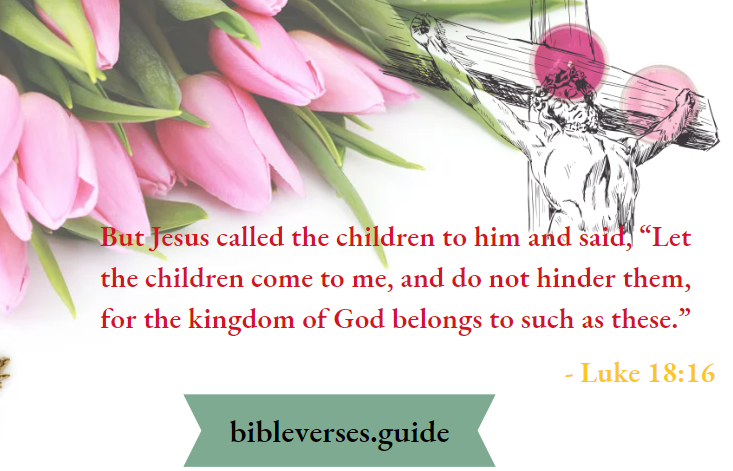
Luke 18-16

We went to the beach most days and built sand castles and collected shells. At least one person always had a little one to keep track of since we were near the water’s edge.

The children were safe and at the same time had the space time and energy to really relish life.

Sometimes one of them would become engrossed in digging for creatures, and he’d want the solitude to do it alone.

At other times several of them would play with buckets and shovels and create their own imaginary constructions.

Why does the kingdom of heaven belong to those who are like little children? I think it must mean that we will all be most completely who God intended us to be without the inhibitions of adulthood.

We will be less guarded, knowing that we are safe in God’s care. We won’t have to be like everyone else but will be free to express ourselves in unique ways.

Since the Bible tells us there will be no more tears in heaven (Rev. 21:4), it must mean that we will laugh in the reckless way that children laugh.

They giggle with delight and double over with peals of joy.

There must be a lot of power that infuses our souls when we get to heaven to open up some of us to godly abandonment. Just to be free and childlike sounds like a tall order for many of us.

And I think God wants us to experience more of this godly abandon here on earth.

On a vacation, we can experience life without the responsibilities and restraints of daily life.

But what if we could be who God intended us to be all the time, not just on vacation?

Maybe if we infused our souls with the nurture of God’s love more frequently, we’d experience more fulfillment, laughter, and childlike peace.

God’s nurture comes from worship, time with him, time with other believers, prayer and just thinking about how much God loves us, and how much he wants to hold us the way we hold the little people in our lives.

And when the sun goes down and little people wind down they cuddle safely in the arms of those who love them.

I can’t think of much that is more peaceful than rocking a baby or an active toddler who gives in to sleepiness.

Father, thank you for the hope children give us that we will all laugh again in the innocence of our younger days. Help us to be more relaxed in your love.



We Know The Final Victor

We Know The Final Victor

Dallas Cowboys football team was playing. He talked about his excitement over their games and what a fan he was.

He would have someone tape the game for him when he was away, and then he could watch it when he got home. Most of the time, he would hear the final score before he got home.

Still, while watching the game he’d get engrossed in the plays as if they were happening in the present moment.

If the Cowboys were behind, Dr. Hendricks talked of being worried . . . until he remembered the final score (for games they had won, of course).

Revelation 1-1

Even when it looked really bad, he could hold on to the fact that they had already won.

He went on to tell us that he felt that way about heaven. We as believers know the final score. We win.

The Book of Revelation opens up some of the future to us and tells us not only the battles that lie ahead but the final result.

The apocalyptic language of Revelation helps us see events with a new set of eyes. It promises that God’s power will ultimately defeat the forces of evil.

What a gift to know that we have the victory won, especially when times are difficult.

John received a glimpse that he shared with us, and we can hold on to it as all the information we need until the time as we know it ends.

Father, thank you for revealing to us the final battle results. Thank you for being with us in our suffering and for giving us a picture of life’s events from a heavenly perspective.

Help us keep that perspective in view.


Hey, You Listen To What I’ ‘m Saying!

Hey, You Listen To What I’ ‘m Saying!

Teach them to your children, talking about them when you sit at home and when you walk along the road, when you lie down, and when you get up.

Write them on the doorframes of your houses and on your gates, so that your days and the days of your children may be many in the land that the LORD swore to give your forefathers, as many as the days that the heavens are above the earth.

If you’ve ever been to New York or Jerusalem, you may have seen devout Orthodox Jews whom you recognized by their long beards, flowing hair, black hats, and dark clothing.

In some cases, you even saw phylacteries—small leather boxes containing pieces of paper with biblical passages written on them.

Orthodox men wear phylacteries strapped to their heads and arms during their weekday morning prayers to remind them of their duties to God and God’s Word.

Deuteronomy 11-18-21

Passages such as this one from Deuteronomy inspire such devotion. This is from Moses’ farewell address to the people of Israel.

Moses had led these people for decades during their wanderings through the desert. Now he was dying, and it was time to pass on some final words of wisdom.

Two of the major themes Moses talked about were God’s love for humanity and humanity’s need to obey God. Moses also challenged people to study and follow God’s Word.

Often when he spoke, Moses was speaking God’s words. In this passage, there was one simple message God wanted to communicate: “Hey, you: listen to what I’m saying and take it seriously.”

Orthodox Jews who wear phylacteries are taking God seriously. So are committed Christians who try to organize their daily lives around the principles the Bible spells out.

The man who does the right thing at work when others encourage him to take an ethical shortcut is fixing God’s Word in his heart.

So is the woman who perseveres in doing good even when she gets no credit for it.

So is the child who obeys her parents even if the commands they give aren’t always fun to carry out.

Life can be so crazy and hectic that people often forget to do what’s right and best.

That’s why God continually reminds us to focus our attention on the one true rule of life and conduct that he, the Creator of the cosmos, authored.

When we hear and obey what God says, our lives will be blessed. When we forget things that are truly important to focus on things that are merely urgent, we go off course.

Okay, God. I’m listening. Tell me what you want me to do and help me do it.


Seekers Will Find

Seekers Will Find

Thinkers who study contemporary spiritual life have declared ours to be a “seeker culture.”

Sociologist Wade Clark Roof interviewed hundreds of people for his book, A Generation of Seekers: The Spiritual Journeys of the Baby Boom Generation.

Roof said many of the 76 million people born between 1946 and 1964 are asking deep questions about the meaning of life and are seeking spiritual answers to these questions.

But unlike their parents, many are looking outside the walls of churches for their salvation.

Some look to close-knit circles of friends that provide the kinds of community and support that many Christians seek in churches.

Others head to the great outdoors, where they experience a sense of closeness to God that they can’t find in even the most majestic cathedrals.

Others see signs of the divine in books, movies, and art. Still, others seek answers in New Age books and an experience of the supernatural in assorted spiritual rituals and nostrums.

Such searching isn’t always successful, but many seekers remain confident that such quests for the sacred are more likely to bring them the experiences they long for than they would ever find in a church.

Matthew 5-6

“Boomers still feel some ‘distance’ from almost every institution, whether military, banks, public schools, Congress, or organized religion,” he wrote.

“For many, having any kind of relationship with a religious institution is problematic.”1

Jesus would have understood today’s spiritual seekers. When he looked at the religious institutions of his own day, he saw a greater emphasis on outward forms of religiosity than on the inner dimensions of spirituality that give life meaning.

Christ saw hypocrisy nearly everywhere he looked. In fact, the word hypocrites turns up more than a dozen times in his teachings found in the Gospel of Matthew.

In Matthew 6, Jesus instructed his followers not to worship like the hypocrites, who stood on the street corners and prayed loudly to impress others with their religiosity.

Instead, when you pray, he said, go into a room by yourself, close the door, and pray quietly to God, who will hear and answer your prayers (v. 6).

In Matthew 23, Jesus launched into a scathing critique of religious hypocrites. “Everything they do is done for men to see,” he said. Then he unleashed a series of condemnations that began with the words “Woe to you.”

Along the way, he referred to scribes and Pharisees—the religious leaders of his day—as “blind guides” (v. 16) and “a brood of vipers” (v. 33), among other colorful terms.

But Jesus wasn’t all doom and gloom. Even though many people used religion as a way to avoid coming into contact with the living God, others had better results.

“Blessed are those who hunger and thirst for righteousness,” he said, “for they will be filled.”

All of us have experienced hunger and thirst. For most of us, there are mild discomforts we feel between meals, snacks, and coffee breaks. But those who have gone longer than normal without food and water really know what hunger and thirst can mean.

Jesus wants us to seek God with the same single-minded determination we would use to seek food if we had gone without it for a week. We are all to be part of a “seeker culture.”

If we do that, he promises that we will find the spiritual nourishment we crave.

Father, thank you for making me hungry for you and helping me continue seeking your truth.


Sheep have The Right Of Way

Sheep have The Right Of Way

Steve, and I headed out of the parking lot at the Dublin airport in our rental car. We knew that driving on the left side of the road would take some adjustment, but the narrowness of the roads was a surprise.

About twenty miles from the airport our dual highway faded away, and we found ourselves on our first highly anticipated Irish country road.

I screamed at Steve to move more to the center as bramble bushes almost whisked against my window.

Of course, he couldn’t move more to the center or he would have hit oncoming cars.

As we rounded a corner, a scene this city girl would never have imagined halted our progress completely.

A flock of sheep meandered along the road, jostling for position as they squeezed out of a gate on our right and turned onto the road ahead of us.

A man at the front of the flock was yelling back to them and his black-and-white dog scurried around the edges of the flock, nudging the sheep to move along.

Psalm 23-1

We inched along behind them for about ten minutes. It was a fascinating sight, and we laughed at the reality of these dirty, smelly animals presiding over a public thoroughfare.

Just as we began to wonder where they were going and how long it would take them to get there, their shepherd opened a gate on the left side of the road. The sheep crowded to rush through to the grassy meadow.

By the time they had all moved from one field to another, lines of backed-up traffic flowed in both directions. The shepherd waved to us smiled and closed the gate behind the last of his flock.

This twenty-first-century encounter with a shepherd brought a smile to my spirit as I thought of the familiar words to the opening verse of the Twenty-third Psalm: “The LORD is my shepherd, I shall not be in want.”

But as I watched the Irish shepherd I realized that I don’t often bring the reality of the Lord as my own Shepherd into my daily life. In the most humble ways, this Irishman cared for his sheep.

And he did it in a way that presumed that everyone understood that the sheep had precedence over the cars on the road.

We are the sheep of our Father. He cares for us in the most basic, as well as the most profound, ways.

Father, thank you for your personal care, as tender as that of a shepherd tending his sheep.


The Warrior’s Psalm

The Warrior’s Psalm

Bob Boardman was a member of the U.S. First Marine Division fighting in the Pacific during World War II.

Serving as part of a tank crew on the Pacific island of Peleliu, he found dread a constant companion.

“It was a fearful place,” he says. “The island was a big coral rock, and the Japanese were hidden away in five hundred coral caves, both natural and man-made. We had to rout out the enemy cave by cave.”

When he had a spare moment, Boardman consoled himself by reading the small Bible he had been given. As he made his way through the Psalms, he found solace in one particular passage that spoke to his fears.

It was Psalm 18, and an introductory note indicated the conditions under which it was written: “David sang to the LORD the words of this song when the LORD delivered him from the hand of all his enemies and from the hand of Saul.”

Psalm 18-2-3

Boardman called David’s words his constant refuge on Peleliu. Daily he faced the challenge of placing his ultimate faith in God, his Rock, rather than being intimidated by the rock caves in which danger dwelt.

He still refers to the passage as “the warrior’s psalm” and turns to it often, both when he is speaking to the public and when he seeks reassurance of God’s presence in his life.

The opening lines of the psalm reveal that David was familiar with the fears that beset soldiers. But mixed with his fears were notes of hope and confidence in God, his Redeemer:

Psalm 18-4-6

Centuries before modern warfare turned Asia and Europe into killing grounds, David’s psalm conveyed the horrors of war: “The earth trembled and quaked, / and the foundations of the mountains shook” (v. 7).

It’s been said that war is hell, but Boardman’s experience during World War II demonstrated to him that even in the chaos and carnage of warfare, those who trust God can experience a foretaste of heaven: “He reached down from on high and took hold of me; he drew me out of deep waters. He rescued me from my powerful enemy” (vv. 16-17).

For Bob Boardman and many others who’ve seen the cruel face of war, the assurance of God’s presence has been a powerful spiritual lifeline.

Father, in the midst of life’s turmoil and strife, help me place my trust in you.


Developing A Long View

Developing A Long View

The beauty of our world is tainted by the ugliness we see all around us. Headlines shout the carnage that man thrusts upon man. Several years ago Steve and I visited Israel.

We traveled to Tiberius, on the Sea of Galilee, and spent several days touring that area.

It was beautiful and peaceful—except for the reminder of trouble when we saw machine-gun-toting soldiers standing on street corners.

We also visited Jerusalem, staying in a lovely hotel within walking distance of many sites. The city bustled with activity as Jewish and Arab people came.

One night we walked the streets of a local shopping area and watched Jewish teenagers hanging out in a pizza shop and coffeehouses, much the same way kids all over the world congregate with friends.

Revelation 21-5

A few months later, we learned that a suicide bomber blew apart the pizza shop in that area. We had been right there. Those laughing youths we saw might have been in the midst of the terror.

Then on September 11, 2001, terror hit America, sending waves of concern across a land that such attacks had not touched.

Battles rage. Cities are destroyed. People kill each other and do much of the terror in the name of God, or a god.

Where is our hope?

This verse from Revelation tells us. It declares that God himself will make everything new. “He will wipe every tear from their eyes.

Revalution 21-4

We are now living under the old order. Satan infiltrates our world. Sin works its destruction. God is available to any who earnestly seek him, but many do not.

But we have a wonderful promise when the end of this world as we know it comes about. God will make everything fresh, untouched by sin, perfect.

I think that God gave this message to John and commanded him to write it down so that we would not lose hope.

When we become discouraged or afraid, we can fix our eyes ahead—develop a long view—and see that evil will not win out in the end.

God will one day unleash his power on all of the world and he will emerge the victor. In that, we can have great hope.

Knowing that evil’s power is limited, we can look past the present with all its harrowing images of oppression, war, and evil men.

We can place our hope in the promises of God, grieve for the troubles of the moment but raise our eyes and our hearts to the reality of an awesome God who will work all things to his good.

Father, our world seems so much more dangerous than it did a few years ago. Our eyes have witnessed the horror that man can do to man.

Please help us to keep hope alive by looking beyond the devastation to you. Thank you for your promises and the future we have waiting for us.


Making The Most Of Your Opportunities

Making The Most Of Your Opportunities

Have you ever been to a store or post office where customers take a number and wait in a long line until the number is called?

One cold and snowy December day, I journeyed to a local post office carrying a mound of boxes full of Christmas presents for faraway family and friends.

Entering the crowded waiting room, I struggled with my boxes and extended a hand to grab a number from the dispenser near the front door. I pulled number 94.

The sign above the counter, where four busy employees were moving as fast as they could, said the latest number called was 52.

Usually, when I go to the post office, I take something to read with me just in case.

This time I had forgotten, which was too bad, because I probably could have read significant portions of Tolstoy’s mammoth War and Peace.

Isaiah 55-6

The milling crowd of customers moved with geologic slowness. After I had been waiting for half an hour, the sign above the counter said “Now Serving: 74.”

By the time the workers were up to the mideighties, I felt like I was in a slow-motion daze. Then the next thing I knew, I looked up and the sign said 96.

After waiting for more than an hour, I had missed my turn.

During my long wait, I wondered if the scene I saw at the post office was anything like what God must deal with on a daily basis as he tries to answer the prayers of millions of people around the world.

But God isn’t like a harried postal worker. God is omnipresent (he is everywhere at once).

God is omniscient (he knows everything including all the prayer requests people make even before they pray). God is omnipotent (he is all-powerful).

Still, Isaiah suggests there are times when we can’t find God, as if like a busy postal worker he had hung up his “Out to lunch” sign.

But God isn’t ever unavailable. Isaiah’s book repeatedly shows that God makes himself available to us, even when we don’t take advantage of the opportunity.

God isn’t out to lunch, but there are plenty of times when we are. Perhaps we become too overwhelmed with the cares of daily life.

Or perhaps we become so busy that we don’t take thirty seconds to listen to God’s still, small voice speaking in our hearts.

God is always here, even if our own attitudes and behavior make him seem a million miles away He is always calling our “number.”

Father, thank you for being there for me. Help me not to take you for granted.


Sins As Scarlet

Sins As Scarlet

The teachers of the law and the Pharisees brought in a woman caught in adultery. They made her stand before the group and said to Jesus, “Teacher, this woman was caught in the act of adultery.

In the Law, Moses commanded us to stone such women. Now what do you say?” They were using this question as a trap, in order to have a basis for accusing him.

But Jesus bent down and started to write on the ground with his finger. When they kept on questioning him, he . . . said to them, “If any one of you is without sin, let him be the first to throw a stone at her.” . . . Jesus straightened up and asked her, “Woman, where are they?

Has no one condemned you?”

John 8-1-11

It’s a scandalous story set in seventeenth-century Boston. A married woman named Hester Prynne has an adulterous affair with a young pastor named Arthur Dimmesdale.

Author Nathaniel Hawthorne’s The Scarlet Letter shows us how the religious leaders of Boston dealt with adulterers. In the case of Hester Prynne, they made her wear the red letter A on her clothing.

No one discovers Dimmesdale’s complicity until later in the story, so he doesn’t have to wear a symbol that others could see. Still, his guilt and shame haunted him in other ways.

In this fascinating scene from John’s Gospel, a small letter A is not enough to publicly condemn a sinner for her sexual misdeeds.

You’ve got to hand it to the Pharisees. They were tough on sin— at least some sins, and at least those sins that were committed by others.

In this case, the target was an easy one: a woman who had been caught in adultery.

The stage was set for another in the ongoing series of encounters between Jesus and the religious leaders of his day.

As usual, Jesus rose to the challenge, telling the Pharisees they could go ahead and stone the woman. But Jesus wanted the first stone to be thrown by a man who had never sinned.

All the righteous indignation and mob emotion that had been growing to a fevered pitch was now punctured by one simple statement.

Once the Pharisees had been dealt with, Jesus turned to the woman, who probably still wore the look of one facing execution.

Jesus was well aware of her sins, but he looked beyond these infractions to her heart, which was hungry for salvation. He forgave the woman, commanding her to sin no more.

In our day, sexual sins continue to arouse the anger of men concerned about righteousness and obedience to God’s law.

That’s all well and good, but in pursuing righteousness, we also need to remember grace and forgiveness, or else we will wind up as self-deceived as the Pharisees.

Father, I thank you for the gift of your forgiveness. Help me to receive it for my own sins and to extend it to others when they need it, too.


When Being Good Good Enough

When Being Good Good Enough

Jeremiah, the so-called weeping prophet, here delivered one of the downbeat lessons for which he was so famous.

While some prophets repeatedly told people about the many good tidings God had in store for them, Jeremiah’s messages to the residents of Jerusalem were more depressing.

His usual point was this: “People, you have really messed things up this time, and you better get right with God. Now!”

One of the themes of Jeremiah’s book is sin, a subject that wasn’t any more popular in his day than it is in ours.

Jeremiah preached to people who believed themselves to be God’s chosen people. Their spiritual pride blinded them to their sin.

Centuries later, people remain blind to sin. Today a “therapeutic” gospel says people are really good at heart if they can bring their many psychoses and addictions under control.

That, combined with a billion advertising messages that preach some variation of the message “You deserve a break today,” has led many to believe that they’re really not so bad after all.

Some people even reject the very idea that there is no such thing as absolute good or evil.

The concept of sin is seen as even more problematic. Others accept notions of good and evil but try to explain away their guilt and shame by pinning it on others.

Instead of accepting blame for their misdeeds, they attribute their acts to abusive parents (“I wouldn’t be so selfish if my daddy had loved me”), insensitive spiritual leaders (“I’m just trying to recover the sense of self-esteem that was beaten out of me by Sister Margaret in the fifth grade”)

Jeremiah 17-9

or complaints about economic injustice that would make Robin Hood blush (“Yes, I downloaded dozens of copyrighted songs from the Internet without paying for them, but the music industry is a huge international conglomerate that charges too much for CDs and will never miss a few dollars here and there”).

Jeremiah would disagree. Called by God to convey God’s message to a wayward world, Jeremiah preached a hard-edged message of repentance.

People are sin-sick, he said, and the only thing that can help them is God’s loving grace.

Although he lived long ago, Jeremiah had a very contemporary approach to getting his message across.

British author Steve Turner, who writes about art, says Jeremiah was one of the first conceptual artists because he regularly staged dramatic presentations to drive home his points.

“Jeremiah hid his underwear in a crevice until it rotted and then displayed it as an illustration of how God saw Israel’s pride,” wrote Turner in his 2001 book, Imagine: A Vision for Christians in the Arts.

Centuries after Jeremiah, Jesus preached a message of love and grace, but his sermons didn’t neglect the important subjects of human sin and pride. More recently, writer Frederick Buechner described sin as a destructive centrifugal force:

When at work in human life, it tends to push everything out toward the periphery.

Bits and pieces go flying off until only the core is left. Eventually, bits and pieces of the core go flying off until nothing is left. “The wages of sin is death” is St. Paul’s way of saying the same thing.1

Buechner concluded his miniessay on sin by saying: “More even than hunger, poverty, or disease, [sin] is what Jesus said he came to save the world from.”2

“The heart is deceitful,” said Jeremiah. And the more we try to argue with him, the more we reveal the truth of what he said.

Father, help me to see my sinful condition as clearly as you do. And please cleanse and purify my twisted little heart.