
Chapter 7 Parenting With OCD: Challenges And Strategies
Parenting with OCD can be a challenging and exhausting experience. Parents with OCD must develop coping mechanisms and seek support from trusted friends, family, and mental health professionals to ensure they provide their children with a nurturing environment.
In this chapter, we delve into the complex world of parenting with OCD, discussing the intersection of personal challenges and the responsibilities of raising children. Well, explore how parents with OCD can address their fears and anxieties to provide a nurturing home environment while still balancing their self-care.
Additionally, we’ll learn how parents can effectively support children who may exhibit OCD or OCD-like behaviors. By understanding these challenges and implementing effective strategies, parents with OCD can take steps toward fostering a supportive and loving atmosphere in their homes.
Read and Learn More OCD Management Made Simple: Top Strategies and Insights
Addressing Fears And Anxieties
Parenting can be an immensely fulfilling and rewarding experience; however, for people living with Obsessive-Compulsive Disorder (OCD), parenting may come with unique challenges. Being a parent often triggers anxieties about cleanliness, safety, and other aspects of raising a happy and healthy child. The good news is that with proper support and tools, people with OCD can become successful parents and effectively address the fears and anxieties arising from their condition.
Firstly, it’s essential to understand the nature of OCD. In simple terms, OCD is a disorder characterized by persistent intrusive thoughts (obsessions) that lead to repetitive behaviors (compulsions). People with OCD often need to perform these compulsions to reduce the anxiety resulting from obsessions. For parents with OCD, the obsessions may gravitate toward their children’s well-being
One primary concern parents with OCD may face is excessive cleaning due to fear of germs, illness, or infection. This behavior can lead to significant distress both for the parent and child. To begin addressing this anxiety, it is helpful for the parent to recognize that cleanliness is essential but not at the cost of constant obsession over sanitation.
Developing a structured cleaning routine that follows reasonable hygiene guidelines can help alleviate anxiety while ensuring a clean home environment.
In addition to maintaining a healthy balance in cleanliness, parents with OCD need to foster trust and open communication within the family. Partners should be supportive and understanding of each other’s mental health needs but also set boundaries so as not to enable unhealthy behaviors.
Awareness programs and therapy sessions aimed at educating partners can assist in developing empathy toward one another’s challenges.
Children should also be educated about their parents’ condition in an age-appropriate manner. This knowledge will enable them to understand their parent’s actions better and encourage open conversations about their feelings and anxieties. Promoting a healthy dialogue within the family unit can improve emotional understanding and coping mechanisms.
Another common fear for parents with OCD is the fear of harm to their children. This could manifest in constant worry about accidents, illnesses, or abductions. While these fears may be natural for any parent to an extent, they can become exaggerated and overwhelming for someone with OCD. Developing a toolbox of coping strategies to deal with these anxieties is essential, such as grounding exercises and cognitive-behavioral therapy (CBT).
Seeking professional help is crucial for parents struggling with these intense fears. A licensed therapist or psychiatrist can work with individuals on specific techniques and approaches tailored to their needs, such as exposure and response prevention (ERP) therapy. ERP involves gradually facing one’s fears in a controlled environment while resisting compulsions, reducing anxiety over time.
Support groups are another invaluable resource for parents with OCD. Connecting with peers who face similar challenges can provide emotional support and practical advice while creating opportunities for socialization and networking. Sometimes, being able to share personal experiences and feel understood by others who have faced similar struggles can be therapeutic in itself.
Balancing self-care with the demands of parenting is essential for parents living with OCD. Getting adequate rest, engaging in relaxation techniques like meditation or yoga, and practicing proper nutrition are important aspects of maintaining mental health. Parents should also ensure they have some personal time devoted to hobbies or activities they enjoy.
Ultimately, parenting with OCD requires persistence and patience from the individual and their loved ones. By addressing fears and anxieties head-on, seeking professional help, cultivating open communication channels within the family unit, collaborating with support networks, and prioritizing self-care, parents can successfully manage the unique challenges presented by their condition.
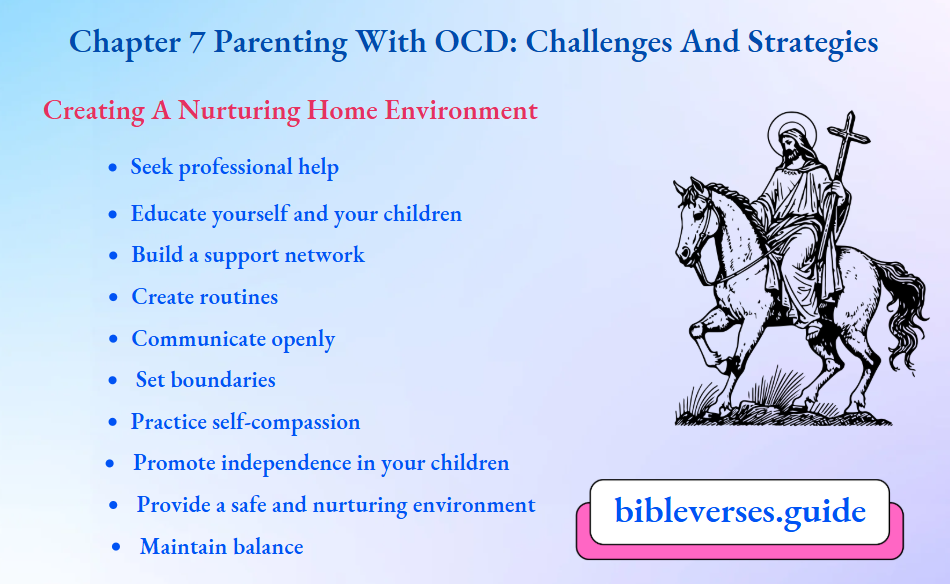
Creating A Nurturing Home Environment
To create a nurturing home environment for your children, it is essential to understand and address the impact of OCD on your parenting style and family dynamics. By doing so, you can ensure your children grow up in a space that prioritizes their well-being, providing them with the love, support, and stability they need. Here are some ways to create a nurturing environment for your family while managing your OCD symptoms.
1. Seek professional help: If you haven’t already, receiving an accurate diagnosis and treatment plan from a mental health professional is crucial. Cognitive-behavioral therapy (CBT) and exposure and response prevention (ERP) effectively manage OCD symptoms. Pharmacological treatments such as selective serotonin reuptake inhibitors (SSRIs) may also help. With appropriate guidance and support, you will be better equipped to manage your thoughts and compulsions while fostering a loving environment for your children.
2. Educate yourself and your children: Understand that parenting will be different for you than for someone without OCD. Familiarize yourself with coping strategies that help you navigate challenges related to OCD while educating your children about the condition in an age-appropriate manner. This will allow them to understand what you’re going through and develop empathy for your struggles.
3. Build a support network: Reach out to friends, family members, or other parents who have experienced similar struggles in raising children while dealing with mental health challenges. Engaging with others can provide valuable insights into effective parenting techniques and offer emotional support when needed. Administrative and practical efforts like joining local or online OCD support groups can be invaluable in gaining information on resources.
4. Create routines: Establishing daily routines for both the parent and child can benefit a family with a parent suffering from OCD, as it can help manage anxiety and uncertainty. Routines can provide structure and predictability, encouraging a sense of stability within the household. In addition, routines can help you manage your compulsions by scheduling time for self-care activities, such as meditating or engaging in hobbies that provide relaxation and reduce stress levels
5. Communicate openly: Honesty and open communication are essential for nurturing healthy relationships within your family. Talk to your spouse or partner about your struggles with OCD and collaborate on managing the parenting workload. Working together to minimize the effects of OCD on parenting responsibilities can lead to increased understanding and support from your partner and minimize feelings of guilt or inadequacy. Please encourage your children to express their emotions, too, as it will help them develop healthy coping mechanisms for stress.
6. Set boundaries: While it’s essential to address OCD symptoms, avoid allowing them to dominate your household. Set limits on how much time you spend catering to compulsions and consciously prioritize quality family time instead. Establishing these boundaries will help balance managing your mental health and creating a nurturing home environment.
7. Practice self-compassion: Parents who deal with OCD often struggle with feelings of guilt, shame, or failure in their role as caregivers. It’s important to remind yourself that every parent makes mistakes, and having OCD does not diminish your ability to raise happy, healthy children. Embrace self-compassion instead of self-criticism while recognizing that being loving, nurturing parents involves prioritizing self-care.
8. Promote independence in your children: Encourage them to develop autonomy by giving them age-appropriate responsibilities around the house, teaching them problem-solving skills, and empowering them when making decisions. Promoting independence in this way alleviates the pressure on yourself as a parent while fostering essential life skills in your children.
9. Provide a safe and nurturing environment: Ensure your home is a space where your children feel loved, supported, and secure. Create an atmosphere of emotional safety by being present, attentive, and empathetic to their needs. Encourage open dialogue and expression of emotions.
10. Maintain balance: The key to parenting with OCD is finding a balance that helps manage symptoms while not sacrificing the nurturing home environment every child deserves. Early intervention and continued treatment can help you effectively cope with your OCD while providing the best possible environment for your children to thrive.
Balancing Parental Responsibilities With Self-Care
Parenting is an immensely rewarding and challenging experience, and the endeavor becomes especially complex for parents diagnosed with obsessive-compulsive disorder (OCD). Being a parent requires a great deal of patience, understanding, and love, but when OCD enters the mix, the challenges can become magnified. However, by effectively balancing parental responsibilities with self-care, parents with OCD can raise happy and healthy children while addressing their needs.
For instance, parents with OCD may worry excessively about keeping their children safe, consistently ensuring a germ-free environment, or adhering to strict routines. Additionally, these individuals may experience anxiety when their children disobey certain rules or orders.
One of the most important things a parent with OCD needs to recognize is that it is possible to be a good parent despite their disorder. Acknowledging that nobody is perfect helps in reducing self-imposed expectations and guilt. Seeking professional help in the form of cognitive-behavioral therapy (CBT) or medication can help improve one’s mental well-being and become better equipped to cope with challenging situations that may arise while parenting.
Prioritizing self-care is crucial for parents with OCD to ensure they can continue providing optimum care for their children. Self-care involves understanding personal limits and learning to mentally, emotionally, and physically recharge.
This could involve exercising regularly, maintaining a healthy diet, getting enough sleep, and taking time for hobbies or activities that bring joy or relaxation. Parents must open communication channels within the family and educate their spouse or partner about their disorder. Having regular check-ins on how each member feels fosters an environment
where everyone feels supported and cared for. In addition, children can also be educated on the subject so they understand that their parent’s behavior is not their fault. This helps foster empathy and patience in children and reduces the chances of negative or confused emotions toward their OCD-affected parent.
Support groups can play a critical role in empowering parents with OCD. Participating in support groups allows one to meet others going through similar experiences and share coping strategies, challenges, and successes. Additionally, the emotional support received from such groups may lead to improved overall mental health.
Time management skills are valuable for parents with OCD, as it’s essential to have healthy routines and boundaries that cater to parenting responsibilities and self-care needs. Keeping a schedule that outlines daily activities particularly self-care-related, helps maintain balance amidst the inevitable unpredictability of parenting.
Parents with OCD must differentiate between their obsessions and legitimate concerns regarding their child’s safety or well-being. Identifying when intrusive thoughts are taking over and impacting decision-making capability is essential. Establishing strategies such as practicing mindfulness techniques or engaging in distraction can temporarily relieve these thoughts.
Finally, self-compassion is key for parents with OCD. Individuals need to acknowledge their strengths and achievements and give themselves credit for what they do well as parents. This helps in building resilience against the inevitable hard days of parenting.
Parenting with OCD is undoubtedly challenging, but embracing a proactive approach focused on balance and self-care makes it possible for these parents to provide excellent care for their children and themselves. Committing to professional help, engaging in open communication with family members, participating in support networks, implementing time management strategies, differentiating legitimate concerns from obsessions, and practicing self-compassion are all essential components of achieving this harmony while parenting OCD
With unwavering determination and an appropriate support system, parents with OCD can successfully navigate the ups and downs of parenthood while effectively managing their disorder. As a result, they can cultivate a happy, healthy, and supportive environment for their children to grow and thrive.
Supporting Children With Ocd Or Ocd-Like Behaviors
Children with OCD might experience obsessive thoughts about germs, danger, or hurting others and may repeatedly engage in compulsive rituals such as hand washing, counting, or checking locks. Addressing and supporting a child with OCD or OCDlike behaviors can be challenging, but with patience, understanding, and a proper support system, parents and caregivers can make a significant difference in their child’s life.
1. Understanding OCD in Children: The first key to supporting children with OCD is understanding the nature of the disorder. It’s essential to recognize that children with OCD are not just being overly dramatic or manipulative their obsessive thoughts are genuine and can cause them severe distress. Educate yourself about the symptoms of OCD in children and be aware of any changes in your child’s behavior.
2. Create a Safe Environment: Creating a safe and supportive environment for children with OCD involves fostering open communication and providing reassurance. Please encourage your child to share their fears and concerns without judgment, making it clear that you are there to listen and offer support. Validate their feelings while helping them understand that certain thoughts or behaviors might stem from their OCD rather than real threats.
3. Seek Professional Help: Do not hesitate to seek professional help if you believe your child may be dealing with OCD. A mental health professional specializing in treating children can assess your child’s symptoms and recommend appropriate interventions. Cognitive Behavioral Therapy (CBT), specifically Exposure and Response Prevention (ERP), is the most effective treatment for OCD in children. This therapy helps kids gradually face their fears without engaging in compulsive behaviors.
4. Collaborate with School Staff: It is crucial to collaborate with school staff if your child’s OCD symptoms impact their education. Share your concerns with teachers, counselors, and administrators so they can understand and accommodate your child’s needs. This communication can help ensure that your child receives appropriate support within the school environment and has the best chance at academic success.
5. Establish Routines and Set Limits: Routines work well for children with OCD, providing stability and security. Establishing daily routines for waking up, meals, homework, playtime, and bedtime can be especially helpful in reducing anxiety. However, it’s vital to set limits on compulsive behaviors. Please encourage your child to resist obsessive thoughts or rituals while also creating a plan to manage their anxiety in healthier ways.
6. Encourage Flexibility: Ensuring room for flexibility within the daily routine is essential for children with OCD. Please encourage them to adapt when changes happen and engage in activities that promote adaptability, such as puzzles, games, or sports. This can help them develop resilience and learn not to rely excessively on rigid routines.
7. Build a Support Network: Children with OCD need a strong support network of professionals, family, friends, and educators who understand their struggles and can encourage them when needed Connect with other families with children with OCD by joining support groups online or in your community. Sharing experiences can provide invaluable insights into managing the disorder while easing feelings of isolation.
8. Practice Self-Care: Parents and caregivers should prioritize self-care when supporting a child with OCD. It is essential to remain patient and empathetic while managing stress levels effectively. Engage in activities you enjoy, contact friends for support, or consider seeking therapy.
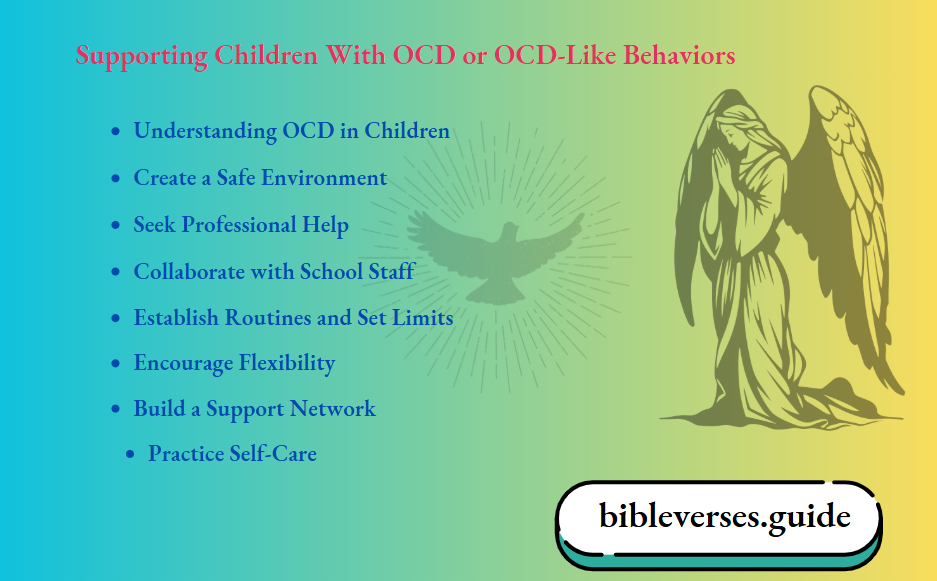
Supporting children with OCD involves understanding the disorder’s nature, creating a safe environment at home and school settings, seeking professional help, establishing routines while promoting flexibility, building a strong support network, and practicing self-care as parents or caregivers.
With the appropriate combination of interventions, understanding, and compassion, children with OCD can develop the necessary skills to manage their condition more effectively and lead happy, fulfilling lives.