
Jesus We Talk About Past, Present, And Future
Dear Thomas,
Your twenty-fifth question states, “Christians say that being ‘in Christ’ changes their past, present, and future. My past is my past. That’s history.
What can Christianity do about that? I am responsible for my choices in the present. What can Christianity do about those? My future is yet to be determined or discovered. What does Christianity have to do with those?”
Yes, in many of my answers to your questions, I have talked about the effect of being “in Christ,” the apostle Paul’s primary motif in explaining the effect of the gospel.
But as you ask, just what does being in Christ mean? Let me explain it again in this way: Adam was the first creation of mankind. All of mankind descended from Adam.
Prior to Adam’s fall into sin, he enjoyed an open, full, and rich relationship with Jesus, his Creator. However, once Adam fell, he lost the unique connectedness he had experienced in the Garden of Eden.
He was removed and barred from it thereafter (see Genesis 3). Adam, the first of mankind, ruined his original and intended relationship with God, and that broken relationship transferred from him to all successive generations. That is why Christians say that we all failed in Adam.
We are all born with Adam’s fallen nature. All of humankind’s failures are evidence of this fall, this separation from God.
Because of Adam’s failure and subsequently all of humanity’s failures ever since, we have a death penalty hanging over our heads, for the wages or consequence of sin, which caused separation from God and Jesus, our Creator, is death (see Rom. 6:23) or the ultimate cessation of life forever.
We and the rest of humanity, past, present, and future, don’t like those prospects. Neither does God nor Jesus, our Creator. There must be a way to resolve that separation.
There must be a way to bring man back into a relationship as intended in the beginning. And there must be a way to expiate or make amends for Adam’s sin, our sins, and everyone else’s sins.
Who could do it? Who could legally make things right? Who could take the responsibility for the wrongs of mankind? Who could pay the wages, and who could take the consequences of death legally and justly? Only one person could do that only our Creator, God Himself, only Jesus.
The rescue plan entailed the coming of the Messiah, the coming of the Son of God, and the coming of Jesus. Born of a virgin, Jesus willingly came to earth in the likeness of man, in the likeness of Adam.
Though He possessed Adam’s nature, He was yet without sin and in union with the Father. Setting His divinity aside (see Mark 14:38, John 5:19-20, Phil. 2:5-7), Jesus came to earth and lived a life of perfect fellowship with God, His Father, with the indwelling Holy Spirit.
Jesus came to live a life of perfect obedience to the law of love given by God. Jesus was the start over, the possibility for mankind to obtain a new beginning.
Jesus did what Adam did not do. But Jesus did much more than that. Jesus suffered the results of Adam’s sin, your and my sins, and the rest of humanity’s sins. It is a harsh reality for any of us that Jesus died on the cross of Calvary because of and for each of us.
Jesus taking the nature of humanity within Himself died with a sense of total separation from God. Jesus died the second death or ultimate death, which was our rightful death.
Jesus said on the cross,

As our Creator God, Jesus took my place, our place, all of humanity’s place, and paid the penalty for humanity’s sins. Jesus died so that we wouldn’t have to die the second death. Jesus died and was resurrected so that we could have life, including our own resurrection if we tasted death prior to Jesus’ second coming.
Even now we can start having that new life, that resurrected life in Him instead of maintaining our natural old life in Adam which is the sin of living life apart from God. The kingdom of God and eternity can start now in this life (see Matt. 10:7; 12:28; 13:11, 44; Luke 17:21).
If I put my passport into my briefcase, wherever my briefcase goes, my passport follows. My passport is connected to my briefcase. We are like the passport, and Jesus is our briefcase.
Jesus has an open invitation for us to come into His briefcase. He issues the open-briefcase invitation, but we make the choice to go in. Once in, we are “in Christ,” and the effect changes our past, present, and future.
Another way of explaining this change of past, present, and future is this: Once we choose Christ as our Creator, Redeemer, and Lord, we have a new life, a new inheritance, a new history, and a new family tree.
We are adopted, and we gain a new identity. We are no longer “in Adam” but anew “in Christ.” All this happens because God is agape (intrinsic, spontaneous, unmotivated) love.
He first loved us (1 John 4:19) and then did what was necessary for our redemption and salvation, validated by Jesus’ resurrection.
Once we belong to this new family in Christ, our past is forgiven, canceled, and made of no account in our present and future life in Christ.
Our present life is changed because of who we are in Christ. The old self of sin, death, and self-centeredness no longer have to dominate our lives, but a new and different operative with new understandings, visions, and motives from His indwelling Spirit comes alive within us. As we mark our days, our present becomes a series of new beginnings, new starts within our relationship with Christ.
Our future is also made different as we, through Christ’s Spirit, continue to heal from our past brokenness and are led by His Spirit to the full meaning of being in the Spirit and heart of Christ.
The “in Christ” motif of Christian thought really does make all the difference in the world as to our past, present, and future. To know that we can fearlessly stand before a holy and loving God because we are forgiven and hidden in Christ is freedom indeed.
Being in Christ means we get to be transformed into what we were intended to be. It is not a have to, or our earning the favor of Christ. Think about it.
Being in Christ allows us to become all that God desires us to be both now and in the future as a developmental process all as a free gift!
Now comes the apparent rub, a seeming contradiction to what I have just said. If we understand that God is love that we were created in His image and that our ultimate wellbeing is determined by our living and loving as our Creator intended, we quickly come to the realization that we just can’t seem to do it.
We understand the apostle Paul’s struggle expressed in Romans 7:7-24, where he lamented that he continually failed to do the things he wanted to do (meeting all of the law’s demands as he understood them).
Like Paul, it is easy to see that we do not live or love as God intended. Even when we try, it is usually infected with self-interest and self-centeredness.
In our still-fallen state, even though redeemed with the promise of a future glorified state, I don’t know if we can ever really know in this life what it means to love God with all our heart, mind, and soul or to love our neighbor as we love ourselves.
But even with all our apparent shortfalls, could it be that God is truly I mean truly gracious? By gracious, 1 means granting us a status we don’t earn, don’t even deserve.
That is the good news. God is indeed gracious! But in order for the grace of God to be effective in our lives, we must believe that it is His nature.
He is there as our guide, support, aid, and comfort through all our trials and missteps as we grow in our relationship with Him.
And in that belief, we can know that no matter what we have done in the past, no matter what we just did in the present, or what we may fail to do in the future, God is still gracious.
We can fully trust Him that we will remain in Christ. God’s love and grace can change our motivating drives. It can affect our hearts and minds and make us into new people.
The apostle Paul discovered that truth in his own spiritual journey when he declared in Romans 7:24-25, “What a wretched man I am! Who will rescue me from this body of death?
Thanks be to God through Jesus Christ our Lord!” He goes on to say in verse 1 of chapter 8, “Therefore, there is now no condemnation for those who are in Christ Jesus.” Then he goes further to explain how the process of change takes place.
This is not the cheap grace that I am talking about. It is a life that recognizes God’s love yet also recognizes an inability to love back adequately as a result of the sin problem, which has made its home within our beings.
It is a life that recognizes that God through Jesus Christ has taken care of our failure problems past, present, and future.
And by our conscious and consistent focus on Jesus Christ as our Lord and Savior, our transformation or healing can and does take place, even if seemingly way too slow.
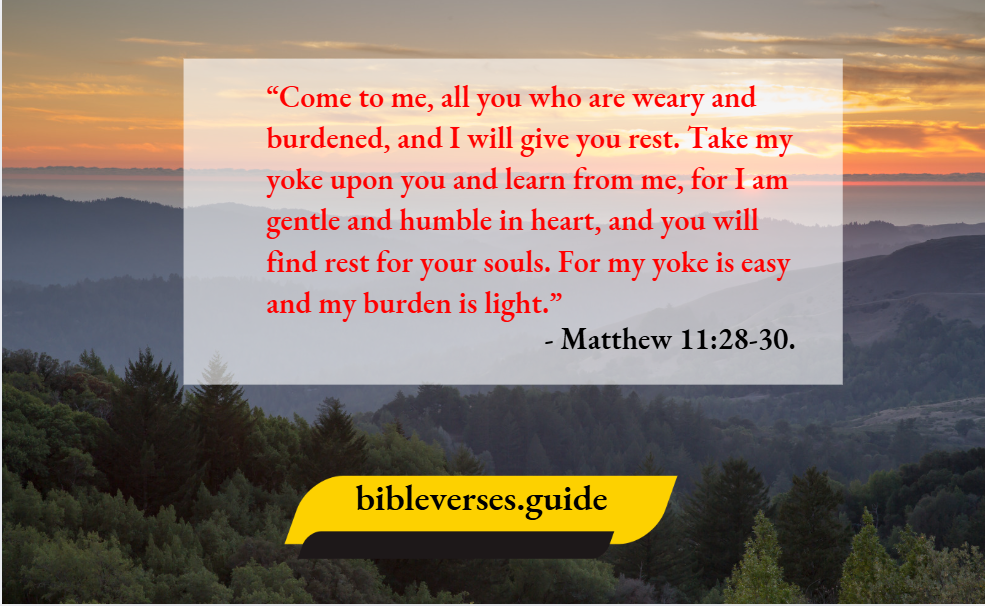
Our return to the Father, like the prodigal son of Luke 15:11-32, is God’s greatest hope and desire for us. And remember what Jesus said in Matthew 11:28-30.
I guess I could say that being in Christ is the only way to live now and forever. It truly does affect my past, my present, and my future!
Your friend,
Matt