
Jesus We Talk About Faith Stuff
Dear Thomas,
You state in question number eighteen, “Sometimes I think that Christians just fake their beliefs or maybe just inherit them and never examine them. Some act like it is just an insurance policy for the great hereafter.
They all say we must have faith to believe in the unseen. But what is this faith, and how does it work in relation to fact and reality? Does faith mean that God is unbelievable, a deity who reportedly did something that cannot be proven? Are we just expected to believe in Him anyway?”
Your question is quite appropriate when we look at the definition of faith in Webster’s New World Dictionary. The first definition given is “unquestioning belief that does not require proof or evidence,” and the second definition is “unquestioning belief in God, religious tenets, etc.”
But using the word faith in the context of believing in God or in Jesus Christ as the Creator and Redeemer of the world, we see that it needs to have a different definition.
It needs some evidence to back it up, as it is not just the demand for unquestioning belief. Faith without adequate evidence to back it up is nothing more than empty hope or speculation.
That being said, I don’t think I base my faith in Jesus Christ or the working of the Holy Spirit in my life on empty hope or speculation.I have experienced firsthand too many of their truth claims (see Chapter 2).
Additionally, Scripture has been formed and preserved as an evidentiary body of man’s relationship with God and God’s dealing with the condition of man.
I think it would be quite unfair of God to say to us humans, “Believe because I said so.” God can say that He is love, for example, but that does not make it so.
God can say that He has our best interests at heart and that we can trust Him when He gives us instructions, but that does not make it so. Things are true because they are true as the evidence shows.
We cannot make claims and then do nothing to substantiate them. That’s what Satan did when he made his claims against God in the Garden of Eden, and we are still involved in the controversy concerning those claims today.
The controversy about the love of God for humanity and His plan of redemption for all mankind was settled and fully accomplished at the cross some two thousand years ago.
The full completion of that controversy as far as mankind is concerned is yet to come, but as we continue living on this earth, we still have decisions to make about God.
So where is the evidence on which to base our faith in God’s claims? God says that all men have sinned and fall short of what He intended for them. I think we have plenty of evidence of that truth.
God says that He so loved the world that He gave His one and only Son to live and die for us. The evidence of that claim is Jesus’ death on the cross, exchanging His life for ours so that we might live.
God says that He (Jesus) is going to come back to claim His own. The evidence of scriptural history shows that He always does what He says He will do.
Is God the kind of God who continually comes to man? Is God faithful? Is God trustworthy? Can we surrender our lives to Him and find that we are in good keeping? Yes, yes, yes, and yes—and these answers are not just speculation.
A great deal of historical, personal, and vicarious evidence exists to support positive and affirmative answers to all these questions.
As principals in a designing and building company, my associates and I are often interviewed by prospective clients. If all we did was give them a brochure that described our skill in designing beautiful and functional homes and described the attention we give to quality, service, and budgets, I doubt that we would get much work.
We could also show the clients a lot of pretty pictures of the work we have done in the past, but would that verify the authenticity of the pictures as our work? We could tell them that it is our job to serve them and that our reward is turning over the keys to their beautiful new home on time and on budget.
We could tell them we are very competitive in our pricing. In other words, we could say whatever we wanted to say in order to sell our services for designing and building homes.
It may sound good, but would it be true? Is it prudent for prospective clients to believe whatever we say? Should they put faith in us just because we say they should? No, of course not.
Clients have the right to know the evidence that hacks up our claims. If we are to gain their trust and their business, there must be outside evidence of the claims we make about ourselves and the way we design and build new homes.
This is why we have found it so important to have testimonials from previous clients. What our clients think of us is much more important and much better evidence than anything we could say about ourselves.
When it comes to the truth claims about God, the same is true. We must see evidence from the experience and the changed lives of others who validate those claims. Here in lies the problem.
All adherents of the Christian faith don’t necessarily give supportive evidence or validate those faith claims that your question suggests. However, there are many who do.
It is probably true that some Christians “go along to get along.” Being a church member can be like belonging to a service club. It is good for family and business, so why not attend? But that is not faith that leads to a relationship with this Jesus we have been talking about.
Other people have been taught that living a good Christian life means being caring, ethical, and moral; keeping promises; doing an honest day’s work for a day’s pay; contributing to the community; and so forth. Part of good citizenship, they believe, is going to church.
In church, they learn the importance of being moral and ethical people, and it seems natural to conclude that only good people are going to go to a good heaven. Anyway, being good seems to yield more rewards than being bad, so again why not be involved in the Christian faith and a Christian community where the encouragement and rewards of being good far exceed the influences and punishments of being bad, immoral, or unethical?
Your question becomes valid if a person’s faith deals primarily with performance as the premium paid on an insurance policy for the great hereafter.
However, faith in performance presupposes the existence of an inherently good and inherently bad and a consciousness of discernment in the nature of man that can distinguish the difference.
But that raises the following question: Where did the sense of goodness and badness come from in the first place? Who created us with the free will to choose one moral path or another, to exercise our ability to reason, to believe, or not to believe? What are such capabilities for? They certainly go beyond animalistic instincts.
I have to say it again. The evidence shows that the free ability to discern, choose, relate, and love must have a source. That source is Jesus, our Creator, Sustainer, Savior, and Redeemer. Furthermore, God wants to be known and experienced.
He wants us to have personal, experiential evidence. He wants us to freely open up to Him so that He can graciously and generously provide the evidence we need to affirm His real and alive relationship with us. Then within this experiential evidence, faith takes on a new and different quality.
It is also true, as you suggested, that some Christians merely inherit their beliefs and understandings about God and Jesus Christ. Their beliefs have little to do with a relational faith based on experiential evidence.
They go to church and maybe read the Bible a bit, but they never give much thought to the questions you have been asking. If pressed to explain why they believe what they believe, they can’t give an answer.
They might say that it is just the way they were taught or just what the church says. They might say that their beliefs are based on their understanding of the Bible.
If the Bible says it, they choose to believe it, and that’s all there is to it. They may even shrug off any questions about their Christian beliefs as irrelevant to their lives. They are comfortable believing what they believe. Please do not disturb me!
This brings to mind the reality of Christian apathy. If that is behind part of the thought in your question, it is probably what you have seen and experienced.
For me, I would much rather see an agnostic asking tough questions about the Christian faith than a professed Christian with no desire or interest in pursuing a greater understanding of his or her professed beliefs or the nature and character of God within those beliefs.
What you are talking about in your question is expressed in the message John the Revelator received from God in a vision about the church in Laodicea. It is recorded for us in Revelation 3:14-20.
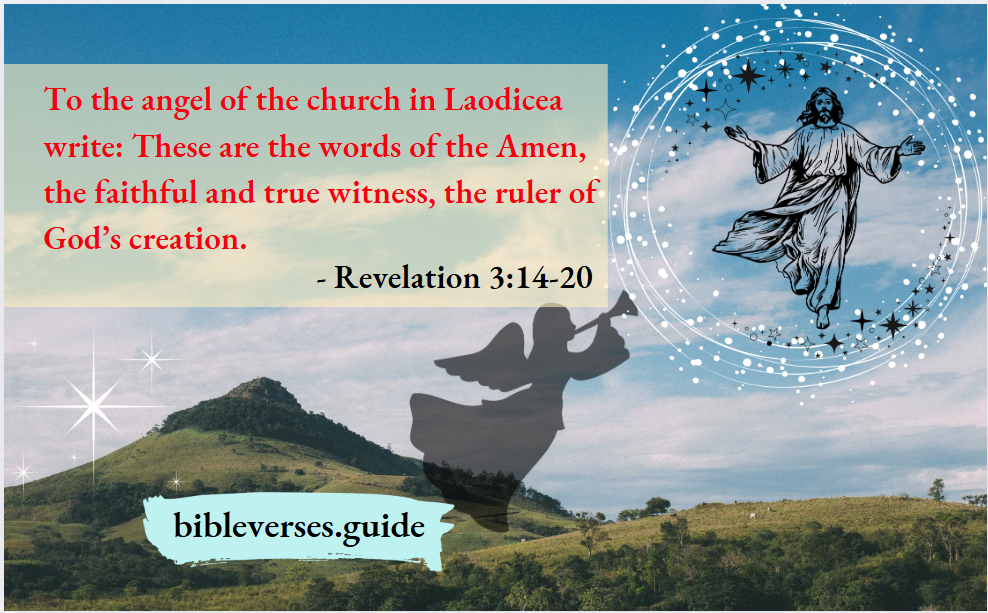
I know your deeds, that you are neither cold nor hot. I wish you were either one or the other! So, because you are lukewarm—neither hot nor cold—I am about to spit [or vomit] you out of my mouth. You say, “I am rich; I have acquired wealth and do not need a thing.” [“I have enough truth to get by.”] But you do not realize that you are wretched, pitiful, poor, blind, and naked.
I counsel you to buy from me gold refined in the fire, so you can become rich; and white clothes to wear, so you can cover your shameful nakedness; and salve to put on your eyes, so you can see.
Those whom I love rebuke and discipline. [In adversity you will do a reality check.] So be earnest, and repent. Here I am! I stand at the door and knock. If anyone hears my voice and opens the door, I will come in and eat with him, and he with me.
That is the crux of the issues raised in your question. Faith must be based on evidence—the evidence of history; the evidence of others’ experiences; the evidence of broken lives put back together through grace and faith in the one who saves, Jesus Christ; the evidence of the Holy Spirit working on the human heart, desiring an open-door invitation for relationship.
Just ascribing to church beliefs—doing the do—isn’t real Christianity. Though some practice it as such, it is not. True Christianity is about having a personal relationship with the living Jesus Christ, God the Father, through the indwelling Holy Spirit. It is a real faith relationship described as “you in Christ” and “Christ in you.”
Faith —Christian faith—means having trust, confidence, and reliance on Jesus Christ as a personal Savior, Redeemer, and friend. In all my answers to your questions, I have been trying to convey evidence to substantiate your faith.
Though a case could be made for many different kinds of evidence on which to base faith in God, the most compelling evidence to me is the fact that in this broken world full of broken people, love exists.
We all need it, want it, desire it, and can experience it. That love is a created potential within each of us. As I expressed in prior letters, we were originally created in the image of God, and at the center of that image is our capacity to love.
The evidence for trust and faith in God is abundant. True faith is never blind. True faith is never a leap in the dark. True faith is a reasoned response to a truth revealed by the Spirit of God Himself.

Accepting and acknowledging are our activities. The continual coming and revealing are His activity. Jesus Christ has revealed and will continue to reveal Himself to those who accept and acknowledge Him.
“Now faith is being sure [the external evidence] of what we hope for and certain [the experiential evidence] of what we do not see” (Heb. 11:1). Thus, it is by faith based on evidence that the Christian holds firm to his or her relationship with God. “Faith stuff” evidence is made sure by the love of God found and experienced in a relationship with Jesus.
Your friend,
Matt