
Chapter 9 Embracing Mindfulness And Mental Wellness
Mindfulness practices, such as meditation and deep breathing, can help calm intrusive thoughts and create a sense of peace within the mind. This mental rest provides the necessary space to recognize and detach from the repetitive patterns that OCD creates.
Nurturing mental wellness also involves developing self-compassion, understanding one’s limitations, and setting realistic expectations for personal growth. By integrating activities that promote self-care, like exercise, healthy eating, and adequate sleep, those struggling with OCD can feel more balanced and better equipped to manage their disorder.
In this chapter, we embark on embracing mindfulness and prioritizing mental wellness. We’ll explore techniques such as practicing mindfulness for OCD management, enabling you to regain control over your thoughts and emotions. You’ll discover the transformative power of small yet impactful habits by incorporating self-care into daily routines.
We’ll also delve into the role of exercise and nutrition, emphasizing their significance in nurturing a sound mind. Finally, we’ll expand our horizon by exploring holistic approaches to OCD, and alternative practices that can empower you to reclaim your mental wellbeing.
Read and Learn More OCD Management Made Simple: Top Strategies and Insights
Practicing Mindfulness For OCD Management
Mindfulness is cultivating awareness and acceptance of the present moment without judgment. By intentionally directing attention to the present moment, individuals can learn to observe their thoughts and feelings without getting immersed in them.
Incorporating mindfulness into daily life has shown promising results in treating anxiety, depression, and various stress-related disorders, including OCD.
The following are examples of how mindfulness practices can be applied for effective OCD management:
1. Mindful breathing: Focusing on the breath is one of the simplest ways to practice mindfulness. Breathing exercises allow individuals with OCD to anchor themselves in the present moment by paying attention to their inhalation and exhalation cycles.
This act of grounding can help reduce the intensity of intrusive thoughts and anxiety that often accompany an obsession. Deep belly or diaphragmatic breathing has been found to be particularly helpful in creating a sense of relaxation.
2. Botanical walks: Engaging in outdoor activities that require focused attention can help disrupt obsessive thought patterns. For instance, walking outside while consciously observing plants, trees, and flowers helps one immerse oneself in nature. This activity offers an opportunity to practice mindfulness and can positively impact overall well¬ being by reducing stress levels.
3. Body scan meditation: A body scan meditation focuses on different body parts sequentially, from head to toe. This mindfulness technique helps cultivate a deeper awareness of physical sensations within the body and encourages individuals with OCD to develop greater self-compassion.
By bringing attention to their bodily sensations, one may also become more attuned to internal cues associated with their obsessions and compulsions, which can be useful in managing OCD symptoms.
4. Mindful eating: People living with OCD can benefit from adopting mindful eating practices that involve paying close attention to their meals without distractions. Eating mindfully entails savoring each bite, chewing thoroughly, and fully engaging with the textures and flavors of food. This practice allows individuals to develop healthier relationships with food and can help break the cycle of obsessive thoughts related to eating rituals.
5. Thought labeling: As intrusive thoughts arise, individuals with OCD can benefit from a mindfulness practice called thought labeling. This technique involves acknowledging and mentally naming an intrusive thought as it surfaces (e.g., ‘This is an obsession” or “This is anxiety”) without judgment. By recognizing and labeling intrusive thoughts, one is better equipped to detach from these recurring thought patterns and reduce the distress they may cause.
6. Progressive muscle relaxation (PMR): For OCD sufferers experiencing tension due to anxiety or stress, PMR can help alleviate physical discomfort. This technique involves systematically tightening and releasing specific muscle groups while focusing on the relaxation sensation following each contraction. PMR has been shown to promote relaxation while improving awareness of how the body responds to stress or anxiety.
7. Loving-kindness meditation: Cultivating self-compassion through loving-kindness meditation is another useful tool in managing OCD symptoms. This mindfulness practice involves directing feelings of love, kindness, and understanding toward oneself and others around them.
By fostering positive emotions, loving-kindness meditation helps support mental health by promoting greater self-acceptance and emotional resilience.
Mindfulness-based practices offer an array of tools that can help individuals with OCD manage their symptoms more effectively. By regularly engaging in mindful activities such as breathing exercises, walking in nature, body scan meditations, and progressive muscle relaxation, OCD sufferers can foster greater self-awareness and develop new coping mechanisms to break the cycle of obsessions and compulsions.
While mindfulness may not cure OCD, it is a valuable adjunct to traditional treatments like cognitive-behavioral therapy in supporting mental health and resilience.

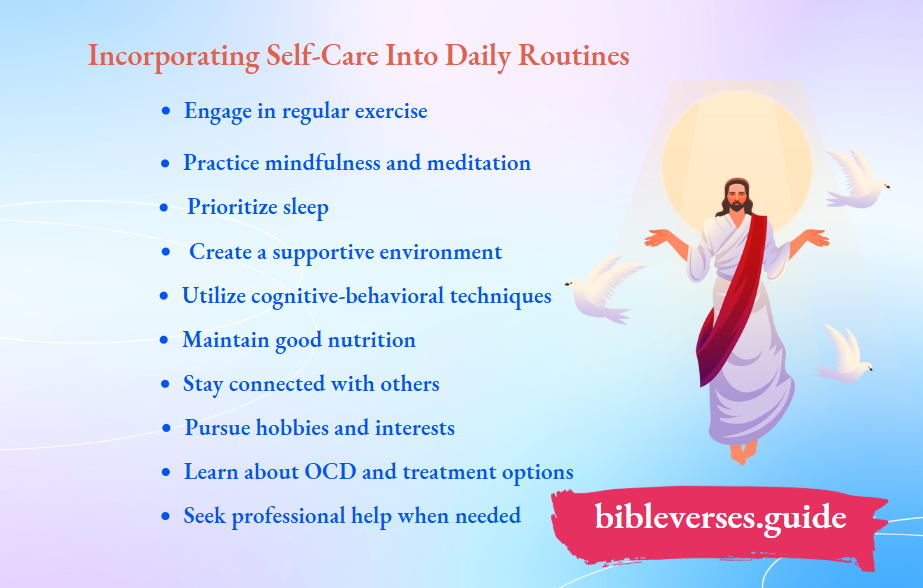
Incorporating Self-Care Into Daily Routines
Self-care is taking care of oneself physically, emotionally, and mentally. Incorporating self-care into daily routines not only helps individuals manage OCD symptoms but also contributes to a better quality of life. Here are some practical examples of self-care strategies for OCD management:
1. Engage in regular exercise: Exercise is well known for its positive effects on mental health, and studies have shown that it can be particularly beneficial for people with OCD. Regular physical activity can help improve mood, reduce anxiety, and boost overall well-being. Try incorporating 30 minutes of moderate exercise such as brisk walking, jogging, yoga, or swimming most days of the week.
2. Practice mindfulness and meditation: Mindfulness involves non-judgmentally paying attention to the present moment. Practicing mindfulness and meditation can help individuals with OCD become aware of their thoughts without getting caught up in them. Schedule daily minutes for mindfulness exercises like breath awareness or body scan meditation.
3. Prioritize sleep: A good night’s sleep is crucial for mental health and overall well-being. People with OCD may struggle with sleep due to anxiety or engaging in rituals late at night. Prioritizing sleep by creating a relaxing bedtime routine, setting a consistent sleep schedule, and ensuring a comfortable sleep environment can help improve sleep quality and reduce OCD symptoms.
4. Create a supportive environment: A well-organized and clutter-free environment can help minimize compulsion triggers and reduce stress for people with OCD. Set aside time regularly to declutter and organize your living space. Consider enlisting the help of a professional organizer if needed.
5. Utilize cognitive-behavioral techniques: Cognitive-behavioral therapy (CBT) is an evidence-based psychological treatment for OCD. Learning and employing CBT techniques, such as thought restructuring, exposure, and response prevention, can help manage OCD symptoms. Seek guidance from a mental health professional trained in CBT for the most effective results.
6. Maintain good nutrition: Eating balanced meals is essential for overall health and well¬ being. A nutrient-rich diet can improve mood, energy levels, and cognitive function, improving OCD management. Daily, consume various fruits, vegetables, whole grains, lean protein, and healthy fats.
7. Stay connected with others: Social support plays a vital role in mental health maintenance. Strong relationships with friends and family can provide emotional support and accountability for self-care practices. Schedule regular phone calls or get-togethers with loved ones to stay connected.
8. Pursue hobbies and interests: Engaging in activities that bring joy and relaxation can help distract from intrusive thoughts and provide an alternative focus for attention. Examples include painting, gardening, playing an instrument, or cooking new recipes. Dedicate time each week to pursuing hobbies or exploring new interests.
9. Learn about OCD and treatment options: Understanding the disorder can help individuals feel more empowered in their recovery journey. Seek out reputable sources of information like books, online resources (such as the International OCD Foundation), and support groups to educate yourself about OCD and its management.
10. Seek professional help when needed: It’s important to recognize when additional support is necessary for managing OCD symptoms. A qualified mental health professional experienced in treating OCD can help individuals develop strategies tailored to their unique needs.
Incorporating self-care strategies into daily routines is an effective way to manage OCD symptoms and improve overall well-being. By practicing routines like regular exercise, mindfulness, and maintaining social connections, individuals can reduce the distress caused by OCD and better navigate life with this challenging condition.
The Role Of Exercise And Nutrition In Mental Wellness
Mental wellness is a crucial component of overall health, affecting every aspect of life, including relationships, productivity, and happiness. A growing body of evidence suggests that exercise and nutrition are essential in promoting and maintaining mental wellness.
This article will discuss the importance of exercise and nutrition in mental well-being, citing recent research and outlining recommendations for a healthy lifestyle Exercise has long been known for its physical benefits, such as increased strength, endurance, and flexibility.
However, studies have highlighted the significant mental health benefits of regular physical activity in recent years. Exercise has been shown to help alleviate symptoms of depression and anxiety, improve mood and cognition, increase self-esteem, and promote better sleep quality. Several mechanisms are at work to produce these positive effects.
First, exercise stimulates the release of endorphins- neurotransmitters that act as natural painkillers and mood elevators – in the brain. These chemicals contribute to the so-called ”runner’s high,” a euphoria often experienced after vigorous exercise.
Second, exercise promotes the growth of new nerve cells (neurogenesis) and their connections within the brain (neuroplasticity). This enhances cognitive function and overall brain health. Additionally, regular physical activity can help mitigate the harmful effects of stress on mental health.
Exercise provides an effective outlet for releasing tension and pent-up emotions while lowering stress hormones such as cortisol. Moreover, it can improve one’s capacity to cope with future stressful situations by fostering psychological resilience.
While the mental health benefits are evident across various forms of exercise – aerobic exercises, resistance training, or mind-body activities such as yoga – it is essential for individuals to choose activities they enjoy and commit to a consistent routine for maximum impact.
Nutrition is another critical factor influencing mental wellness. The human brain requires a wide variety of nutrients to function optimally.
A diet rich in these necessary nutrients can significantly impact mood, cognition, and overall mental well-being. Research indicates a strong link between certain nutrients and improved mental health.
For example, omega-3 fatty acids, commonly found in oily fish such as salmon and sardines, are crucial for maintaining brain cell membrane integrity and proper signaling between neurons. These fats have been shown to help reduce the risk of depression and may also help alleviate symptoms of bipolar disorder.
B vitamins – particularly B6, B9 (folate), and B12 – play vital roles in producing neurotransmitters such as serotonin, dopamine, and norepinephrine. Low levels of these neurotransmitters have been linked to mood disorders like depression and anxiety. Consuming foods rich in B vitamins (e.g., whole grains, lean meats, legumes, dairy products) can improve concentration, cognitive performance, and overall well-being.
Nutrient-dense diets based on whole foods are immensely beneficial to mental wellness. Various colorful fruits and vegetables provide essential vitamins and minerals that bolster brain function while offering antioxidants to protect against oxidative stress.
Similarly, lean proteins (e.g., chicken, turkey, tofu) supply amino acids necessary for producing mood-regulating neurotransmitters. On the other hand, a diet high in processed foods (such as refined carbohydrates and added sugars) can negatively impact mental health outcomes. These foods can cause rapid fluctuations in blood sugar levels that may contribute to mood swings or feelings of fatigue.
Exercise and nutrition are powerful tools for promoting mental wellness. By prioritizing regular exercise and maintaining a balanced diet of whole foods rich in essential nutrients, one can promote better mental health outcomes for improved quality of life.
Exploring Holistic Approaches To OCD
Holistic approaches to OCD aim to address the condition’s underlying causes and improve overall mental, emotional, and physical well-being. Considering various aspects of an individual’s life, these interventions emphasize a whole-person approach incorporating lifestyle changes, complementary therapies, and integrative practices.
1. Lifestyle Changes: A healthy lifestyle that includes balanced nutrition, regular exercise, adequate sleep, stress management, and avoiding harmful substances can play an essential role in improving one’s OCD symptoms. For instance:
- Proper nutrition: Consuming a balanced diet that includes lean proteins, complex carbohydrates, healthy fats, vitamins, minerals, and adequate water intake can create an optimal environment for brain function and neurotransmitter balance. – Exercise: Regular physical activity has been shown to decrease anxiety levels, and improve mood and cognition by increasing serotonin and endorphin levels.
- Sleep hygiene: Establishing a consistent sleep schedule with sufficient hours of rest can alleviate symptoms of anxiety and depression linked to OCD.
2. Mindfulness-Based Stress Reduction (MBSR): MBSR is a structured program that has been found effective in reducing stress, depression, and anxiety. MBSR techniques involve mindfulness meditation and body awareness practices to develop self-awareness through present-moment focus. By observing one’s thoughts non-judgmentally and fostering self-compassion, those with OCD can gradually loosen the grip of their obsessions and compulsions.
3. Yoga: As a holistic mind-body practice, yoga is known to promote relaxation, reduce stress, and enhance mental clarity. Studies have shown that practicing yoga can modulate the stress response and improve mood by increasing the production of gamma-aminobutyric acid (GABA) in the brain, which has been linked to reduced anxiety levels and OCD symptom improvement.
4. Acupuncture: A traditional Chinese medicine practice that involves the insertion of thin needles at specific points on the body to unblock energy pathways (meridians) and restore balance. Acupuncture is effective in reducing anxiety symptoms, including those linked with OCD. While the exact mechanism of action remains unclear, acupuncture is believed to stimulate the release of endorphins and alter the brain’s serotonin and norepinephrine levels.
5. Herbal Supplements: Natural remedies such as valerian root, St. John’s wort, passionflower, kava kava, and lavender can have calming effects on the nervous system and modulate neurotransmitter levels. However, it is important to note that some herbal supplements can interact with medications or worsen certain conditions. Therefore, consult a healthcare professional before using these remedies for OCD treatment.
6. Biofeedback: This technique involves learning how to control physiological functions such as heart rate, muscle tension, or skin temperature through feedback provided by electronic monitoring devices. By observing their body’s responses to stressors, individuals with OCD can learn relaxation techniques to counteract these reactions and better manage anxiety symptoms.
7. Energy Therapies: Reiki, qigong, and other energy therapy claim to balance life force energy (qi) within the body to promote overall health and well¬ being. While data on these methods’ effectiveness for treating OCD is limited, some individuals may find them helpful as part of a comprehensive care plan centered on relaxation and stress reduction.
By integrating lifestyle changes, stress reduction techniques, and complementary therapies, individuals with OCD may obtain a sense of well¬ being and improved symptom management. It is crucial to consult with a healthcare professional before embarking on a holistic treatment plan and ensure that it complements rather than contradicts ongoing therapies.